


Cracked Tooth Endodontic Assessment
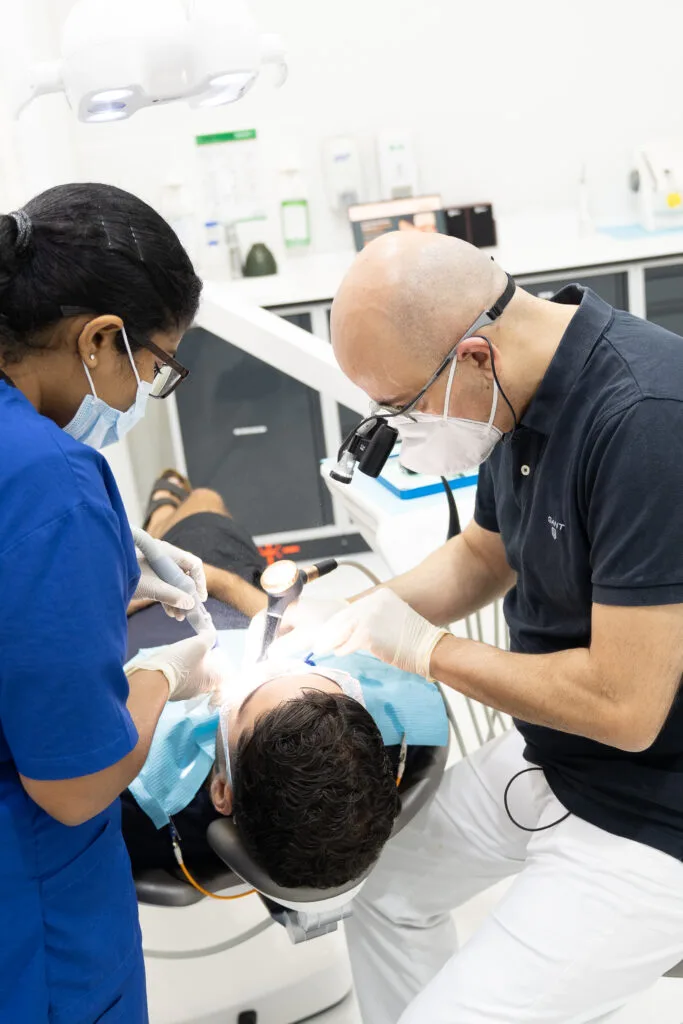
A cracked tooth endodontic assessment determines whether a fracture has affected the dental pulp, root canal system, root, gums, or supporting bone and whether the tooth remains restorable. At Bourgeois Dental Clinic in Dubai, diagnosis may involve symptom review, bite testing, pulp testing, gum examination, dental imaging, magnification, and assessment of the remaining tooth structure.
What Is a Cracked Tooth?
A cracked tooth contains a fracture line that may involve enamel, dentine, the dental pulp, or the root. Some cracks remain limited, while others progress deeper with repeated chewing forces.
Cracks are not always clearly visible on standard dental X-rays and may cause intermittent symptoms that are difficult to locate.
What Types of Tooth Cracks Are There?
Craze Lines
Craze lines are small superficial lines within the enamel. They are common and usually do not affect the dental pulp.
Fractured Cusp
A weakened cusp may crack or break around a large filling. Treatment may involve a filling, onlay, or crown depending on the depth and remaining structure.
Cracked Tooth
A crack may extend from the chewing surface toward the root. The prognosis depends on its depth, direction, pulp involvement, and whether it extends below the gumline.
Split Tooth
A split tooth has separated into distinct segments. Preservation of the entire tooth is often not possible, although selected parts may occasionally be managed depending on anatomy.
Vertical Root Fracture
A vertical root fracture begins in the root and may extend toward the crown. It can occur in root-treated teeth and may cause localised gum infection or bone loss.
What Causes Teeth to Crack?
- Biting hard foods or objects
- Large or old fillings
- Untreated decay
- Teeth grinding and clenching
- Dental trauma
- Weakening after extensive restorative treatment
- Sudden temperature changes
- Using teeth to open packaging
- Unfavourable bite forces
- Age-related structural changes
What Symptoms Can a Cracked Tooth Cause?
- Sharp pain when biting
- Pain when releasing biting pressure
- Intermittent pain that is difficult to locate
- Sensitivity to cold, heat, or sweets
- Pain when chewing specific foods
- Recurring discomfort around a filling or crown
- Gum swelling beside the tooth
- A localised deep gum pocket
- Symptoms that come and go
Some cracks produce no symptoms until they extend further or affect the pulp.
How Is a Cracked Tooth Diagnosed?
No single test identifies every crack. The dentist combines several findings.
The assessment may include:
- Symptom history: Reviewing when pain occurs and which movements trigger it.
- Visual examination: Checking fillings, cusps, discolouration, and visible fracture lines.
- Bite testing: Applying controlled pressure to individual cusps.
- Pulp testing: Evaluating whether the pulp is healthy, inflamed, or non-vital.
- Periodontal examination: Looking for an isolated deep pocket that may indicate a root-level crack.
- Magnification and illumination: Helping identify subtle fracture lines.
- Restoration removal: In selected cases, an old filling may need removal to evaluate the underlying tooth.
- Dental imaging: Reviewing the root, surrounding bone, and indirect signs of fracture.
Can a Crack Be Seen on an X-Ray?
Many cracks are too thin or positioned at an angle that prevents direct visibility on a standard X-ray.
Dental imaging may show indirect findings such as localised bone loss, root changes, infection, a large restoration, or a fracture that has widened.
When Does a Cracked Tooth Need Root Canal Treatment?
Root canal treatment may be recommended when the crack has caused irreversible pulp inflammation, pulp death, infection, or exposure of the internal tissue.
Root canal treatment manages the pulp and canal infection but does not physically remove the crack. The tooth generally requires a protective final restoration.
Can Root Canal Treatment Save Every Cracked Tooth?
No. Root canal treatment can help preserve selected teeth when the crack affects the pulp but the tooth remains structurally restorable.
The prognosis may be poor when the crack:
- Extends deeply below the gumline
- Continues through the root
- Creates a split tooth
- Causes severe localised bone loss
- Leaves insufficient healthy structure
- Prevents a reliable final restoration
How Are Cracked Teeth Treated?
Treatment depends on the crack type and depth and may include:
- Monitoring superficial craze lines
- Smoothing a minor rough edge
- Composite bonding
- A tooth-coloured filling
- An inlay or onlay
- A dental crown
- Root canal treatment
- Periodontal treatment
- Extraction when the tooth is not restorable
Why Is a Crown Often Recommended?
A crown or onlay may cover weakened cusps and help distribute chewing forces around the tooth.
However, no restoration can guarantee that a crack will stop progressing. The prognosis depends on crack depth, bite, remaining structure, grinding, and restoration design.
Can a Cracked Tooth Be Treated with a Filling?
A filling may be appropriate for a limited fracture with sufficient surrounding support.
A large crack, weakened cusp, or heavily restored tooth may require broader coverage with an onlay or crown.
What Is Cracked Tooth Syndrome?
Cracked tooth syndrome describes symptoms associated with a crack that may be difficult to identify. The patient may experience sharp pain when biting or releasing pressure, temperature sensitivity, or intermittent discomfort.
The symptoms can resemble decay, pulp inflammation, bite trauma, or pain from a neighbouring tooth.
Can Teeth Grinding Worsen a Crack?
Yes. Grinding and clenching create repeated forces that may extend a crack, fracture a cusp, damage a restoration, or reduce the prognosis of a repaired tooth.
Bruxism treatment and a custom night guard may be recommended after the tooth is stabilised.
Can a Root-Treated Tooth Develop a Crack?
Yes. Root-treated teeth may have lost structure because of decay, previous fillings, access preparation, or fractures.
They may also contain posts or crowns that affect diagnosis. A vertical root fracture is an important consideration when a root-treated tooth develops localised swelling, drainage, or a deep periodontal pocket.
What Happens If a Crack Is Left Untreated?
A crack may progress, expose the pulp, cause infection, fracture a cusp, split the tooth, or extend beneath the gumline.
Early assessment may allow a more conservative treatment, although not every crack can be prevented from progressing.
Is a Cracked Tooth a Dental Emergency?
Prompt assessment is recommended when the tooth causes severe pain, swelling, trauma-related symptoms, exposed pulp, movement, or inability to chew.
Rapid facial swelling, fever, difficulty breathing or swallowing, or spreading infection requires urgent medical or dental care.
What Is the Prognosis of a Cracked Tooth?
The prognosis depends on:
- Crack location and depth
- Whether the pulp is affected
- Root involvement
- Remaining tooth structure
- Gum and bone support
- Bite forces
- Grinding and clenching
- Ability to place a protective restoration
- Patient maintenance and follow-up
Some teeth remain functional for many years after treatment, while others continue to fracture or require extraction.
How to Protect a Cracked or Restored Tooth
- Avoid chewing hard foods on the affected tooth
- Do not bite ice, pens, bones, or packaging
- Complete the recommended crown or onlay
- Manage grinding and clenching
- Wear a night guard when advised
- Maintain daily brushing and interdental cleaning
- Attend regular dental reviews
- Report renewed biting pain, swelling, or movement
Cracked Tooth Assessment on Sheikh Zayed Road
Bourgeois Dental Clinic is located on the first floor of Indigo Sky Building, Sheikh Zayed Road, Exit 41, near Al Thanya Street in Dubai. The clinic is accessible from Al Barsha, Umm Al Sheif, Umm Suqeim, Jumeirah, Al Quoz, Barsha Heights, The Greens, Dubai Marina, and surrounding communities.
Book a cracked-tooth assessment for sharp biting pain, intermittent sensitivity, a fractured cusp, a damaged filling, or symptoms affecting a root-treated tooth.
Department
Endodontics
FAQ
Frequently Asked Questions
BOOK AN
Appointment
Working Hours
We are here to serve you