


Root Canal and Endodontic Treatment in Dubai
- 12Services
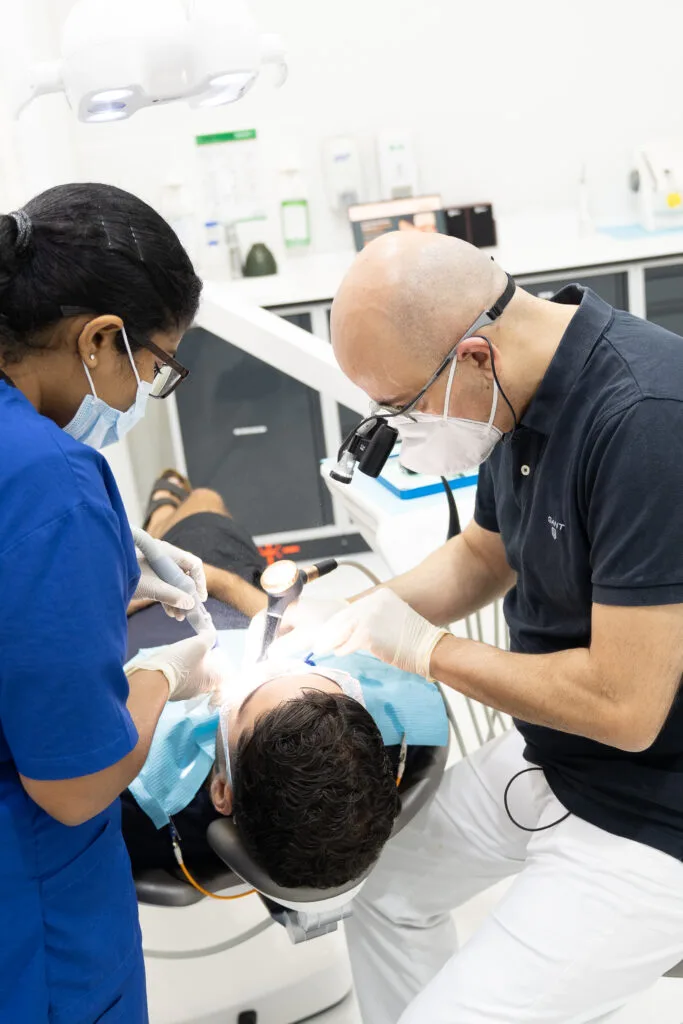
Endodontics focuses on diagnosing and treating inflammation, infection, injury, and disease affecting the dental pulp and tissues surrounding the tooth roots. At Bourgeois Dental Clinic in Dubai, endodontic care begins with a detailed examination to determine whether a painful, infected, cracked, traumatised, or previously treated tooth can be preserved.
Our endodontic services may include root canal treatment, root canal retreatment, emergency root canal care, management of dental-pulp inflammation, infected-tooth treatment, dental-abscess assessment, root canal treatment for front teeth and molars, pulpotomy, post-and-core build-up, internal tooth bleaching, and cracked-tooth endodontic assessment.
What Is Endodontics?
Endodontics is the area of dentistry concerned with the dental pulp, root canals, and tissues surrounding the roots of teeth. The dental pulp contains nerves, blood vessels, and connective tissue inside the tooth.
When the pulp becomes irreversibly inflamed or infected because of deep decay, cracks, trauma, leaking restorations, or repeated dental procedures, root canal treatment may be considered to remove the affected tissue and preserve the remaining tooth.
Endodontic Services at Bourgeois Dental Clinic
- Root canal treatment
- Root canal retreatment
- Emergency root canal treatment
- Treatment of dental-pulp inflammation
- Infected-tooth treatment
- Dental-abscess treatment
- Root canal treatment for front teeth
- Root canal treatment for molars
- Pulpotomy
- Post-and-core build-up
- Internal tooth bleaching
- Cracked-tooth endodontic assessment
What Is the Dental Pulp?
The dental pulp is the soft tissue inside the tooth. It extends from the central pulp chamber into the root canals and contains nerves, blood vessels, and connective tissue.
The pulp can become irritated, inflamed, exposed, or infected because of:
- Deep tooth decay
- A cracked or fractured tooth
- A large or leaking filling
- Repeated dental treatment
- Dental trauma
- Severe tooth wear
- Advanced gum or periodontal disease in selected cases
- Previous root canal treatment that has not healed as expected
What Symptoms May Indicate a Root Canal Problem?
Possible symptoms include:
- Severe or persistent toothache
- Pain when biting or chewing
- Prolonged sensitivity to hot or cold
- Spontaneous pain without an obvious trigger
- Pain that wakes the patient during sleep
- Swelling of the gum or face
- A pimple or draining area on the gum
- Darkening of a tooth after trauma
- Tenderness around the tooth
- An unpleasant taste or odour
- A loose or damaged restoration
- Symptoms returning after previous root canal treatment
Some infected teeth cause few or no symptoms and are detected through examination or dental X-rays.
When Is Root Canal Treatment Needed?
Root canal treatment may be recommended when the pulp is irreversibly inflamed, infected, exposed, or unable to remain healthy.
Possible indications include:
- Deep decay reaching or approaching the pulp
- Severe pulp inflammation
- A dental abscess
- A fracture exposing the pulp
- Trauma affecting the nerve and blood supply
- Persistent symptoms beneath a crown or filling
- Infection around the root
- A tooth requiring internal treatment before restoration
Not every toothache requires root canal treatment. Sensitivity may also arise from gum recession, cracks, grinding, decay, a loose filling, bite pressure, or another dental condition.
What Happens During an Endodontic Consultation?
The dentist reviews the symptoms, when they began, what triggers them, previous dental treatment, trauma, medical history, and current medications.
The assessment may include:
- Clinical examination: Checking for decay, cracks, swelling, damaged restorations, discolouration, and gum changes.
- Pulp testing: Assessing the tooth response to temperature, pressure, or other diagnostic tests.
- Bite testing: Determining whether chewing or release of pressure causes pain.
- Periodontal assessment: Checking whether a crack, infection, or pocket extends below the gumline.
- Dental X-rays: Reviewing the roots, surrounding bone, decay, restorations, and signs of infection.
- Restorability assessment: Determining whether enough healthy tooth structure remains to preserve and restore the tooth.
- Treatment discussion: Comparing root canal treatment, retreatment, restoration, monitoring, extraction, and tooth-replacement options where relevant.
How Is Root Canal Treatment Performed?
The exact procedure depends on the tooth, number of canals, anatomy, infection, previous treatment, and restorative condition. Treatment commonly includes:
- Local anaesthesia: The tooth and surrounding area are numbed when clinically appropriate.
- Isolation: A dental dam may be used to isolate the tooth and support a clean working field.
- Access preparation: An opening is created through the tooth or existing restoration.
- Removal of affected tissue: Inflamed or infected pulp tissue is removed from the pulp chamber and canals.
- Cleaning and shaping: The canals are carefully enlarged, cleaned, and disinfected.
- Medication or temporary filling: Some teeth require an interim stage before final filling.
- Root-canal filling: The prepared canals are sealed using suitable endodontic materials.
- Restoration: The access opening is sealed with a filling, core build-up, onlay, or crown according to the remaining tooth structure.
Is Root Canal Treatment Painful?
Local anaesthesia is generally used to reduce discomfort during treatment. The amount of discomfort varies according to the degree of inflammation, infection, tooth anatomy, and individual response.
Temporary tenderness when chewing may occur afterward. Severe, increasing, or persistent pain should be assessed.
How Many Appointments Are Needed?
Some teeth may be treated in one visit, while others require multiple appointments because of infection, complex anatomy, previous treatment, drainage, symptoms, or the need for medication between visits.
The final restoration may require a separate appointment after the root canal procedure is completed.
What Is Root Canal Retreatment?
Root canal retreatment may be considered when a previously treated tooth develops new symptoms, persistent infection, a leaking restoration, untreated canal anatomy, or another endodontic concern.
Retreatment usually involves reopening the tooth, removing previous filling materials, cleaning the canals again, managing identified problems, and resealing the canal system.
Why Can a Root-Treated Tooth Become Infected Again?
Possible reasons include:
- Complex or previously untreated canals
- Persistent bacteria within the canal system
- A leaking filling or crown
- New tooth decay
- A cracked tooth or root
- Delayed placement of the final restoration
- Breakdown of the temporary or permanent seal
- Structural damage to the tooth
What Is Emergency Root Canal Treatment?
Emergency root canal care focuses on assessing and stabilising a tooth causing severe pain, swelling, infection, or pressure.
Emergency care may include opening the tooth, drainage where clinically appropriate, removal of affected pulp tissue, temporary medication, bite adjustment, or another procedure based on the diagnosis.
What Is a Dental Abscess?
A dental abscess is a collection of infection associated with a tooth, root, or surrounding tissues. It may cause pain, swelling, tenderness, drainage, fever, or an unpleasant taste.
Dental-abscess treatment depends on the source and may involve drainage, root canal treatment, retreatment, gum treatment, or extraction.
When Does Dental Swelling Need Urgent Care?
Urgent medical or dental assessment is required when swelling is rapidly increasing or is associated with fever, difficulty breathing, difficulty swallowing, spreading facial or neck swelling, significant weakness, or inability to open the mouth normally.
These symptoms can indicate a spreading infection and should not be managed through pain medicine alone.
Are Antibiotics Enough for an Infected Tooth?
Antibiotics may be prescribed in selected cases, particularly when infection is spreading or systemic symptoms are present. However, antibiotics do not remove infected pulp tissue, clean the root canals, repair a fracture, or eliminate the source inside the tooth.
Definitive dental treatment may still be required even if swelling or pain temporarily improves.
Root Canal Treatment for Front Teeth
Front-tooth root canal treatment is commonly required after trauma, deep decay, fractures, or pulp inflammation.
Front teeth often have fewer canals than molars, but treatment must still consider root anatomy, tooth colour, remaining structure, bite forces, and the final cosmetic restoration.
Root Canal Treatment for Molars
Molar root canal treatment can be more complex because molars may contain several roots, multiple canals, curved anatomy, and additional canal branches.
Molars also experience substantial chewing forces and commonly require a protective onlay or crown after treatment when tooth structure has been significantly weakened.
What Is a Pulpotomy?
Pulpotomy involves removing affected tissue from the pulp chamber while retaining selected tissue within the root canals.
It may be considered in specific primary or permanent teeth depending on age, diagnosis, pulp condition, root development, symptoms, and restorative requirements.
What Is a Post and Core Build-Up?
Post-and-core treatment may be used to rebuild a root-treated tooth that has lost a significant amount of visible structure.
A post is placed within a prepared portion of the root canal only when additional retention is required for the core. A post does not strengthen the root and is not necessary for every root-treated tooth.
Does Every Root-Treated Tooth Need a Crown?
No. The final restoration depends on tooth location, remaining structure, bite, cracks, previous fillings, and functional demands.
Many back teeth require cuspal coverage with an onlay or dental crown. Selected front teeth may be restored with a bonded filling, veneer, crown, or another option according to the amount of lost structure.
What Is Internal Tooth Bleaching?
Internal tooth bleaching is a treatment for selected discoloured teeth that have previously received root canal treatment.
A whitening material is placed inside the tooth through a controlled procedure. Suitability depends on the quality of the root canal filling, tooth structure, cause of discolouration, cracks, and existing restorations.
Can a Cracked Tooth Receive Root Canal Treatment?
Some cracked teeth may be preserved with root canal treatment and a protective restoration when the crack has affected the pulp but the tooth remains restorable.
Cracks extending deeply below the gumline, through the root, or dividing the tooth may have a poor prognosis. A cracked-tooth endodontic assessment helps determine whether preservation is realistic.
Can Root Canal Treatment Save Every Tooth?
No. Preservation depends on the fracture pattern, remaining tooth structure, periodontal support, root condition, restorability, infection, and ability to provide an effective final seal.
Extraction may be recommended when the tooth is split, severely decayed, structurally unrestorable, affected by a deep root fracture, or has inadequate supporting tissues.
What Happens If a Root Canal Problem Is Left Untreated?
An untreated inflamed or infected tooth may develop increasing pain, loss of pulp vitality, abscess formation, swelling, bone changes, or spread of infection.
Symptoms may temporarily reduce if the nerve tissue dies, but the underlying infection can remain.
How Long Does a Root-Treated Tooth Last?
No exact lifespan can be guaranteed. Longevity depends on the tooth condition, canal anatomy, quality of treatment, final restoration, bite, cracks, oral hygiene, gum health, and maintenance.
Prompt placement of the appropriate final restoration and regular dental reviews can support the long-term prognosis.
How to Care for a Root-Treated Tooth
- Avoid chewing hard foods on a temporary restoration
- Complete the final filling, onlay, or crown as advised
- Brush twice daily with fluoride toothpaste
- Clean between the teeth every day
- Avoid biting hard objects
- Manage grinding and clenching
- Attend recommended follow-up appointments
- Seek assessment if pain, swelling, drainage, or biting discomfort develops
Why Choose Bourgeois Dental Clinic for Endodontic Care?
- Assessment of tooth pain, infection, swelling, trauma, and previous root canal treatment
- Root canal, restorative, crown, gum, implant, and emergency dental services within one clinic
- Treatment planning based on tooth preservation and restorability
- Evaluation of the final restoration before and after root canal treatment
- Clear explanation of alternatives, limitations, risks, and maintenance
- Convenient Sheikh Zayed Road location in Dubai
Root Canal Treatment on Sheikh Zayed Road
Bourgeois Dental Clinic is located on the first floor of Indigo Sky Building, Sheikh Zayed Road, Exit 41, near Al Thanya Street in Dubai. The clinic is convenient for patients from Al Barsha, Umm Al Sheif, Umm Suqeim, Jumeirah, Al Quoz, Barsha Heights, The Greens, Dubai Marina, and surrounding communities.
Book an endodontic consultation to assess tooth pain, sensitivity, swelling, infection, a cracked tooth, or symptoms following previous root canal treatment.
FAQ
Frequently Asked Questions
BOOK AN
Appointment
Working Hours
We are here to serve you