


Restorative Dentistry in Dubai
- 8Services
- 2Specialists
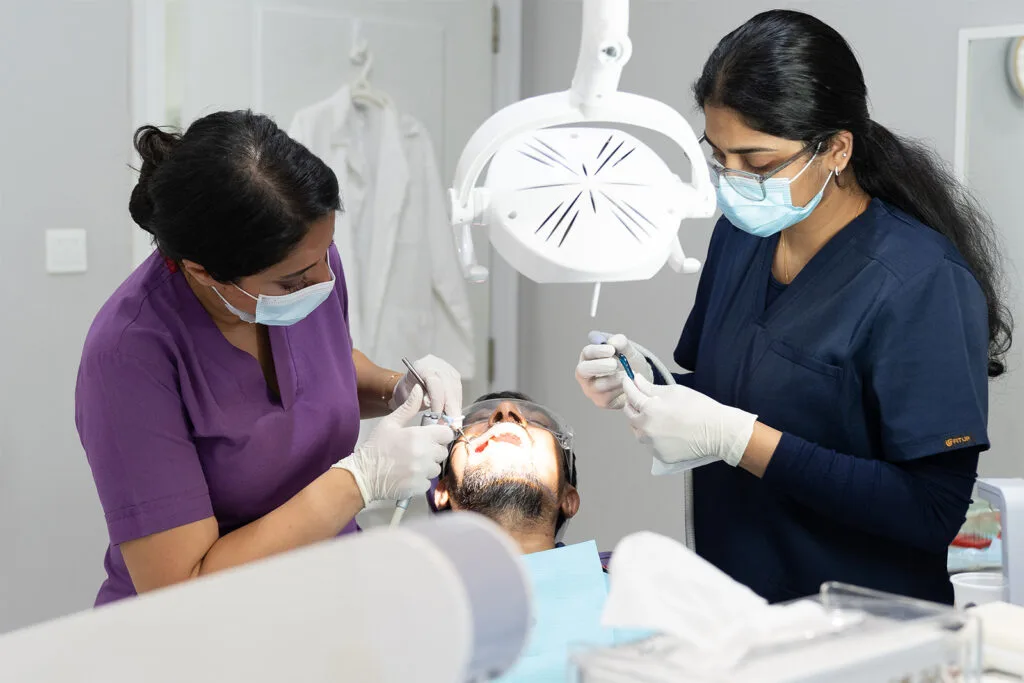
Restorative dentistry focuses on repairing damaged or weakened teeth, replacing missing teeth, and helping patients regain comfortable chewing, speech, appearance, and oral function. At Bourgeois Dental Clinic in Dubai, restorative treatment begins with a detailed assessment of the teeth, gums, bite, jaw, existing restorations, and individual treatment goals.
Our restorative dentistry services may include dental crowns, zirconia crowns, E-max crowns, dental bridges, inlays and onlays, broken-tooth restoration, worn-teeth rehabilitation, replacement of old crowns and bridges, full-mouth rehabilitation, partial dentures, complete dentures, implant-supported dentures, and denture repair or adjustment.
What Is Restorative Dentistry?
Restorative dentistry includes treatments used to repair or replace teeth affected by decay, fractures, wear, large fillings, previous root canal treatment, missing teeth, or failing dental restorations.
The objective is not only to improve appearance. A restorative plan should also consider tooth strength, bite forces, gum health, cleaning access, speech, chewing comfort, and the long-term condition of the remaining natural teeth.
Restorative Dentistry Services at Bourgeois Dental Clinic
- Dental crowns
- Zirconia crowns
- E-max crowns
- Dental bridges
- Dental inlays and onlays
- Broken-tooth restoration
- Worn-teeth rehabilitation
- Replacement of old crowns and bridges
- Full-mouth rehabilitation
- Partial dentures
- Complete dentures
- Implant-supported dentures
- Denture repair and adjustment
Who May Need Restorative Dental Treatment?
A restorative dental assessment may be appropriate for patients with:
- A broken, cracked, or heavily chipped tooth
- A large or failing dental filling
- A tooth weakened by extensive decay
- A tooth that has received root canal treatment
- Worn, shortened, or flattened teeth
- One or more missing teeth
- Loose, damaged, or uncomfortable crowns and bridges
- Difficulty chewing because of missing or damaged teeth
- Old dentures that no longer fit comfortably
- Changes in the bite caused by tooth loss or wear
- Multiple dental problems requiring coordinated treatment
The appropriate treatment depends on the amount of healthy tooth structure remaining, gum and bone condition, bite forces, oral hygiene, medical history, and the patient's preferences.
What Happens During a Restorative Dental Consultation?
The dentist reviews your symptoms, dental history, previous treatment, oral-care habits, medical history, and treatment goals. The examination may include:
- Tooth assessment: Checking for decay, cracks, fractures, large fillings, sensitivity, and previous root canal treatment.
- Gum assessment: Reviewing inflammation, bleeding, recession, periodontal disease, and support around potential restorations.
- Bite evaluation: Examining tooth contacts, chewing forces, grinding, clenching, and jaw movement.
- Restoration assessment: Checking existing crowns, bridges, fillings, veneers, dentures, and implant restorations.
- Missing-tooth evaluation: Assessing the spaces, neighbouring teeth, gum condition, and replacement options.
- Diagnostic records: Dental X-rays, photographs, digital scans, impressions, or other records may be recommended.
- Treatment discussion: The dentist explains suitable options, alternatives, limitations, stages, maintenance, and expected outcomes.
Dental Crowns
A dental crown covers most or all of the visible part of a prepared tooth. It may be considered when a tooth is significantly weakened, cracked, heavily filled, worn, misshapen, or restored after root canal treatment.
The appropriate crown material depends on the tooth location, remaining structure, bite, appearance requirements, gum condition, available space, and the dentist's treatment plan.
Options may include zirconia crowns, E-max crowns, or other restorative materials selected for the individual case.
Zirconia Crowns
Zirconia is a dental ceramic used for selected crowns and bridges. It may be considered where strength, coverage, and tooth-coloured appearance are required.
Different zirconia types have different levels of strength, opacity, and translucency. The most appropriate option depends on whether the restoration is placed on a front or back tooth, the underlying tooth colour, available thickness, and bite forces.
E-max Crowns
E-max crowns are commonly made from lithium-disilicate ceramic. They may be selected for suitable front or selected back teeth where appearance, translucency, and adhesive bonding are important considerations.
E-max is not automatically suitable for every tooth. Heavy bite forces, limited space, tooth colour, remaining structure, and restoration design must be assessed.
Dental Bridges
A dental bridge replaces one or more missing teeth by using neighbouring teeth or implants to support the replacement tooth or teeth.
Traditional bridges may require preparation of the supporting teeth. Implant-supported bridges may be considered when suitable implants and bone support are available.
The dentist should compare bridges with dental implants and removable dentures before treatment because each option has different requirements, benefits, limitations, and maintenance needs.
Inlays and Onlays
Dental inlays and onlays are indirect restorations used to repair selected teeth when a standard filling may not provide sufficient coverage but a full crown may not be necessary.
An inlay fits mainly within the prepared portion of the tooth, while an onlay covers one or more weakened cusps. Suitability depends on remaining tooth structure, crack location, bite, decay, and restoration size.
Broken-Tooth Restoration
A broken tooth may require composite bonding, a filling, an inlay, an onlay, a veneer, a crown, root canal treatment, or extraction depending on the depth and direction of the fracture.
A small enamel chip is very different from a crack extending below the gumline. Prompt assessment helps determine whether the tooth can be restored and whether the dental pulp has been affected.
Worn-Teeth Rehabilitation
Teeth can become worn because of grinding, clenching, acidic erosion, aggressive brushing, bite problems, missing teeth, or long-term functional habits.
Treatment may involve preventive changes, composite restorations, onlays, crowns, orthodontics, management of acid exposure, or a custom night guard. The underlying cause should be managed to reduce the risk of continued wear or restoration failure.
Replacing Old Crowns and Bridges
Older crowns and bridges may require replacement when they become loose, fractured, worn, uncomfortable, difficult to clean, affected by decay, or visually mismatched.
Replacement should not be based on age alone. The dentist assesses the restoration margins, supporting teeth, gum condition, bite, X-rays, symptoms, and structural condition before recommending treatment.
Full-Mouth Rehabilitation
Full-mouth rehabilitation is a coordinated treatment plan for patients with multiple damaged, worn, missing, or heavily restored teeth.
The plan may include fillings, crowns, bridges, implants, dentures, gum treatment, root canal treatment, orthodontics, bite management, and preventive care.
Because treatment can be complex, it is usually divided into diagnostic, stabilisation, treatment, and maintenance stages.
Partial Dentures
A partial denture is a removable appliance used to replace some missing teeth while the patient retains other natural teeth.
The denture may use acrylic, metal, flexible components, or other materials depending on the design. It must be planned to support chewing, appearance, stability, and cleaning without unnecessarily damaging the remaining teeth or gums.
Complete Dentures
Complete dentures replace all teeth in the upper jaw, lower jaw, or both. They rely on the gums, underlying bone, saliva, muscle control, and denture design for support and retention.
Patients should understand that adaptation takes time and that dentures require adjustment, cleaning, maintenance, and eventual replacement as the mouth changes.
Implant-Supported Dentures
Implant-supported dentures use dental implants to improve retention and stability compared with conventional removable dentures in suitable patients.
Suitability depends on bone availability, gum health, medical factors, smoking, implant position, hygiene, and the planned restoration. Implant-supported treatment still requires maintenance and professional review.
Denture Repair and Adjustment
Dentures may become loose, fractured, uncomfortable, or unstable because of wear, accidental damage, changes in the gums and bone, or changes in the bite.
Some problems can be managed through adjustment, repair, relining, or rebasing. Other dentures may need complete replacement if the design, fit, material, or tooth position is no longer suitable.
Restorative Dentistry and Root Canal Treatment
A tooth with deep decay, severe inflammation, or infection may require root canal treatment before a crown or another final restoration is placed.
Root canal treatment addresses the infected or inflamed tissue inside the tooth, while the crown or restoration rebuilds and protects the remaining external structure.
Restorative Dentistry and Dental Implants
Dental implants may be considered to replace missing teeth without using neighbouring natural teeth as bridge supports. Implant treatment involves surgical and restorative stages.
Not every patient is suitable for implants. Bone condition, gum health, smoking, medical history, oral hygiene, and available space must be assessed.
Restorative Dentistry and Cosmetic Appearance
Restorative treatment often improves appearance as well as function. Tooth-coloured crowns, bridges, inlays, onlays, and dentures may be designed to coordinate with the surrounding teeth and smile.
However, the primary restoration choice should be based on tooth health, strength, bite, and long-term maintenance rather than appearance alone.
How Long Do Dental Restorations Last?
No dental restoration should be described as permanent. Longevity depends on the material, tooth condition, bite, grinding, oral hygiene, diet, smoking, gum health, restoration design, and maintenance.
Crowns, bridges, dentures, and other restorations may eventually wear, chip, fracture, loosen, or require replacement. Regular examinations can help identify problems earlier.
How to Maintain Restorative Dental Work
- Brush twice daily with fluoride toothpaste
- Clean between natural teeth and restorations every day
- Use bridge floss, interdental brushes, or other cleaning aids when recommended
- Clean dentures according to professional instructions
- Remove removable dentures as instructed
- Avoid biting hard objects
- Manage grinding and clenching
- Wear a custom night guard when recommended
- Attend dental and hygiene appointments
- Seek assessment if a restoration becomes loose, painful, chipped, or difficult to clean
Why Choose Bourgeois Dental Clinic for Restorative Dentistry?
- Personalized assessment of damaged, worn, and missing teeth
- General, restorative, cosmetic, implant, orthodontic, gum, and root canal services within one clinic
- Treatment planning based on function, appearance, bite, and oral health
- Options ranging from conservative restorations to full-mouth rehabilitation
- Clear explanation of alternatives, limitations, maintenance, and expected stages
- Convenient location on Sheikh Zayed Road in Dubai
Restorative Dentist on Sheikh Zayed Road
Bourgeois Dental Clinic is located on the first floor of Indigo Sky Building, Sheikh Zayed Road, Exit 41, near Al Thanya Street in Dubai. The clinic is convenient for patients from Al Barsha, Umm Al Sheif, Umm Suqeim, Jumeirah, Al Quoz, Barsha Heights, The Greens, Dubai Marina, and surrounding communities.
Book a restorative dental consultation to assess damaged, worn, weakened, or missing teeth and discuss suitable treatment options.

FAQ
Frequently Asked Questions
BOOK AN
Appointment
Working Hours
We are here to serve you