


Pediatric Dental Consultation and Checkup
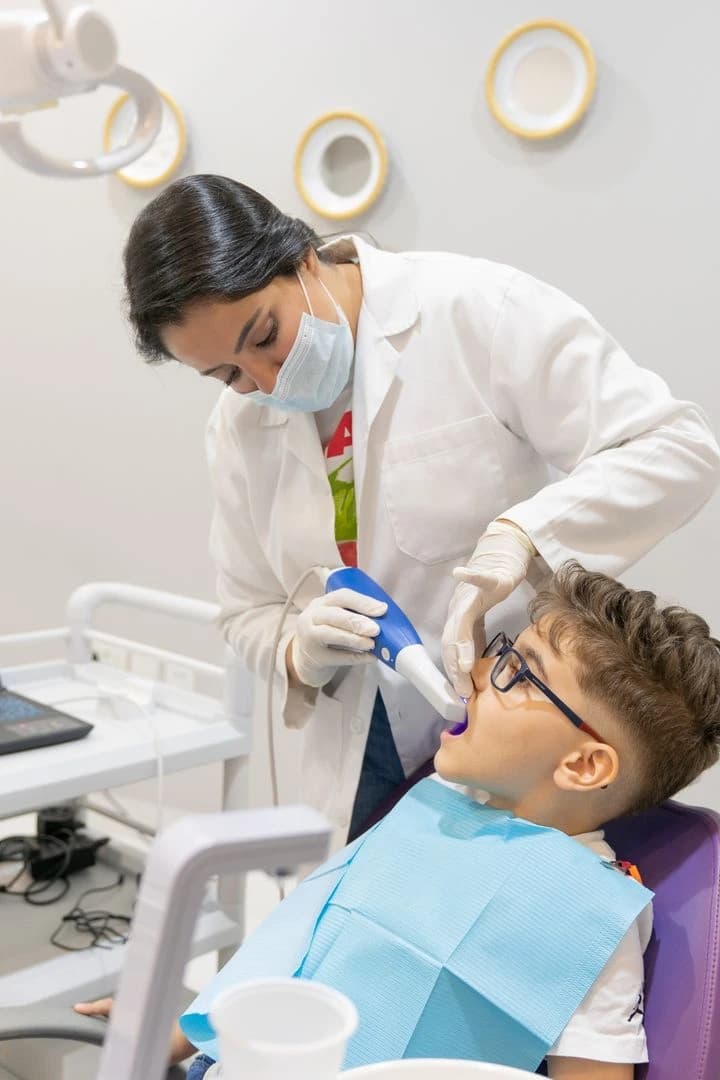
A pediatric dental consultation assesses a child’s teeth, gums, oral development, cavity risk, dental habits, symptoms, and need for preventive or restorative care. The visit is adapted to the child’s age, communication needs, medical history, previous dental experiences, and ability to cooperate.
At Bourgeois Dental Clinic in Dubai, the aim is to identify current problems, reduce future dental risk, help the child become familiar with dental care, and provide parents or guardians with practical guidance.
When Should a Child Have a Dental Checkup?
A dental assessment may be appropriate when:
- The first teeth have appeared
- The child has never had a dental checkup
- There is visible tooth decay or staining
- The child reports tooth pain or sensitivity
- The gums bleed or appear swollen
- A tooth is broken, loose, displaced, or injured
- Permanent teeth are erupting unusually
- There is crowding, spacing, or a bite concern
- A baby tooth has been lost early
- The child has difficulty brushing or eating
- There is persistent bad breath or an oral change
What Happens During the Consultation?
- Medical and dental history: Reviewing health conditions, allergies, medication, previous treatment, dental trauma, pain, habits, and parental concerns.
- Age-appropriate introduction: Helping the child become familiar with the dental chair, light, mirror, and examination.
- Teeth examination: Checking for decay, enamel changes, fractures, fillings, crowns, tooth wear, and eruption.
- Gum and oral-tissue assessment: Reviewing plaque, bleeding, swelling, ulcers, and other visible changes.
- Bite and development review: Assessing spacing, crowding, oral habits, jaw relationships, and permanent-tooth eruption.
- Imaging when indicated: Dental X-rays may be recommended when clinically justified and useful for diagnosis.
- Prevention and treatment plan: Discussing cleaning, fluoride, sealants, fillings, pulp treatment, extraction, trauma care, or monitoring when appropriate.
How Is the Visit Adapted for Children?
The approach may include:
- Simple explanations suitable for the child’s age
- Showing selected instruments before use
- Short pauses where appropriate
- Positive reinforcement
- Gradual familiarisation with treatment
- Appropriate involvement of a parent or guardian
- Separating urgent care from elective treatment when necessary
No single behaviour-guidance method works for every child. Pain, infection, age, previous experiences, developmental needs, and treatment complexity can affect cooperation.
Will the Child Need Dental X-Rays?
Not every checkup requires imaging. X-rays may be recommended to assess:
- Decay between teeth
- Depth of a cavity
- Infection around a tooth
- Developing permanent teeth
- Delayed or unusual eruption
- Dental trauma
- Root and bone conditions
The decision should be based on clinical need and the expected benefit of the information obtained.
How Is Cavity Risk Assessed?
The dentist may consider:
- Previous cavities or fillings
- Visible plaque
- Enamel weakness
- Brushing routine
- Fluoride exposure
- Frequency of sugary snacks and drinks
- Medical conditions or medication
- Dry mouth
- Dental-development factors
- Ability to attend regular care
A higher-risk child may require more frequent review and additional preventive support.
What Preventive Care May Be Recommended?
- Children’s dental cleaning
- Fluoride treatment
- Dental sealants
- Personalised brushing guidance
- Diet and snack-frequency advice
- Monitoring of tooth eruption
- Regular risk-based checkups
What if Tooth Decay Is Found?
Treatment depends on the depth of decay, symptoms, tooth type, remaining structure, infection, age, cooperation, and how long the tooth is expected to remain.
Options may include preventive monitoring, fluoride, a tooth-coloured filling, pulp treatment, a dental crown, or extraction when the tooth cannot be maintained predictably.
Why Are Baby Teeth Checked Carefully?
Baby teeth support chewing, speech, appearance, and space for permanent teeth. Untreated disease may lead to pain, infection, swelling, sleep disturbance, difficulty eating, and premature tooth loss.
Can the Dentist Check Orthodontic Development?
Yes. The checkup may identify crowding, crossbite, underbite, protruding teeth, delayed eruption, oral habits, or early tooth loss.
An early orthodontic assessment may be recommended when further evaluation is useful. Early review does not mean that every child needs braces immediately.
What Happens if the Child Has Dental Anxiety?
The dentist may begin with a shorter familiarisation visit, complete only the examination, prioritise urgent problems, or plan treatment in stages.
Laughing-gas sedation may be considered for selected children after medical and clinical assessment, but it is not suitable for every child or procedure.
When Is the Problem Urgent?
Arrange prompt dental assessment for:
- Severe or persistent tooth pain
- Facial or gum swelling
- Pus or a dental abscess
- A broken or displaced tooth
- Dental trauma
- Bleeding that does not stop
- Difficulty eating or sleeping because of dental symptoms
- A permanent tooth that has been knocked out
Difficulty breathing or swallowing, rapidly spreading facial or neck swelling, eye swelling, severe head injury, confusion, repeated vomiting, uncontrolled heavy bleeding, or significant deterioration requires urgent medical care.
Pediatric Dental Checkup on Sheikh Zayed Road
Bourgeois Dental Clinic is located on the first floor of Indigo Sky Building, Sheikh Zayed Road, Exit 41, near Al Thanya Street in Dubai. The clinic is accessible from Al Barsha, Umm Al Sheif, Umm Suqeim, Jumeirah, Al Quoz, Barsha Heights, The Greens, Dubai Marina, and nearby communities.
Book a children’s dental consultation for a routine checkup, tooth pain, visible decay, gum concerns, dental trauma, unusual eruption, preventive care, or early orthodontic assessment.
Department
Pediatric Dentistry & Children’s Dental Care
FAQ
Frequently Asked Questions
BOOK AN
Appointment
Working Hours
We are here to serve you