


Early Orthodontic Assessment for Children
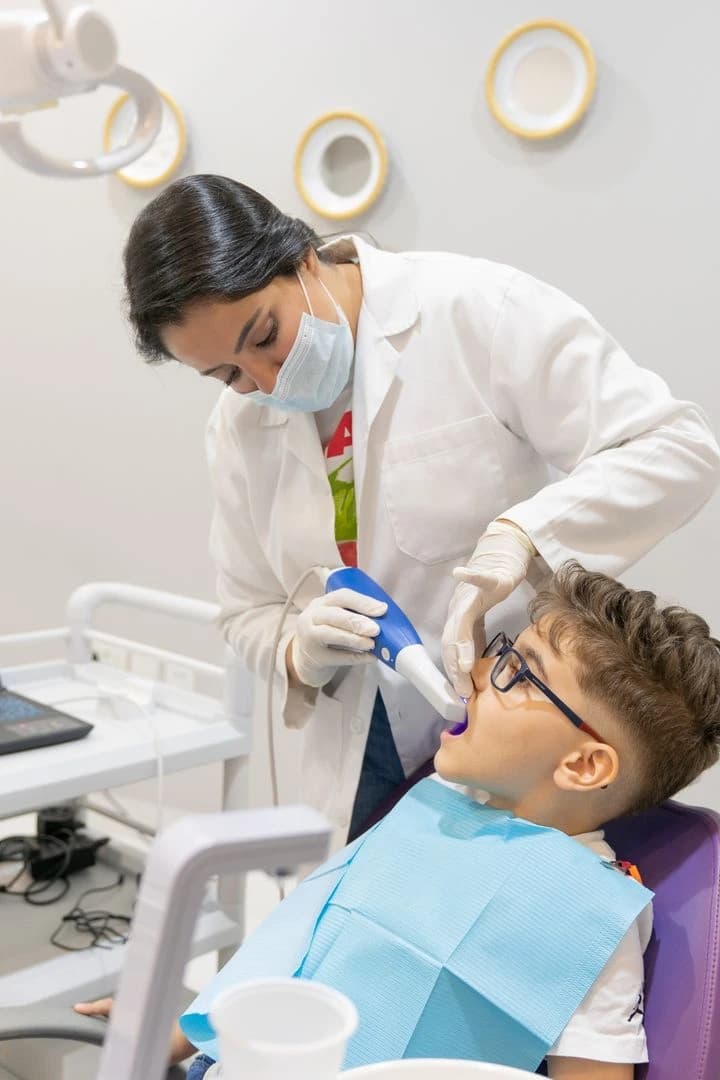
An early orthodontic assessment evaluates how a child’s teeth, dental arches, bite, and jaws are developing before all permanent teeth have erupted. It can identify concerns that may benefit from monitoring, preventive guidance, space management, limited early treatment, or later comprehensive orthodontic care.
At Bourgeois Dental Clinic in Dubai, early assessment does not mean that every child needs braces immediately. The goal is to recognise developing problems, determine the appropriate timing for care, and avoid unnecessary treatment.
When Might a Child Need an Early Orthodontic Assessment?
An assessment may be appropriate when there is:
- Crowded or overlapping teeth
- Large spaces between teeth
- Delayed or asymmetrical eruption
- A permanent tooth erupting outside the normal arch
- A retained baby tooth
- Premature loss of baby teeth
- A crossbite
- An underbite
- A deep or open bite
- Protruding front teeth
- Jaw shifting while biting
- Difficulty biting or chewing
- Persistent thumb or finger habits
- A history of dental trauma
- Facial or dental asymmetry
What Does Early Orthodontic Assessment Examine?
- Number and position of erupted teeth
- Developing permanent teeth
- Available space in the dental arches
- Crowding and spacing
- Upper and lower jaw relationships
- Crossbite, underbite, overbite, and open bite
- Tooth protrusion and trauma risk
- Oral habits and tongue posture
- Premature tooth loss
- Facial symmetry and growth
What Happens During the Appointment?
- Medical and dental history: Reviewing growth, health conditions, trauma, oral habits, previous treatment, and family concerns.
- Dental-development examination: Checking baby and permanent teeth, eruption paths, crowding, and spacing.
- Bite assessment: Reviewing how the upper and lower teeth meet and whether the jaw shifts.
- Jaw and facial review: Considering symmetry, profile, growth, and arch relationships.
- Space assessment: Evaluating whether enough room is available for permanent teeth.
- Records when indicated: Photographs, digital scans, impressions, or imaging may be recommended.
- Timing discussion: Deciding whether to monitor, begin limited treatment, or reassess later.
Does Early Assessment Mean Early Braces?
No. Many children only need monitoring while permanent teeth erupt and growth continues.
Early treatment may be considered when delaying care could allow a problem to worsen or make later correction more difficult. Other children may be better treated after more permanent teeth have erupted.
What Problems May Benefit From Earlier Attention?
Earlier assessment may be useful for:
- A functional jaw shift
- A front tooth trapped in crossbite
- A developing underbite
- Severe tooth protrusion with trauma risk
- Loss of space after premature tooth loss
- A permanent tooth blocked from erupting
- Significant arch-width differences
- Persistent oral habits affecting tooth position
- Progressive facial or dental asymmetry
Suitability for treatment depends on diagnosis, growth, cooperation, oral health, and expected benefit.
What Is Interceptive Orthodontic Treatment?
Interceptive treatment is limited early care intended to guide selected aspects of tooth eruption, space, arch development, or bite relationships.
It may involve:
- A removable or fixed appliance
- Space maintenance
- Space regaining
- Selected arch development
- Correction of an individual tooth in crossbite
- Habit management
- Monitoring tooth eruption
Early treatment may reduce part of a developing problem but does not guarantee that later braces or aligners will not be needed.
How Does Premature Baby-Tooth Loss Affect Orthodontics?
Early tooth loss may allow neighbouring teeth to move into the space required for permanent teeth.
A space maintainer, monitoring, or another space-management plan may be considered depending on the missing tooth, eruption stage, and crowding.
Can Early Assessment Help Crowded Teeth?
It can identify whether crowding is caused by limited space, tooth size, eruption position, premature tooth loss, or jaw relationships.
Not all crowding should be treated immediately. Some cases are monitored until dental development allows a more predictable plan.
Can a Crossbite Be Treated Early?
Selected crossbites may benefit from earlier treatment, especially when a tooth is trapped, the jaw shifts while closing, gum recession is developing, or asymmetry is increasing.
The treatment approach depends on whether the concern is dental, skeletal, functional, or combined.
Can an Underbite Change With Growth?
Yes. Jaw growth may affect an underbite over time.
Early treatment may improve selected dental or functional factors, but it cannot guarantee control of future jaw growth. Monitoring or later combined treatment may still be required.
Do Oral Habits Affect Tooth and Jaw Development?
Persistent thumb sucking, finger habits, pacifier use beyond the expected stage, tongue pressure, or other functional patterns may influence tooth position and bite development.
Habit management should be age-appropriate and supportive. Treatment may include guidance, monitoring, an appliance, or referral when clinically appropriate.
Can Early Treatment Prevent Tooth Injury?
Protruding front teeth may have a greater risk of trauma during falls, play, or sports.
Selected orthodontic treatment, behaviour guidance, and suitable sports protection may reduce risk, but no treatment can eliminate dental injuries completely.
Will the Child Need Dental X-Rays?
Not every assessment requires imaging. X-rays may be recommended to evaluate:
- Developing permanent teeth
- Missing or extra teeth
- Impacted or displaced teeth
- Delayed eruption
- Root position
- Available space
- Previous dental trauma
How Often Is Monitoring Needed?
The review interval depends on the concern, growth stage, eruption, treatment timing, oral habits, and risk of progression.
Monitoring appointments help identify when observation should continue or active treatment should begin.
What Are the Risks and Limitations of Early Treatment?
- Temporary discomfort
- Difficulty wearing or cleaning an appliance
- Appliance loss or breakage
- Gum inflammation or cavities with poor hygiene
- Limited correction because of growth or biological factors
- Relapse after treatment
- Need for later braces or clear aligners
- Longer total treatment when early care is not appropriately timed
- Need for referral in complex skeletal or developmental cases
When Is Prompt Assessment Recommended?
Arrange an assessment when the jaw shifts during closure, a permanent tooth is not erupting, a tooth is trapped in crossbite, facial asymmetry is increasing, front teeth are highly protruded, or a child loses a baby tooth much earlier than expected.
Early Orthodontic Assessment on Sheikh Zayed Road
Bourgeois Dental Clinic is located on the first floor of Indigo Sky Building, Sheikh Zayed Road, Exit 41, near Al Thanya Street in Dubai. The clinic is accessible from Al Barsha, Umm Al Sheif, Umm Suqeim, Jumeirah, Al Quoz, Barsha Heights, The Greens, Dubai Marina, and nearby communities.
Book an early orthodontic assessment for crowding, unusual eruption, crossbite, underbite, protruding teeth, oral habits, premature tooth loss, jaw shifting, or space-management concerns.
Department
Pediatric Dentistry & Children’s Dental Care
FAQ
Frequently Asked Questions
BOOK AN
Appointment
Working Hours
We are here to serve you