


Pediatric Dentistry & Children’s Dental Care in Dubai
- 15Services
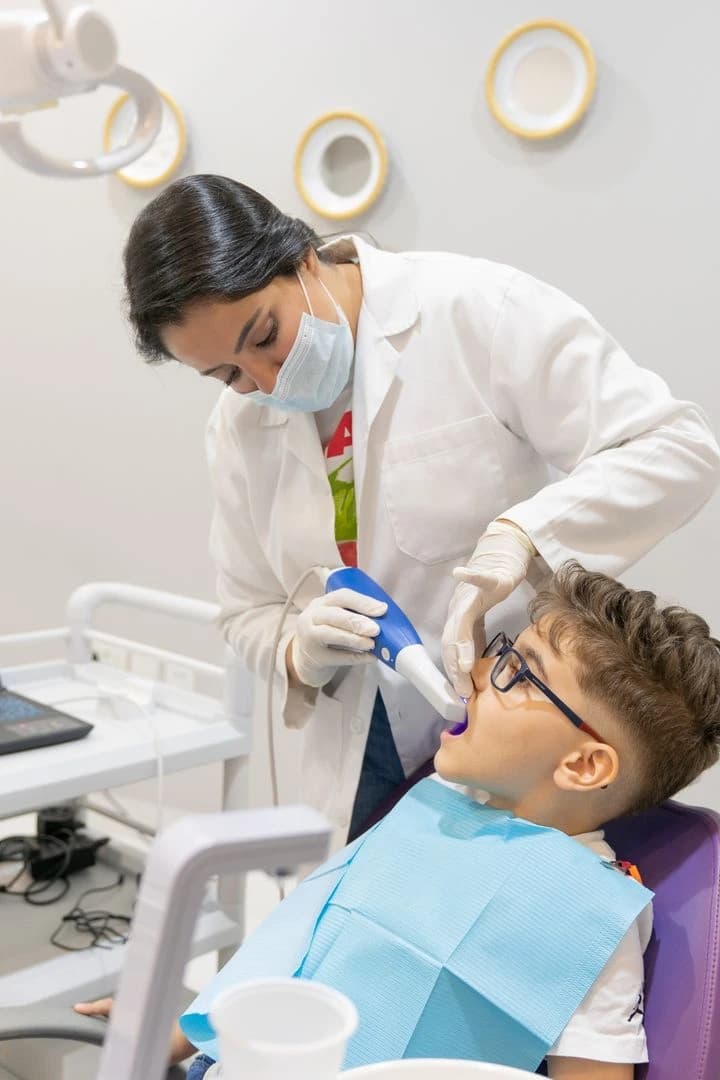
Pediatric dentistry supports healthy teeth, gums, oral habits, and dental development from early childhood through adolescence. Children may need preventive checkups, professional cleaning, fluoride, sealants, fillings, treatment of painful or infected baby teeth, dental-trauma care, space management, or early orthodontic assessment.
At Bourgeois Dental Clinic in Dubai, children’s dental care is planned according to age, dental development, cooperation, medical history, previous experiences, decay risk, gum health, oral habits, diet, and the urgency of the dental problem.
Pediatric and Children’s Dental Services
- Pediatric dental consultation and checkup
- Children’s dental cleaning
- Fluoride treatment for children
- Dental sealants for children
- Tooth-coloured fillings for children
- Baby-tooth pulpotomy
- Root canal treatment for baby teeth
- Dental crowns for baby teeth
- Baby-tooth extraction
- Space maintainers for children
- Early orthodontic assessment
- Children’s dental-trauma treatment
- Emergency dental care for children
- Laughing-gas sedation for children
- Children’s oral-hygiene and diet guidance
When Should a Child First Visit the Dentist?
An early dental visit helps parents understand brushing, fluoride exposure, feeding habits, tooth eruption, injury prevention, and decay risk. The appropriate timing may depend on when the first teeth appear and whether symptoms or concerns are already present.
Children should be assessed promptly when there is pain, swelling, dental trauma, visible decay, feeding difficulty, unusual tooth eruption, bleeding gums, or a persistent oral change.
Why Are Regular Dental Checkups Important?
Children’s teeth and oral habits change quickly. Regular assessment may help identify:
- Early tooth decay
- Plaque and gum inflammation
- Weak enamel or high cavity risk
- Delayed or abnormal tooth eruption
- Crowding or bite-development concerns
- Oral habits affecting teeth or jaws
- Dental injuries
- Problems beneath old fillings or crowns
- Premature loss of baby teeth
The recommended review interval depends on the child’s individual risk and treatment history.
Are Baby Teeth Important?
Yes. Baby teeth contribute to:
- Chewing and nutrition
- Speech development
- Smile appearance and confidence
- Maintaining space for permanent teeth
- Guiding permanent-tooth eruption
- Supporting healthy oral habits
Baby teeth naturally fall out, but untreated decay or infection may still cause pain, swelling, difficulty eating, disturbed sleep, school absence, and damage to surrounding tissues.
What Happens During a Pediatric Dental Checkup?
- Medical and dental history: Reviewing health conditions, allergies, medication, previous treatment, pain, habits, and concerns.
- Age-appropriate introduction: Helping the child become familiar with the dental environment and examination.
- Teeth and gum examination: Assessing decay, plaque, gum health, eruption, enamel, fillings, and injuries.
- Bite and development review: Checking spacing, crowding, jaw relationships, oral habits, and permanent-tooth eruption.
- Imaging when indicated: Dental X-rays may be recommended when the expected benefit justifies their use.
- Prevention planning: Discussing brushing, fluoride, diet, sealants, cleaning, and review intervals.
- Treatment discussion: Explaining options, alternatives, risks, urgency, and expected cooperation.
How Is a Child Helped to Feel Comfortable?
Children respond differently to dental care. Supportive approaches may include:
- Simple age-appropriate explanations
- Showing instruments before use
- Shorter introductory visits when appropriate
- Positive reinforcement
- Allowing gradual familiarisation
- Involving the parent or guardian appropriately
- Planning treatment according to urgency and cooperation
No technique works for every child. Pain, infection, previous trauma, age, communication needs, and treatment complexity may affect cooperation.
What Preventive Treatments Are Available?
Professional Dental Cleaning
Children’s dental cleaning removes selected plaque and deposits while supporting brushing education and gum-health assessment.
Fluoride Treatment
Fluoride treatment may strengthen enamel and reduce decay risk when selected according to the child’s age, cavity risk, fluoride exposure, and ability to cooperate.
Dental Sealants
Dental sealants may protect deep grooves in suitable back teeth by making them easier to keep clean. Sealants require monitoring and do not replace brushing, fluoride, or a suitable diet.
How Is Tooth Decay Treated in Children?
Treatment depends on the depth of decay, symptoms, tooth position, remaining tooth structure, infection, child’s age, and how long the tooth is expected to remain.
Options may include:
- Preventive monitoring for suitable early lesions
- Fluoride and improved home care
- Tooth-coloured fillings
- Pulpotomy
- Root canal treatment for a baby tooth
- A protective dental crown
- Extraction when the tooth cannot be maintained predictably
What Is a Baby-Tooth Pulpotomy?
A pulpotomy removes inflamed or infected pulp tissue from the crown portion of a baby tooth while preserving suitable tissue in the roots.
It may be considered when decay has reached the pulp but the tooth remains restorable and does not show signs that make another treatment more appropriate.
Can Baby Teeth Receive Root Canal Treatment?
Selected baby teeth may receive pulp treatment when preserving the tooth is beneficial for chewing, comfort, development, and space maintenance.
Suitability depends on infection, root condition, remaining tooth structure, proximity to natural exfoliation, and the effect on the developing permanent tooth.
Why Might a Baby Tooth Need a Crown?
A crown may protect a baby tooth that has extensive decay, weakened structure, a large restoration, or previous pulp treatment.
The crown type depends on the tooth, bite, remaining structure, appearance, durability needs, and the child’s cooperation.
When Is Baby-Tooth Extraction Considered?
Extraction may be considered when a tooth is:
- Severely decayed and not restorable
- Associated with infection or swelling
- Fractured beyond predictable repair
- Interfering with permanent-tooth eruption
- Retained beyond the expected time in a way that creates a problem
- Associated with another clinical concern requiring removal
Not every loose or delayed baby tooth needs extraction. Natural exfoliation may be monitored when healthy and appropriate.
What Is a Space Maintainer?
A space maintainer may be used after premature loss of a baby tooth to reduce unwanted movement of neighbouring teeth.
It is not required after every extraction. The decision depends on the missing tooth, age, eruption stage, available space, bite, and development of the permanent tooth.
What Is an Early Orthodontic Assessment?
An early orthodontic assessment evaluates tooth eruption, space, crowding, jaw growth, crossbite, underbite, protruding teeth, oral habits, and premature tooth loss.
Early assessment does not mean that every child needs braces immediately. Monitoring may be the most appropriate plan until dental development reaches a suitable stage.
How Are Dental Injuries in Children Managed?
Dental-trauma treatment depends on whether the injured tooth is a baby or permanent tooth and whether it is chipped, fractured, displaced, loosened, pushed into the gum, or completely knocked out.
Prompt assessment is important because injuries may affect the tooth, root, gum, bone, lip, and developing permanent teeth.
What Should You Do if a Permanent Tooth Is Knocked Out?
A knocked-out permanent tooth requires urgent dental care. Hold it by the crown rather than the root, avoid scrubbing it, and seek immediate professional instructions.
A knocked-out baby tooth should generally not be placed back into the socket because this may damage the developing permanent tooth. Urgent assessment is still required.
What Are Common Pediatric Dental Emergencies?
- Severe toothache
- Facial or gum swelling
- Dental abscess
- Broken or chipped tooth
- Loose or displaced tooth after injury
- Knocked-out permanent tooth
- Uncontrolled bleeding
- Injury to the lips, cheeks, or gums
- A crown or filling that has fallen out with pain
- Difficulty eating or sleeping because of dental symptoms
Emergency dental assessment for children determines the source, urgency, and appropriate treatment.
When Does a Child Need Urgent Medical Care?
Seek urgent medical care for:
- Difficulty breathing
- Difficulty swallowing or inability to swallow saliva
- Rapidly spreading facial or neck swelling
- Swelling around the eye
- Severe head injury, loss of consciousness, repeated vomiting, or confusion
- Uncontrolled heavy bleeding
- Severe weakness or deterioration
- A significant allergic reaction
Is Laughing Gas Available for Children?
Laughing gas, also called nitrous-oxide and oxygen inhalation sedation, may help selected children feel more relaxed while remaining conscious and able to communicate.
It is not suitable for every child or procedure. Suitability depends on medical history, breathing through the nose, cooperation, treatment complexity, recent illness, guardian consent, and clinical assessment.
Does Laughing Gas Replace Local Anaesthesia?
Not necessarily. Laughing gas supports relaxation but may not provide sufficient pain control for restorative or surgical treatment. Local anaesthesia may still be required when clinically appropriate.
How Can Parents Help Prevent Tooth Decay?
- Help or supervise brushing according to the child’s age and ability
- Use an age-appropriate fluoride toothpaste as advised
- Limit frequent sugary snacks and drinks
- Avoid prolonged exposure to sweetened bottles or cups
- Encourage water between meals
- Attend dental reviews based on the child’s risk
- Ask about sealants and fluoride when appropriate
- Report pain, swelling, trauma, or visible decay early
How Does Diet Affect Children’s Teeth?
The frequency of sugar exposure can be as important as the total amount. Frequent snacks, sweet drinks, sticky foods, and sipping sugary beverages over long periods may increase decay risk.
Oral-hygiene and diet guidance can help families build realistic routines based on the child’s age, school schedule, medical needs, and cavity risk.
What Are the Risks and Limitations of Pediatric Dental Treatment?
Risks vary by procedure and may include:
- Temporary soreness or sensitivity
- Difficulty cooperating or completing treatment
- Local-anaesthetic effects
- Damage to a filling or crown
- Recurrent decay
- Progression of infection
- Need for additional treatment or extraction
- Effects on surrounding or developing teeth
- Need for referral when treatment complexity exceeds the available setting
The dentist should explain the relevant risks, alternatives, and expected follow-up before treatment.
Pediatric Dentistry on Sheikh Zayed Road
Bourgeois Dental Clinic is located on the first floor of Indigo Sky Building, Sheikh Zayed Road, Exit 41, near Al Thanya Street in Dubai. The clinic is accessible from Al Barsha, Umm Al Sheif, Umm Suqeim, Jumeirah, Al Quoz, Barsha Heights, The Greens, Dubai Marina, and nearby communities.
Book a children’s dental appointment for a routine checkup, cleaning, tooth decay, dental pain, baby-tooth treatment, trauma, swelling, fluoride, sealants, space maintenance, or early orthodontic assessment.
FAQ
Frequently Asked Questions
BOOK AN
Appointment
Working Hours
We are here to serve you