


Baby-Tooth Extraction
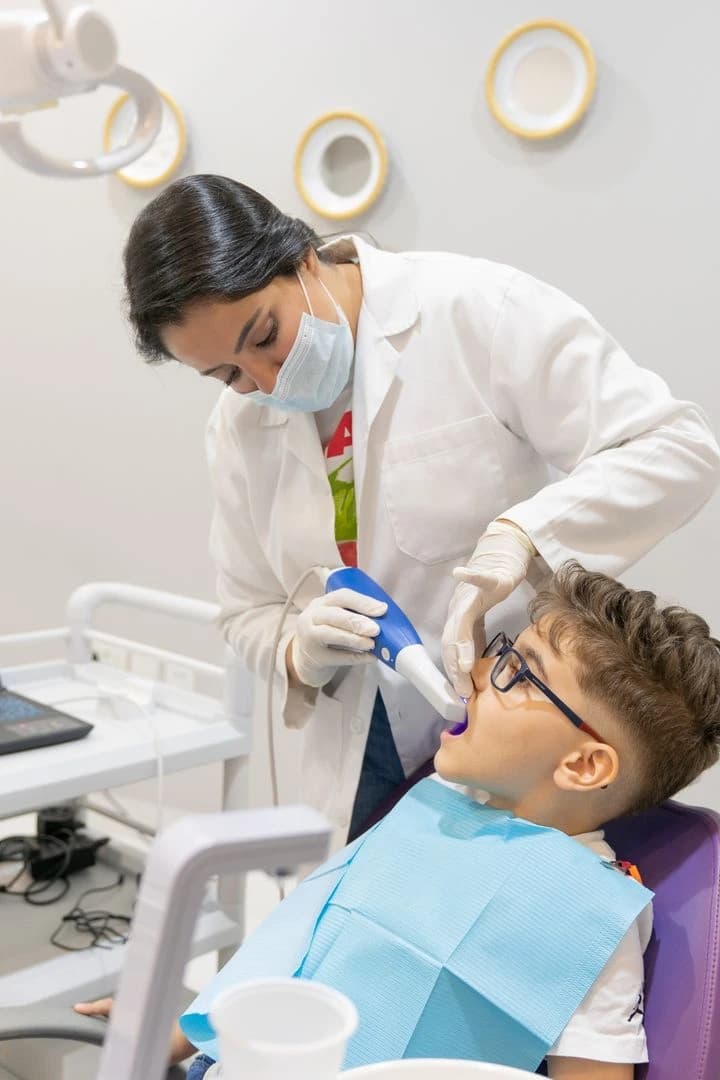
Baby-tooth extraction removes a primary tooth when preserving it is no longer predictable, beneficial, or clinically appropriate. Extraction may be considered for severe decay, infection, fracture, eruption problems, prolonged retention, dental trauma, or another condition affecting the child’s oral development.
At Bourgeois Dental Clinic in Dubai, extraction is recommended only after assessing the tooth, symptoms, infection, roots, permanent-tooth development, available space, bite, medical history, alternatives, and the child’s ability to cooperate.
Why Might a Baby Tooth Need Extraction?
- Severe decay that cannot be restored predictably
- Dental infection or abscess
- A fracture extending below the gum or into the root
- A tooth damaged by trauma
- A retained baby tooth interfering with permanent-tooth eruption
- A severely mobile tooth causing pain or eating difficulty
- A baby tooth associated with another developmental concern
- Failure of previous filling, crown, or pulp treatment
- Orthodontic or space-management reasons in selected cases
Does Every Decayed Baby Tooth Need Extraction?
No. Depending on the condition, options may include:
- Tooth-coloured filling
- Pulpotomy
- Root canal treatment
- Dental crown
- Preventive monitoring in selected early lesions
- Extraction when preservation is not predictable
The decision depends on symptoms, infection, remaining structure, root condition, age, cooperation, and expected tooth lifespan.
Should a Loose Baby Tooth Be Extracted?
Not always. A naturally loosening tooth can often be allowed to fall out on its own when it is comfortable and healthy.
Extraction may be considered when the tooth causes significant pain, interferes with eating, remains attached in an unusual way, blocks permanent-tooth eruption, or is associated with infection or trauma.
What Happens During the Assessment?
- Medical history: Reviewing health conditions, allergies, medication, bleeding concerns, and previous dental experiences.
- Clinical examination: Checking the tooth, gum, swelling, mobility, fracture, decay, and surrounding teeth.
- Dental imaging when indicated: Assessing roots, infection, bone, and the developing permanent tooth.
- Space and eruption review: Determining whether early loss may affect neighbouring teeth or permanent-tooth eruption.
- Alternative comparison: Discussing restoration, pulp treatment, extraction, and possible space maintenance.
How Is a Baby Tooth Extracted?
- The procedure is explained in age-appropriate language.
- Local anaesthesia is used when clinically appropriate.
- The tooth and surrounding area are assessed for adequate numbness.
- The tooth is loosened carefully.
- The tooth is removed using an appropriate technique.
- The socket is examined.
- Bleeding is controlled.
- Aftercare instructions are provided to the parent or guardian.
The technique depends on the tooth, root shape, natural root resorption, fracture, infection, and position of the permanent tooth.
Does Baby-Tooth Extraction Hurt?
Local anaesthesia is generally used to control pain during the procedure. The child may feel pressure or movement.
Temporary soreness may occur afterward. Significant or increasing pain, swelling, fever, pus, or uncontrolled bleeding requires assessment.
What Happens if the Tooth Breaks During Extraction?
Baby-tooth roots may be thin, curved, or naturally resorbing. A root fragment may occasionally separate.
The dentist assesses whether removal is necessary and safe, considering fragment size, infection, position, and proximity to the developing permanent tooth.
Will the Child Need a Space Maintainer?
A space maintainer may be considered after premature loss of selected baby teeth to reduce unwanted movement of neighbouring teeth.
It is not required after every extraction. The decision depends on:
- Which tooth was removed
- The child’s age
- Permanent-tooth development
- Available space
- Crowding
- Bite
- Time expected before eruption
Can the Child Eat After Extraction?
Follow the clinic’s instructions. Soft, suitable foods may be recommended after numbness begins to wear off.
Avoid chewing the lip, cheek, or tongue while numb and avoid foods that may injure or disturb the extraction area.
How Should the Extraction Area Be Cared For?
- Keep gentle pressure on gauze as instructed
- Avoid touching the socket with fingers or objects
- Do not rinse forcefully during the initial healing period
- Brush the surrounding teeth carefully
- Follow dietary instructions
- Use medication only as directed
- Attend follow-up when recommended
Is Bleeding Normal?
Minor oozing can occur after extraction and should gradually reduce with appropriate pressure.
Heavy bleeding, bleeding that does not improve with pressure, dizziness, weakness, or bleeding associated with a medical condition requires urgent assessment.
Are Antibiotics Needed After Extraction?
Antibiotics are not automatically required after a baby-tooth extraction.
They may be considered when there is spreading infection, systemic involvement, or another clinical or medical indication. They do not replace extraction or drainage when those treatments are required.
How Long Does Healing Take?
Soft-tissue healing usually progresses gradually, but timing varies according to infection, extraction difficulty, medical health, oral hygiene, and whether the child disturbs the area.
Increasing symptoms rather than gradual improvement should be reviewed.
What Are the Risks and Limitations?
- Temporary pain or swelling
- Bleeding
- Local-anaesthetic effects
- Accidental biting of numb tissue
- Root fracture
- Injury to surrounding gum or teeth
- Infection
- Effects on the developing permanent tooth
- Loss of space after premature extraction
- Need for a space maintainer or orthodontic follow-up
- Difficulty completing treatment because of cooperation
When Is Urgent Care Needed?
Arrange prompt dental assessment for increasing pain, facial or gum swelling, pus, fever with worsening symptoms, persistent heavy bleeding, difficulty eating or drinking, or a bad taste with swelling.
Difficulty breathing or swallowing, inability to swallow saliva, rapidly spreading face or neck swelling, eye swelling, confusion, severe weakness, or significant deterioration requires urgent medical care.
Baby-Tooth Extraction on Sheikh Zayed Road
Bourgeois Dental Clinic is located on the first floor of Indigo Sky Building, Sheikh Zayed Road, Exit 41, near Al Thanya Street in Dubai. The clinic is accessible from Al Barsha, Umm Al Sheif, Umm Suqeim, Jumeirah, Al Quoz, Barsha Heights, The Greens, Dubai Marina, and nearby communities.
Book a baby-tooth extraction assessment for severe decay, infection, swelling, fracture, dental trauma, a retained baby tooth, eruption concerns, or evaluation of whether the tooth can be restored.
Department
Pediatric Dentistry & Children’s Dental Care
FAQ
Frequently Asked Questions
BOOK AN
Appointment
Working Hours
We are here to serve you