


Dental Crowns for Baby Teeth
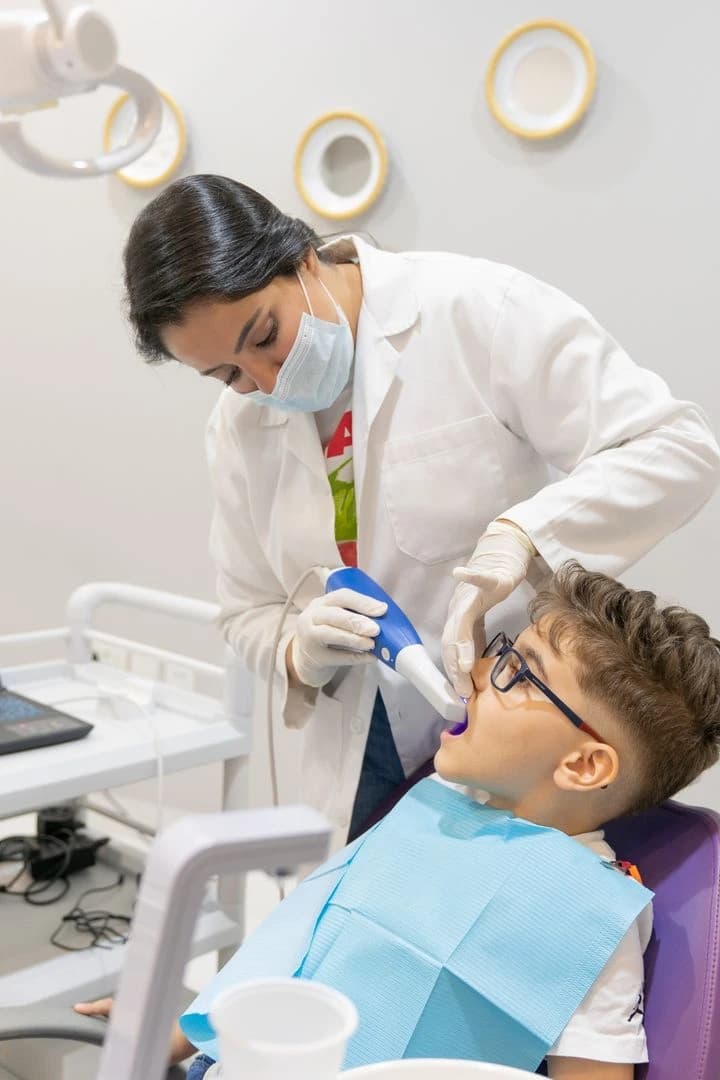
A dental crown covers and protects most or all of a suitable baby tooth that has been weakened by extensive decay, fracture, a large restoration, or pulp treatment. It may provide more complete protection than a filling when substantial tooth structure has been lost.
At Bourgeois Dental Clinic in Dubai, crown suitability is based on the tooth’s condition, remaining structure, infection status, bite, expected lifespan, moisture control, appearance needs, dental development, and the child’s cooperation.
Why Might a Baby Tooth Need a Crown?
- Extensive tooth decay
- A large or repeatedly failing filling
- Significant loss of tooth structure
- A fracture or developmental defect
- Previous pulpotomy
- Previous root canal treatment
- A high risk of restoration fracture
- A need for stronger full-coverage protection
What Is the Difference Between a Filling and a Crown?
- Filling: Replaces a selected damaged part of the tooth.
- Crown: Covers a larger portion of the tooth and distributes chewing forces across the remaining structure.
A filling may be appropriate for a smaller cavity, while a crown may be more predictable when the tooth is extensively weakened.
What Happens During the Assessment?
- Clinical examination: Assessing decay, fractures, remaining structure, gum condition, and bite.
- Symptom review: Discussing pain, sensitivity, swelling, eating difficulty, and previous treatment.
- Imaging when indicated: Checking decay depth, roots, infection, and the developing permanent tooth.
- Pulp assessment: Determining whether a filling, pulpotomy, root canal treatment, or extraction is also required.
- Crown planning: Selecting an appropriate full-coverage restoration based on clinical needs and available options.
How Is a Crown Placed on a Baby Tooth?
- The procedure is explained in age-appropriate language.
- Local anaesthesia may be used.
- The tooth is isolated.
- Decay and weak tooth structure are removed.
- Pulp treatment is completed first when required.
- The tooth is shaped to receive the crown.
- The crown is fitted and checked.
- It is secured according to the selected crown system.
- The bite and surrounding gum are assessed.
What Crown Materials Are Available?
The appropriate crown material depends on the tooth, location, bite, remaining structure, appearance priorities, durability needs, moisture control, and the options clinically available.
The dentist should explain the benefits, limitations, appearance, and expected maintenance of the recommended crown before treatment.
Does Crown Placement Hurt?
Local anaesthesia is generally used when preparation of the tooth could cause discomfort. The child may feel pressure, vibration, or unfamiliar sensations.
Temporary gum tenderness or chewing sensitivity may occur afterward. Significant pain, swelling, or a crown that interferes with biting requires review.
Why Are Crowns Common After Pulp Treatment?
A tooth that has received pulp treatment often has extensive decay or reduced structure. Full coverage may help reduce fracture and leakage risk.
A crown does not guarantee that the pulp treatment will remain successful, so follow-up remains important.
Can Front Baby Teeth Receive Crowns?
Selected front baby teeth may receive crowns when decay, fracture, developmental defects, or previous treatment have significantly weakened them.
The restoration choice depends on appearance, tooth structure, bite, moisture control, age, and cooperation.
How Long Does a Baby-Tooth Crown Last?
The goal is generally for the crown to remain functional until the baby tooth naturally falls out, but this cannot be guaranteed.
Longevity depends on:
- The original tooth condition
- Crown fit and retention
- Remaining tooth structure
- Bite forces
- Grinding or clenching
- Diet and oral hygiene
- New decay
- Dental trauma
- Natural tooth eruption and exfoliation
Can a Crown Fall Off?
Yes. A crown may loosen or detach because of cement failure, tooth breakdown, new decay, sticky foods, trauma, or changes as the baby tooth naturally loosens.
Keep the crown when possible and contact the clinic. Do not attempt to secure it with household glue.
Can Decay Develop Under a Crown?
Yes. New decay may develop at the crown margin if plaque and frequent sugar exposure are not controlled.
Brushing, suitable fluoride toothpaste, cleaning nearby surfaces, dietary care, and regular checkups remain essential.
What Should the Child Do After Crown Placement?
- Avoid biting the cheek, lip, or tongue while numb
- Follow eating instructions
- Brush gently around the crown and gumline
- Avoid very sticky foods that may pull at the crown
- Report persistent high biting pressure
- Attend follow-up reviews
Is Gum Discomfort Normal?
Mild temporary gum tenderness may occur after crown placement.
Increasing swelling, pus, persistent bleeding, severe pain, fever, or facial swelling requires assessment.
When Is Extraction Better Than a Crown?
Extraction may be more appropriate when the tooth cannot be restored, infection is extensive, the roots are unsuitable, the tooth is close to natural loss, or the prognosis remains poor despite full coverage.
What Are the Risks and Limitations?
- Temporary soreness or gum irritation
- Local-anaesthetic effects
- Accidental biting of numb tissue
- Crown loosening or loss
- Crown wear or fracture
- New decay around the crown
- Persistent or recurrent pulp infection
- Need for adjustment, replacement, or extraction
- Appearance limitations depending on the material
- Difficulty completing treatment because of cooperation
When Is Urgent Assessment Needed?
Arrange prompt care when a crown falls off, the tooth becomes painful, the gum swells, pus appears, the crown causes injury, the bite remains uncomfortable, or facial swelling develops.
Difficulty breathing or swallowing, rapidly spreading swelling, eye swelling, severe weakness, or significant deterioration requires urgent medical care.
Dental Crowns for Baby Teeth on Sheikh Zayed Road
Bourgeois Dental Clinic is located on the first floor of Indigo Sky Building, Sheikh Zayed Road, Exit 41, near Al Thanya Street in Dubai. The clinic is accessible from Al Barsha, Umm Al Sheif, Umm Suqeim, Jumeirah, Al Quoz, Barsha Heights, The Greens, Dubai Marina, and nearby communities.
Book a baby-tooth crown assessment for extensive decay, a large filling, a fractured tooth, previous pulp treatment, a loose crown, or evaluation of whether a crown, filling, or extraction is appropriate.
Department
Pediatric Dentistry & Children’s Dental Care
FAQ
Frequently Asked Questions
BOOK AN
Appointment
Working Hours
We are here to serve you