


Tooth-Coloured Fillings for Children
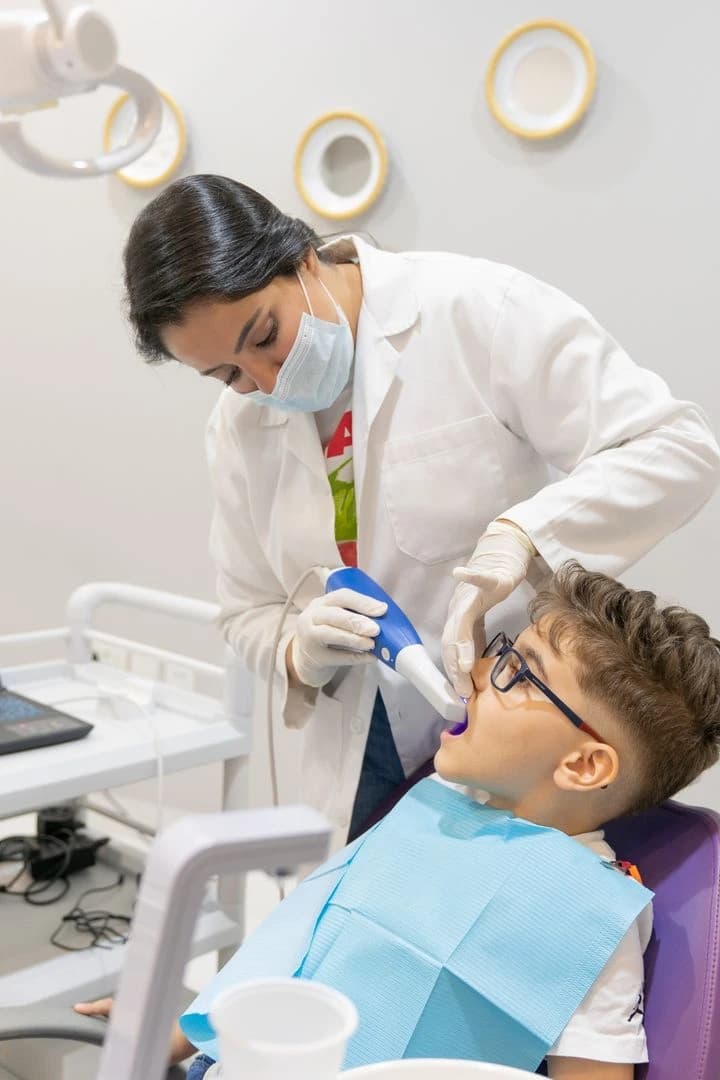
Tooth-coloured fillings restore suitable areas of decay, wear, or minor fracture while matching the natural appearance of a child’s tooth. They may be used for selected baby or permanent teeth when enough healthy structure remains and the tooth can be restored predictably.
At Bourgeois Dental Clinic in Dubai, the treatment decision is based on the depth and location of decay, symptoms, tooth type, remaining enamel and dentine, gum condition, bite forces, moisture control, age, cooperation, and how long the tooth is expected to remain.
When Might a Child Need a Filling?
- A visible cavity
- Decay detected between teeth
- Food trapping in a damaged tooth
- Temporary sensitivity to sweets, cold, or pressure
- A small chip or fracture
- Loss or damage of a previous filling
- A defect in the tooth surface
- Early breakdown around a sealant or restoration
Tooth pain, spontaneous pain, swelling, pus, or sleep disturbance may indicate deeper involvement requiring more than a routine filling.
What Happens During the Assessment?
- Clinical examination: Checking the cavity, tooth structure, gum, bite, and surrounding teeth.
- Symptom review: Discussing pain, sensitivity, swelling, eating difficulty, and previous treatment.
- Dental imaging when indicated: X-rays may be recommended to assess decay depth, neighbouring surfaces, roots, or infection.
- Restorability assessment: Determining whether enough healthy tooth remains for a filling.
- Treatment comparison: Discussing prevention, filling, pulp treatment, crown, extraction, or monitoring when appropriate.
How Is a Tooth-Coloured Filling Placed?
- The child is prepared using age-appropriate explanations.
- Local anaesthesia may be used when clinically required.
- The tooth is isolated from saliva as effectively as possible.
- Decay and unsupported tooth structure are removed.
- The tooth is prepared for the selected restorative material.
- The filling is placed and shaped.
- The material is hardened when required.
- The bite, contact, and surface are checked.
Do Children Always Need Local Anaesthesia?
Not every small restoration requires the same anaesthetic approach. The need depends on cavity depth, tooth sensitivity, treatment technique, and the child’s comfort.
When local anaesthesia is used, the lip, cheek, or tongue may remain numb temporarily. The child should be supervised to reduce accidental biting or chewing of numb tissue.
Are Tooth-Coloured Fillings Used for Baby Teeth?
Yes, in suitable cases. Baby teeth may be restored when enough healthy structure remains and maintaining the tooth supports chewing, comfort, space, and normal development.
Extensive decay, pulp infection, limited remaining structure, or difficulty isolating the tooth may make a crown, pulp treatment, or extraction more suitable.
Can Permanent Teeth Receive Tooth-Coloured Fillings?
Yes. Tooth-coloured materials are commonly considered for suitable cavities and minor fractures in permanent teeth.
The material choice depends on cavity size, location, bite forces, moisture control, enamel support, and long-term restorative needs.
Can a Filling Treat Toothache?
A filling may relieve symptoms when pain is caused by a restorable cavity that has not caused irreversible pulp damage or infection.
Spontaneous pain, prolonged pain, night pain, swelling, pus, or tenderness may indicate a need for pulp treatment, root canal treatment, a crown, extraction, or emergency care.
What Is the Difference Between a Filling and a Crown?
- Filling: Replaces a selected damaged portion of the tooth.
- Dental crown: Covers a larger part of the tooth and may be recommended when extensive structure has been lost.
A crown may provide more complete protection for a heavily damaged baby molar or a tooth that has received pulp treatment.
How Long Does a Child’s Filling Last?
Filling lifespan varies according to:
- Cavity size and location
- Remaining tooth structure
- Material selected
- Moisture control during placement
- Bite forces and grinding
- Diet and oral hygiene
- New decay around the filling
- Dental trauma
- The remaining life of a baby tooth
Fillings require regular monitoring and may eventually need repair or replacement.
Can Decay Return Around a Filling?
Yes. New decay may develop where plaque accumulates around the restoration or on another tooth surface.
Preventive care includes brushing with suitable fluoride toothpaste, cleaning between touching teeth, limiting frequent sugar exposure, professional reviews, and fluoride or sealants when appropriate.
What Should the Child Do After a Filling?
Follow the dentist’s instructions regarding eating, drinking, numbness, brushing, and possible sensitivity.
Avoid chewing the lip, cheek, or tongue while numb. Contact the clinic if the bite feels persistently high, the filling feels loose, or pain worsens.
Is Sensitivity Normal After a Filling?
Mild temporary sensitivity may occur after treatment, especially with deeper cavities.
Increasing pain, spontaneous pain, night pain, swelling, fever, difficulty eating, or pain that does not improve requires reassessment.
What Happens if the Child Cannot Complete the Filling?
The dentist may pause treatment, place a temporary restoration, divide care into stages, prioritise urgent disease, or consider another behaviour-support approach.
Laughing-gas sedation may be considered for suitable children after clinical and medical assessment, but it is not appropriate for every child or procedure.
What Are the Risks and Limitations?
- Temporary sensitivity or soreness
- Local-anaesthetic effects
- Accidental biting of numb tissue
- Filling wear, fracture, or loss
- New decay around the restoration
- Need for pulp treatment if the tooth deteriorates
- Need for a crown if insufficient structure remains
- Difficulty completing treatment because of cooperation
- Need for replacement as the child grows or the tooth changes
- Failure to control an existing infection with a filling alone
When Is Urgent Care Needed?
Arrange prompt assessment for severe pain, facial or gum swelling, pus, fever with worsening dental symptoms, a broken tooth causing injury, difficulty eating or sleeping, or a filling that has fallen out with significant pain.
Difficulty breathing or swallowing, rapidly spreading facial or neck swelling, eye swelling, severe weakness, or uncontrolled bleeding requires urgent medical care.
Children’s Tooth-Coloured Fillings on Sheikh Zayed Road
Bourgeois Dental Clinic is located on the first floor of Indigo Sky Building, Sheikh Zayed Road, Exit 41, near Al Thanya Street in Dubai. The clinic is accessible from Al Barsha, Umm Al Sheif, Umm Suqeim, Jumeirah, Al Quoz, Barsha Heights, The Greens, Dubai Marina, and nearby communities.
Book a children’s filling assessment for visible cavities, food trapping, sensitivity, a chipped tooth, a damaged filling, or evaluation of whether a filling, crown, pulp treatment, or another option is appropriate.
Department
Pediatric Dentistry & Children’s Dental Care
FAQ
Frequently Asked Questions
BOOK AN
Appointment
Working Hours
We are here to serve you