


Dental Crowns
- 2Specialists
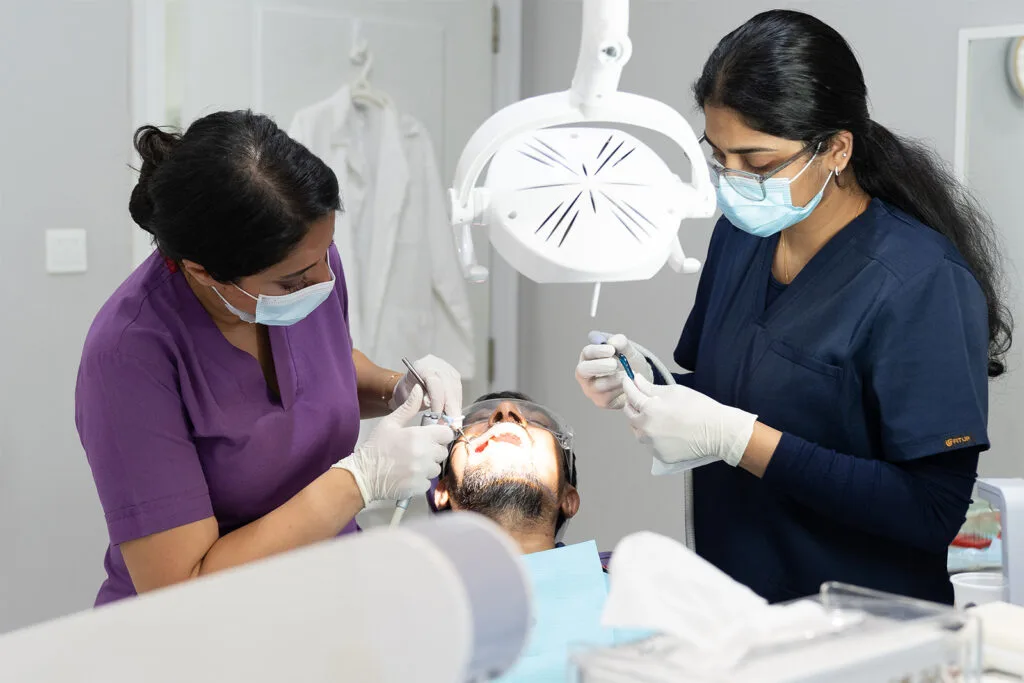
A dental crown is a custom restoration that covers most or all of the visible part of a prepared tooth to rebuild its shape, strength, appearance, and function. At Bourgeois Dental Clinic in Dubai, crown treatment begins with an assessment of the remaining tooth structure, gums, bite, symptoms, previous dental work, and restorative needs.
What Is a Dental Crown?
A dental crown, sometimes called a dental cap, is designed to fit over a prepared natural tooth or an implant abutment. It may be used when a filling alone would not provide sufficient coverage or support.
Crowns can be made from different materials, including zirconia, lithium-disilicate ceramic such as E-max, porcelain-fused-to-metal, metal alloys, or other restorative materials selected according to the clinical case.
When May a Tooth Need a Crown?
A crown may be considered for a tooth that is:
- Significantly weakened by decay
- Heavily restored with a large filling
- Cracked or fractured
- Worn because of grinding, erosion, or bite forces
- Restored after root canal treatment
- Supporting a dental bridge
- Misshapen or structurally compromised
- Replacing the visible part of a dental implant
- Unable to be predictably restored with a standard filling
Not every damaged tooth needs a crown. A filling, inlay or onlay, bonding, veneer, or another restoration may be more conservative when sufficient healthy tooth structure remains.
What Happens During a Dental-Crown Consultation?
The dentist reviews the patient's symptoms, previous treatment, sensitivity, chewing comfort, grinding habits, and cosmetic concerns.
The examination may include:
- Tooth assessment: Checking for decay, cracks, fractures, large fillings, structural weakness, and previous root canal treatment.
- Gum assessment: Reviewing gum inflammation, recession, bleeding, periodontal support, and cleaning access.
- Bite evaluation: Assessing tooth contacts, chewing forces, grinding, clenching, and jaw movement.
- Restorability assessment: Determining whether enough healthy tooth structure remains to support a crown.
- Diagnostic records: Dental X-rays, photographs, scans, or impressions may be recommended.
- Material selection: Discussing zirconia, E-max, porcelain-fused-to-metal, or another suitable option.
How Is a Dental Crown Placed?
The treatment process varies according to the tooth, material, and clinical condition. It commonly includes:
- Preparation: Decay, damaged filling material, and weakened tooth structure are removed as necessary.
- Core build-up: The tooth may require a foundation filling to rebuild missing structure before crown preparation.
- Tooth shaping: The tooth is prepared to create space and support for the crown.
- Scan or impression: A detailed digital scan or impression is taken.
- Temporary crown: A temporary restoration may protect the tooth while the final crown is produced.
- Final fitting: The crown is checked for fit, colour, shape, contact points, and bite.
- Cementation or bonding: The restoration is secured using the appropriate dental material.
- Final review: The dentist checks comfort, bite, gum margins, and cleaning access.
Does a Crown Require Tooth Shaving?
Yes. A crown generally requires controlled preparation of the tooth to create space for the restorative material and allow the crown to fit correctly.
The amount of preparation depends on the crown material, existing tooth shape, decay, fillings, tooth position, bite, and required thickness. The dentist aims to preserve as much healthy tooth structure as clinically appropriate.
Does a Root-Canal-Treated Tooth Need a Crown?
Many root-canal-treated back teeth require significant protection because they may have lost structure through decay, previous fillings, access preparation, or fracture. A crown or onlay may help rebuild and protect the remaining tooth.
Not every root-treated tooth automatically needs the same restoration. The recommendation depends on tooth location, remaining structure, bite, crack risk, and previous damage.
What Crown Materials Are Available?
Zirconia Crowns
Zirconia crowns may be selected where strength, coverage, and a tooth-coloured appearance are important. Different zirconia types vary in opacity, translucency, and mechanical properties.
E-max Crowns
E-max crowns are commonly made from lithium-disilicate ceramic and may be considered for suitable front or selected back teeth where appearance and adhesive bonding are important.
Porcelain-Fused-to-Metal Crowns
These restorations combine a metal substructure with an outer porcelain layer. They may be used in selected cases, although gumline appearance and porcelain wear should be considered.
How Is the Right Crown Material Selected?
The dentist considers:
- Whether the tooth is at the front or back of the mouth
- The amount of remaining tooth structure
- Bite and grinding forces
- The colour of the underlying tooth
- Available restorative space
- Gumline position
- Appearance requirements
- Whether the crown will be bonded or conventionally cemented
- Existing restorations and neighbouring teeth
Can a Crown Repair a Broken Tooth?
A crown may restore a broken tooth when sufficient healthy tooth structure and support remain. The tooth may first require a core build-up, root canal treatment, periodontal treatment, or another procedure.
A fracture extending deeply below the gumline or through the root may make the tooth difficult or impossible to restore. Learn more about broken-tooth restoration.
Can a Crown Be Placed Over a Dental Implant?
Yes. An implant crown replaces the visible portion of a missing tooth and is connected to a dental implant through an abutment or another restorative connection.
Implant crowns and crowns on natural teeth are supported differently and require different planning, cleaning, and maintenance.
How Long Do Dental Crowns Last?
No crown should be considered permanent. Longevity depends on the crown material, tooth condition, bite, grinding, oral hygiene, gum health, diet, smoking, restoration design, and maintenance.
A crown may eventually chip, fracture, loosen, wear, develop decay at the margin, or require replacement because of changes in the tooth or gums.
Can Teeth Grinding Damage a Crown?
Yes. Grinding and clenching can increase the risk of ceramic chipping, crown fracture, cement failure, tooth fracture, and wear of opposing teeth.
Patients with bruxism may need teeth-grinding assessment and a custom night guard.
How to Care for a Dental Crown
- Brush twice daily with fluoride toothpaste
- Clean between the crowned tooth and neighbouring teeth every day
- Use interdental brushes or floss aids when recommended
- Avoid biting ice, pens, bones, and hard objects
- Do not use the crown to open packaging
- Manage grinding and clenching
- Attend regular dental and hygiene appointments
- Seek assessment if the crown becomes loose, painful, chipped, or difficult to clean
When Should an Existing Crown Be Checked?
Arrange a dental assessment if you notice:
- Pain when biting
- Persistent sensitivity
- A loose or moving crown
- A chipped or fractured surface
- Food trapping around the crown
- Bleeding or swelling of the surrounding gum
- An unpleasant taste or odour
- A visible dark line or open margin
- A change in the bite
Dental Crowns on Sheikh Zayed Road
Bourgeois Dental Clinic is located on the first floor of Indigo Sky Building, Sheikh Zayed Road, Exit 41, near Al Thanya Street in Dubai. Our location is convenient for patients from Al Barsha, Umm Al Sheif, Umm Suqeim, Jumeirah, Al Quoz, Barsha Heights, The Greens, Dubai Marina, and surrounding areas.
Book a dental-crown consultation to assess a weakened, broken, heavily filled, worn, or root-canal-treated tooth.
Department
Restorative Dentistry
Related Doctors


FAQ
Frequently Asked Questions
BOOK AN
Appointment
Working Hours
We are here to serve you