


Dental Implants in Dubai
- 15Services
- 2Specialists
- 3Documented Cases
Cases
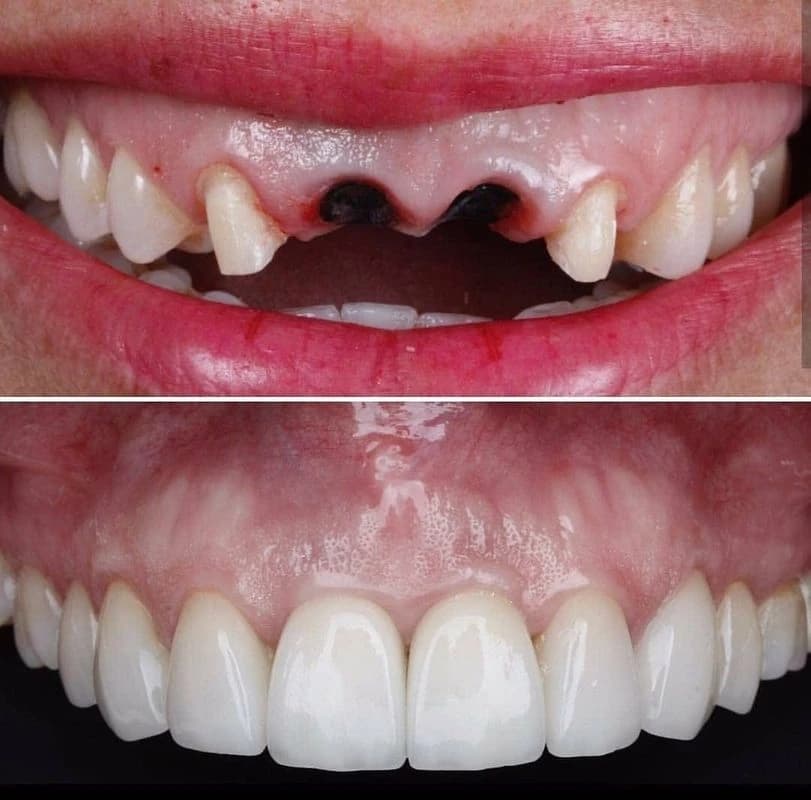
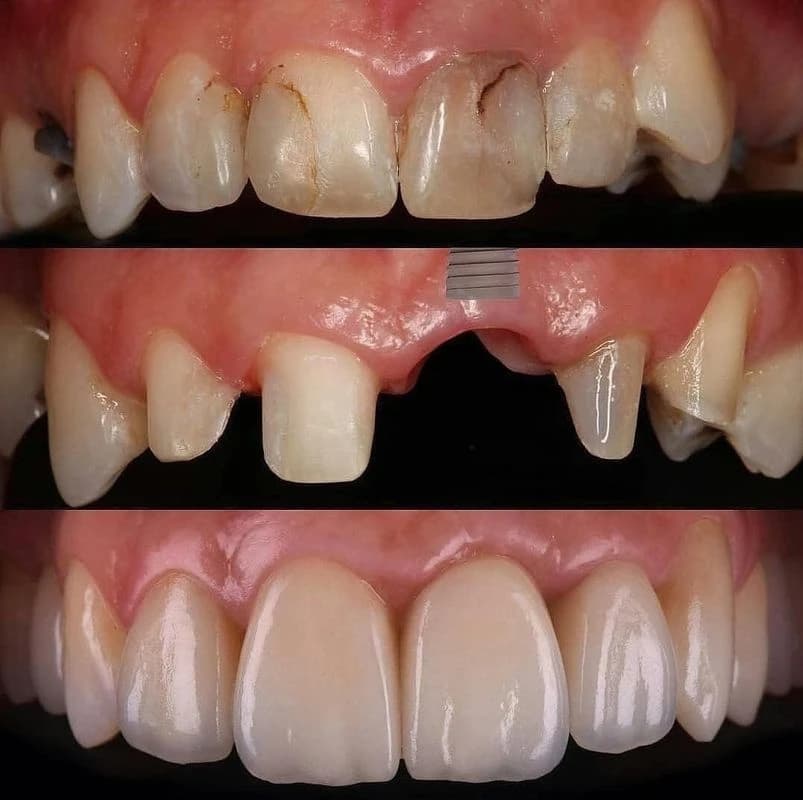
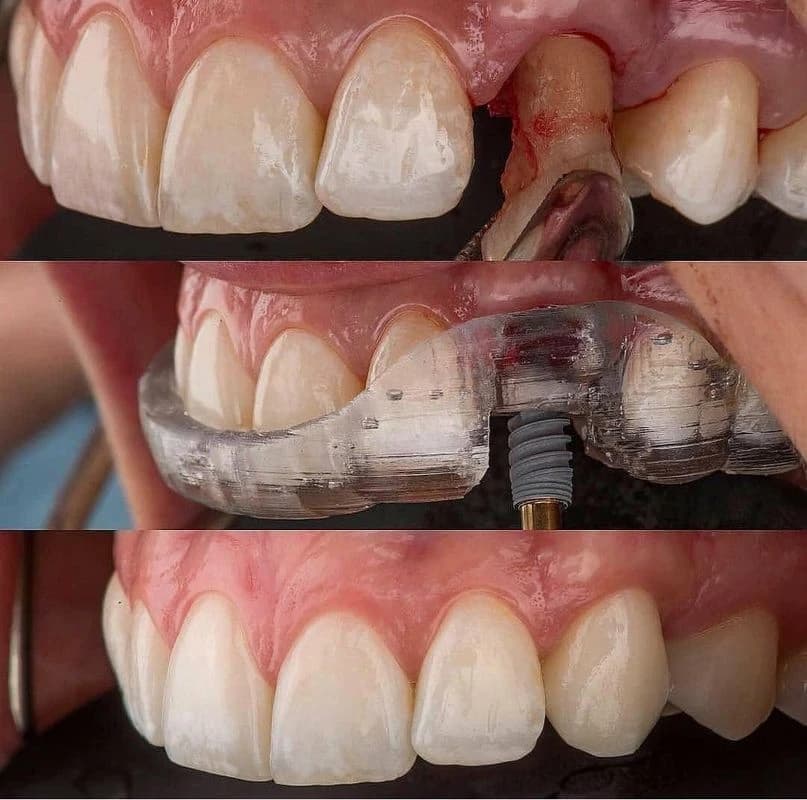
Dental implants are artificial tooth-root replacements placed within the jawbone to support a crown, bridge, or suitable removable restoration. At Bourgeois Dental Clinic in Dubai, implant treatment begins with a detailed assessment of the missing-tooth area, gums, bone volume, neighbouring teeth, bite, medical history, oral hygiene, smoking, and long-term restorative requirements.
Dental implants may be used to replace a single missing tooth, several teeth, or selected full-arch cases. Treatment suitability, timing, healing, number of implants, and final restoration depend on the individual patient's clinical condition.
Dental Implant Services at Bourgeois Dental Clinic
- Dental implant consultation and treatment planning
- Single-tooth dental implant
- Multiple-teeth dental implants
- Full-mouth dental implants
- Full-arch fixed dental implants
- Immediate dental implant placement
- Dental implant after tooth extraction
- Implant-supported dental bridge
- Dental implant crown
- Bone grafting for dental implants
- Sinus lift for dental implants
- Socket preservation after tooth extraction
- Dental implant site assessment
- Failed dental implant assessment and replacement
- Dental implant removal
What Is a Dental Implant?
A dental implant is a biocompatible component placed within the jawbone to act as an artificial root. After appropriate healing and stability, it may support:
- A single implant crown
- An implant-supported bridge
- A fixed full-arch restoration
- An implant-supported removable denture
The visible replacement tooth is a separate restorative component connected to the implant through an abutment or another suitable connection.
What Parts Make Up an Implant Tooth?
An implant-supported tooth commonly includes:
- Implant fixture: The part placed within the jawbone.
- Abutment: The connector between the implant and restoration.
- Implant crown: The visible replacement tooth.
Full-arch bridges and implant-supported dentures may use different numbers and types of components depending on the clinical design.
Who May Be Suitable for Dental Implants?
Potential candidates generally require:
- One or more missing or non-restorable teeth
- Adequate bone or the possibility of bone augmentation
- Healthy or controlled gum tissues
- Acceptable oral hygiene
- A medical condition compatible with surgery and healing
- Realistic expectations regarding treatment time and maintenance
- Commitment to long-term professional and home care
Suitability can only be confirmed after clinical examination and appropriate imaging.
Who May Need Additional Assessment Before Implant Treatment?
Additional planning may be needed for patients with:
- Active periodontitis or gum infection
- Insufficient bone volume
- Uncontrolled diabetes
- Smoking or tobacco use
- Previous head or neck radiotherapy
- Selected medications affecting bone or healing
- Grinding and clenching
- Complex medical conditions
- Previous implant failure
- Significant bite or restorative problems
These factors do not automatically prevent implant treatment, but they may affect risk, timing, treatment design, or prognosis.
What Happens During a Dental Implant Consultation?
The dentist reviews the missing tooth or teeth, symptoms, previous dental treatment, medical history, medications, smoking, diabetes, oral hygiene, bite, cosmetic concerns, and replacement preferences.
The assessment may include:
- Clinical examination: Evaluating gums, remaining teeth, decay, infection, spacing, and soft tissues.
- Periodontal assessment: Checking gum health, bleeding, pockets, and bone support.
- Bone assessment: Reviewing the height, width, and shape of the available jawbone.
- Dental imaging: Assessing roots, bone, nerves, sinus position, infection, and neighbouring structures.
- Bite assessment: Reviewing chewing forces, tooth contacts, grinding, and restorative space.
- Restorative planning: Determining the intended crown, bridge, denture, or full-arch restoration before implant placement.
- Risk assessment: Considering medical factors, smoking, diabetes, oral hygiene, and previous gum disease.
Why Is Restorative Planning Important Before Implant Placement?
The implant should be positioned to support the planned final tooth or bridge rather than being placed according to bone availability alone.
Restorative planning considers:
- Final tooth position
- Bite and chewing forces
- Appearance and gumline
- Cleaning access
- Available space
- Neighbouring roots and teeth
- Implant angulation
- Number of implants
- Type of final restoration
Can Dental Implants Replace One Missing Tooth?
Yes. A single-tooth implant may support an individual crown without preparing neighbouring teeth for a conventional bridge.
The available bone, gum profile, neighbouring roots, bite, smile line, and restorative space must be evaluated.
Can Implants Replace Several Missing Teeth?
Yes. Several missing teeth may be replaced with individual implants, an implant-supported bridge, or another suitable design.
One implant is not always required for every missing tooth. The number and position depend on bone, bite forces, span length, restoration design, and cleaning access.
Can Dental Implants Replace All Teeth?
Selected patients may receive a fixed or removable implant-supported full-arch restoration.
Full-arch treatment requires comprehensive planning of bone volume, gum condition, implant distribution, bite, smile line, lip support, speech, cleaning ability, medical risk, and the condition of any remaining teeth.
Specific branded concepts or a fixed number of implants should not be assumed until clinical assessment confirms the appropriate design.
What Is Immediate Implant Placement?
Immediate implant placement means placing an implant during the same appointment as tooth extraction.
It may be suitable when the socket, bone, gum tissue, infection status, implant stability, and restorative plan are favourable. It is not appropriate for every extraction site.
Does Immediate Placement Mean an Immediate Tooth?
No. Immediate implant placement and immediate restoration are separate decisions.
An implant may be placed immediately but left to heal without a functional tooth. A temporary tooth may be possible in selected cases when implant stability, bite, bone, and risk factors are suitable.
What Is Delayed Implant Placement?
Delayed placement allows the extraction socket and surrounding tissues to heal before the implant is inserted.
This approach may be selected when infection, bone loss, soft-tissue damage, grafting, or implant stability concerns make immediate placement less predictable.
What Is Socket Preservation?
Socket preservation places graft material within or around an extraction socket to help reduce bone-volume changes after tooth removal.
It does not prevent all bone shrinkage and does not guarantee that later implant treatment will not require additional grafting.
When Is Bone Grafting Needed?
Bone grafting may be considered when the jawbone lacks sufficient height, width, or contour to support the planned implant.
Possible grafting situations include:
- Bone loss after long-term tooth absence
- Damage caused by infection
- Thin bone around a front tooth
- Extraction-socket defects
- Previous periodontal bone loss
- Preparation for full-arch treatment
- Repair of selected implant-site defects
What Is a Sinus Lift?
A sinus lift increases bone volume in the upper back jaw beneath the maxillary sinus.
It may be considered when insufficient vertical bone remains for an implant because of sinus anatomy, bone resorption, or previous tooth loss.
Is Dental Implant Surgery Painful?
Local anaesthesia is used during implant placement. Patients may feel pressure or vibration but should not feel sharp pain during the procedure.
Temporary swelling, tenderness, bruising, minor bleeding, or jaw stiffness may occur afterward. The extent depends on the number of implants, grafting, surgery complexity, and individual healing.
How Is a Dental Implant Placed?
A typical implant process may include:
- Assessment and planning: Examining the site and planning the restoration.
- Site preparation: Treating infection, gum disease, or damaged teeth when required.
- Implant placement: Preparing the bone and inserting the implant.
- Grafting when needed: Adding bone or soft tissue according to the site.
- Healing phase: Allowing the implant and bone to stabilise.
- Abutment stage: Connecting the restorative component when appropriate.
- Impression or digital scan: Recording the implant and surrounding tissues.
- Final restoration: Placing the implant crown, bridge, or prosthesis.
- Maintenance: Monitoring gums, bone, bite, restoration, and cleaning.
How Long Does Implant Treatment Take?
Treatment time varies according to extraction healing, bone grafting, implant stability, medical risk, soft-tissue condition, and the type of final restoration.
Some cases proceed over several months, while selected immediate protocols may shorten parts of the treatment. Exact timing cannot be confirmed before assessment.
What Is Osseointegration?
Osseointegration is the process through which the surrounding bone stabilises and connects with the implant surface.
Successful integration depends on implant stability, bone quality, healing, smoking, infection control, medical factors, and avoiding excessive early loading.
Can a Temporary Tooth Be Provided?
A temporary tooth may be possible depending on implant stability, location, bite, cosmetic need, and treatment design.
Temporary restorations may need to remain out of heavy contact during healing. They are not the same as the final implant crown or bridge.
What Is an Implant Crown?
A dental implant crown is the visible replacement tooth connected to the implant through an abutment or screw-retained design.
Its shape must support appearance, chewing, gum health, and daily cleaning. Implant crowns do not decay like natural enamel, but they can loosen, chip, fracture, or contribute to plaque retention if not maintained.
What Is an Implant-Supported Bridge?
An implant-supported bridge replaces several missing teeth using implants as support.
It can reduce the need to prepare healthy neighbouring teeth for a conventional bridge. The bridge must be designed to allow daily cleaning beneath and around the restoration.
What Are the Benefits of Dental Implants?
- Replacement of missing teeth without always preparing neighbouring teeth
- Support for fixed crowns and bridges
- Improved support for selected removable dentures
- Restoration of chewing function
- Maintenance of a tooth-like replacement design
- Potential support for full-arch rehabilitation
Benefits depend on successful treatment, maintenance, bone support, and patient-specific conditions.
What Are the Risks and Limitations?
Possible risks include:
- Pain, swelling, bruising, or bleeding
- Infection
- Failure of the implant to integrate
- Damage to neighbouring teeth or roots
- Nerve injury or altered sensation
- Sinus complications in the upper jaw
- Bone or gum recession
- Unfavourable appearance or gumline
- Peri-implant mucositis or peri-implantitis
- Progressive bone loss
- Loose or fractured screws
- Chipping or fracture of the crown or bridge
- Need for grafting or additional surgery
- Need for implant removal
- Need for replacement or maintenance of restorative components
Can Dental Implants Fail?
Yes. Early failure may occur when the implant does not integrate with the bone. Later failure may relate to peri-implantitis, progressive bone loss, excessive forces, fracture, poor cleaning access, smoking, medical factors, or restorative complications.
A failed implant assessment identifies whether the problem involves the crown, screw, implant, gum, bone, or bite.
Can a Failed Implant Be Replaced?
Replacement may be possible after evaluating the cause of failure, infection, bone volume, gum tissue, implant position, medical risk, and restorative plan.
The site may need implant removal, healing, bone grafting, soft-tissue treatment, or an alternative tooth-replacement option.
When Is Implant Removal Needed?
Dental implant removal may be considered when the implant is mobile, fractured, severely affected by bone loss, incorrectly positioned, painful, infected beyond predictable treatment, or unable to support a maintainable restoration.
How Does Smoking Affect Dental Implants?
Smoking can increase implant-healing complications, gum inflammation, peri-implant bone loss, and treatment failure risk.
Stopping tobacco use before and after treatment can support healing and long-term maintenance.
How Does Diabetes Affect Implant Treatment?
Patients with well-managed diabetes may still be considered for implant treatment. Poorly controlled diabetes can increase infection risk and delay healing.
Medical coordination and recent information about diabetes control may be required.
Can Patients with Gum Disease Receive Implants?
Active periodontal disease should generally be treated and stabilised before implant placement.
Patients with a history of periodontitis may still receive implants but often require closer implant and gum maintenance because their future peri-implant disease risk may be higher.
Can Grinding Affect Dental Implants?
Grinding and clenching may increase forces on implant crowns, bridges, screws, and components.
It can contribute to screw loosening, ceramic fracture, component wear, and bite discomfort. A custom night guard may be recommended when clinically appropriate.
How Long Do Dental Implants Last?
No exact lifespan can be guaranteed. Long-term performance depends on:
- Bone and gum health
- Implant position
- Restoration design
- Daily cleaning
- Smoking
- Diabetes control
- Grinding and bite forces
- Professional maintenance
- History of periodontal disease
- Mechanical wear of components
Implant crowns, screws, dentures, and bridge materials may require repair or replacement even when the implant fixture remains stable.
How Should Dental Implants Be Cleaned?
- Brush twice daily with a soft toothbrush
- Clean at the gumline around each implant
- Use correctly sized interdental brushes
- Use implant-safe floss or threaders where recommended
- Clean beneath implant bridges
- Use a single-tufted brush for difficult areas
- Use water irrigation as an additional tool when appropriate
- Attend professional maintenance appointments
What Are Warning Signs Around an Implant?
Book an assessment for:
- Bleeding around the implant
- Gum swelling or pus
- Persistent unpleasant taste
- Gum recession
- Visible implant threads
- Pain during chewing
- Movement of the crown or bridge
- Movement of the implant itself
- Fracture or chipping of the restoration
- Food trapping beneath the implant restoration
Rapid facial swelling, fever, difficulty breathing or swallowing, neck swelling, eye swelling, or severe weakness requires urgent assessment.
Dental Implants on Sheikh Zayed Road
Bourgeois Dental Clinic is located on the first floor of Indigo Sky Building, Sheikh Zayed Road, Exit 41, near Al Thanya Street in Dubai. The clinic is convenient for patients from Al Barsha, Umm Al Sheif, Umm Suqeim, Jumeirah, Al Quoz, Barsha Heights, The Greens, Dubai Marina, and surrounding communities.
Book a dental implant consultation to assess a missing tooth, multiple missing teeth, a failing tooth, a full-arch replacement, bone grafting needs, or an existing implant concern.

FAQ
Frequently Asked Questions
BOOK AN
Appointment
Working Hours
We are here to serve you