


Multiple-Teeth Dental Implants
- 2Specialists
- 3Documented Cases
Cases
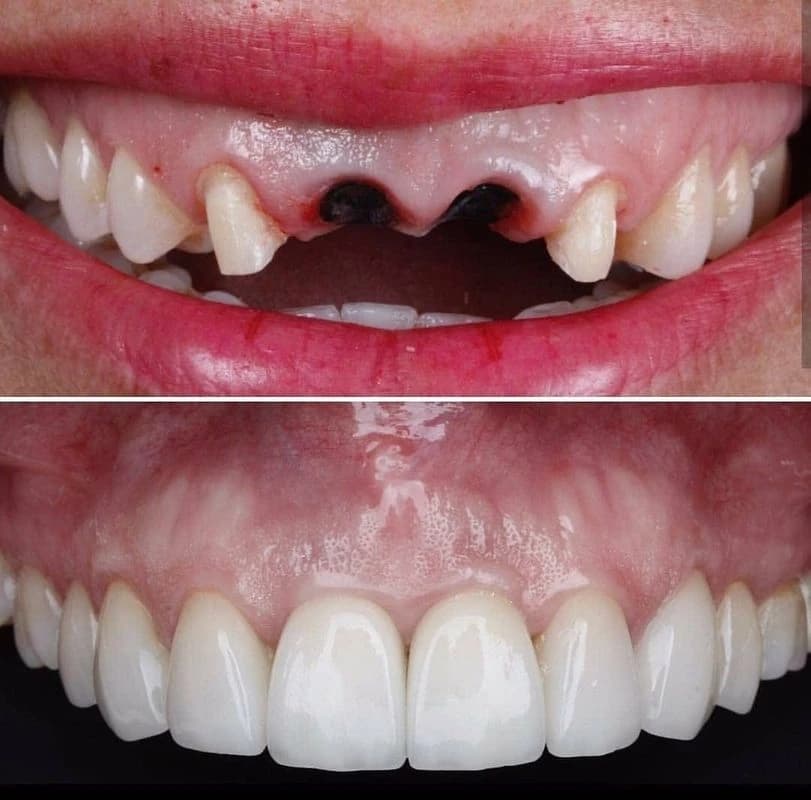
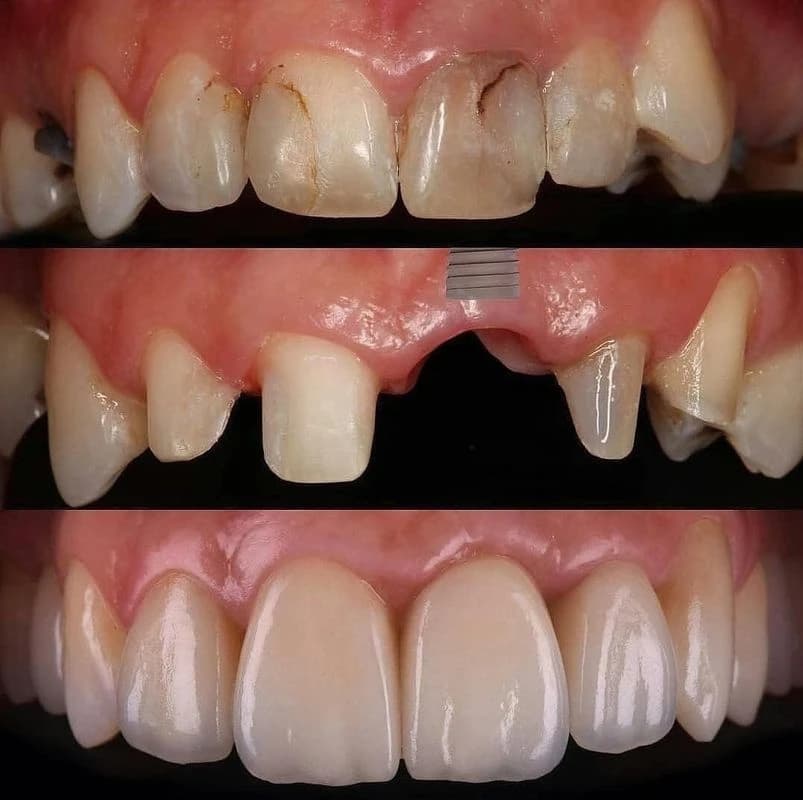
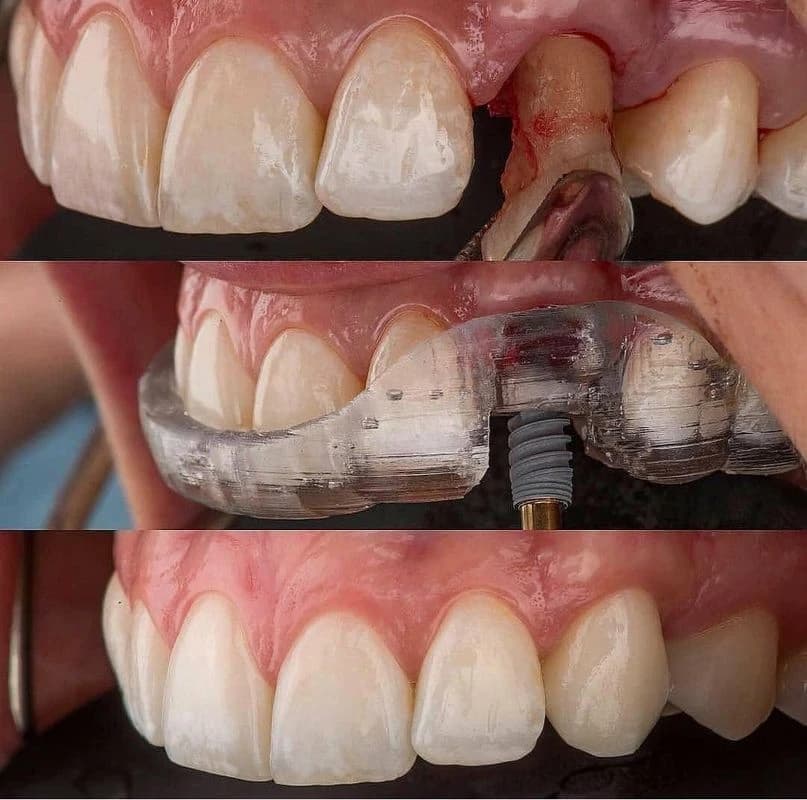
Multiple-teeth dental implant treatment replaces several missing or non-restorable teeth using individual implant crowns, an implant-supported bridge, or another suitable implant-supported restoration. One implant is not always required for every missing tooth because implant distribution depends on bone, bite forces, the length of the missing-tooth space, restoration design, and cleaning access.
At Bourgeois Dental Clinic in Dubai, treatment planning evaluates the entire missing-tooth area, remaining teeth, gums, bone volume, bite, smile, medical risk, and long-term maintenance requirements.
Who May Consider Multiple Dental Implants?
This treatment may be considered for patients with:
- Several adjacent missing teeth
- Missing teeth in different areas of the mouth
- A failing conventional bridge
- Several non-restorable teeth
- An uncomfortable removable partial denture
- Reduced chewing ability because of missing posterior teeth
- A need for fixed replacement without preparing selected neighbouring teeth
How Can Several Teeth Be Replaced?
Possible designs include:
- Individual implants with separate crowns
- An implant-supported bridge
- A combination of individual crowns and bridges
- An implant-supported removable partial denture
- A staged plan that restores different areas separately
Does Every Missing Tooth Need an Implant?
No. An implant-supported bridge may replace several adjacent teeth using fewer implants than the number of missing teeth.
The number and position are selected according to:
- Bone volume and quality
- Length of the missing-tooth span
- Bite forces
- Jaw position
- Implant distribution
- Restoration material
- Cleaning access
- Condition of remaining teeth
What Is an Implant-Supported Bridge?
An implant-supported bridge replaces several teeth using implants as the supporting foundations.
It differs from a conventional bridge because it does not rely on natural teeth at each end. The design should provide suitable chewing support while allowing cleaning beneath and around the bridge.
What Happens During the Assessment?
The dentist reviews the number and location of missing teeth, previous extractions, dentures or bridges, chewing difficulties, appearance, medical history, smoking, diabetes, grinding, and oral hygiene.
The clinical assessment may include:
- Remaining-tooth evaluation: Checking decay, restorations, gum support, and long-term prognosis.
- Periodontal assessment: Evaluating gum disease, bleeding, pockets, and bone loss.
- Bone assessment: Measuring available bone across the planned implant sites.
- Restorative-space assessment: Confirming room for implant crowns or a bridge.
- Bite evaluation: Reviewing chewing forces and implant distribution.
- Smile and gum assessment: Evaluating visible areas and tissue profile.
- Dental imaging: Reviewing nerves, sinuses, roots, infection, and bone anatomy.
Should Questionable Teeth Be Saved or Removed?
The dentist evaluates whether remaining teeth can be predictably restored and maintained.
Considerations include:
- Bone and gum support
- Root condition
- Decay and structural loss
- Previous root canal treatment
- Fractures
- Mobility
- Position within the planned restoration
- Ability to clean and maintain the tooth
Teeth should not be removed solely to simplify implant treatment when predictable preservation remains possible.
Can Existing Bridges Be Replaced with Implants?
Yes. A failing conventional bridge may be replaced with individual implants, an implant-supported bridge, another conventional bridge, or a removable option.
The supporting teeth, bone beneath the missing-tooth space, gum condition, and restoration design must be assessed.
Can Dental Implants Replace Back Teeth?
Yes. Implants may restore missing premolars and molars and improve chewing support.
Back-tooth treatment requires assessment of stronger bite forces, available vertical space, the mandibular nerve, maxillary sinus, implant distribution, and grinding habits.
Can Multiple Front Teeth Be Replaced?
Yes. Front-tooth cases require detailed aesthetic and soft-tissue planning.
Challenges may include:
- Loss of bone and gum volume
- Uneven gum levels
- Limited space between roots
- Visible smile line
- Need for temporary teeth
- Matching the neighbouring teeth
- Creating cleaning access without compromising appearance
Will Bone Grafting Be Needed?
Bone grafting may be required at one or more implant sites when bone is insufficient.
The graft may be performed:
- At the time of extraction
- Before implant placement
- At the time of implant placement
- After removal of a failed implant
Not every site needs the same procedure, and treatment may be staged.
Will a Sinus Lift Be Needed?
A sinus lift may be considered for implants in the upper back jaw when insufficient vertical bone remains below the sinus.
The need may differ from one side of the mouth to the other.
Can the Implants Be Placed on the Same Day as Extractions?
Immediate placement may be possible at selected sites with favourable bone, soft tissue, infection control, and implant stability.
Other sites may require delayed placement, meaning a single patient can have different timing protocols in different areas.
Will Temporary Teeth Be Provided?
Temporary replacement may be possible through:
- A removable partial denture
- A temporary implant-supported bridge
- Bonded temporary teeth
- Modified existing dentures
- Healing without a temporary restoration in selected posterior sites
The design depends on implant stability, bite, appearance, healing, and the need to avoid excessive early loading.
How Are Multiple Implants Placed?
- Diagnostic planning: Planning the final teeth and implant distribution.
- Site preparation: Treating gum disease, infection, and non-restorable teeth.
- Implant placement: Positioning implants to support the planned restoration.
- Bone or soft-tissue grafting: Added where needed.
- Healing: Allowing the implants to integrate.
- Digital scan or impression: Recording implant positions and tissues.
- Trial stages: Checking bite, appearance, fit, and cleaning access.
- Final restoration: Placing individual crowns, a bridge, or another prosthesis.
- Maintenance: Monitoring the implants, gums, bone, bite, and restoration.
How Long Does Treatment Take?
Multiple-site treatment may require more time than a single implant because several areas may heal differently.
The timeline depends on extractions, grafting, implant stability, bone quality, temporary teeth, restorative complexity, medical factors, and healing.
What Are the Main Benefits?
- Fixed replacement of several missing teeth
- Reduced reliance on removable partial dentures
- Potential avoidance of preparing selected healthy teeth
- Improved distribution of chewing support
- Restoration of separate or connected missing-tooth areas
- Personalised use of individual crowns or implant bridges
What Are the Risks and Limitations?
- Infection
- Failure of one or more implants to integrate
- Different healing rates between sites
- Nerve or sinus complications
- Bone or gum recession
- Implant-position limitations
- Difficulty cleaning beneath connected restorations
- Loose screws or components
- Chipping or fracture of crowns or bridges
- Peri-implant inflammation and bone loss
- Need for grafting, repair, or implant removal
- Need to modify the treatment plan if a site does not heal as expected
Can One Implant Fail While the Others Remain Healthy?
Yes. Each implant site has its own bone, gum, position, loading, and healing conditions.
A complication affecting one implant does not automatically mean that all implants will fail, but the entire restoration and bite must be assessed.
How Is an Implant Bridge Cleaned?
Daily cleaning beneath the bridge and around every implant connection is essential.
Recommended tools may include:
- Floss threaders
- Implant or bridge floss
- Interdental brushes
- Single-tufted brushes
- Water irrigation as an additional aid
The bridge should be designed to allow access for these tools.
How Long Do Multiple Implants Last?
No exact lifespan can be guaranteed. Outcomes depend on implant integration, gum and bone health, cleaning, smoking, diabetes, bite forces, restoration design, and professional maintenance.
The bridge, crowns, screws, or restorative materials may require repair or replacement over time.
What Warning Signs Require Assessment?
- Bleeding or swelling around an implant
- Pus or persistent unpleasant taste
- Pain when chewing
- Movement of a crown or bridge
- Movement of an implant
- Fracture or chipping
- Food trapping beneath the restoration
- Gum recession or visible implant components
Multiple Dental Implants on Sheikh Zayed Road
Bourgeois Dental Clinic is located on the first floor of Indigo Sky Building, Sheikh Zayed Road, Exit 41, near Al Thanya Street in Dubai. The clinic is convenient for patients from Al Barsha, Umm Al Sheif, Umm Suqeim, Jumeirah, Al Quoz, Barsha Heights, The Greens, Dubai Marina, and surrounding communities.
Book a multiple-implant consultation for several missing teeth, a failing bridge, uncomfortable partial denture, or several teeth that may require replacement.
Department
Dental Implants and Implant Dentistry
Related Doctors


FAQ
Frequently Asked Questions
BOOK AN
Appointment
Working Hours
We are here to serve you