


Root Canal Treatment for Baby Teeth
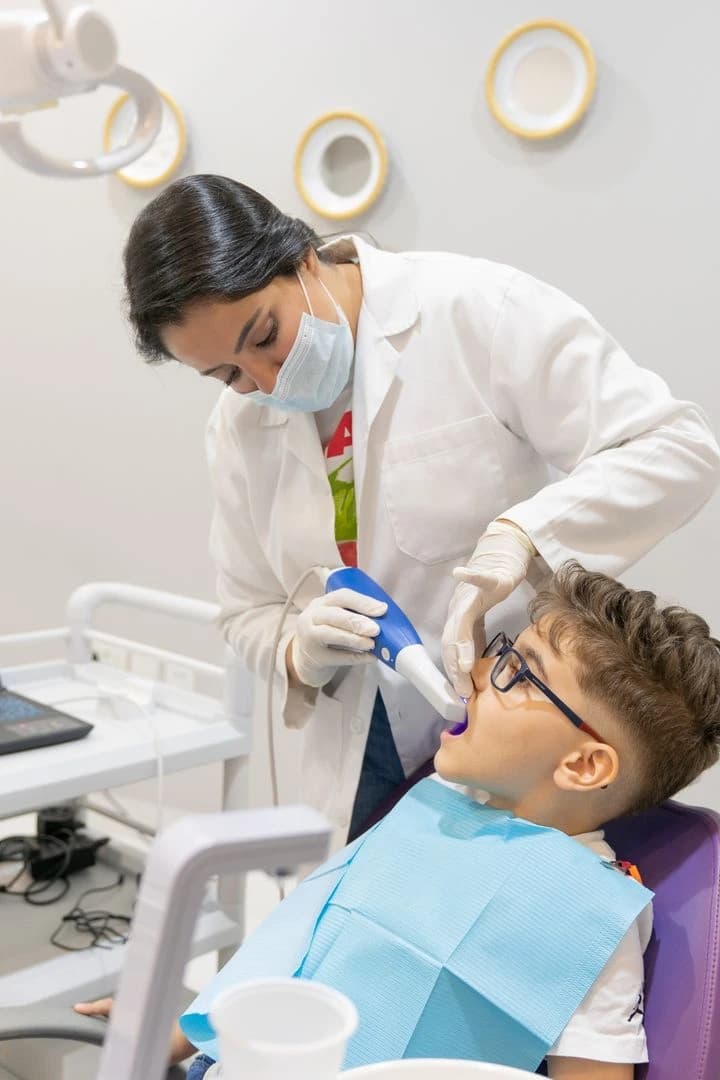
Root canal treatment for a baby tooth, sometimes called pulpectomy, removes infected or irreversibly damaged pulp tissue from the crown and root canals of a suitable primary tooth. The canals are cleaned, treated, and filled with a material selected for a baby tooth before the tooth is restored.
At Bourgeois Dental Clinic in Dubai, treatment is recommended only after evaluating pain, swelling, infection, root condition, remaining tooth structure, proximity to natural tooth loss, the developing permanent tooth, medical history, and the child’s ability to cooperate.
Why Would a Baby Tooth Need Root Canal Treatment?
Treatment may be considered when:
- Deep decay has infected or irreversibly inflamed the pulp
- A previous pulpotomy has developed symptoms or infection
- Dental trauma has damaged the pulp
- The tooth remains restorable
- Maintaining the tooth may support chewing and space preservation
- The tooth is expected to remain for a clinically meaningful period
- The roots and surrounding tissues are suitable for treatment
What Symptoms May Indicate Pulp Infection?
- Spontaneous tooth pain
- Night pain or disturbed sleep
- Persistent pain after cold, sweets, or eating
- Pain when biting
- Gum swelling near the tooth
- A small gum spot that drains pus
- Facial swelling
- A large or broken cavity
- Discolouration after dental trauma
Some infected baby teeth cause few symptoms, so clinical examination and imaging may still be required.
What Is the Difference Between Pulpotomy and Root Canal Treatment?
- Pulpotomy: Removes affected pulp tissue from the crown portion while preserving suitable tissue within the roots.
- Baby-tooth root canal treatment: Removes affected or infected tissue from both the crown and root canals.
The correct treatment depends on the pulp condition, symptoms, bleeding, infection, imaging, and restorability.
What Happens During the Assessment?
- Medical and dental history: Reviewing pain, swelling, medication, allergies, medical conditions, trauma, and previous treatment.
- Clinical examination: Checking the cavity, gum, tooth mobility, swelling, drainage, bite, and remaining structure.
- Dental imaging when indicated: Assessing roots, infection, bone, natural root resorption, and the developing permanent tooth.
- Restorability assessment: Determining whether the tooth can support a reliable final restoration.
- Treatment comparison: Discussing root canal treatment, extraction, space maintenance, or another appropriate option.
How Is a Baby-Tooth Root Canal Performed?
- The procedure is explained in age-appropriate language.
- Local anaesthesia is used when clinically appropriate.
- The tooth is isolated to reduce contamination.
- Decay and unsupported structure are removed.
- The affected pulp tissue is removed from the crown and canals.
- The canals are cleaned and treated.
- A suitable filling material is placed within the canals.
- The tooth is sealed and restored.
- A full-coverage crown may be recommended for protection.
Will the Tooth Need a Crown?
A dental crown is often considered after root canal treatment because the tooth may have lost substantial structure and become more vulnerable to fracture or leakage.
The final restoration depends on the tooth, remaining structure, bite, moisture control, appearance needs, and expected time before natural exfoliation.
Why Preserve an Infected Baby Tooth?
Preserving a suitable baby tooth may help maintain:
- Comfort
- Chewing ability
- Speech support
- Space for the permanent tooth
- Normal eruption guidance
- Dental-arch stability
Preservation is not appropriate when the tooth has a poor prognosis or when treatment risks outweigh the expected benefit.
When Is Extraction More Appropriate?
Extraction may be more appropriate when:
- The tooth cannot be restored predictably
- Infection is extensive
- The root condition is unsuitable
- The tooth is close to natural exfoliation
- A fracture extends below the gum or into the root
- There is insufficient cooperation for safe completion
- The tooth interferes with permanent-tooth development
A space maintainer may be considered after premature tooth loss, but it is not required in every case.
Does Root Canal Treatment Hurt?
Local anaesthesia is generally used to control discomfort. The child may feel pressure, vibration, or unfamiliar sensations during treatment.
Temporary soreness may occur afterward. Increasing pain, swelling, pus, fever, or difficulty eating requires reassessment.
Are Antibiotics Required?
Antibiotics are not automatically required and do not replace treatment of the infected tooth.
They may be considered when there is spreading infection, systemic involvement, or another clinical or medical indication.
How Long Does the Treated Tooth Last?
The goal is usually to maintain the tooth until natural exfoliation, but no treatment can guarantee this outcome.
Longevity depends on:
- The original diagnosis
- Extent of infection
- Root condition
- Quality of canal treatment
- Quality of the filling or crown
- New decay
- Oral hygiene
- Bite forces
- Follow-up attendance
Can Infection Return?
Yes. Symptoms or infection may return if bacteria remain, the restoration leaks or breaks, new decay develops, or the tooth’s condition progresses.
Further care may include restoration repair, repeat assessment, or extraction.
What Should the Child Do After Treatment?
- Avoid biting the lip, cheek, or tongue while numb
- Follow eating and drinking instructions
- Brush carefully around the treated tooth
- Avoid very hard or sticky foods that may damage the restoration
- Use medication only as directed by the treating clinician or appropriate medical professional
- Attend scheduled reviews
What Are the Risks and Limitations?
- Temporary soreness
- Local-anaesthetic effects
- Accidental biting of numb tissue
- Persistent or recurrent infection
- Failure or leakage of the restoration
- Tooth fracture
- Need for extraction
- Possible effects on surrounding tissues
- Difficulty completing treatment because of cooperation
- Need for referral in complex cases
When Is Urgent Care Needed?
Arrange prompt dental care for increasing pain, facial or gum swelling, pus, fever with worsening dental symptoms, difficulty eating or sleeping, or a broken or loose restoration.
Difficulty breathing or swallowing, inability to swallow saliva, rapidly spreading facial or neck swelling, eye swelling, severe weakness, confusion, or significant deterioration requires urgent medical care.
Root Canal Treatment for Baby Teeth on Sheikh Zayed Road
Bourgeois Dental Clinic is located on the first floor of Indigo Sky Building, Sheikh Zayed Road, Exit 41, near Al Thanya Street in Dubai. The clinic is accessible from Al Barsha, Umm Al Sheif, Umm Suqeim, Jumeirah, Al Quoz, Barsha Heights, The Greens, Dubai Marina, and nearby communities.
Book an assessment for your child’s baby tooth to discuss deep decay, spontaneous pain, swelling, previous pulp treatment, dental trauma, root canal treatment, a protective crown, or extraction.
Department
Pediatric Dentistry & Children’s Dental Care
FAQ
Frequently Asked Questions
BOOK AN
Appointment
Working Hours
We are here to serve you