


Root Canal Treatment for Molars
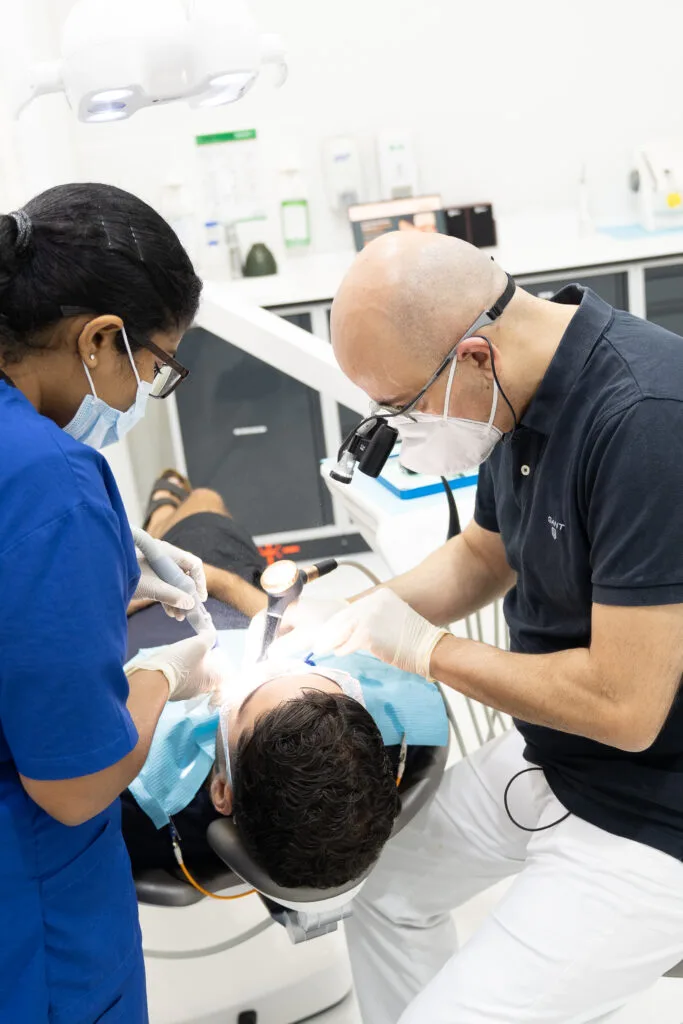
Molar root canal treatment removes inflamed or infected tissue from the complex canal system of a back tooth while aiming to preserve the tooth for chewing. At Bourgeois Dental Clinic in Dubai, treatment planning considers the number of roots and canals, curvature, infection, remaining tooth structure, cracks, previous restorations, and the need for a protective final restoration.
Why Are Molar Root Canals More Complex?
Molars commonly have several roots and multiple canals. Their anatomy may include:
- Curved canals
- Narrow or calcified canals
- Additional or hidden canals
- Canal branches and connections
- Previous fillings or crowns that limit access
- Cracks or weakened cusps
- Complex root shapes
The exact anatomy varies between teeth and patients.
Why May a Molar Need Root Canal Treatment?
- Deep decay
- Irreversible pulp inflammation
- Infection around one or more roots
- A dental abscess
- A cracked cusp or fractured tooth
- Symptoms beneath a large filling or crown
- Pulp exposure during treatment
- Trauma
- Persistent pain when chewing
- Prolonged sensitivity to temperature
What Symptoms May Occur?
- Throbbing pain
- Pain when chewing
- Prolonged hot or cold sensitivity
- Pain that wakes the patient
- Swelling near the back tooth
- A pimple or drainage on the gum
- An unpleasant taste
- Food trapping around a damaged restoration
- Pain that spreads toward the jaw, ear, or nearby teeth
How Is a Molar Assessed?
The dentist reviews symptoms, previous fillings or crowns, bite pressure, grinding, and the history of the tooth.
The examination may include:
- Clinical examination: Checking decay, cracks, restoration failure, swelling, and gum condition.
- Pulp testing: Assessing the tooth response to temperature or other tests.
- Bite testing: Checking pain on individual cusps or release of pressure.
- Periodontal assessment: Looking for isolated deep pockets that may indicate a fracture.
- Dental imaging: Reviewing roots, canals, surrounding bone, decay, and previous restorations.
- Restorability assessment: Determining whether the tooth can support an onlay or crown after treatment.
How Is Molar Root Canal Treatment Performed?
- Local anaesthesia: The tooth and surrounding tissues are numbed when clinically appropriate.
- Isolation: A dental dam may be used.
- Access preparation: An opening is created through the chewing surface or existing restoration.
- Canal location: The dentist identifies the main and additional canals.
- Tissue removal: Inflamed, infected, or dead pulp tissue is removed.
- Cleaning and shaping: Each accessible canal is enlarged, irrigated, and disinfected.
- Medication when needed: Some infected teeth require an antibacterial dressing between appointments.
- Canal filling: The prepared canals are sealed with suitable endodontic materials.
- Core and final restoration: The tooth is rebuilt and protected according to remaining structure.
How Many Appointments Are Required?
Some molars may be treated in one visit. Others require several appointments because of infection, persistent drainage, difficult anatomy, previous treatment, severe symptoms, or the need for medication.
The core build-up and final crown or onlay may require additional visits.
Does a Root-Treated Molar Need a Crown?
Many root-treated molars require cuspal coverage because they often have substantial decay, large fillings, weakened cusps, or structural loss.
A dental crown or onlay may be recommended depending on the remaining tooth structure, cracks, bite, and restorative design.
Root canal treatment alone does not protect a weakened molar from fracture.
Can a Filling Be Enough After Treatment?
A filling may be sufficient in selected molars with limited structural loss and strong remaining cusps.
However, many molars require broader coverage. The final decision is made after removing decay and assessing the remaining tooth.
Can a Cracked Molar Be Treated?
Some cracked molars may be preserved with root canal treatment and a protective restoration when the crack affects the pulp but does not extend deeply through the root.
A split tooth, vertical root fracture, or crack extending far below the gumline may make preservation unpredictable.
Why Can Molar Pain Be Difficult to Locate?
Pain from a molar may spread toward other teeth, the jaw, ear, temple, or opposite arch. Several back teeth can produce similar symptoms.
Diagnosis may require comparison of multiple teeth, bite testing, pulp testing, and imaging.
Can Antibiotics Treat a Molar Infection?
Antibiotics may be used in selected spreading infections or when systemic symptoms are present. They do not remove infected pulp tissue or clean the root canals.
Definitive treatment of the source remains necessary.
What If the Molar Was Treated Before?
A previously treated molar may develop recurrent infection because of untreated anatomy, leakage, new decay, restoration failure, or fracture.
Root canal retreatment may be considered if the tooth remains restorable.
What Happens If the Tooth Cannot Be Saved?
Extraction may be recommended when there is:
- A vertical root fracture
- A split tooth
- Severe decay extending below the restorative margin
- Insufficient healthy structure
- Severe periodontal damage
- Persistent infection with poor prognosis
- Inability to provide a reliable final restoration
Replacement options may include a dental implant, bridge, or removable denture.
How Long Does a Root-Treated Molar Last?
No exact lifespan can be guaranteed. Longevity depends on root anatomy, treatment quality, cracks, remaining structure, final restoration, bite, grinding, oral hygiene, gum health, and maintenance.
How to Care for the Molar After Treatment
- Avoid hard chewing while a temporary filling is present
- Complete the final onlay or crown as advised
- Brush twice daily with fluoride toothpaste
- Clean between the teeth every day
- Manage grinding and clenching
- Wear a night guard when recommended
- Attend follow-up appointments
- Report swelling, biting pain, fracture, or restoration movement
Molar Root Canal Treatment on Sheikh Zayed Road
Bourgeois Dental Clinic is located on the first floor of Indigo Sky Building, Sheikh Zayed Road, Exit 41, near Al Thanya Street in Dubai. The clinic is accessible from Al Barsha, Umm Al Sheif, Umm Suqeim, Jumeirah, Al Quoz, Barsha Heights, The Greens, Dubai Marina, and surrounding communities.
Book a molar root canal consultation for persistent back-tooth pain, swelling, deep decay, a broken filling, or discomfort when chewing.
Department
Endodontics
FAQ
Frequently Asked Questions
BOOK AN
Appointment
Working Hours
We are here to serve you