


Root Canal Retreatment
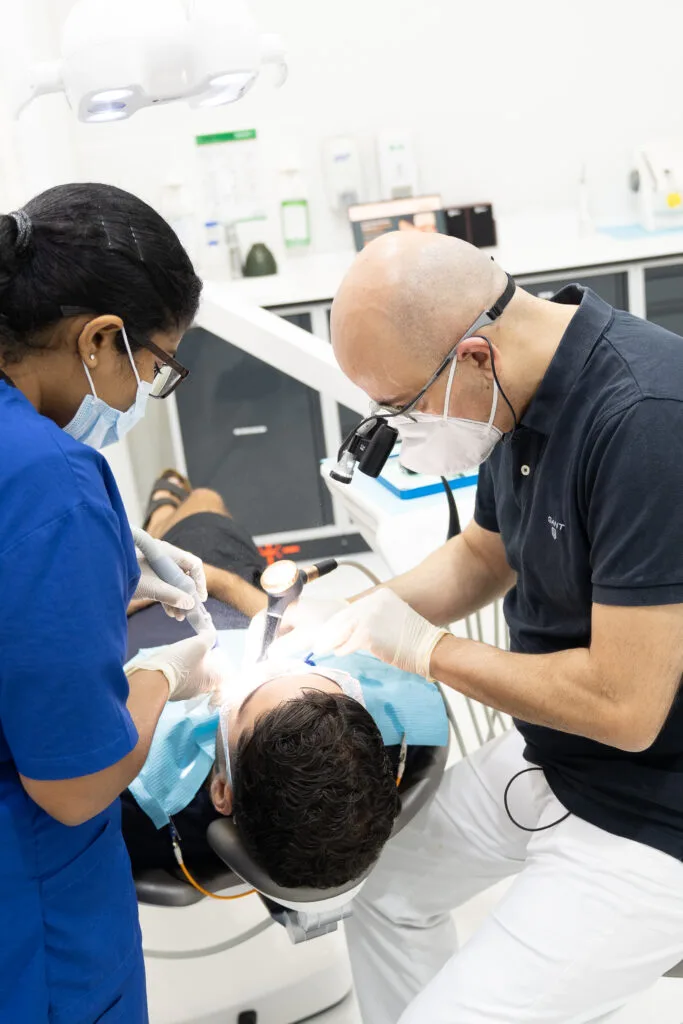
Root canal retreatment is a procedure used to reassess and treat a previously root-treated tooth that has persistent infection, recurring symptoms, leakage, or another endodontic concern. At Bourgeois Dental Clinic in Dubai, retreatment is considered only after evaluating the previous treatment, final restoration, remaining tooth structure, cracks, root condition, gum support, and long-term restorability.
What Is Root Canal Retreatment?
During retreatment, the dentist reopens a previously treated tooth, removes existing root-filling materials where possible, searches for untreated or difficult canal anatomy, cleans and disinfects the canal system again, and reseals it.
The tooth then requires a new temporary or final restoration to protect the canal system from contamination.
Why Can a Root Canal Need Retreatment?
A previously treated tooth may require reassessment because of:
- Persistent infection around the root
- Pain when biting or chewing
- Recurring swelling or gum drainage
- An untreated or missed canal
- Complex canal anatomy
- A leaking filling or crown
- New tooth decay
- Delayed placement of the final restoration
- Breakdown of the coronal seal
- A fractured restoration
- A new crack or fracture
- Incomplete healing around the root
A radiographic area around the root does not always mean immediate retreatment is required. The dentist considers symptoms, previous imaging, healing time, restoration quality, and changes over time.
What Symptoms Can Occur After Previous Root Canal Treatment?
- Pain when chewing
- Persistent tenderness
- Recurring swelling
- A pimple or draining area on the gum
- An unpleasant taste
- A loose or leaking crown
- Fracture of the tooth or restoration
- New discolouration or gum changes
- Symptoms returning months or years later
Some persistent infections cause no pain and are identified through follow-up X-rays.
What Happens During a Retreatment Consultation?
The dentist reviews the date and reason for the original treatment, symptoms, previous restorations, trauma, and available dental records.
The assessment may include:
- Clinical examination: Checking swelling, drainage, decay, fractures, and restoration margins.
- Bite testing: Assessing tenderness during pressure.
- Periodontal examination: Looking for deep isolated pockets that may suggest a root fracture.
- Dental imaging: Reviewing canal fillings, roots, posts, surrounding bone, and untreated anatomy.
- Restoration assessment: Determining whether the crown or filling is leaking or damaged.
- Restorability assessment: Confirming whether enough healthy tooth structure remains.
- Option comparison: Discussing retreatment, endodontic surgery, monitoring, extraction, or replacement options.
How Is Root Canal Retreatment Performed?
The process may include:
- Local anaesthesia: The tooth and surrounding area are numbed when clinically appropriate.
- Isolation: A dental dam may be used.
- Access through the restoration: The dentist may work through or remove part of a filling, core, or crown.
- Removal of previous material: Existing root-filling material is removed where possible.
- Canal exploration: Untreated, blocked, curved, or additional canals are investigated.
- Cleaning and disinfection: The canals are reshaped, irrigated, and disinfected.
- Medication: An antibacterial dressing may be placed between appointments.
- Canal sealing: The canals are refilled after treatment objectives are achieved.
- Restoration: The access is sealed and a suitable final restoration is planned.
Will the Existing Crown Need to Be Removed?
Sometimes retreatment can be completed through an access opening in the existing crown. In other cases, the crown must be removed because it is damaged, leaking, poorly fitting, or prevents appropriate access.
A crown removed during retreatment may not be reusable. Learn more about replacement of old crowns and bridges.
What Happens If a Post Is Inside the Tooth?
A post may need to be removed to access the root canals. Post removal can be technically difficult and may increase the risk of root damage, perforation, or fracture.
The dentist considers whether retreatment through the post, post removal, surgical treatment, monitoring, or extraction provides the most appropriate option.
Is Retreatment More Complex Than Initial Treatment?
It can be more complex because previous filling materials, posts, blocked canals, altered anatomy, ledges, separated instruments, calcification, and existing restorations may limit access.
The feasibility and prognosis depend on the specific barriers and the condition of the tooth.
Can Retreatment Treat Every Failed Root Canal?
No. Retreatment may not be appropriate when there is a vertical root fracture, extensive decay, severe periodontal damage, inadequate remaining structure, an inaccessible obstruction, or an inability to provide a reliable final restoration.
Alternative options may include surgical endodontic treatment, extraction, dental implant treatment, a bridge, or a removable restoration.
What Is Endodontic Surgery?
Endodontic surgery may be considered when infection remains around the root and conventional retreatment is not possible or has not resolved the problem.
A common procedure involves accessing the root tip through the gum, removing affected tissue and a small part of the root end, and sealing the root-end area.
Suitability requires clinical and radiographic assessment and depends on root anatomy, tooth location, bone, gum condition, and restorability.
Will Retreatment Eliminate the Infection?
Retreatment aims to reduce or eliminate bacteria and improve the seal of the canal system. However, no treatment can guarantee complete healing.
Healing depends on the infection, root anatomy, cracks, quality of cleaning and sealing, final restoration, immune response, and follow-up care.
How Many Appointments Are Required?
Retreatment often requires more than one visit, particularly when infection, complex anatomy, previous materials, posts, or persistent drainage are present.
The final restoration may require additional appointments.
Is Retreatment Painful?
Local anaesthesia is generally used. Temporary tenderness, pressure sensitivity, or mild swelling may occur afterward.
Increasing pain, facial swelling, fever, drainage, or difficulty swallowing requires prompt assessment.
Does the Tooth Need a New Crown After Retreatment?
A new crown or another restoration may be required when the existing restoration is removed, damaged, leaking, or no longer provides adequate structural protection.
The final restoration depends on tooth location, remaining structure, bite forces, and previous damage.
How Long Does Healing Take?
Symptoms may improve before the bone around the root has fully healed. Radiographic healing can take longer and is monitored through follow-up examinations and imaging.
Persistent or worsening symptoms require reassessment.
What Are the Main Risks and Limitations?
- Difficulty removing previous root-filling material
- Difficulty removing a post or core
- Instrument separation
- Canal blockage or perforation
- Root or tooth fracture
- Persistent infection
- Need for surgery
- Need for extraction
- Need to replace the final crown or restoration
How to Care for the Tooth After Retreatment
- Avoid hard chewing on a temporary restoration
- Complete the final restoration as recommended
- Brush and clean between the teeth daily
- Attend follow-up imaging appointments
- Manage grinding and clenching
- Report swelling, drainage, movement, or biting pain
- Seek prompt care if symptoms worsen
Root Canal Retreatment on Sheikh Zayed Road
Bourgeois Dental Clinic is located in Indigo Sky Building, Sheikh Zayed Road, Exit 41, near Al Thanya Street in Dubai. The clinic is accessible from Al Barsha, Umm Al Sheif, Umm Suqeim, Jumeirah, Al Quoz, Barsha Heights, The Greens, Dubai Marina, and nearby communities.
Book a root canal retreatment assessment for persistent symptoms, swelling, drainage, or infection around a previously treated tooth.
Department
Endodontics
FAQ
Frequently Asked Questions
BOOK AN
Appointment
Working Hours
We are here to serve you