


Infected Tooth Treatment
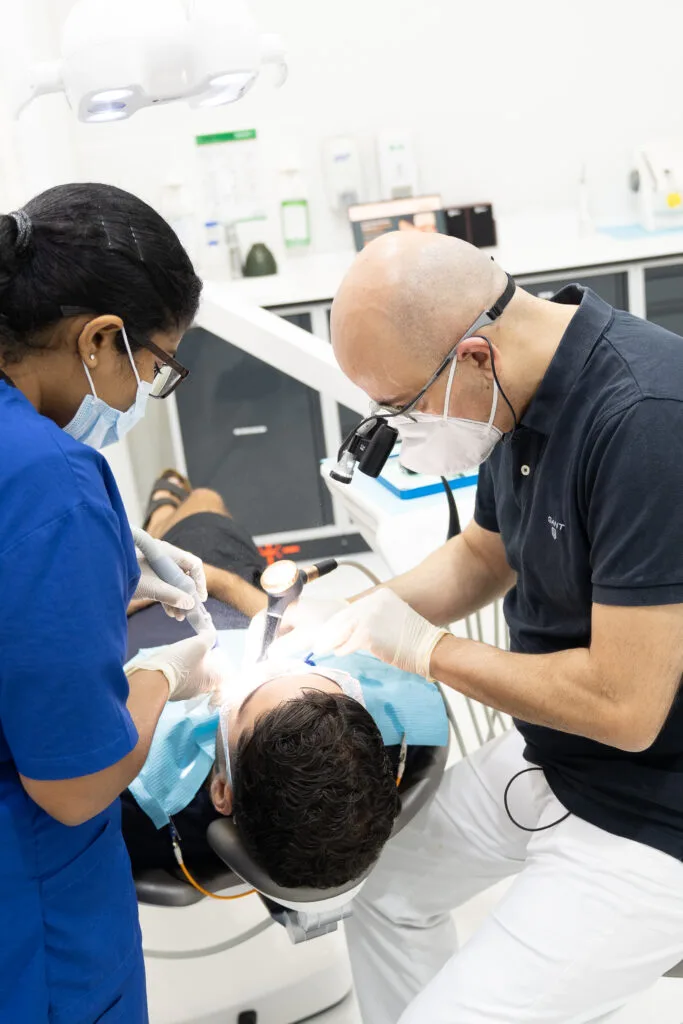
An infected tooth requires treatment of the source of infection rather than symptom relief alone. At Bourgeois Dental Clinic in Dubai, the dentist evaluates whether infection originates inside the tooth, around the root, from the gums, beneath a restoration, or from a fracture before recommending treatment.
What Is an Infected Tooth?
A tooth infection may develop when bacteria enter the dental pulp or surrounding tissues through deep decay, a crack, trauma, a leaking filling, gum disease, or previous dental treatment.
The infection may remain localised or spread into the gum, jawbone, face, or nearby spaces.
What Causes Tooth Infection?
- Deep untreated decay
- Irreversible pulp inflammation and pulp death
- A cracked or fractured tooth
- A leaking filling or crown
- Trauma that damages the pulp
- Persistent infection after previous root canal treatment
- Severe gum or periodontal disease
- Food or bacteria trapped around a partially erupted tooth
- Structural damage beneath a restoration
- Delayed treatment of an infected cavity
What Are the Symptoms of an Infected Tooth?
Possible symptoms include:
- Persistent or throbbing toothache
- Pain when biting
- Prolonged sensitivity to hot or cold
- Gum or facial swelling
- A pimple or draining opening on the gum
- An unpleasant taste or odour
- Tenderness around the tooth
- Tooth discolouration
- Loose teeth in periodontal infections
- Fever or general weakness in spreading infection
- Difficulty opening the mouth
Some infected teeth do not cause pain and are detected through examination or dental imaging.
Is Every Tooth Infection a Dental Abscess?
No. Infection can exist within the root canal system or surrounding tissues before a distinct collection of pus forms.
A dental abscess is a localised collection of infection. Treatment still depends on whether the source is the tooth pulp, gums, a fracture, or another structure.
How Is an Infected Tooth Diagnosed?
The dentist reviews pain, swelling, drainage, fever, previous treatment, trauma, medical conditions, and current medications.
The assessment may include:
- Clinical examination: Checking decay, fractures, swelling, gum changes, and damaged restorations.
- Pulp testing: Evaluating whether the dental pulp is inflamed, dead, or still responsive.
- Bite testing: Checking tenderness and crack-related symptoms.
- Periodontal examination: Determining whether infection originates from the gums or a root fracture.
- Dental imaging: Reviewing the roots, surrounding bone, restorations, and infection patterns.
- Swelling assessment: Determining whether infection is localised or spreading.
- Restorability assessment: Evaluating whether the tooth can be preserved and restored.
How Is an Infected Tooth Treated?
Treatment depends on the source, severity, tooth condition, and spread of infection. Options may include:
- Root canal treatment
- Root canal retreatment
- Drainage where clinically indicated
- Replacement of a leaking filling or crown
- Gum or periodontal treatment
- Management of a cracked tooth
- Extraction when the tooth is not restorable
- Antibiotics in selected spreading or systemic infections
Can Root Canal Treatment Save an Infected Tooth?
Many restorable teeth with infection inside the root canal system can be treated by removing infected tissue, cleaning and disinfecting the canals, sealing them, and restoring the tooth.
The prognosis depends on remaining tooth structure, root anatomy, cracks, infection extent, periodontal support, and the final restoration.
When Is Root Canal Retreatment Needed?
A previously treated tooth may require retreatment when infection persists or returns because of untreated canal anatomy, leakage, new decay, delayed restoration, or another endodontic problem.
A root fracture or structurally unrestorable tooth may not be suitable for retreatment.
When Is Drainage Required?
Drainage may be considered when infection has formed a localised collection that can be safely accessed through the tooth, gum tissue, or another appropriate route.
Drainage does not replace treatment of the source. Root canal treatment, periodontal treatment, or extraction may still be required.
Are Antibiotics Needed?
Antibiotics are not automatically required for every infected tooth. Localised infection may be treated through dental procedures that remove or drain the source.
Antibiotics may be prescribed when infection is spreading, fever or systemic symptoms are present, the patient has certain medical risks, or drainage cannot be achieved immediately.
Antibiotics do not repair a cracked tooth, clean infected root canals, or remove decay.
Can an Infected Tooth Be Treated Without Root Canal Treatment?
Yes, when the infection originates from the gums, a partially erupted tooth, or another non-pulpal source. Treatment may involve periodontal cleaning, drainage, restoration replacement, or another procedure.
If the pulp and root canals are infected, root canal treatment or extraction is generally required to address the source.
When Does an Infected Tooth Need Extraction?
Extraction may be recommended when:
- The tooth is split or has a deep root fracture
- Decay extends too deeply for predictable restoration
- Insufficient healthy structure remains
- Periodontal support is severely compromised
- Infection cannot be predictably managed
- The tooth has repeated treatment failure and poor prognosis
- A reliable final restoration cannot be placed
Can Tooth Infection Spread?
Yes. Infection can spread into the jaw, facial tissues, neck spaces, or bloodstream in severe cases.
Rapidly increasing swelling, fever, difficulty breathing or swallowing, eye swelling, severe weakness, confusion, or difficulty opening the mouth requires urgent medical or dental assessment.
Can Pain Stop Even When Infection Remains?
Yes. Pain may reduce when the dental pulp dies or when infection drains temporarily through the gum.
The underlying bacteria and infection can remain and later cause recurring swelling, drainage, bone loss, or acute pain.
What Happens After Root Canal Treatment?
The tooth requires an appropriate final restoration to protect it against leakage and structural fracture.
Depending on the tooth, this may include:
- A bonded filling
- A core build-up
- An inlay or onlay
- A dental crown
- A post-and-core build-up when additional retention is required
How Long Does Infection Take to Heal?
Symptoms may improve before the surrounding bone has fully healed. Healing time depends on infection size, treatment quality, immune response, final restoration, and oral health.
Follow-up examinations and dental imaging may be recommended.
How to Reduce the Risk of Tooth Infection
- Brush twice daily with fluoride toothpaste
- Clean between the teeth every day
- Treat decay before it becomes deep
- Replace leaking or damaged restorations
- Wear a sports mouthguard when appropriate
- Manage grinding and clenching
- Attend routine dental examinations
- Seek assessment for cracks, trauma, swelling, or persistent pain
Infected Tooth Treatment on Sheikh Zayed Road
Bourgeois Dental Clinic is located on the first floor of Indigo Sky Building, Sheikh Zayed Road, Exit 41, near Al Thanya Street in Dubai. The clinic is accessible from Al Barsha, Umm Al Sheif, Umm Suqeim, Jumeirah, Al Quoz, Barsha Heights, The Greens, Dubai Marina, and surrounding communities.
Book an infected-tooth assessment for tooth pain, swelling, drainage, persistent sensitivity, trauma, or symptoms affecting a previously treated tooth.
Department
Endodontics
FAQ
Frequently Asked Questions
BOOK AN
Appointment
Working Hours
We are here to serve you