


Dental Pulp Inflammation Treatment
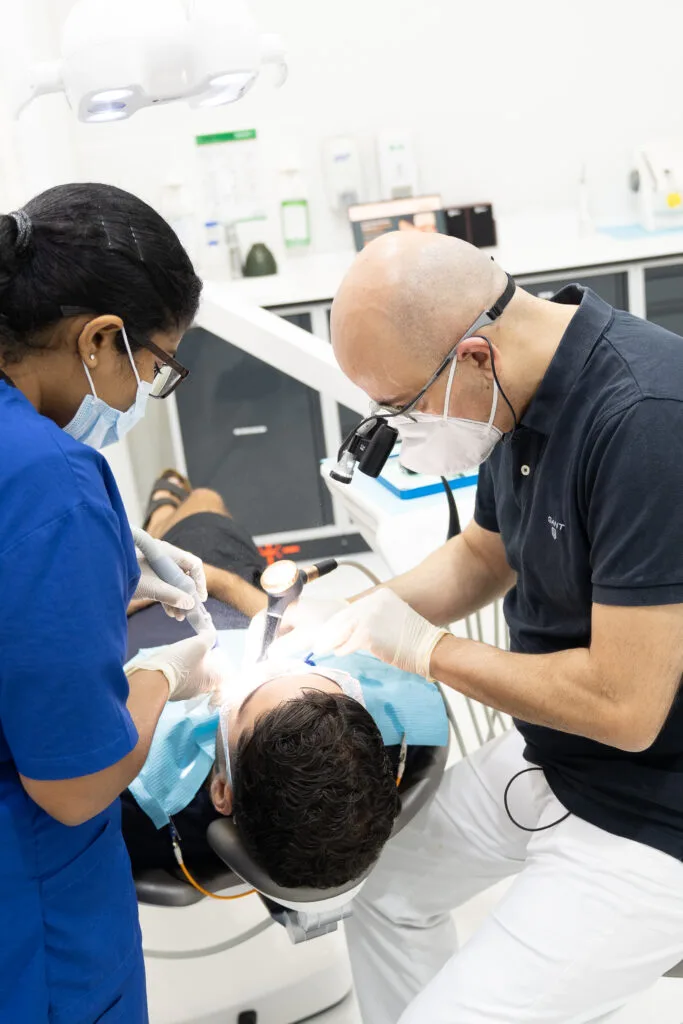
Dental pulp inflammation occurs when the nerve and blood-vessel tissue inside a tooth becomes irritated or inflamed because of decay, cracks, trauma, leaking restorations, or repeated dental treatment. At Bourgeois Dental Clinic in Dubai, diagnosis is based on symptoms, pulp tests, bite assessment, dental imaging, tooth structure, and whether the pulp is likely to recover.
What Is Dental Pulp Inflammation?
The dental pulp is the soft tissue inside the tooth. It contains nerves, blood vessels, and connective tissue and extends from the pulp chamber into the root canals.
When the pulp becomes irritated, it may produce sensitivity or pain. The condition can range from mild and potentially reversible inflammation to severe irreversible inflammation that requires root canal treatment or another appropriate procedure.
What Causes Pulp Inflammation?
Possible causes include:
- Deep tooth decay
- A cracked or fractured tooth
- A leaking, loose, or damaged filling
- A large restoration close to the pulp
- Repeated dental procedures on the same tooth
- Dental trauma
- Severe tooth wear
- Grinding or clenching
- Heat generated during previous treatment
- Exposure of the pulp
- Untreated infection
What Is Reversible Pulpitis?
Reversible pulpitis describes inflammation that may settle after the source of irritation is removed and the tooth is appropriately restored.
Symptoms may include short, sharp sensitivity to cold, sweets, or air that stops soon after the trigger is removed.
Treatment may involve:
- Removing decay
- Replacing a leaking filling
- Applying a protective liner or restorative material
- Managing sensitivity
- Adjusting an excessive bite contact
- Monitoring the tooth response
Only a clinical examination can determine whether the pulp is likely to recover.
What Is Irreversible Pulpitis?
Irreversible pulpitis occurs when inflammation is too advanced for the pulp to return to health predictably.
Possible symptoms include:
- Spontaneous tooth pain
- Throbbing pain
- Pain that wakes the patient
- Prolonged sensitivity after hot or cold exposure
- Pain that spreads to nearby areas
- Difficulty identifying the exact tooth
- Pain that becomes more frequent or severe
When irreversible inflammation is diagnosed, root canal treatment may be recommended if the tooth remains restorable. Extraction may be considered when the tooth cannot be predictably preserved.
Can an Inflamed Tooth Have No Pain?
Yes. Pulp inflammation and pulp death do not always cause obvious symptoms. Some problems are discovered through decay assessment, trauma history, tooth discolouration, testing, or dental X-rays.
A lack of pain does not always mean that the pulp is healthy.
What Happens During the Consultation?
The dentist asks about the type, duration, location, frequency, and triggers of the pain and reviews trauma, previous restorations, medical history, and current medications.
The examination may include:
- Visual examination: Checking decay, cracks, damaged fillings, discolouration, and swelling.
- Cold or heat testing: Comparing the tooth response with neighbouring teeth.
- Electrical or other pulp testing: Assessing sensory response when clinically appropriate.
- Bite and percussion testing: Checking pain during pressure or tapping.
- Gum assessment: Looking for drainage, deep pockets, recession, or fracture signs.
- Dental imaging: Reviewing decay depth, roots, restorations, and surrounding bone.
- Restorability assessment: Determining whether the tooth can support a final restoration.
How Is Pulp Inflammation Diagnosed?
Diagnosis is not based on a single symptom or test. The dentist combines the patient's history, clinical findings, pulp response, bite response, X-rays, restoration condition, and changes over time.
Cold sensitivity alone does not automatically mean that root canal treatment is needed. Likewise, severe pain can sometimes arise from a crack, bite trauma, gum problem, or another condition.
How Is Reversible Pulp Inflammation Treated?
The goal is to remove the irritant and seal the tooth before inflammation progresses.
Treatment may include:
- Removing active decay
- Placing a tooth-coloured filling
- Replacing a leaking restoration
- Using a protective pulp-capping or lining material in selected cases
- Repairing a small fracture
- Adjusting a high filling or excessive bite contact
- Providing sensitivity-management recommendations
- Reviewing the tooth after treatment
When Is Root Canal Treatment Required?
Root canal treatment may be needed when testing and symptoms indicate irreversible inflammation, pulp exposure that cannot be managed conservatively, pulp death, or infection inside the tooth.
The procedure removes the affected tissue, cleans and disinfects the root canals, seals the canal system, and allows the tooth to receive an appropriate final restoration.
Can a Filling Cure Pulp Inflammation?
A filling may allow the pulp to recover when inflammation is reversible and the irritant can be completely removed.
A filling cannot predictably treat irreversible inflammation or infection inside the root canals. In those cases, symptoms may continue or worsen after the tooth is restored.
What Is Pulp Capping?
Pulp capping uses a protective dental material over or near the pulp in selected teeth to support healing and preserve vitality.
Suitability depends on the degree of inflammation, contamination, bleeding control, pulp exposure, age, tooth condition, symptoms, and ability to seal the restoration.
Pulp capping is not appropriate for every deep cavity or exposed pulp.
What Is a Pulpotomy?
A pulpotomy removes affected tissue from the pulp chamber while retaining selected tissue within the root canals.
It may be considered in selected primary or permanent teeth depending on diagnosis, age, root development, symptoms, and restorative requirements.
Can Grinding Cause Pulp Inflammation?
Grinding and clenching may contribute to cracks, bite trauma, restoration damage, and repeated stress on teeth.
They may not directly cause every case of pulpitis, but they can produce symptoms or worsen an existing structural problem. Bruxism assessment or a custom night guard may be recommended when appropriate.
Can Pulp Inflammation Improve on Its Own?
Mild reversible inflammation may settle after the source is removed. However, untreated decay, cracks, leaking fillings, or irreversible inflammation generally require dental treatment.
Pain may also decrease after the pulp loses vitality, but infection can remain inside the tooth and around the root.
What Happens If Irreversible Pulpitis Is Not Treated?
The pulp may lose vitality and become infected. The tooth may then develop pain when biting, swelling, drainage, a dental abscess, or bone changes around the root.
Symptoms can fluctuate, so temporary improvement should not be assumed to mean that the condition has healed.
When Is Urgent Assessment Required?
Prompt assessment is recommended for severe or increasing pain, facial swelling, fever, gum drainage, trauma, or pain that prevents sleep.
Difficulty breathing or swallowing, rapidly spreading facial or neck swelling, severe weakness, or difficulty opening the mouth requires urgent medical or dental attention.
How to Protect the Tooth After Treatment
- Complete the recommended filling, onlay, or crown
- Avoid chewing hard foods on a temporary restoration
- Brush twice daily with fluoride toothpaste
- Clean between the teeth every day
- Reduce frequent sugary and acidic exposure
- Manage grinding and clenching
- Attend review appointments
- Report recurring pain, swelling, or prolonged sensitivity
Dental Pulp Treatment on Sheikh Zayed Road
Bourgeois Dental Clinic is located on the first floor of Indigo Sky Building, Sheikh Zayed Road, Exit 41, near Al Thanya Street in Dubai. The clinic is convenient for patients from Al Barsha, Umm Al Sheif, Umm Suqeim, Jumeirah, Al Quoz, Barsha Heights, The Greens, Dubai Marina, and surrounding areas.
Book a dental-pulp assessment for persistent tooth pain, prolonged sensitivity, deep decay, trauma, or discomfort beneath a filling or crown.
Department
Endodontics
FAQ
Frequently Asked Questions
BOOK AN
Appointment
Working Hours
We are here to serve you