


Pulpotomy
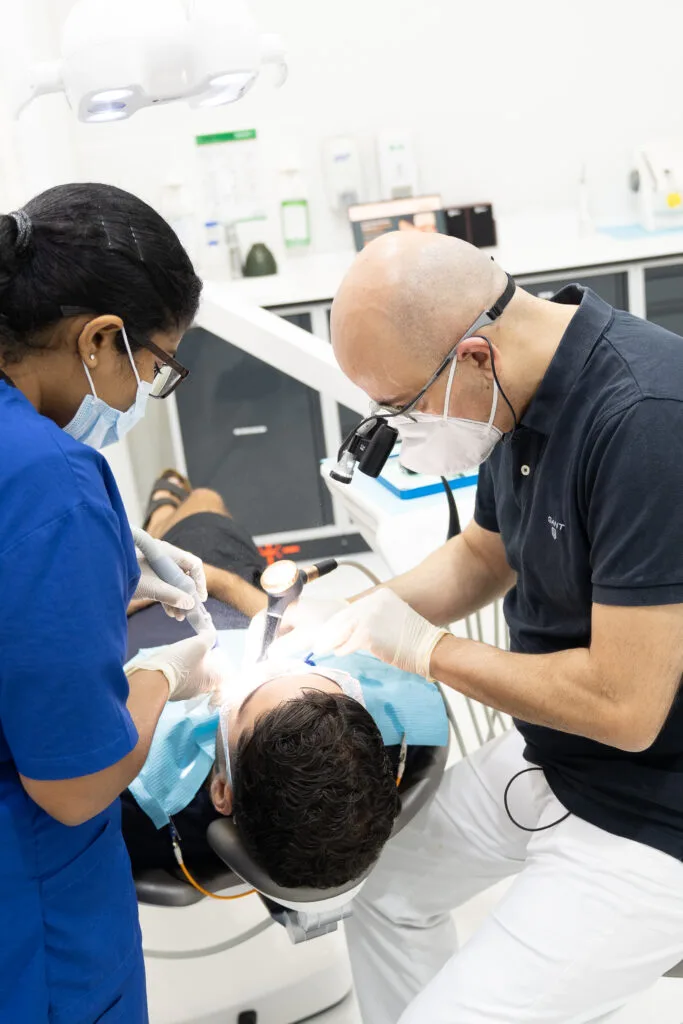
A pulpotomy removes inflamed or exposed tissue from the pulp chamber while attempting to preserve healthy or manageable pulp tissue inside the root canals. At Bourgeois Dental Clinic in Dubai, suitability depends on the diagnosis, age, tooth type, symptoms, pulp condition, root development, contamination, restorability, and ability to provide an effective final seal.
What Is a Pulpotomy?
The dental pulp extends from the central pulp chamber into the root canals. During a pulpotomy, tissue from the crown portion of the pulp is removed, while selected tissue inside the roots is retained.
This differs from full root canal treatment, which removes pulp tissue from both the chamber and the root canals.
When May a Pulpotomy Be Considered?
A pulpotomy may be considered in selected cases involving:
- Deep decay approaching or exposing the pulp
- Traumatic pulp exposure
- Selected primary teeth
- Young permanent teeth with incomplete root development
- Selected permanent teeth with symptoms and findings compatible with vital-pulp treatment
- Situations where preserving pulp vitality may support continued root development
It is not suitable for every painful, infected, or exposed tooth.
Pulpotomy in Primary Teeth
In a primary tooth, pulpotomy may be used when decay reaches the pulp chamber but the root tissue remains suitable for preservation.
The objective may be to keep the tooth functional until its expected natural replacement, provided the tooth remains restorable and there is no evidence of advanced root infection or unsuitable root changes.
Pulpotomy in Permanent Teeth
In selected permanent teeth, partial or full pulpotomy may be considered as a vital-pulp procedure.
This can be particularly relevant in younger permanent teeth because preserving living pulp tissue may allow continued root maturation and strengthening of the root walls.
Suitability depends on accurate diagnosis, bleeding control, contamination, restorative seal, and follow-up.
What Symptoms Are Assessed?
The dentist reviews:
- Short or prolonged sensitivity
- Spontaneous pain
- Night pain
- Pain when chewing
- History of trauma
- Duration of pulp exposure
- Swelling or drainage
- Previous restorations
- Changes in tooth colour
What Happens During the Consultation?
The assessment may include:
- Clinical examination: Checking decay, fractures, pulp exposure, swelling, and restorability.
- Pulp testing: Assessing vitality and response when clinically appropriate.
- Bite and percussion testing: Checking tenderness around the root.
- Gum assessment: Looking for swelling, drainage, or deep pockets.
- Dental imaging: Reviewing root development, surrounding bone, decay, and resorption.
- Bleeding assessment: Evaluating pulp bleeding during treatment when relevant.
- Restoration planning: Confirming that the tooth can receive an effective final seal.
How Is a Pulpotomy Performed?
The exact technique depends on whether the tooth is primary or permanent and on the clinical diagnosis.
Common stages may include:
- Local anaesthesia: The tooth and surrounding area are numbed when appropriate.
- Isolation: A dental dam may be used.
- Decay removal: Decayed and contaminated tissue is removed.
- Pulp access: The pulp chamber is opened.
- Removal of affected coronal pulp: Inflamed tissue is removed from the chamber.
- Bleeding control: The remaining pulp tissue is assessed and bleeding is controlled.
- Protective material: A suitable medicament or bioactive material is placed over the remaining pulp.
- Restoration: The tooth is sealed with an appropriate filling or crown.
Why Is Bleeding Control Important?
The ability to control bleeding can provide information about the condition of the remaining pulp tissue.
Persistent uncontrolled bleeding, pus, necrotic tissue, or other findings may indicate that pulpotomy is not suitable and that root canal treatment, pulpectomy, or extraction should be considered.
What Is the Difference Between Pulpotomy and Pulpectomy?
A pulpotomy removes pulp tissue mainly from the crown portion of the tooth while retaining tissue in the roots.
A pulpectomy removes pulp tissue from the chamber and root canals and is more similar to complete root canal treatment.
What Is the Difference Between Pulpotomy and Pulp Capping?
Pulp capping places a protective material over a small exposure or near the pulp without removing a substantial portion of the chamber tissue.
Pulpotomy removes part or all of the coronal pulp before placing a protective material over the remaining tissue.
Can Pulpotomy Prevent Root Canal Treatment?
In selected cases, successful pulpotomy may preserve pulp vitality and avoid immediate full root canal treatment.
However, no outcome can be guaranteed. Some teeth may later develop symptoms, pulp death, infection, or healing failure and require further treatment.
Does a Pulpotomy Hurt?
Local anaesthesia is generally used. Temporary tenderness may occur after treatment, particularly if the tooth was previously inflamed.
Severe or increasing pain, swelling, drainage, or fever should be assessed promptly.
What Restoration Is Needed After Pulpotomy?
An effective seal is essential because bacterial leakage can cause treatment failure.
The final restoration may include:
- A tooth-coloured filling
- A stainless-steel crown for selected primary teeth
- An onlay or crown for selected permanent teeth
- Another restoration based on the tooth and structural loss
How Is Success Monitored?
Follow-up may include clinical examinations and dental imaging to review:
- Pain or sensitivity
- Swelling or drainage
- Tooth function
- Root development
- Bone health
- Root resorption
- Restoration integrity
When Is Pulpotomy Not Suitable?
Pulpotomy may not be appropriate when there is:
- Pulp death
- Established root-canal infection
- A dental abscess
- Uncontrolled bleeding from the remaining pulp
- Severe spontaneous or persistent symptoms inconsistent with vital-pulp therapy
- Significant root resorption
- A non-restorable tooth
- A deep crack or root fracture
- Inability to provide a reliable seal
What Happens If Pulpotomy Fails?
Further treatment may include root canal treatment, pulpectomy, retreatment, or extraction depending on tooth type, root development, symptoms, and restorability.
How to Care for the Tooth After Pulpotomy
- Avoid hard chewing while a temporary restoration is present
- Complete the recommended final restoration
- Brush twice daily with fluoride toothpaste
- Clean between the teeth every day
- Attend scheduled follow-up appointments
- Report pain, swelling, drainage, or restoration damage
- Seek prompt care if symptoms increase
Pulpotomy Treatment on Sheikh Zayed Road
Bourgeois Dental Clinic is located on the first floor of Indigo Sky Building, Sheikh Zayed Road, Exit 41, near Al Thanya Street in Dubai. The clinic is accessible from Al Barsha, Umm Al Sheif, Umm Suqeim, Jumeirah, Al Quoz, Barsha Heights, The Greens, Dubai Marina, and nearby communities.
Book a pulpotomy assessment for a deeply decayed, traumatised, pulp-exposed, primary, or young permanent tooth.
Department
Endodontics
FAQ
Frequently Asked Questions
BOOK AN
Appointment
Working Hours
We are here to serve you