


Emergency Root Canal Treatment
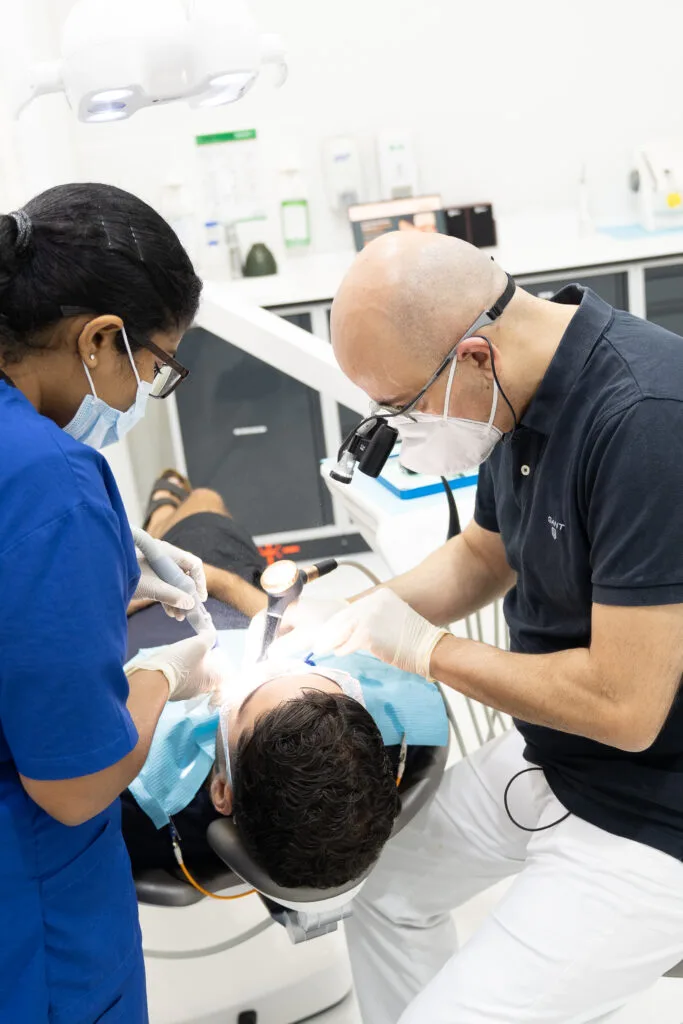
Emergency root canal treatment focuses on diagnosing and stabilising a tooth causing severe pain, swelling, pressure, or symptoms of dental-pulp infection. At Bourgeois Dental Clinic in Dubai, emergency care is based on the diagnosis and may involve pain relief, drainage, removal of affected pulp tissue, temporary medication, root canal treatment, or another appropriate procedure.
What Is an Endodontic Dental Emergency?
An endodontic emergency involves urgent symptoms related to the dental pulp, root canals, or tissues around the root.
Possible emergency symptoms include:
- Severe or increasing toothache
- Throbbing pain
- Pain that prevents sleep
- Severe pain when biting
- Facial or gum swelling
- A dental abscess
- Drainage or an unpleasant taste
- A fractured tooth exposing sensitive tissue
- Trauma affecting a tooth
- Severe symptoms beneath a crown or filling
- Swelling after previous root canal treatment
When Should You Seek Immediate Medical Attention?
Seek urgent medical or dental assessment when dental swelling is accompanied by:
- Difficulty breathing
- Difficulty swallowing
- Rapidly spreading facial or neck swelling
- Fever with significant weakness
- Difficulty opening the mouth
- Swelling near the eye
- Confusion or severe systemic symptoms
These signs may indicate a spreading infection and should not be managed with pain medicine alone.
What Causes Severe Root Canal Pain?
Possible causes include:
- Irreversible inflammation of the pulp
- Infection or pulp death
- A dental abscess
- Deep tooth decay
- A cracked or fractured tooth
- Trauma
- A leaking restoration
- Pressure from infection around the root
- A high or damaged filling
- Reinfection after previous root canal treatment
What Happens During an Emergency Examination?
The dentist asks when the pain began, how severe it is, what triggers it, whether swelling is present, and whether the patient has fever, trauma, or previous treatment.
The examination may include:
- Visual assessment: Checking decay, fractures, swelling, damaged fillings, and drainage.
- Pulp testing: Evaluating the tooth response to temperature or other tests.
- Bite testing: Identifying pressure-related pain or crack symptoms.
- Gum examination: Checking swelling, drainage, periodontal pockets, and tenderness.
- Dental imaging: Assessing roots, surrounding bone, decay, and previous treatment.
- Medical-risk review: Checking fever, swelling spread, medical conditions, allergies, and medications.
- Restorability assessment: Determining whether the tooth can be preserved.
What Emergency Treatment May Be Provided?
Treatment depends on the diagnosis and may include:
- Opening the tooth to access the pulp chamber
- Removing inflamed or infected pulp tissue
- Cleaning selected canal spaces
- Drainage through the tooth when clinically appropriate
- Drainage of a localised swelling when indicated
- Placement of medication inside the tooth
- A temporary filling
- Bite adjustment in selected cases
- Initial root canal treatment
- Root canal retreatment
- Extraction when the tooth cannot be restored
Emergency treatment may stabilise the condition without completing the entire root canal procedure during the same visit.
Will the Root Canal Be Completed During the Emergency Visit?
Some teeth may be fully treated during the emergency appointment. Others require staged treatment because of swelling, drainage, infection, complex anatomy, time limitations, or the need for medication between visits.
The patient must complete the recommended follow-up treatment and final restoration even if symptoms improve.
Can Severe Tooth Pain Stop Without Treatment?
Pain can sometimes reduce when the dental pulp loses vitality. This does not necessarily mean the problem has healed.
Infection may remain around the root and later cause swelling, drainage, bone changes, or recurrent pain.
Are Antibiotics Prescribed for Emergency Root Canal Problems?
Antibiotics are not automatically required for every toothache or localised pulp inflammation.
They may be prescribed when infection is spreading, systemic symptoms are present, or the patient's medical condition indicates a need. Definitive treatment of the source remains important.
What Can I Do Before the Emergency Appointment?
- Avoid chewing on the painful side
- Keep the area clean with gentle brushing
- Avoid placing aspirin or chemicals on the tooth or gum
- Use pain medicine only according to medical or professional instructions
- Apply a cold compress externally if swelling is present
- Bring a list of medications and allergies
- Report fever, difficulty swallowing, or spreading swelling immediately
Can a Swollen Tooth Be Treated with Root Canal Treatment?
Many infections originating inside a restorable tooth can be managed through root canal treatment, sometimes combined with drainage or medication.
However, a deeply fractured, split, severely decayed, or structurally unrestorable tooth may require extraction.
What If the Tooth Already Had Root Canal Treatment?
A previously treated tooth can develop pain or swelling because of persistent infection, leakage, untreated anatomy, new decay, or fracture.
The dentist may recommend root canal retreatment, surgical assessment, restoration replacement, monitoring, or extraction.
Can a Cracked Tooth Cause Emergency Pain?
Yes. Cracks may cause sharp pain when biting, sensitivity, pulp inflammation, or infection. The prognosis depends on the depth and direction of the crack.
Some cracked teeth may be restored, while cracks extending through the root or deeply below the gumline may make preservation unpredictable.
What Happens After Emergency Treatment?
The dentist provides instructions about temporary restorations, chewing, medication, swelling, and follow-up treatment.
Further care may include:
- Completion of root canal treatment
- Root canal retreatment
- A permanent filling
- A post-and-core build-up
- An onlay or crown
- Management of a cracked tooth
- Extraction and tooth-replacement planning
- Follow-up imaging
Why Is Follow-Up Important?
Emergency pain relief does not always complete treatment. Temporary fillings can leak or fracture, medication can lose effectiveness, and an untreated canal can become reinfected.
Completing the treatment and final restoration helps protect the tooth and reduce the risk of recurring symptoms.
Emergency Root Canal Care on Sheikh Zayed Road
Bourgeois Dental Clinic is located on the first floor of Indigo Sky Building, Sheikh Zayed Road, Exit 41, near Al Thanya Street in Dubai. The clinic is accessible from Al Barsha, Umm Al Sheif, Umm Suqeim, Jumeirah, Al Quoz, Barsha Heights, The Greens, Dubai Marina, and surrounding communities.
Contact Bourgeois Dental Clinic for an urgent dental assessment if you have severe tooth pain, gum swelling, drainage, trauma, or symptoms affecting a previously root-treated tooth.
Department
Endodontics
FAQ
Frequently Asked Questions
BOOK AN
Appointment
Working Hours
We are here to serve you