


Dental Abscess and Facial-Swelling Assessment
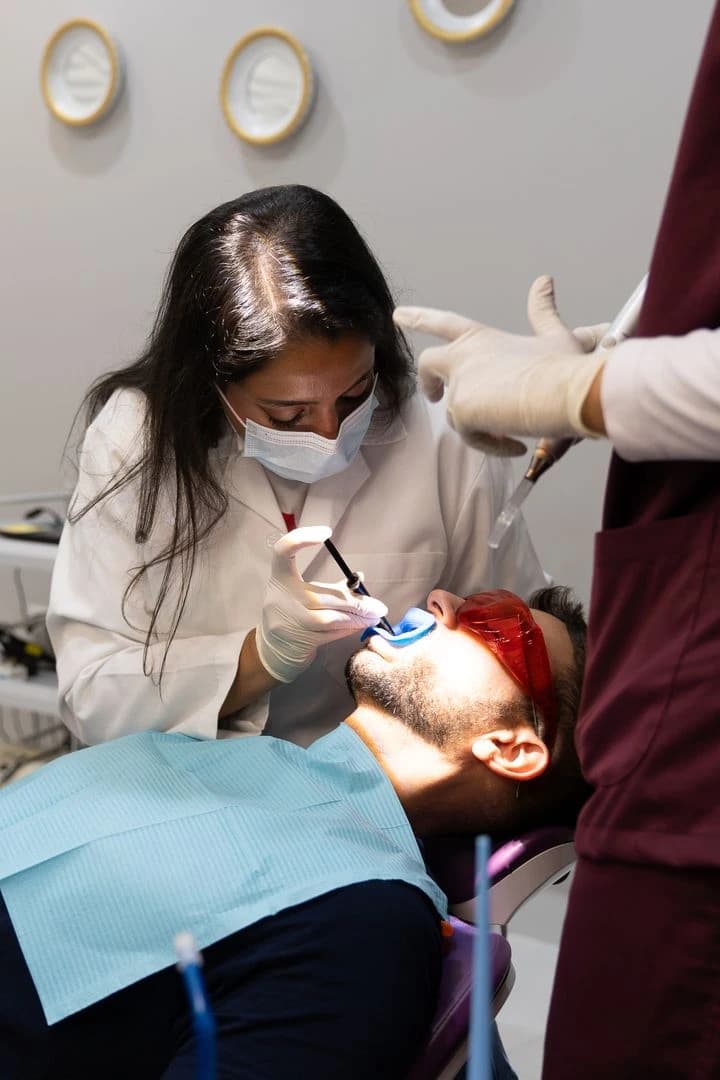
A dental abscess and facial-swelling assessment identifies the source and severity of infection affecting a tooth, root, gum, jaw, or surrounding facial tissues. Prompt assessment is important because some infections remain localised while others may spread and affect swallowing, breathing, the eye, neck, mouth opening, or general health.
At Bourgeois Dental Clinic in Dubai, the assessment prioritises swelling location, speed of progression, pain, pus, fever, difficulty swallowing, difficulty breathing, mouth opening, medical history, medication, immunity, and previous dental treatment.
Rapidly spreading swelling or breathing and swallowing difficulty requires urgent hospital medical care. A dental clinic may not be the appropriate setting for infections affecting deeper facial or neck spaces.
What Is a Dental Abscess?
A dental abscess is a collection of infection or pus associated with a tooth, root, gum, or supporting tissues.
Common categories include:
- Periapical abscess: Infection associated with the pulp and root area of a tooth.
- Periodontal abscess: Infection within the gum and supporting tissues around a tooth.
- Pericoronal infection: Infection around a partially erupted tooth, commonly a wisdom tooth.
What Symptoms May Suggest an Abscess?
- Severe or throbbing tooth pain
- Swollen gum
- Facial or jaw swelling
- Pus
- A persistent unpleasant taste
- Pain when biting
- Tooth sensitivity
- Fever
- Swollen lymph nodes
- Difficulty opening the mouth
- General weakness or feeling unwell
- A raised spot or drainage point on the gum
What Happens During the Assessment?
- Emergency screening: Checking breathing, swallowing, eye involvement, neck swelling, fever, confusion, weakness, and general deterioration.
- History: Reviewing symptom onset, progression, pain, previous swelling, dental treatment, medication, allergies, and medical conditions.
- Dental examination: Assessing decay, fractures, restorations, gum swelling, drainage, mobility, impacted teeth, and mouth opening.
- Diagnostic testing: Evaluating tenderness, vitality, biting response, gum pockets, and swelling where clinically appropriate.
- Imaging when indicated: Dental X-rays may be recommended to assess roots, bone, decay, impacted teeth, and the likely infection source.
- Immediate-care plan: Discussing drainage, root-canal treatment, periodontal care, extraction, medication, or urgent referral.
- Follow-up plan: Confirming infection resolution and arranging definitive restoration or replacement planning.
Is Every Facial Swelling Caused by a Tooth?
No. Facial swelling may have dental, salivary, sinus, skin, allergic, traumatic, or medical causes.
A dental examination helps determine whether the swelling is associated with:
- Tooth decay
- Root infection
- Gum infection
- An impacted tooth
- A fractured tooth
- A failing restoration
- Recent dental treatment
Non-dental swelling may require medical referral.
When Is Facial Swelling a Medical Emergency?
Seek urgent hospital care when swelling is associated with:
- Difficulty breathing
- Difficulty swallowing
- Rapid spread towards the neck
- Swelling around or below the eye
- Severe difficulty opening the mouth
- High fever or marked weakness
- Confusion or reduced alertness
- Major deterioration
- Known immune suppression with worsening infection
Can an Abscess Drain by Itself?
An abscess may release pus through the gum, temporarily reducing pressure and pain. This does not mean the infection has resolved.
The source may remain inside the tooth, root, periodontal pocket, or surrounding tissues and still require treatment.
Can a Dental Abscess Heal Without Treatment?
It should not be assumed to heal permanently without treatment. Symptoms may fluctuate while infection remains or spreads.
Definitive care usually requires treatment of the source.
How Is a Dental Abscess Treated?
Treatment may include:
- Drainage
- Root-canal treatment
- Periodontal cleaning or drainage
- Extraction
- Local cleaning around a wisdom tooth
- Removal or repair of a failing restoration
- Medication when clinically indicated
- Hospital or specialist referral
The correct option depends on the infection source, tooth restorability, swelling, medical history, and imaging findings.
When Is Root-Canal Treatment Used?
Root-canal treatment may be appropriate when infection originates within the tooth and the tooth can be restored and maintained.
The procedure removes affected pulp tissue, cleans and disinfects the canals, and seals the space. A filling, onlay, or crown may later be required to restore and protect the tooth.
When Is Extraction Required?
Extraction may be considered when:
- The tooth cannot be restored appropriately
- A fracture extends deeply into the root
- There is inadequate periodontal support
- The infection cannot be managed through root-canal or periodontal treatment
- The tooth presents another significant clinical risk
Extraction does not automatically remove the need for infection monitoring or further medical care.
Are Antibiotics Always Needed?
No. Localised infections often require direct treatment of the source.
Antibiotics may be considered when:
- Swelling is spreading
- Fever or systemic symptoms are present
- The patient has relevant medical risk factors
- Immediate drainage or source control is not sufficient
- Clinical findings justify their use
Antibiotics should not be taken without appropriate prescribing guidance and should not replace dental treatment.
Why Can Antibiotics Alone Fail?
The infected tissue may remain inside a tooth, root canal, periodontal pocket, or enclosed space where treatment of the source is still required.
Symptoms may improve temporarily and return after medication is completed.
Can I Drain an Abscess at Home?
No. Do not puncture, squeeze, cut, or attempt to drain swelling at home.
This may spread infection, injure tissues, cause bleeding, delay appropriate treatment, or worsen the condition.
Can Heat Be Applied to Facial Swelling?
Do not apply excessive heat to unexplained or rapidly increasing swelling. Heat may be unsuitable when infection is present.
Seek professional guidance rather than relying on home treatment for facial swelling.
Can Pain Medication Treat an Abscess?
Pain medication may reduce symptoms temporarily but does not eliminate pus, infected pulp tissue, periodontal infection, or the source of the abscess.
Medication suitability depends on allergies, pregnancy, age, medical conditions, and other medicines.
Can Wisdom Teeth Cause Facial Swelling?
Yes. Infection around a partially erupted wisdom tooth may cause:
- Gum swelling
- Pain at the back of the mouth
- Bad taste
- Difficulty opening
- Cheek swelling
- Pain when swallowing
Treatment may include cleaning, drainage, medication when indicated, and extraction planning after the acute condition is assessed.
Can Gum Disease Cause an Abscess?
Yes. A periodontal abscess may develop around a tooth with deep gum pockets, food trapping, calculus, or reduced supporting tissues.
Management may involve drainage, periodontal cleaning, bite assessment, medication when indicated, or extraction when support is inadequate.
What if the Swelling Appears After Dental Treatment?
Swelling after extraction, root-canal treatment, implant treatment, gum treatment, or another procedure should be assessed when it is severe, increasing, associated with fever, pus, bad taste, uncontrolled bleeding, difficulty opening, or general deterioration.
Some post-treatment swelling may be expected, but the pattern and severity determine whether urgent review is needed.
How Is the Infection Monitored?
Follow-up may review:
- Reduction in swelling
- Pain and temperature
- Drainage
- Mouth opening
- Tooth restorability
- Gum healing
- Completion of root-canal or extraction care
- Need for further imaging or referral
What Are the Risks and Limitations?
- Infection may spread despite initial treatment
- Pain may not disappear immediately
- The tooth may not be restorable
- Drainage may need to be repeated
- Hospital care may become necessary
- Antibiotics may cause side effects or may not control the source alone
- Additional root-canal, periodontal, surgical, or restorative care may be required
- Recurrence is possible if definitive treatment is not completed
When Is Immediate Hospital Care Required?
Seek urgent medical care for breathing or swallowing difficulty, rapidly spreading facial or neck swelling, swelling involving the eye, severe difficulty opening, confusion, severe weakness, uncontrolled bleeding, major deterioration, or significant infection in a medically vulnerable patient.
Dental Abscess Assessment on Sheikh Zayed Road
Bourgeois Dental Clinic is located on the first floor of Indigo Sky Building, Sheikh Zayed Road, Exit 41, near Al Thanya Street in Dubai. The clinic is accessible from Al Barsha, Umm Al Sheif, Umm Suqeim, Jumeirah, Al Quoz, Barsha Heights, The Greens, Dubai Marina, and nearby communities.
Book a dental abscess and facial-swelling assessment for tooth pain, gum swelling, facial swelling, pus, fever, difficulty opening, a bad taste, or worsening infection symptoms.
Department
Dental Emergencies & Urgent Dental Care
FAQ
Frequently Asked Questions
BOOK AN
Appointment
Working Hours
We are here to serve you