


Emergency Root-Canal Assessment
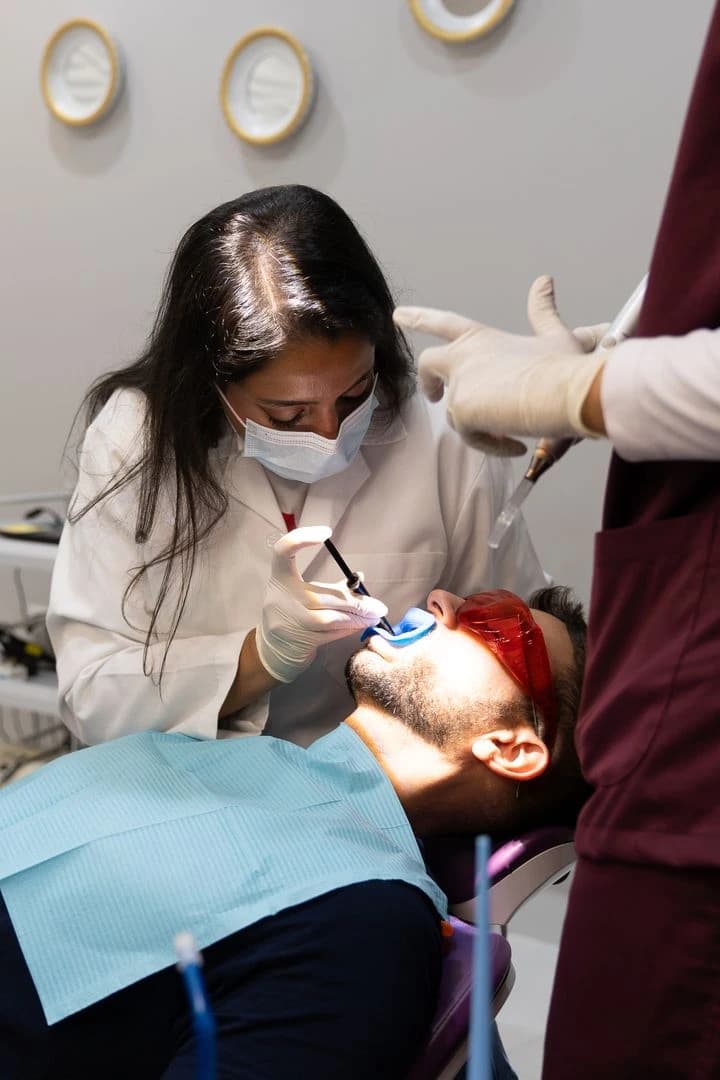
An emergency root-canal assessment determines whether severe tooth pain or infection originates from the dental pulp and whether the tooth can be preserved through endodontic treatment. The assessment may be appropriate for spontaneous pain, prolonged temperature sensitivity, biting pain, deep decay, a cracked tooth, pulp exposure, swelling, or infection around the root.
At Bourgeois Dental Clinic in Dubai, the dentist evaluates the symptoms, tooth structure, pulp condition, root anatomy, surrounding bone, previous dental work, medical history, and whether immediate treatment, temporary stabilisation, extraction, referral, or hospital care is required.
Not every painful tooth needs root-canal treatment. Similar symptoms may result from gum disease, a high restoration, a cracked root, an impacted wisdom tooth, jaw-muscle pain, sinus-related symptoms, or another dental condition.
Which Symptoms May Require an Emergency Root-Canal Assessment?
- Severe spontaneous tooth pain
- Throbbing pain
- Pain that interrupts sleep
- Prolonged sensitivity to hot or cold
- Pain when biting or releasing pressure
- Deep decay
- A broken tooth with pulp exposure
- Swelling or pus near a tooth
- A persistent bad taste
- Pain beneath a crown or large filling
- Tooth discolouration after trauma
- A previously treated tooth becoming painful
What Happens During the Assessment?
- Emergency screening: Checking swelling, breathing, swallowing, fever, trauma, bleeding, and general health.
- Symptom history: Reviewing the location, duration, severity, triggers, night-time pain, and previous treatment.
- Dental examination: Assessing decay, fractures, restorations, gum swelling, drainage, mobility, and bite contacts.
- Pulp testing: Evaluating the tooth response to temperature or other clinical tests when appropriate.
- Biting and percussion tests: Checking tenderness around the tooth and root.
- Imaging when indicated: Dental X-rays may be recommended to assess roots, bone, decay, infection, previous treatment, and restorability.
- Treatment planning: Discussing emergency access, drainage, temporary medication, definitive root-canal treatment, restoration, extraction, or referral.
What Is the Dental Pulp?
The dental pulp is the soft tissue inside the tooth containing nerves, blood vessels, and connective tissue.
It may become inflamed or infected because of:
- Deep decay
- A crack or fracture
- Trauma
- Repeated dental procedures
- A leaking restoration
- Pulp exposure
- Bacteria entering through damaged tooth structure
What Is Irreversible Pulp Inflammation?
Irreversible pulp inflammation means the tissue inside the tooth is unlikely to recover without treatment.
Possible features include:
- Spontaneous pain
- Lingering temperature sensitivity
- Night-time pain
- Pain that is difficult to localise
- Increasing intensity
- Limited relief from ordinary measures
Symptoms vary, and diagnosis requires clinical examination rather than relying on pain descriptions alone.
What Is Pulp Necrosis?
Pulp necrosis occurs when the tissue inside the tooth loses vitality. The tooth may become less sensitive temporarily even while infection develops around the root.
Possible signs include:
- Swelling
- Pus
- Pain when biting
- Tooth discolouration
- A gum drainage point
- Radiographic changes around the root
Can a Tooth Need Root-Canal Treatment Without Severe Pain?
Yes. Some infected or non-vital teeth cause little discomfort and are identified through swelling, discolouration, a gum drainage point, dental imaging, or examination.
A reduction in pain does not always mean the tooth has healed.
What Is Emergency Root-Canal Treatment?
Emergency treatment may involve:
- Opening the tooth to access the pulp space
- Removing inflamed or infected tissue
- Cleaning selected root-canal spaces
- Supporting drainage when clinically appropriate
- Placing an internal medication
- Sealing the tooth with a temporary restoration
- Planning completion of the root-canal procedure
The exact treatment depends on the diagnosis, tooth anatomy, infection, restorability, and available clinical time.
Can Root-Canal Treatment Be Completed in One Visit?
Sometimes, but not always. Multiple visits may be needed when:
- There is active infection or drainage
- The root anatomy is complex
- The tooth has previous root-canal treatment
- Symptoms require monitoring
- Additional imaging or referral is needed
- The tooth requires staged restoration
Does Root-Canal Treatment Remove the Tooth Nerve?
The procedure removes affected pulp tissue from inside the tooth, cleans and disinfects the canal system, and seals the space.
The tooth remains in the mouth and continues to function through its root and surrounding supporting tissues.
Can a Cracked Tooth Receive Root-Canal Treatment?
Possibly. Root-canal treatment may help when a crack has affected the pulp but the tooth remains structurally restorable.
It may not be suitable when:
- The tooth is split into separate segments
- The fracture extends deeply down the root
- Insufficient tooth structure remains
- The periodontal support is inadequate
- A durable restoration cannot be provided
Will the Tooth Need a Crown Afterwards?
Many back teeth require an onlay or crown after root-canal treatment because they may have extensive decay, large restorations, or weakened cusps.
The final restoration depends on:
- Remaining tooth structure
- Tooth position
- Bite forces
- Existing cracks
- Previous restorations
- Aesthetic requirements
What if the Tooth Already Has a Crown?
Access may sometimes be made through an existing crown, but the crown may need replacement if it is damaged, leaking, poorly fitting, or associated with decay.
The dentist may need to remove the crown to evaluate the tooth more accurately.
Can a Previously Root-Treated Tooth Become Painful?
Yes. Possible causes include:
- Persistent or recurrent infection
- Untreated canal anatomy
- A cracked tooth or root
- A leaking restoration
- New decay
- Periodontal disease
- Heavy bite pressure
Retreatment, surgery, restoration replacement, monitoring, or extraction may be considered depending on the findings.
Are Antibiotics Always Needed?
No. Root-canal infection often requires direct treatment of the source.
Antibiotics may be considered when infection is spreading, swelling is increasing, systemic symptoms are present, or medical factors justify their use. They should not replace drainage or endodontic treatment when these are required.
Can Pain Medication Replace Root-Canal Treatment?
No. Medication may reduce discomfort temporarily but cannot remove infected pulp tissue, clean the canal system, repair a crack, or treat the underlying source.
When Is Extraction a Better Option?
Extraction may be discussed when:
- The tooth cannot be restored appropriately
- The root is deeply fractured
- Too little healthy tooth structure remains
- Periodontal support is inadequate
- Previous treatment has a poor prognosis
- A maintainable final restoration cannot be provided
Visit emergency tooth-extraction assessment when removal may need to be considered.
What Should I Do Before the Appointment?
- Keep the area gently clean
- Avoid chewing hard foods on the painful tooth
- Do not place aspirin or chemicals on the tooth or gum
- Follow medication guidance from a pharmacist, physician, dentist, or product label
- Seek urgent care if swelling, fever, breathing, or swallowing symptoms develop
What Are the Risks and Limitations?
- Pain may not disappear immediately
- The root anatomy may be complex
- Instruments may fracture within a canal
- Canals may be difficult to locate or clean
- The tooth may have an undetected crack
- Infection may persist or recur
- Retreatment or surgery may later be required
- The tooth may eventually need extraction
- A protective restoration may be necessary
- No outcome can be guaranteed before full diagnosis
When Is Hospital Care Required?
Seek urgent hospital medical care for breathing or swallowing difficulty, rapidly spreading facial or neck swelling, swelling around the eye, severe weakness, confusion, major deterioration, uncontrolled bleeding, or significant facial trauma.
Emergency Root-Canal Assessment on Sheikh Zayed Road
Bourgeois Dental Clinic is located on the first floor of Indigo Sky Building, Sheikh Zayed Road, Exit 41, near Al Thanya Street in Dubai. The clinic is accessible from Al Barsha, Umm Al Sheif, Umm Suqeim, Jumeirah, Al Quoz, Barsha Heights, The Greens, Dubai Marina, and nearby communities.
Book an emergency root-canal assessment for severe spontaneous pain, prolonged sensitivity, biting pain, deep decay, pulp exposure, swelling, infection, or pain beneath an existing restoration.
Department
Dental Emergencies & Urgent Dental Care
FAQ
Frequently Asked Questions
BOOK AN
Appointment
Working Hours
We are here to serve you