


Loose or Displaced Tooth After Trauma
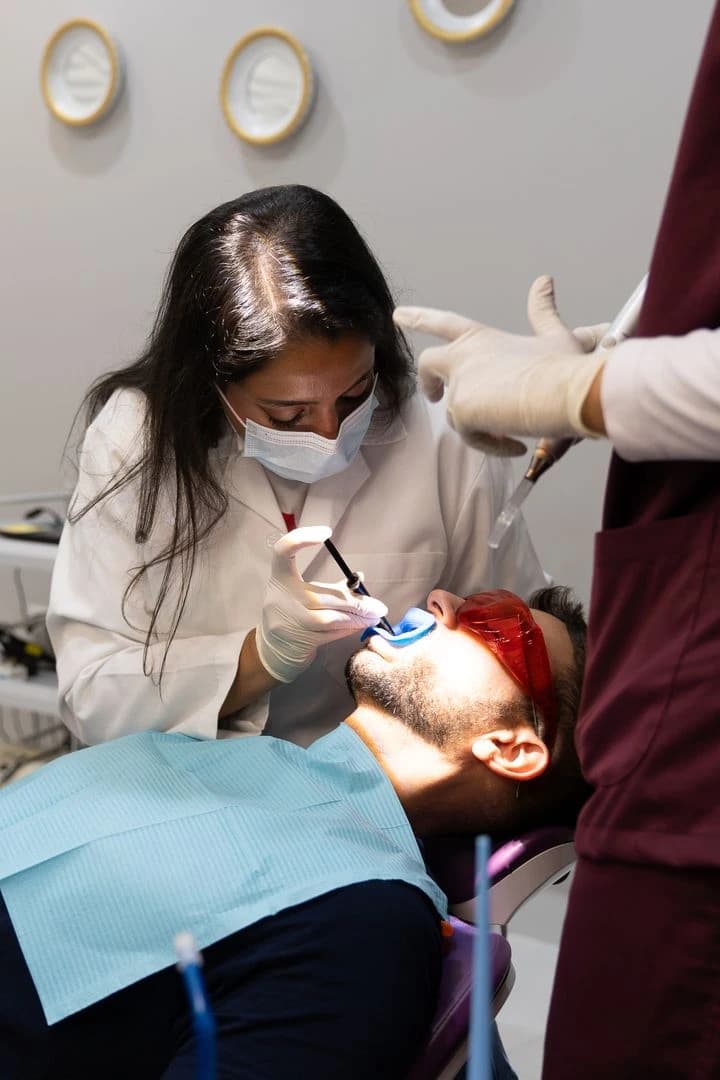
A loose or displaced tooth after trauma requires prompt assessment to evaluate the tooth, root, supporting bone, gums, dental pulp, bite, and nearby structures. Treatment may involve careful repositioning, flexible stabilisation, monitoring, root-canal care, repair of associated fractures, or specialist referral.
At Bourgeois Dental Clinic in Dubai, the emergency assessment considers how the injury occurred, the direction and amount of displacement, tooth mobility, bleeding, bite changes, pain, numbness, associated facial injury, age, root development, and the time since trauma.
Do not repeatedly move, push, pull, or test a traumatised tooth. Excessive manipulation may worsen injury to the root, socket, gum, or supporting bone.
What Types of Dental Displacement Can Occur?
- Subluxation: The tooth becomes loose but remains in its normal position.
- Extrusion: The tooth is partially pulled out of the socket.
- Lateral luxation: The tooth is displaced sideways and may become locked in bone.
- Intrusion: The tooth is pushed deeper into the socket.
- Avulsion: The tooth is completely knocked out.
Each injury requires a different management plan.
Which Symptoms Need Immediate Assessment?
- A tooth that moves after an injury
- A tooth that appears longer, shorter, or shifted
- A sudden bite change
- Bleeding around the gum
- Pain when biting
- Numbness in the lip, chin, or face
- Several teeth moving together
- Difficulty closing the mouth normally
- A visible gum or bone injury
- Associated crown or root fracture
- Loss of consciousness or signs of head injury
What Happens During the Emergency Assessment?
- Medical and trauma screening: Checking consciousness, head injury, facial trauma, bleeding, breathing, and neurological symptoms.
- History: Reviewing how and when the trauma happened and whether the tooth position changed immediately.
- Clinical examination: Assessing tooth position, mobility, gum injury, bite, tenderness, and neighbouring teeth.
- Pulp assessment: Testing nerve response where appropriate, recognising that early results after trauma may be uncertain.
- Imaging: Dental X-rays may be taken from more than one angle to assess roots, socket bone, fractures, and tooth position.
- Repositioning: A displaced tooth may be carefully repositioned when clinically appropriate.
- Stabilisation: A flexible splint may be placed for a defined period.
- Follow-up planning: Monitoring pulp vitality, root development, mobility, colour, infection, and healing.
Should I Push the Tooth Back Into Place?
Do not force a displaced tooth into position without professional guidance.
Incorrect pressure may:
- Damage the root surface
- Increase socket fracture
- Injure the gums
- Worsen bleeding
- Alter the bite further
- Delay appropriate treatment
Why Is Prompt Repositioning Important?
When clinically suitable, earlier repositioning may reduce prolonged displacement and support healing of the periodontal tissues and bone.
The approach depends on the injury type, root development, associated fracture, time since trauma, and whether the tooth is locked in bone.
Why Is a Dental Splint Used?
A flexible splint may stabilise the injured tooth while supporting tissues heal.
The splint should:
- Allow cleaning
- Permit controlled movement when appropriate
- Avoid excessive pressure
- Be reviewed regularly
- Be removed according to the injury-specific plan
Can Several Teeth Be Splinted Together?
Yes. The injured tooth may be attached temporarily to stable neighbouring teeth.
The number of teeth and splint duration depend on the injury, mobility, bone fracture, and stability of the surrounding teeth.
Does a Loose Tooth Always Need Extraction?
No. Many traumatised teeth can be repositioned, stabilised, and monitored.
Extraction may be considered when:
- The tooth or root is severely fractured
- There is inadequate supporting bone
- The tooth cannot be repositioned or stabilised
- The tooth is otherwise non-restorable
- Another significant clinical risk is present
Can the Dental Nerve Recover?
Possibly. Pulp healing depends on:
- Type and severity of injury
- Root development
- Blood-supply disruption
- Time since trauma
- Associated fractures
- Infection
A single early vitality test may not provide a final answer, so follow-up is important.
When Is Root-Canal Treatment Needed?
Root-canal treatment may be required if the pulp becomes necrotic or infected.
Possible signs include:
- Persistent pain
- Swelling
- Pus
- Progressive tooth discolouration
- Radiographic changes around the root
- Loss of pulp vitality over time
Treatment timing differs between mature and immature permanent teeth.
Can a Traumatised Tooth Change Colour?
Yes. Temporary or permanent colour change may occur because of bleeding inside the tooth, pulp damage, or loss of vitality.
Colour change should be assessed with symptoms, clinical tests, and imaging rather than treated based on appearance alone.
What if the Tooth Is Pushed Into the Gum?
An intruded tooth has been driven deeper into the socket and may also involve bone injury.
Management may include:
- Observation for spontaneous re-eruption in selected cases
- Orthodontic repositioning
- Surgical repositioning
- Root-canal planning
- Specialist referral
The choice depends on age, root development, depth of intrusion, and associated injuries.
What if the Tooth Is Pulled Partly Out?
An extruded tooth may appear longer than neighbouring teeth and may be very mobile.
Prompt repositioning and flexible splinting may be considered when suitable.
What if Several Teeth Move Together?
Movement of a group of teeth may indicate a fracture of the supporting alveolar bone.
This requires urgent assessment and may need:
- Repositioning of the bone segment
- Longer stabilisation
- Oral-surgery referral
- Additional imaging
- Close follow-up
How Should the Mouth Be Cared for After Treatment?
- Choose softer foods temporarily
- Avoid biting directly on injured teeth
- Clean carefully around the splint
- Follow brushing and rinsing instructions
- Avoid contact sports until cleared
- Do not pull or test the splinted teeth
- Attend all follow-up visits
What Follow-Up Is Required?
Follow-up may monitor:
- Mobility
- Tooth position
- Bite
- Pulp vitality
- Tooth colour
- Root development
- Root resorption
- Bone and gum healing
- Infection
- Neighbouring teeth
- Splint condition and removal
Can Complications Appear Later?
Yes. Possible delayed complications include:
- Pulp necrosis
- Dental infection
- Root resorption
- Ankylosis
- Tooth discolouration
- Gum recession
- Loss of bone support
- Changes in eruption or tooth position
- Eventual tooth loss
What Are the Risks and Limitations?
- The tooth may not regain normal stability
- Root-canal treatment may become necessary
- Root resorption or ankylosis may occur
- The tooth may darken
- The bite may require further correction
- Bone or gum healing may be incomplete
- Several appointments and X-rays may be needed
- The tooth may eventually require extraction
- No long-term outcome can be guaranteed
When Is Hospital Care Required?
Seek hospital care for loss of consciousness, vomiting after trauma, severe headache, facial numbness, major facial injury, suspected jaw fracture, uncontrolled bleeding, breathing difficulty, severe neurological symptoms, or concern that a dental fragment has been inhaled.
Dental-Trauma Care on Sheikh Zayed Road
Bourgeois Dental Clinic is located on the first floor of Indigo Sky Building, Sheikh Zayed Road, Exit 41, near Al Thanya Street in Dubai. The clinic is accessible from Al Barsha, Umm Al Sheif, Umm Suqeim, Jumeirah, Al Quoz, Barsha Heights, The Greens, Dubai Marina, and nearby communities.
Book urgent assessment for a loose or displaced tooth after trauma when a tooth moves, changes position, affects the bite, bleeds, or becomes painful after an injury.
Department
Dental Emergencies & Urgent Dental Care
FAQ
Frequently Asked Questions
BOOK AN
Appointment
Working Hours
We are here to serve you