


Dental Implant After Extraction in Dubai: Immediate or Delayed?

Immediate implant placement is not suitable for every extraction. Learn how immediate, early and delayed timing is compared using bone, gum, infection, stability and final-crown factors.
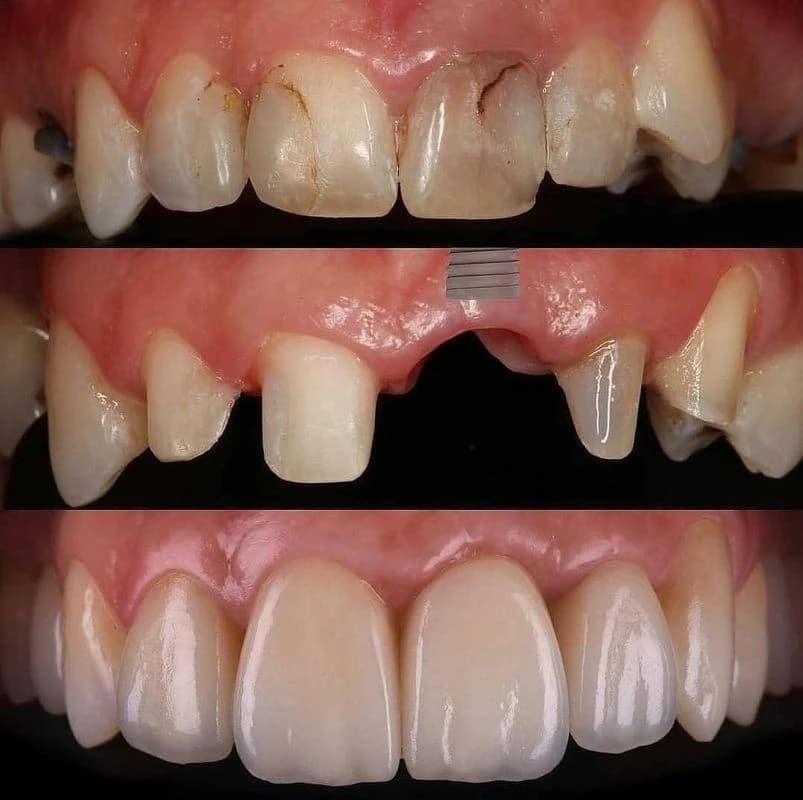
When a tooth cannot be predictably preserved, patients often ask whether it can be removed and replaced with an implant during the same appointment. The answer is sometimes yes, but the decision cannot be made from the calendar alone. The condition of the socket, facial bone, gums, infection, neighbouring structures and the implant’s initial stability all influence whether immediate placement is appropriate.
At Bourgeois Dental Clinic, patients who may need a dental implant after tooth extraction in Dubai receive an implant-focused assessment. Planning begins with the tooth’s prognosis and the final replacement tooth—not with a promise that every case can be completed immediately.
Quick Answer: Can an Implant Be Placed on the Same Day as Extraction?
An implant may be placed into a fresh extraction socket during the same surgical appointment when the site and patient are suitable. Favourable conditions can include enough bone to position and stabilise the implant, manageable infection, intact or treatable socket walls, suitable gum tissue and a restorative plan that protects the implant during healing.
Immediate placement is not always the faster route overall and is not automatically superior. If bone, soft tissue, infection control, stability or aesthetic risk is unfavourable, the implant team may recommend early or delayed placement. Waiting can be an active treatment decision that improves access to healed tissue or allows grafting and disease control.
Why Implant Planning Must Begin with the Final Tooth
An implant is the foundation for a replacement tooth; it is not the visible tooth itself. Treatment planning should therefore define the intended crown, bridge or full-arch restoration before surgery whenever possible.
This restorative-first approach influences implant position, depth and angle, as well as the temporary-tooth strategy and cleaning access. A stable implant placed in an unfavourable position can make the final restoration difficult to design, maintain or protect from bite forces.
First Question: Can the Tooth Be Saved?
Implant planning should not begin by assuming extraction. A damaged or painful tooth may still be treatable with a filling, crown, root-canal treatment, gum care or another restorative approach. the implant team evaluates whether the tooth is restorable, its periodontal support, fracture pattern, infection and expected long-term function before recommending removal.
Extraction may be discussed when a tooth is vertically fractured, structurally non-restorable, affected by severe decay, has advanced support loss or cannot be treated predictably after previous therapy. The alternatives, limitations and consequences of removing the tooth should be explained before consent.
Immediate, Early and Delayed Placement
Patients often use “same-day implant” to describe several different concepts. The timing should be defined clearly:
- Immediate implant placement: the implant is inserted into the extraction socket during the same appointment as tooth removal.
- Early implant placement: the implant is placed after a period of soft-tissue healing or partial bone healing.
- Delayed placement: the extraction site is allowed to heal more fully before implant surgery.
These terms describe when the implant enters the bone. They do not automatically describe when the final tooth is fitted or when normal chewing is allowed.
Immediate Placement Is Not the Same as Immediate Loading
An implant can be placed immediately and still be left without a functional crown while it heals. Conversely, a temporary tooth may be attached quickly but deliberately kept out of heavy contact. “Placement,” “restoration” and “loading” are separate decisions.
The implant team considers implant stability, bone quality, bite forces, tooth location, grinding, the number of implants and the design of any temporary restoration. Patients should ask whether the proposed temporary tooth is removable, bonded to neighbouring teeth or connected to the implant, and what they may safely eat.
What Is Assessed Before Choosing Timing
A dental implant consultation in Dubai may include clinical examination, appropriate dental imaging and review of medical and dental history. The assessment can cover:
- Why the tooth is failing and whether preservation remains realistic
- Extent and location of infection or inflammation
- Integrity of the extraction-socket walls
- Bone height, width, shape and quality beyond the root
- Position of neighbouring roots, nerves and the maxillary sinus
- Gum thickness, recession, smile line and soft-tissue volume
- Available space for the future abutment and crown
- Bite contacts, clenching and grinding
- Smoking, diabetes, medications and other healing considerations
- Ability to maintain daily cleaning and attend follow-up care
A two-dimensional X-ray may answer some questions, while selected cases require three-dimensional imaging to assess anatomy and plan the implant position. Imaging is prescribed according to clinical need rather than used as a substitute for examination.
When Immediate Placement May Be Considered
Immediate dental implant placement may be considered when:
- The tooth can be removed while preserving important socket structures
- Enough bone remains in a favourable position to stabilise the implant
- The implant can be positioned for the planned crown rather than simply following the old root socket
- Infection can be appropriately managed and the site thoroughly cleaned
- Soft-tissue and aesthetic risks are acceptable
- The patient’s health and habits support healing
- A safe temporary-tooth strategy is available when appearance is important
- The patient understands that grafting or future revision may still be required
Meeting one condition is not enough. Suitability reflects the complete risk profile and what is discovered during extraction.
Why the Final Decision May Change During Surgery
Imaging and examination support planning, but the exact socket condition becomes fully visible only after the tooth is removed. An apparently intact wall may be thin, fractured or lost. Granulation tissue, root anatomy or an unexpected defect may affect implant stability and positioning.
The implant team should discuss a backup plan before treatment. If immediate placement becomes unsafe or restoratively unfavourable, the procedure may change to socket preservation, grafting or healing before later implant placement. Changing the timing is not a treatment failure; it can be the safer response to actual anatomy.
When Early or Delayed Placement May Be Better
Waiting may be recommended when:
- Extraction leaves a major bone-wall defect
- The remaining bone cannot provide suitable implant stability
- Infection or inflamed tissue requires further control
- Soft-tissue damage or recession increases aesthetic risk
- A staged bone graft is needed before implant positioning
- The tooth is close to important anatomy and additional planning is required
- Medical or behavioural risks should be stabilised first
- The future restoration cannot yet be defined predictably
The waiting period is not identical for every patient. It depends on the tissue condition, grafting, healing response and treatment protocol selected after assessment.
Can an Implant Be Placed in an Infected Tooth Site?
The word “infection” covers different clinical situations. A localised lesion around a root is not the same as spreading facial swelling, uncontrolled periodontal disease or extensive destruction of socket walls. Selected sites with previous infection may still be considered for implant placement after careful extraction, debridement and risk assessment, but infection does not make immediate treatment automatically safe.
Urgent symptoms such as rapidly increasing swelling, fever, difficulty swallowing or breathing, severe weakness or spreading facial or neck infection require prompt medical or dental assessment. Implant timing is secondary to controlling the acute condition.
Front-Tooth Extraction and Aesthetic Risk
Replacing a visible front tooth requires careful management of the facial bone, gum margin, papillae, implant position and temporary tooth. A thin gum type, high smile line or damaged facial bone can increase the risk of recession and asymmetry.
Immediate placement does not freeze the gum and bone in their original position. Tissue remodelling still occurs after extraction. the implant team evaluates whether simultaneous grafting, soft-tissue management, a non-loading temporary tooth or a staged approach provides a more realistic pathway. Exact preservation of the previous gumline cannot be guaranteed.
Back-Tooth Extraction Has Different Priorities
Molar sites often have wider sockets, multiple roots and stronger chewing forces. In the upper back jaw, sinus anatomy may limit available bone; in the lower jaw, the nerve position must be considered. Achieving stability in an appropriate restorative position can be more important than placing the implant immediately.
A molar implant may therefore follow a different timing strategy from a front-tooth implant even in the same patient. The final crown size, opposing teeth, grinding and hygiene access are part of the plan.
Why Careful Extraction Matters
The extraction technique aims to remove the tooth while protecting usable bone and soft tissue where possible. Root shape, previous root-canal treatment, fracture and ankylosis can make removal more complex. No technique can guarantee that thin socket walls will remain completely intact.
After extraction, the implant team inspects and cleans the site. If the conditions support the pre-planned implant position and stability, immediate placement may continue. If not, the agreed alternative is followed.
Socket Preservation When the Implant Is Not Placed
Socket preservation after tooth extraction places graft material in or around a selected socket to help reduce changes in ridge dimensions during healing. It may support later implant planning when immediate placement is unsuitable or not desired.
Socket preservation does not prevent every change in bone volume and does not guarantee that additional grafting will never be needed. The expected benefits depend on defect anatomy, material, technique, soft-tissue closure and healing.
Bone Grafting with or Before an Implant
Bone grafting for dental implants may be performed at extraction, with immediate implant placement or as a separate stage. The objective may be to fill part of the socket gap, rebuild a damaged wall or create sufficient contour for a future implant.
Grafting adds cost, healing requirements and its own risks. It should be recommended for a defined anatomical purpose, not presented as mandatory for every implant. Patients should ask what defect is being treated, which material is proposed and how the graft changes the timeline.
What Temporary Tooth Options Are Available?
A visible gap after extraction can often be managed while healing occurs. Depending on the site and clinical conditions, options may include:
- A temporary implant crown kept out of heavy bite contact
- A small removable temporary tooth
- A bonded temporary tooth supported by neighbouring teeth
- A temporary bridge or existing denture adjusted for the healing site
- No temporary replacement in a non-visible area when appropriate
The temporary solution should protect the surgical site, maintain appearance where needed and remain cleanable. A temporary crown is not the final crown and may be modified as the gums heal.
From Extraction to the Final Implant Crown
The complete pathway may include:
- Diagnosis, imaging and restorative planning
- Treatment of active oral-health problems
- Tooth extraction and site inspection
- Immediate implant placement, grafting or socket preservation as indicated
- Healing reviews and management of temporary replacement
- Assessment of implant integration and tissue stability
- Digital scan or impression for the restoration
- Fabrication and fitting of the dental implant crown
- Bite adjustment, cleaning instruction and maintenance planning
The schedule varies considerably. Same-day implant placement does not mean the final crown is completed that day, and a longer healing pathway is not necessarily worse.
Possible Risks and Limitations
- Failure to obtain or maintain implant stability
- Infection, pain, swelling, bleeding or delayed healing
- Bone or gum recession affecting appearance or cleaning
- Need for bone or soft-tissue grafting
- Damage to neighbouring structures
- Implant malposition or restorative compromise
- Temporary restoration fracture or pressure on the healing site
- Failure of integration and need for implant removal
- Future loosening, wear or fracture of restorative components
- Peri-implant inflammation without effective cleaning and maintenance
Implants have favourable outcomes in appropriately selected patients, but no timing protocol guarantees success. Individual risk should be discussed before treatment.
Aftercare Following Extraction and Implant Placement
- Follow the prescribed medication and mouth-care instructions
- Do not disturb the surgical area with fingers or repeated tongue pressure
- Avoid smoking and nicotine as advised
- Use the recommended soft diet and do not chew on a non-loaded temporary tooth
- Maintain cleaning in the rest of the mouth and follow site-specific hygiene instructions
- Attend every planned review and suture-removal visit
- Contact the clinic for increasing swelling, persistent bleeding, fever, severe pain, bad taste or a loose temporary component
Long-term care continues after the final restoration. Dental implant maintenance may include professional cleaning, gum assessment, restoration checks, bite review and imaging when clinically indicated.
How Much Does an Implant After Extraction Cost in Dubai?
Cost depends on the tooth, implant system, surgical complexity, imaging, temporary replacement, grafting, healing stages, abutment, final crown and follow-up. Immediate placement is not automatically less expensive because grafting or a provisional restoration may be added during the same visit.
Request a written plan after assessment. It should separate the extraction, implant placement, grafting, temporary tooth, abutment, final restoration and maintenance where applicable. The least expensive advertised figure may represent only one component.
Questions to Ask Before Implant Treatment
- Can this tooth still be preserved predictably?
- What does the imaging show about the socket and surrounding anatomy?
- Why is immediate, early or delayed placement recommended for this site?
- What could cause the plan to change after extraction?
- Will bone or gum grafting be needed?
- What temporary tooth will I have, and can I chew on it?
- When is the final crown expected?
- What risks are increased by my medical history, smoking or grinding?
- What is included in the written quotation?
- How will the implant and crown be maintained long term?
Book an Implant Assessment
Bourgeois Dental Clinic is located in Office No. 5, first floor, Indigo Sky Building, Sheikh Zayed Road, Exit 41, near Al Thanya Street in Dubai. The clinic is accessible from Umm Al Sheif, Al Barsha, Umm Suqeim, Jumeirah, Al Quoz, Barsha Heights, The Greens, Dubai Marina and nearby areas.
Book an implant assessment if a tooth may need extraction or has already been removed. Bring available X-rays and previous treatment records. He can assess whether immediate, early or delayed implant placement is appropriate and explain the alternative replacement options.
Editorial note: This guide is educational and does not establish individual suitability. Implant timing, grafting, temporary restoration, risks, healing and cost require clinical examination and appropriate imaging.