


Broken Veneer or Bridge Emergency Assessment
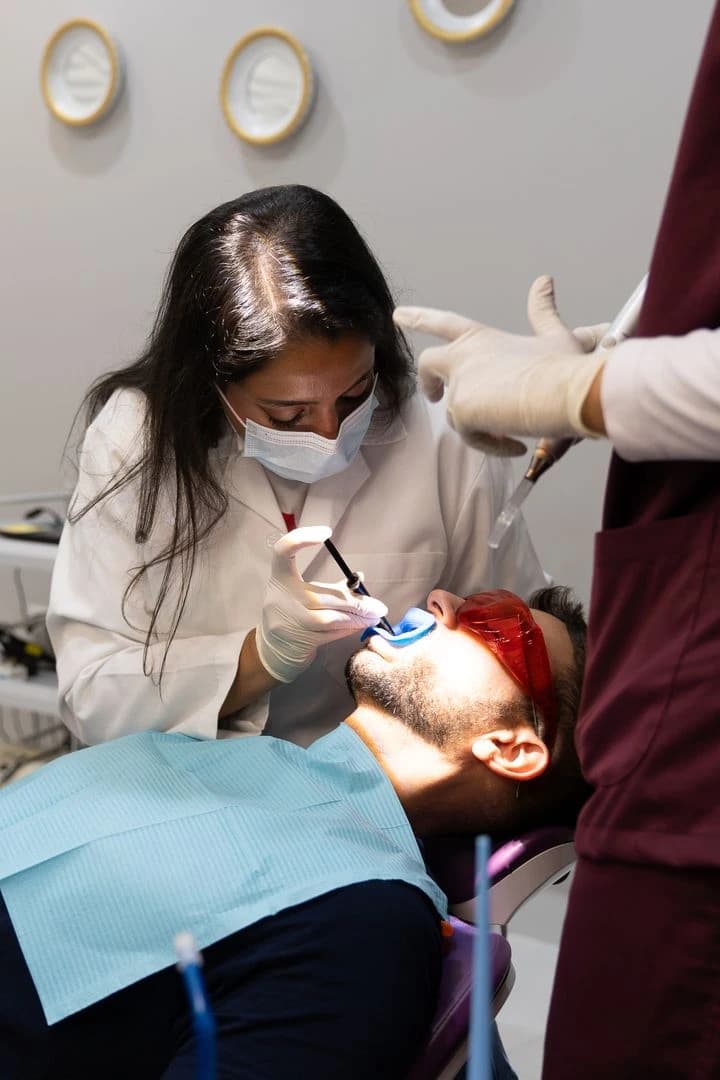
Emergency assessment for a broken veneer or dental bridge evaluates the damaged restoration, supporting teeth, surrounding gums, bite forces, decay, fractures, looseness, and whether temporary protection, repair, recementation, or replacement is appropriate.
At Bourgeois Dental Clinic in Dubai, the dentist assesses whether the damage is limited to the restoration or also involves the natural tooth, supporting crowns, cement, bridge connectors, implant components, or gum tissues.
Do not use household glue to attach a veneer or bridge. Incorrect positioning may damage the restoration, tooth, gums, and bite and may prevent professional repair.
What Can Cause Veneers or Bridges to Break?
- Dental trauma
- Biting hard food or objects
- Grinding or clenching
- Material fatigue
- Decay beneath or around supporting restorations
- Fracture of a supporting tooth
- Heavy bite contacts
- Bridge-connector fracture
- Cement or bonding failure
- Ageing dental work
Which Symptoms Need Prompt Assessment?
- A sharp edge cutting the lip or tongue
- Veneer or bridge movement
- Pain when biting
- Strong sensitivity
- Visible tooth damage underneath
- A sudden bite change
- Food trapping around the restoration
- Bad taste or odour
- Swelling or pus
- Difficulty chewing
- An implant bridge component becoming loose
What Should I Do With the Broken Restoration?
- Keep any detached veneer or bridge component
- Store it in a clean container
- Bring it to the appointment
- Avoid chewing on the affected side
- Keep the area gently clean
- Do not use household glue
- Do not file or reshape the restoration at home
- Seek prompt care if pain, swelling, or sharp edges are present
What Happens During the Assessment?
- History: Reviewing how the restoration broke, pain, trauma, grinding, and previous treatment.
- Restoration examination: Assessing chips, fractures, looseness, fit, cement, connectors, and appearance.
- Supporting-tooth assessment: Checking decay, cracks, sensitivity, mobility, and remaining structure.
- Gum assessment: Evaluating irritation, bleeding, food trapping, and cleaning access.
- Bite assessment: Checking heavy or unstable contacts.
- Imaging when indicated: Dental X-rays may be used to assess roots, supporting teeth, decay, and implant components.
- Treatment plan: Discussing smoothing, repair, temporary restoration, recementation, replacement, root-canal treatment, or extraction.
Can a Chipped Veneer Be Repaired?
Possibly. Small chips may sometimes be:
- Smoothed and polished
- Repaired with composite resin
- Monitored when minor and stable
Replacement may be preferred when the damage affects strength, fit, colour, margins, bonding, or appearance significantly.
Can a Detached Veneer Be Rebonded?
It may be possible when:
- The veneer remains intact
- The tooth surface is suitable
- There is no significant decay
- The veneer still fits accurately
- The tooth has not fractured
- The bonding surface can be prepared appropriately
A damaged or poorly fitting veneer may require replacement.
Can a Broken Bridge Be Repaired?
Repairability depends on:
- Bridge material
- Location and size of the fracture
- Condition of supporting teeth or implants
- Integrity of the connectors
- Presence of decay
- Bridge fit and stability
- Bite forces
Small porcelain defects may sometimes be repaired, while structural fractures often require bridge replacement.
What if the Entire Bridge Becomes Loose?
A loose bridge should be assessed promptly because movement may:
- Damage supporting teeth
- Allow decay to progress
- Trap food
- Irritate the gums
- Change the bite
- Create a swallowing or inhalation concern
Do not repeatedly push or test a loose bridge.
Can a Bridge Be Recemented?
Possibly, when the bridge is intact, the supporting teeth remain stable, decay is limited or absent, and the fit remains accurate.
Repeated bridge loosening should be investigated rather than managed only with repeated recementation.
Can Supporting Teeth Break Under a Bridge?
Yes. Supporting teeth may develop:
- Decay
- Crown or root fractures
- Loose posts or cores
- Pulp or root infection
- Periodontal disease
- Loss of structural support
Can a Broken Veneer Expose the Natural Tooth?
Yes. Exposed enamel or dentine may become sensitive or rough.
Severe or prolonged sensitivity, spontaneous pain, or biting pain may suggest deeper tooth involvement and requires assessment.
What if the Bridge Is Supported by Implants?
Implant-supported bridges may develop:
- Loose screws
- Fractured porcelain or composite
- Framework damage
- Attachment wear
- Food trapping
- Gum or implant-tissue inflammation
- Heavy bite contacts
The cause should be identified before tightening or repairing the restoration.
Can Grinding Damage Veneers and Bridges?
Yes. Grinding or clenching may contribute to chipping, fracture, debonding, loose components, and damage to supporting teeth.
Visit restoration protection for bruxism when repeated restorative damage occurs.
Can Temporary Protection Be Provided?
Depending on the condition, temporary care may include:
- Smoothing sharp edges
- Covering exposed tooth structure
- Temporary composite repair
- Temporary recementation
- Removing an unstable component when safe
- Protecting the supporting tooth until replacement is made
When Is Root-Canal Treatment Needed?
Root-canal treatment may be required when the supporting natural tooth has irreversible pulp inflammation or infection.
Possible signs include severe spontaneous pain, prolonged sensitivity, biting pain, swelling, pus, or radiographic changes around the root.
When Is Extraction Considered?
Extraction may be discussed when a supporting tooth is deeply fractured, severely decayed, has inadequate periodontal support, or cannot be restored predictably.
Loss of one supporting tooth may require redesigning or replacing the entire bridge.
Can a Loose Veneer or Bridge Be Swallowed?
Yes. Loose components may be swallowed or, less commonly, inhaled.
Seek urgent medical care if coughing, wheezing, breathing difficulty, or chest discomfort suggests inhalation.
How Can Future Damage Be Reduced?
- Avoid biting hard objects
- Maintain good cleaning around bridge margins
- Use floss threaders or recommended cleaning aids
- Assess grinding and clenching
- Use a protective appliance when indicated
- Attend regular dental reviews
- Treat decay and gum disease
- Review heavy bite contacts
What Are the Risks and Limitations?
- The restoration may not be repairable
- Colour matching may be limited during repair
- Composite repairs may chip or stain
- A veneer or bridge may require complete replacement
- Supporting teeth may need root-canal treatment
- Decay or fractures may be found underneath
- Repeated damage may continue with heavy loading
- Complex bridge replacement may require several appointments
- No outcome can be guaranteed before full assessment
When Is Hospital Care Required?
Seek urgent medical care when a restoration may have been inhaled or when symptoms include breathing difficulty, choking, chest discomfort, major facial trauma, uncontrolled bleeding, rapidly spreading swelling, or significant deterioration.
Broken Veneer and Bridge Care on Sheikh Zayed Road
Bourgeois Dental Clinic is located on the first floor of Indigo Sky Building, Sheikh Zayed Road, Exit 41, near Al Thanya Street in Dubai. The clinic is accessible from Al Barsha, Umm Al Sheif, Umm Suqeim, Jumeirah, Al Quoz, Barsha Heights, The Greens, Dubai Marina, and nearby communities.
Book an emergency assessment for a broken veneer or bridge when the restoration chips, fractures, loosens, causes pain, develops sharp edges, or affects chewing and appearance.
Department
Dental Emergencies & Urgent Dental Care
FAQ
Frequently Asked Questions
BOOK AN
Appointment
Working Hours
We are here to serve you