


Jaw-Exercise and Mobility Guidance
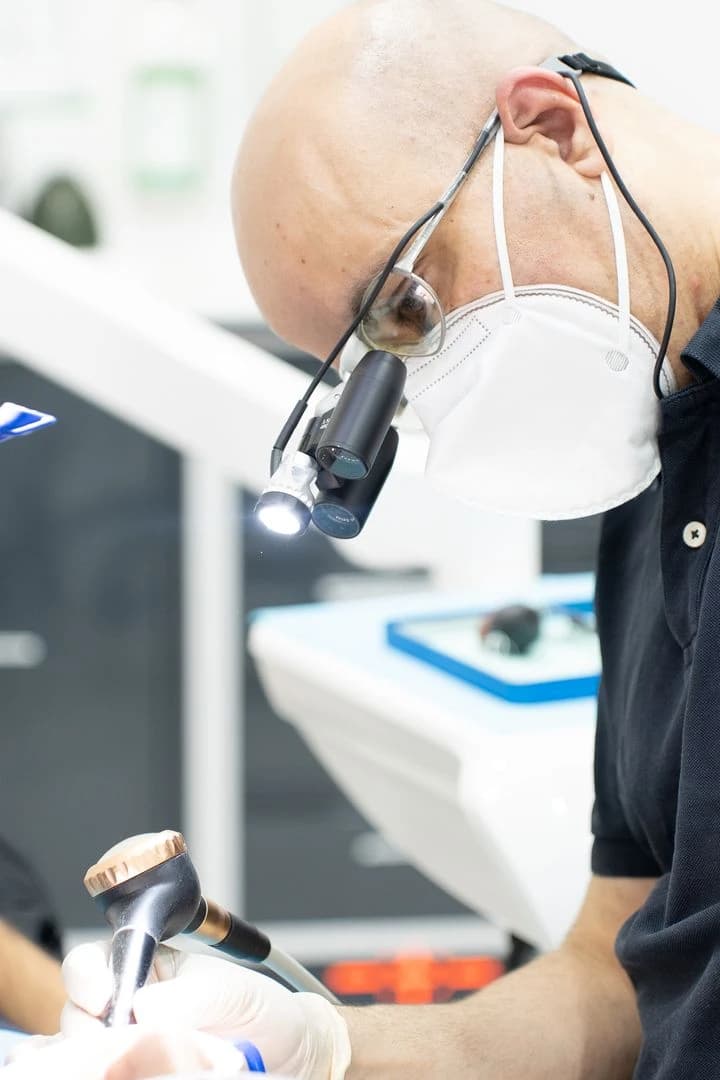
Jaw-exercise and mobility guidance provides individually selected movements intended to support comfortable jaw function, coordination, or gradual mobility when clinically appropriate. Exercises should be chosen only after assessing pain, locking, trauma, swelling, dental infection, opening limitation, joint sounds, muscle tenderness, and medical history.
At Bourgeois Dental Clinic in Dubai, exercises are not prescribed as a universal solution for every temporomandibular symptom. Some patients benefit from observation, self-care, appliance therapy, dental treatment, physiotherapy, medical evaluation, or referral instead.
Forceful stretching, repeated testing, or unsupervised manipulation may worsen symptoms, particularly during acute locking, recent trauma, infection, suspected fracture, or progressive restriction.
Who May Benefit From Jaw-Mobility Guidance?
Selected guidance may be considered for patients with:
- Mild muscle-related stiffness
- Recovering limitation after assessment
- Movement coordination difficulties
- Jaw fatigue
- Symptoms after prolonged mouth opening
- Daytime clenching with muscle tension
- Stable joint symptoms without acute warning signs
- A treatment plan involving gradual functional rehabilitation
When Should Exercises Be Avoided Until Assessment?
Do not begin forceful or unsupervised exercises when there is:
- Acute jaw locking
- Inability to open or close normally
- Recent facial or jaw trauma
- Suspected fracture or dislocation
- Rapidly increasing swelling
- Dental infection or pus
- Severe unexplained pain
- Progressive reduction in opening
- Neurological symptoms
- A sudden bite change
What Happens Before Exercise Guidance?
- History review: Discussing pain, locking, trauma, duration, previous treatment, headaches, sleep, and medical conditions.
- Jaw-movement assessment: Observing opening, closing, deviation, side-to-side movement, and comfortable range.
- Joint and muscle assessment: Checking sounds, tenderness, spasm, swelling, and symptom reproduction.
- Dental assessment: Excluding infection, fractures, painful teeth, and unstable restorations.
- Bite review: Checking recent changes and whether movement causes dental interference.
- Suitability decision: Determining whether exercise, rest, appliance therapy, dental treatment, imaging, or referral is more appropriate.
- Demonstration: Showing selected movements and confirming that they are performed comfortably.
- Follow-up plan: Monitoring response and adjusting or stopping exercises when necessary.
What Types of Jaw Exercises May Be Considered?
Depending on the diagnosis, guidance may include:
- Controlled opening and closing
- Gentle side-to-side movement
- Forward movement exercises
- Coordination exercises using a mirror
- Resting-jaw awareness
- Gentle muscle relaxation
- Limited stretching within a comfortable range
- Exercises provided in collaboration with physiotherapy
Not every patient needs every exercise.
What Is Controlled Jaw Opening?
Controlled opening aims to improve awareness and coordination while keeping movement within a comfortable range.
The patient may be asked to observe whether the jaw deviates or whether a familiar click, catch, or pain occurs. Movement should not be forced through severe pain or locking.
Can a Mirror Help With Jaw Exercises?
A mirror may help selected patients observe whether the jaw moves smoothly or deviates during opening.
Visual feedback is intended to improve coordination, not to encourage constant checking or repeated painful movement.
Are Stretching Exercises Safe?
Gentle stretching may be appropriate for selected muscle-related limitations after assessment.
Stretching may be unsuitable when restriction is related to:
- Acute joint locking
- Fracture or dislocation
- Infection
- Significant inflammation
- Recent surgery or trauma
- Progressive joint disease
- Unexplained neurological symptoms
How Often Should Exercises Be Performed?
Frequency depends on the diagnosis, symptom response, range of movement, and treatment objective.
More exercise is not necessarily better. Excessive repetition may increase fatigue, irritation, clicking, or pain.
Should Exercises Cause Pain?
Mild awareness or gentle stretching may occur with selected movements, but sharp pain, increasing pain, locking, swelling, numbness, dizziness, or a sudden bite change are reasons to stop and seek review.
Can Exercises Stop Jaw Clicking?
Exercises may improve movement coordination in selected patients, but they cannot guarantee that clicking or popping will stop.
Painless, stable clicking may not require active treatment. Painful clicking, locking, or progressive limitation requires broader assessment.
Can Exercises Help a Locked Jaw?
A persistently locked jaw should not be treated with unsupervised exercise.
Visit jaw-locking and limited-opening assessment for evaluation of joint restriction, muscle spasm, infection, trauma, and other causes.
Can Exercises Help Daytime Clenching?
Resting-jaw awareness and brief relaxation movements may support management of daytime muscle tension.
Behavioural reminders, trigger awareness, treatment of dental pain, sleep review, and other interventions may also be needed.
Can Exercises Replace a Night Guard?
No. Exercises and dental appliances serve different purposes.
- Exercises: May support mobility, coordination, or muscle comfort.
- Night guard or splint: May protect selected teeth and restorations or support management of certain symptoms.
Neither option is appropriate for every patient, and neither guarantees symptom relief.
Can Jaw Exercises Replace Physiotherapy?
Not always. Patients with persistent muscle pain, neck involvement, postural concerns, trauma, progressive restriction, or complex movement problems may benefit from physiotherapy assessment.
The dental and physiotherapy plans should be coordinated when both are involved.
How Is Progress Monitored?
Follow-up may review:
- Comfortable mouth opening
- Movement symmetry
- Frequency of locking
- Pain during chewing or yawning
- Muscle tenderness
- Ability to perform daily activities
- Response to self-care or appliance therapy
- New dental or neurological symptoms
When Should Exercises Be Stopped?
Stop and seek review if there is:
- Increasing pain
- New or persistent locking
- Reduced opening
- Swelling
- Numbness or neurological symptoms
- Dizziness
- A sudden bite change
- A dental fracture
- Symptoms suggesting infection
What Are the Risks and Limitations?
- Incorrect exercises may worsen symptoms
- Excessive repetition may increase muscle fatigue
- Clicking may continue
- Mobility may remain limited
- Exercises cannot treat infection or fracture
- Some conditions require imaging or referral
- Improvement cannot be guaranteed
- Symptoms may recur
- Follow-up and adjustment may be required
When Is Prompt Dental Care Needed?
Arrange prompt assessment for persistent locking, worsening limitation, severe pain, swelling, pus, trauma, a sudden bite change, a fractured tooth, or pain that increases during exercise.
When Is Urgent Medical Care Needed?
Seek urgent medical care for difficulty breathing or swallowing, rapidly spreading swelling, suspected jaw fracture, major facial trauma, loss of consciousness, neurological symptoms, severe weakness, confusion, chest pain, or significant deterioration.
Jaw-Exercise and Mobility Guidance on Sheikh Zayed Road
Bourgeois Dental Clinic is located on the first floor of Indigo Sky Building, Sheikh Zayed Road, Exit 41, near Al Thanya Street in Dubai. The clinic is accessible from Al Barsha, Umm Al Sheif, Umm Suqeim, Jumeirah, Al Quoz, Barsha Heights, The Greens, Dubai Marina, and nearby communities.
Book jaw-exercise and mobility guidance for muscle stiffness, movement coordination, recovering limitation, clenching-related tension, or a personalised functional-care plan.
Department
TMJ, Jaw Pain & Bruxism Care
FAQ
Frequently Asked Questions
BOOK AN
Appointment
Working Hours
We are here to serve you