


Jaw Locking and Limited-Opening Assessment
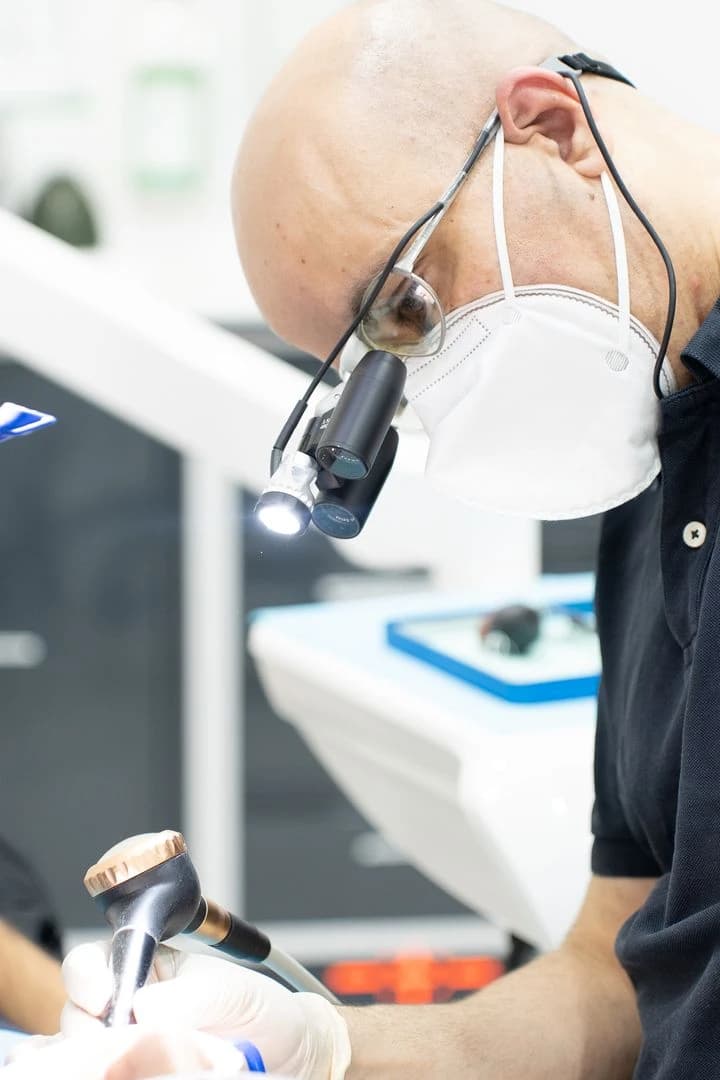
A jaw-locking and limited-opening assessment evaluates difficulty opening or closing the mouth normally. The aim is to distinguish joint-related restriction, muscle spasm, dental infection, trauma, swelling, pain-related guarding, and other conditions that may require urgent dental, medical, or specialist care.
At Bourgeois Dental Clinic in Dubai, patients are assessed according to how suddenly the limitation began, whether the jaw is locked open or closed, the presence of pain, swelling, fever, trauma, dental symptoms, bite changes, previous episodes, medication, and medical history.
Patients should not repeatedly force a locked or severely restricted jaw, particularly after trauma or when swelling, infection, or severe pain is present.
What Is Jaw Locking?
Jaw locking may describe:
- Difficulty opening the mouth fully
- The jaw becoming temporarily stuck during opening
- Difficulty closing after opening widely
- A sudden reduction in movement
- Repeated catching during movement
- Painful restriction caused by muscle spasm or inflammation
The cause cannot be determined reliably from the symptom alone.
When Is Assessment Needed?
Prompt assessment is appropriate when:
- The jaw cannot open or close normally
- Restriction developed suddenly
- Locking persists rather than resolving quickly
- There is severe pain
- The symptoms followed trauma
- There is facial or gum swelling
- Fever, pus, or a bad taste is present
- The bite changed suddenly
- Eating, drinking, or speaking is difficult
- Episodes are becoming more frequent
What Can Cause Limited Mouth Opening?
Possible contributors include:
- Temporomandibular-joint restriction
- Movement or displacement of joint structures
- Chewing-muscle spasm
- Dental infection or abscess
- Inflammation around an impacted tooth
- Recent dental treatment with prolonged opening
- Facial or jaw trauma
- Post-surgical swelling
- Scar tissue or previous injury
- Inflammatory joint disease
- Neurological or muscular conditions
- Medication-related muscle reactions
What Happens During the Assessment?
- Urgency screening: Checking breathing, swallowing, swelling, fever, trauma, bleeding, and general condition.
- History: Reviewing onset, previous episodes, pain, injury, dental treatment, infection symptoms, medication, and medical conditions.
- Jaw-movement assessment: Observing opening, closing, deviation, catching, and range without forceful manipulation.
- Joint and muscle examination: Checking tenderness, swelling, spasm, and sounds.
- Dental examination: Looking for decay, abscess, impacted teeth, fractures, gum infection, and damaged restorations.
- Bite assessment: Reviewing sudden changes that may suggest trauma, joint alteration, swelling, or dental problems.
- Imaging when indicated: Recommending dental or advanced imaging when expected to provide diagnostic benefit.
- Management plan: Discussing urgent treatment, conservative care, medication review with an appropriate clinician, or referral.
Can a Dental Infection Restrict Mouth Opening?
Yes. Infection around a tooth, gum, impacted wisdom tooth, or deeper facial space may cause pain, swelling, and muscle spasm that limits opening.
Possible warning signs include:
- Toothache
- Facial or gum swelling
- Pus
- A persistent bad taste
- Fever with worsening symptoms
- Pain when swallowing
- Increasing difficulty opening
- General weakness or deterioration
Infection-related restriction requires diagnosis and treatment rather than jaw exercises alone.
Can Trauma Cause Jaw Locking?
Yes. A blow to the face, sports injury, fall, road accident, or forceful opening may cause joint injury, fracture, dislocation, swelling, or muscle guarding.
Major trauma, facial deformity, altered bite, numbness, uncontrolled bleeding, severe swelling, or suspected fracture requires urgent medical assessment.
What Is an Open Lock?
An open lock describes difficulty closing the mouth after it has opened widely. It may occur after yawning, dental treatment, trauma, or joint instability.
Do not repeatedly force the jaw closed. Persistent inability to close requires urgent professional assessment.
What Is a Closed Lock?
A closed lock may describe a sudden reduction in mouth opening, sometimes accompanied by pain, deviation, or a change in joint sounds.
Not every restricted opening is a disc-related closed lock. Muscle spasm, infection, trauma, swelling, and other conditions must be considered.
Can Prolonged Dental Treatment Cause Temporary Limitation?
Keeping the mouth open for an extended period may temporarily fatigue the chewing muscles or irritate the joint.
Mild symptoms may improve with conservative care, but persistent restriction, severe pain, swelling, bite changes, or progressive symptoms require examination.
Should I Force the Jaw Open?
No. Forceful stretching may worsen pain, tissue irritation, muscle spasm, or joint injury.
Gentle movement may be recommended only after assessment confirms that exercises are appropriate. Visit jaw-exercise and mobility guidance for information about supervised recommendations.
Is Imaging Required?
Imaging may be considered when there is:
- Recent trauma
- Suspected fracture or dislocation
- Persistent or progressive restriction
- Possible dental infection
- Severe asymmetry
- Sudden bite alteration
- Recurrent locking
- Suspected bone or joint disease
- Need for specialist planning
The most appropriate imaging depends on whether the concern involves teeth, bone, or soft joint tissues.
How Is Limited Opening Managed?
Management depends on the cause and may include:
- Treatment of dental infection
- Management of a fractured or painful tooth
- Temporary dietary modification
- Avoiding extreme mouth opening
- Conservative comfort measures
- Selected gentle movement guidance
- Review of medication or medical contributors
- Physiotherapy
- Referral for urgent reduction, advanced imaging, pain management, or specialist care
An occlusal splint is not automatically appropriate for every locked or restricted jaw.
Can a Night Guard Prevent Locking?
A night guard may protect teeth and help selected muscle symptoms, but it cannot guarantee prevention of jaw locking.
A poorly fitting appliance or one that changes tooth contacts may require adjustment or discontinuation after professional review.
When Is Referral Needed?
- Persistent inability to open or close normally
- Recurrent locking
- Major trauma
- Suspected fracture or dislocation
- Progressive limitation
- Possible inflammatory joint disease
- Neurological symptoms
- Complex facial pain
- Need for advanced imaging
- Limited response to conservative treatment
What Are the Risks and Limitations of Care?
- The cause may not be clear at the first visit
- Symptoms may have several contributors
- Movement may remain limited temporarily
- Exercises may worsen symptoms when incorrectly selected
- Imaging or specialist care may be required
- Locking may recur
- Dental appliances do not prevent every episode
- Improvement cannot be guaranteed
When Is Emergency Medical Care Needed?
Seek urgent medical care for difficulty breathing or swallowing, rapidly spreading facial or neck swelling, major trauma, suspected jaw fracture, inability to close after injury, uncontrolled bleeding, loss of consciousness, neurological symptoms, severe weakness, confusion, or significant deterioration.
Jaw-Locking Assessment on Sheikh Zayed Road
Bourgeois Dental Clinic is located on the first floor of Indigo Sky Building, Sheikh Zayed Road, Exit 41, near Al Thanya Street in Dubai. The clinic is accessible from Al Barsha, Umm Al Sheif, Umm Suqeim, Jumeirah, Al Quoz, Barsha Heights, The Greens, Dubai Marina, and nearby communities.
Book a jaw-locking and limited-opening assessment for difficulty opening or closing, recurrent catching, pain, trauma, swelling, infection symptoms, or sudden bite changes.
Department
TMJ, Jaw Pain & Bruxism Care
FAQ
Frequently Asked Questions
BOOK AN
Appointment
Working Hours
We are here to serve you