


Knocked-Out Permanent Tooth Emergency
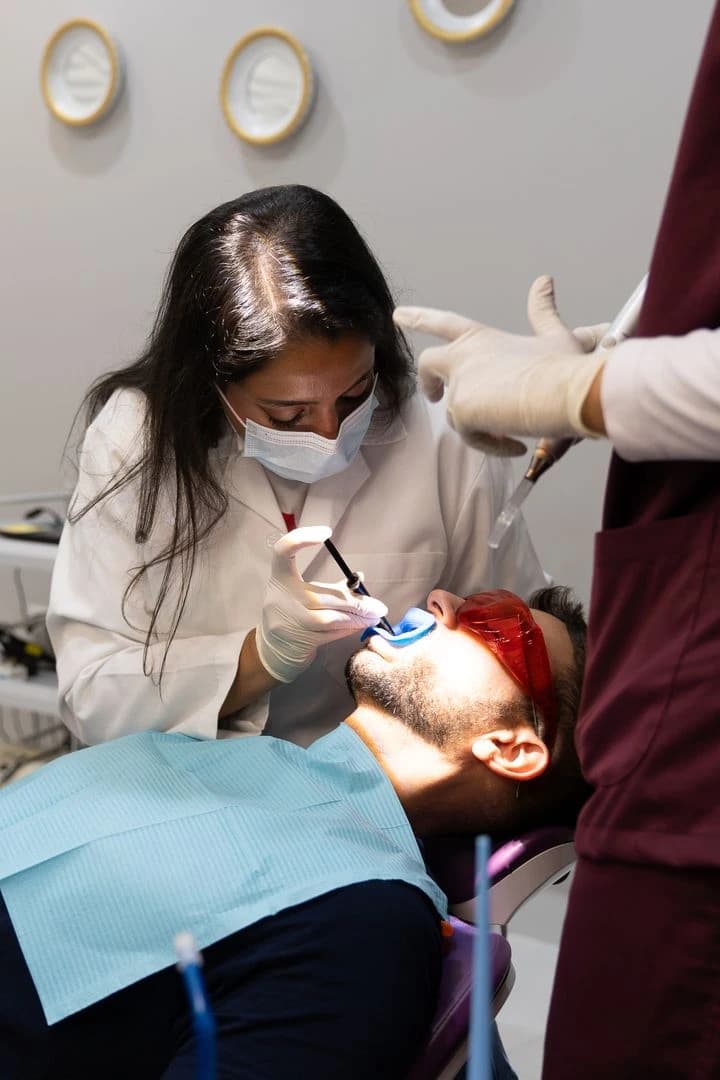
A knocked-out permanent tooth is a time-sensitive dental emergency. Prompt handling, suitable storage, and urgent professional care may improve the possibility of replanting and retaining the tooth, although successful healing cannot be guaranteed.
At Bourgeois Dental Clinic in Dubai, emergency assessment considers how long the tooth has been out of the mouth, how it was stored, root damage, contamination, associated fractures, gum and bone injury, the patient’s age and medical history, and whether hospital care is required for broader facial trauma.
A knocked-out baby tooth should not be replanted because doing so may damage the developing permanent tooth underneath.
What Should I Do Immediately?
- Find the tooth: Locate it quickly if it is safe to do so.
- Hold it by the crown: Do not touch the root more than necessary.
- Do not scrub it: Avoid scraping, brushing, disinfectants, soap, or chemicals.
- Rinse gently if dirty: Use a brief gentle rinse without damaging the root surface.
- Keep it moist: Do not allow the tooth to dry.
- Seek urgent dental care immediately: Treatment becomes less predictable as time passes.
Can the Tooth Be Put Back Into the Socket?
Immediate replantation may sometimes be appropriate for a permanent tooth when the patient is conscious, cooperative, has no risk of inhaling the tooth, and there is no concern about major facial injury.
Do not force the tooth into the socket. When uncertain, keep it in a suitable storage medium and seek urgent professional care.
What Is a Suitable Storage Medium?
The aim is to prevent the root surface from drying.
Depending on availability and professional guidance, temporary storage may include:
- A specialised tooth-preservation solution
- Cold milk
- Saline
- Keeping the tooth inside the mouth only when the patient is fully conscious and there is no swallowing or inhalation risk
Plain water is generally less suitable for prolonged storage, but allowing the tooth to dry is also harmful.
Why Should the Root Not Be Scrubbed?
The root surface contains delicate periodontal-ligament cells that may support healing after replantation.
Scrubbing, scraping, drying, or applying chemicals may damage these cells and reduce the likelihood of favourable healing.
What Happens During the Emergency Visit?
- Medical and trauma screening: Checking consciousness, facial injuries, bleeding, tetanus considerations, medication, and medical conditions.
- Socket assessment: Examining the gum, bone, bleeding, contamination, and associated injuries.
- Tooth assessment: Checking root condition, fractures, contamination, and storage history.
- Imaging: Dental X-rays may be taken to assess the socket, root, bone, and nearby teeth.
- Cleaning and replantation: The tooth and socket may be managed and the tooth repositioned when clinically suitable.
- Stabilisation: A flexible dental splint may be used for a defined period.
- Further planning: Root-canal treatment, medication, hygiene guidance, diet modification, and follow-up may be required.
Can Every Knocked-Out Tooth Be Replanted?
No. Replantation may not be appropriate when:
- The tooth is a baby tooth
- The tooth has severe root or crown damage
- The socket is severely damaged
- The tooth has remained dry for an extended period
- There is significant contamination
- A medical condition makes replantation unsuitable
- The patient cannot safely cooperate
- There is a risk of swallowing or inhalation
Does Replantation Guarantee That the Tooth Will Survive?
No. The outcome is affected by:
- Time outside the mouth
- Drying time
- Storage medium
- Root development
- Root and socket damage
- Contamination
- Associated bone injury
- Follow-up and root-canal care
Why Is the Tooth Splinted?
A flexible splint may stabilise the replanted tooth while supporting tissues begin to heal.
The splint should allow controlled physiological movement when clinically appropriate and must be reviewed and removed according to the treatment plan.
Will Root-Canal Treatment Be Needed?
Many replanted mature permanent teeth require root-canal treatment because the blood supply to the pulp is disrupted.
The timing depends on:
- Root development
- Time outside the mouth
- Clinical findings
- Signs of pulp healing or infection
- Age of the patient
- Associated trauma
What Other Injuries May Occur?
- Fracture of the socket bone
- Gum lacerations
- Loose neighbouring teeth
- Displaced teeth
- Crown or root fractures
- Lip, cheek, or tongue injuries
- Jaw fracture
- Head injury
Visit loose or displaced tooth after trauma when neighbouring teeth have moved or become mobile.
What Should I Eat After Replantation?
Patients may be advised to:
- Choose softer foods temporarily
- Avoid biting directly on the injured tooth
- Keep the mouth and splint clean
- Follow the dentist’s brushing and rinsing instructions
- Avoid contact sports until cleared
Are Antibiotics Always Required?
Medication decisions depend on contamination, injury, age, allergies, medical history, and clinical guidelines. Antibiotics may be prescribed when clinically appropriate but are not a substitute for replantation, stabilisation, imaging, and follow-up.
What About Tetanus Protection?
Some contaminated injuries may require review of tetanus immunisation status. The dentist may recommend medical advice depending on the injury and vaccination history.
What Follow-Up Is Required?
Follow-up may include:
- Splint review and removal
- Pulp and root-canal assessment
- Dental X-rays
- Monitoring tooth colour and mobility
- Checking gum and bone healing
- Assessing root resorption
- Monitoring ankylosis
- Reviewing neighbouring teeth
- Long-term restorative planning
What Is Root Resorption?
Root resorption is a possible complication in which the root structure is progressively lost after trauma.
Regular review and imaging help detect changes, although treatment cannot prevent every form of resorption.
What Is Ankylosis?
Ankylosis may occur when the root fuses directly to the surrounding bone. The tooth may lose normal mobility and may gradually appear lower than neighbouring teeth in a growing patient.
Management depends on age, growth, appearance, function, and the rate of change.
What if the Tooth Cannot Be Saved?
Future options may include:
- Temporary tooth replacement
- Adhesive bridge
- Conventional bridge
- Orthodontic space management
- Dental implant after growth and healing when appropriate
- Removable replacement
The correct option depends on age, growth, bone, neighbouring teeth, appearance, and long-term planning.
What Are the Risks and Limitations?
- The tooth may not reattach successfully
- Root-canal treatment may be needed
- Root resorption may occur
- Ankylosis may develop
- The tooth may darken
- Infection may develop
- Bone or gum healing may be incomplete
- The tooth may eventually be lost
- Long-term follow-up is required
When Is Hospital Care Required?
Seek hospital care for loss of consciousness, vomiting after head injury, severe headache, major facial trauma, suspected jaw fracture, uncontrolled bleeding, breathing difficulty, neurological symptoms, or concern that a tooth or fragment has been inhaled.
Knocked-Out Tooth Emergency Care on Sheikh Zayed Road
Bourgeois Dental Clinic is located on the first floor of Indigo Sky Building, Sheikh Zayed Road, Exit 41, near Al Thanya Street in Dubai. The clinic is accessible from Al Barsha, Umm Al Sheif, Umm Suqeim, Jumeirah, Al Quoz, Barsha Heights, The Greens, Dubai Marina, and nearby communities.
Contact the clinic immediately for a knocked-out permanent tooth. Keep the tooth moist, handle it by the crown, and avoid scrubbing the root.
Department
Dental Emergencies & Urgent Dental Care
FAQ
Frequently Asked Questions
BOOK AN
Appointment
Working Hours
We are here to serve you