


Lost or Broken Filling Emergency Care
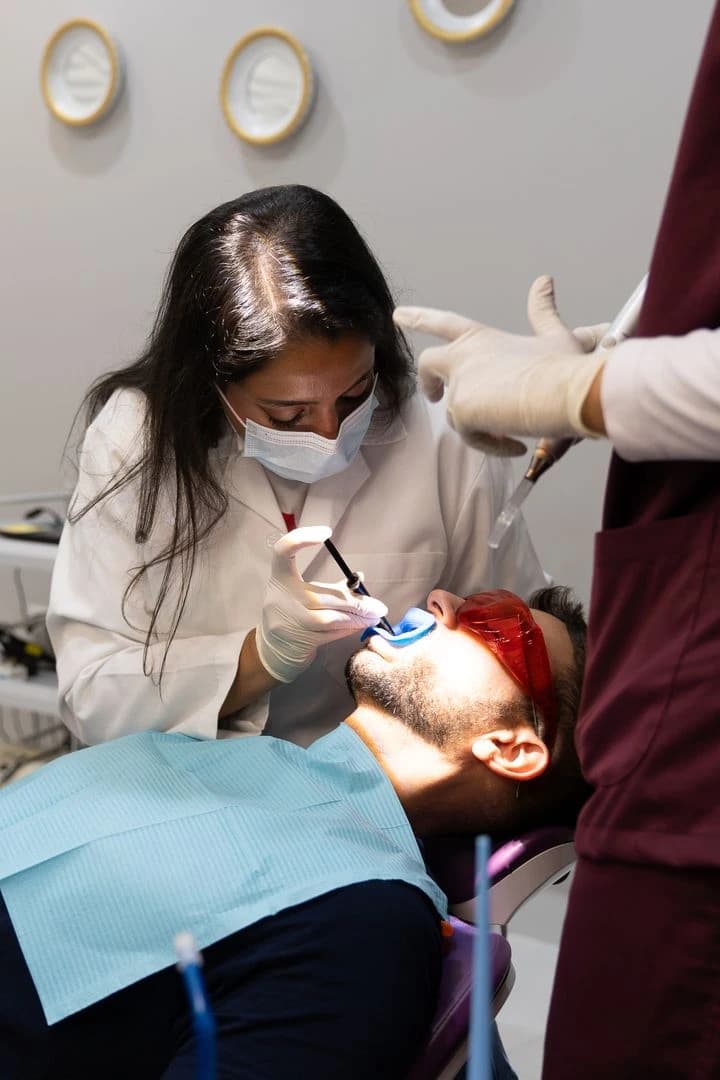
Emergency care for a lost or broken filling assesses the exposed tooth, remaining restoration, decay, cracks, sensitivity, bite, and whether the tooth can be repaired safely. Prompt assessment may reduce discomfort, protect exposed dentine, prevent food trapping, and lower the risk of further tooth fracture.
At Bourgeois Dental Clinic in Dubai, the dentist evaluates why the filling failed, how much healthy tooth remains, whether decay is present beneath or around the restoration, and whether the dental pulp or root has been affected.
A lost filling does not always mean that another filling is the correct solution. Teeth with extensive structural loss may require an onlay, crown, root-canal treatment, or another restorative plan.
Why Do Dental Fillings Break or Fall Out?
- Recurrent decay around the filling
- Heavy biting forces
- Teeth grinding or clenching
- Age and material wear
- A crack in the supporting tooth
- A very large filling with limited tooth support
- Trauma
- Food or object-related loading
- Bonding or material failure
- Changes in the bite
Which Symptoms Need Prompt Assessment?
- Severe or increasing tooth pain
- Sharp sensitivity to hot, cold, or sweet foods
- Pain when biting
- A sharp edge cutting the tongue or cheek
- Visible loss of filling material
- Food repeatedly collecting inside the tooth
- A crack or fracture around the filling
- Swelling, pus, or a bad taste
- A sudden bite change
- A loose fragment moving inside the cavity
What Happens During the Emergency Visit?
- Symptom review: Discussing when the filling failed, pain, sensitivity, biting discomfort, and previous treatment.
- Dental examination: Assessing the cavity, remaining filling, decay, cracks, gum condition, and nearby teeth.
- Pulp assessment: Testing the dental nerve when clinically appropriate.
- Bite assessment: Checking whether heavy contacts contributed to the failure.
- Imaging when indicated: Dental X-rays may be recommended to evaluate decay, roots, infection, and remaining tooth structure.
- Temporary protection: A temporary restoration may be placed when definitive treatment cannot be completed immediately.
- Definitive plan: Discussing a filling, onlay, crown, root-canal treatment, repair, or extraction.
Can the Tooth Be Refilled?
Possibly. A replacement filling may be suitable when:
- Sufficient healthy tooth structure remains
- Decay can be removed safely
- The tooth is not deeply cracked
- The pulp remains healthy or capable of recovery
- The filling can be shaped and retained appropriately
- Bite forces can be managed
When Is an Onlay or Crown More Appropriate?
An onlay or crown may be considered when:
- The lost filling was very large
- One or more cusps are weak or fractured
- There is insufficient support for another direct filling
- The tooth has extensive wear
- The tooth has received root-canal treatment
- Repeated filling fractures have occurred
The aim is to protect remaining tooth structure without removing more healthy tissue than clinically necessary.
When Is Root-Canal Treatment Needed?
Root-canal treatment may be required when decay, fracture, or restoration failure has caused irreversible pulp inflammation or infection.
Possible signs include:
- Severe spontaneous pain
- Prolonged temperature sensitivity
- Night-time pain
- Pain when biting
- Swelling or pus
- Loss of pulp vitality
Visit emergency root-canal assessment when nerve involvement is suspected.
Can a Broken Filling Hide a Cracked Tooth?
Yes. The filling may fail because the supporting tooth has cracked or weakened.
Some cracks are not fully visible until the old filling is removed. The final treatment plan may therefore change after the tooth is cleaned and examined more closely.
What Should I Do Before the Appointment?
- Keep the area gently clean
- Rinse after meals if food collects in the cavity
- Avoid chewing hard or sticky foods on the affected side
- Avoid very hot or cold foods if the tooth is sensitive
- Do not place aspirin or chemicals directly on the tooth
- Do not use household glue
- Seek urgent care if swelling, severe pain, fever, or pus develops
Can I Use a Temporary Filling Material?
Some pharmacy temporary materials may provide short-term coverage when used according to instructions, but they do not replace diagnosis or definitive treatment.
Do not place material deeply into a painful, infected, bleeding, or severely fractured tooth without professional advice.
Can the Filling Be Reattached?
Direct fillings are usually replaced rather than reattached. If a larger restoration such as an inlay or onlay has come out intact, bring it to the appointment because recementation may occasionally be possible.
Why Does the Tooth Hurt After the Filling Falls Out?
Pain may result from:
- Exposed dentine
- Deep decay
- Pulp inflammation
- A crack
- Food pressure inside the cavity
- A sharp fractured edge
- Infection around the root
- Heavy bite pressure
Can a Lost Filling Cause Infection?
Yes. The open cavity may allow bacteria and food to reach deeper tooth structures. Swelling, pus, severe pain, fever, or a persistent bad taste requires prompt assessment.
When Is Extraction Considered?
Extraction may be discussed when:
- The tooth is split or deeply fractured
- Too little sound tooth structure remains
- The root is fractured
- Decay extends too deeply for reliable restoration
- Periodontal support is inadequate
- Infection cannot be controlled predictably
How Can Future Filling Failure Be Reduced?
- Treat decay early
- Maintain regular dental reviews
- Avoid biting hard objects
- Assess grinding and clenching
- Use a night guard when clinically appropriate
- Maintain good oral hygiene
- Choose an appropriate restoration for the amount of remaining tooth structure
What Are the Risks and Limitations?
- The tooth may require more treatment than expected
- A hidden crack may be discovered
- Temporary fillings may fracture or fall out
- Sensitivity may continue after repair
- Root-canal treatment may become necessary
- A crown or onlay may be required
- Some teeth cannot be restored
- Repeated loading may damage the new restoration
- No outcome can be guaranteed before full assessment
When Is Hospital Care Required?
Hospital care is rarely needed for a lost filling alone. Seek urgent medical care if dental symptoms are accompanied by breathing or swallowing difficulty, rapidly spreading facial swelling, severe weakness, confusion, major trauma, or uncontrolled bleeding.
Lost-Filling Emergency Care on Sheikh Zayed Road
Bourgeois Dental Clinic is located on the first floor of Indigo Sky Building, Sheikh Zayed Road, Exit 41, near Al Thanya Street in Dubai. The clinic is accessible from Al Barsha, Umm Al Sheif, Umm Suqeim, Jumeirah, Al Quoz, Barsha Heights, The Greens, Dubai Marina, and nearby communities.
Book urgent care for a lost or broken filling when a tooth becomes painful, sensitive, sharp, difficult to chew on, or exposed after restoration failure.
Department
Dental Emergencies & Urgent Dental Care
FAQ
Frequently Asked Questions
BOOK AN
Appointment
Working Hours
We are here to serve you