


Lost or Loose Crown Emergency Care
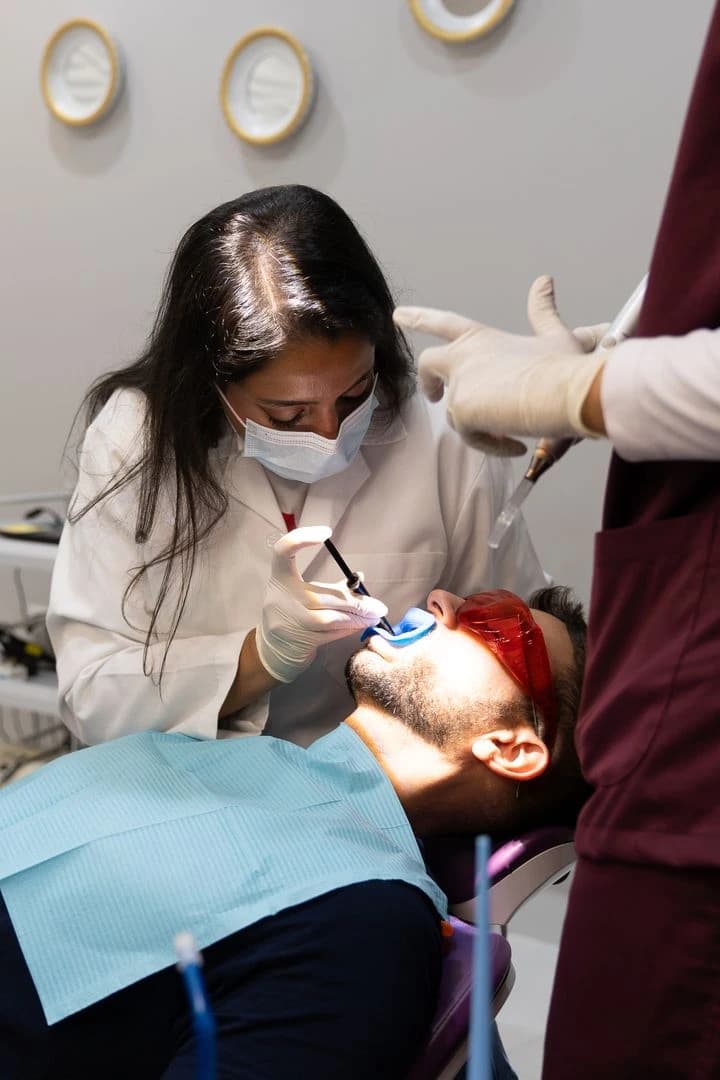
Emergency care for a lost or loose crown assesses the crown, supporting tooth, cement, remaining structure, decay, cracks, sensitivity, and bite. Prompt review may protect the prepared tooth, reduce sensitivity, prevent crown damage, and determine whether the crown can be recemented or requires replacement.
At Bourgeois Dental Clinic in Dubai, the dentist evaluates why the crown became loose or came off, whether the underlying tooth has fractured, whether decay is present, and whether the crown still fits accurately.
Do not use household glue to reattach a crown. These materials may damage the tooth and crown, irritate oral tissues, prevent proper seating, and make professional treatment more difficult.
Why Do Dental Crowns Become Loose or Fall Off?
- Cement failure
- Decay beneath the crown
- Fracture of the supporting tooth
- Insufficient remaining tooth structure
- Heavy bite forces
- Grinding or clenching
- Crown wear or fracture
- A loose core or post
- Changes in tooth position
- Trauma
Which Symptoms Need Prompt Assessment?
- Severe tooth pain
- Strong temperature sensitivity
- Pain when biting
- A crown moving during chewing
- Bad taste or odour from beneath the crown
- Visible decay or a broken tooth underneath
- Swelling or pus
- A sharp crown edge
- A sudden bite change
- A crown on an implant becoming loose
What Should I Do When a Crown Comes Off?
- Keep the crown in a clean container
- Bring it to the dental appointment
- Keep the tooth gently clean
- Avoid chewing hard foods on the affected side
- Avoid very hot or cold foods if sensitive
- Do not force the crown back into place
- Do not use household glue
- Seek prompt care if pain, swelling, or fracture is present
What Happens During the Emergency Visit?
- History: Reviewing when the crown loosened, pain, sensitivity, previous treatment, and trauma.
- Crown inspection: Checking fractures, wear, internal cement, margins, and fit.
- Tooth assessment: Evaluating decay, cracks, remaining structure, core, post, and gum condition.
- Pulp and root assessment: Testing the tooth and reviewing previous root-canal treatment where relevant.
- Bite assessment: Checking whether heavy contacts contributed to loosening.
- Imaging when indicated: Dental X-rays may be used to assess decay, roots, posts, infection, and restorability.
- Treatment plan: Discussing recementation, temporary protection, repair, a new crown, root-canal treatment, or extraction.
Can the Same Crown Be Recemented?
Possibly. Recementation may be suitable when:
- The crown remains intact
- The fit is accurate
- The supporting tooth is not fractured
- There is no significant decay
- The core or post is stable
- The margins remain acceptable
- The bite can be adjusted appropriately
When Can the Crown Not Be Reused?
- The crown is fractured or distorted
- Decay has changed the tooth shape
- The supporting tooth has fractured
- The internal surface is damaged
- The margins no longer fit
- The crown has repeatedly loosened
- The restoration is unaesthetic or structurally inadequate
Can the Tooth Under the Crown Decay?
Yes. Although the crown material does not decay, the natural tooth at the margin or underneath may develop decay.
Risk may increase with:
- Plaque accumulation
- Food trapping
- Dry mouth
- Poor crown margins
- High sugar exposure
- Difficulty cleaning
- Ageing cement or restoration damage
Can a Tooth Break Under a Crown?
Yes. A supporting tooth may develop a crown fracture, root fracture, core failure, or post-related problem.
Treatment depends on the location and severity of the damage and may include repair, a new core, a new crown, root-canal treatment, gum treatment, or extraction.
Why Does the Tooth Become Sensitive After the Crown Falls Off?
The prepared tooth may have exposed dentine and reduced insulation from temperature and pressure.
Severe, spontaneous, prolonged, or worsening pain may indicate pulp inflammation, decay, a crack, or infection and requires prompt assessment.
Can a Crown Be Temporarily Replaced?
A temporary dental cement may occasionally be used professionally when the tooth and crown are suitable. Pharmacy temporary products may provide brief support but may prevent complete seating or create excess material.
Do not force a crown into place if the tooth or crown appears damaged.
What if the Crown Is Loose but Has Not Fallen Off?
A loose crown should be assessed before it is swallowed, inhaled, fractured, or allows further decay and food trapping.
Avoid chewing on it and do not repeatedly test the movement.
What if the Crown Is on an Implant?
A loose implant crown may involve:
- A loose screw
- Cement failure
- Fractured restorative material
- Component wear
- Heavy bite forces
- An implant or tissue-related complication
The crown should be assessed before repeated tightening or recementation.
Can Grinding Make a Crown Loose?
Grinding or clenching may increase mechanical stress on crowns, posts, cores, cement, teeth, and implant components.
Visit restoration protection for bruxism when crowns or other restorations repeatedly loosen or fracture.
When Is Root-Canal Treatment Needed?
Root-canal treatment may be required when the supporting tooth develops irreversible pulp inflammation or infection.
Possible symptoms include severe spontaneous pain, prolonged sensitivity, biting pain, swelling, pus, or radiographic signs of infection.
When Is Extraction Considered?
Extraction may be considered when:
- The supporting tooth is deeply fractured
- The root is fractured
- Decay extends too far below the gum
- Insufficient structure remains for a reliable restoration
- Periodontal support is inadequate
- Infection cannot be controlled predictably
Can the Crown Be Swallowed or Inhaled?
A loose crown may be swallowed or, less commonly, inhaled.
Seek urgent medical care if there is coughing, breathing difficulty, chest discomfort, wheezing, or concern that the crown entered the airway.
How Can Future Crown Loosening Be Reduced?
- Maintain good oral hygiene around crown margins
- Attend regular dental reviews
- Avoid biting hard objects
- Assess grinding or clenching
- Use a protective appliance when indicated
- Treat decay and gum disease
- Review repeated loosening rather than simply recementing
- Check bite contacts after new treatment
What Are the Risks and Limitations?
- The old crown may not be reusable
- Decay or fractures may be discovered underneath
- Temporary cement may fail
- Sensitivity may continue
- A new crown may be required
- Root-canal treatment may become necessary
- The supporting tooth may be non-restorable
- Repeated loosening may continue if the cause is not corrected
- No outcome can be guaranteed before examination
When Is Hospital Care Required?
Hospital care is required when a crown or component may have been inhaled and the patient develops breathing symptoms. Seek urgent medical care for rapidly spreading swelling, breathing or swallowing difficulty, major trauma, uncontrolled bleeding, or severe deterioration.
Loose-Crown Emergency Care on Sheikh Zayed Road
Bourgeois Dental Clinic is located on the first floor of Indigo Sky Building, Sheikh Zayed Road, Exit 41, near Al Thanya Street in Dubai. The clinic is accessible from Al Barsha, Umm Al Sheif, Umm Suqeim, Jumeirah, Al Quoz, Barsha Heights, The Greens, Dubai Marina, and nearby communities.
Book urgent care for a lost or loose crown when the crown moves, falls out, causes pain or sensitivity, affects the bite, or exposes a damaged tooth.
Department
Dental Emergencies & Urgent Dental Care
FAQ
Frequently Asked Questions
BOOK AN
Appointment
Working Hours
We are here to serve you