

Best Cosmetic Dentistry in Dubai: Which Treatment Is Right for Your Smile?
The best cosmetic dentistry in Dubai is not one procedure, material or standard smile. It is a personalised plan that improves the concern you want to change while respecting your teeth, gums, bite, facial features and long-term maintenance. Whitening may be appropriate when colour is the main concern; bonding can improve selected chips or small gaps; veneers may address particular shape, surface or colour concerns; aligners can move teeth; and crowns are generally reserved for teeth that need broader structural coverage.
At the Cosmetic Dentistry Department at Bourgeois Dental Clinic, planning begins with an examination rather than a predetermined package. This guide explains how common options differ, which questions affect suitability and how to compare complete treatment pathways without assuming that the most extensive option is the best one.
Quick answer: how is the right cosmetic treatment selected?
The starting point is the cause of the concern. A dark tooth caused by an old root-canal treatment is not planned in the same way as general surface staining. A gap caused by tooth size differs from one related to gum disease or tooth movement. Uneven edges may need minor reshaping, bonding or no treatment, while worn teeth may require an assessment of grinding and bite forces before cosmetic restoration.
The dentist evaluates oral health, remaining enamel and tooth structure, gum levels, alignment, bite, existing fillings or crowns and the number of teeth visible when you smile. Your preferences also matter: how much change you want, whether you accept tooth preparation, how quickly you want treatment completed and how much maintenance you are prepared to undertake.
Cosmetic dentistry treatments compared
| Main concern | Possible treatment | Important limitation |
|---|---|---|
| Healthy teeth with general staining | Professional whitening | Does not change fillings, crowns or veneers |
| Small chips, edge defects or selected gaps | Composite bonding | Can stain, chip or need polishing and repair |
| Selected shape, surface or resistant colour concerns | Porcelain or E-max veneers | May require irreversible enamel preparation |
| Crowding, rotations or bite-related tooth position | Clear aligners or orthodontics | Requires suitable biology, wear compliance and retention |
| Structurally weakened or heavily restored tooth | Dental crown or other restorative coverage | Requires more tooth coverage than a veneer |
| Uneven or excessive visible gum tissue | Gum contouring after periodontal assessment | Not suitable for every gum or bone relationship |
| Several connected cosmetic concerns | Smile design and staged smile makeover | Each included procedure still needs its own indication |
1. Professional teeth whitening for colour improvement
Professional whitening is often the most conservative starting point when healthy natural teeth are generally darker or stained. It changes the colour of natural tooth structure but does not whiten composite fillings, bonding, crowns or veneers. Existing restorations may therefore look different after treatment and could need separate review if they are visible.
A Zoom teeth-whitening assessment in Dubai considers the type of discolouration, sensitivity history, cracks, cavities, gum health and existing restorations. Whitening cannot correct tooth shape, close a physical gap or move teeth. It should also not be used to conceal a colour change that first requires diagnosis.
2. Composite bonding for selected chips and gaps
Composite bonding uses tooth-coloured resin placed directly onto the tooth. It may be suitable for small chips, uneven edges, limited shape changes or selected spaces. Because treatment is usually additive, it can preserve more natural structure than options that require broader preparation, although some finishing or adjustment may still be needed.
Bonding is not maintenance-free. The material can lose polish, stain, chip or wear and may require repair or replacement. Suitability depends on bite forces, grinding, the size of the planned addition, tooth position and oral habits. The composite-bonding service in Dubai evaluates whether bonding can create stable contours that remain cleanable and functional.
3. Porcelain and E-max veneers for selected smile changes
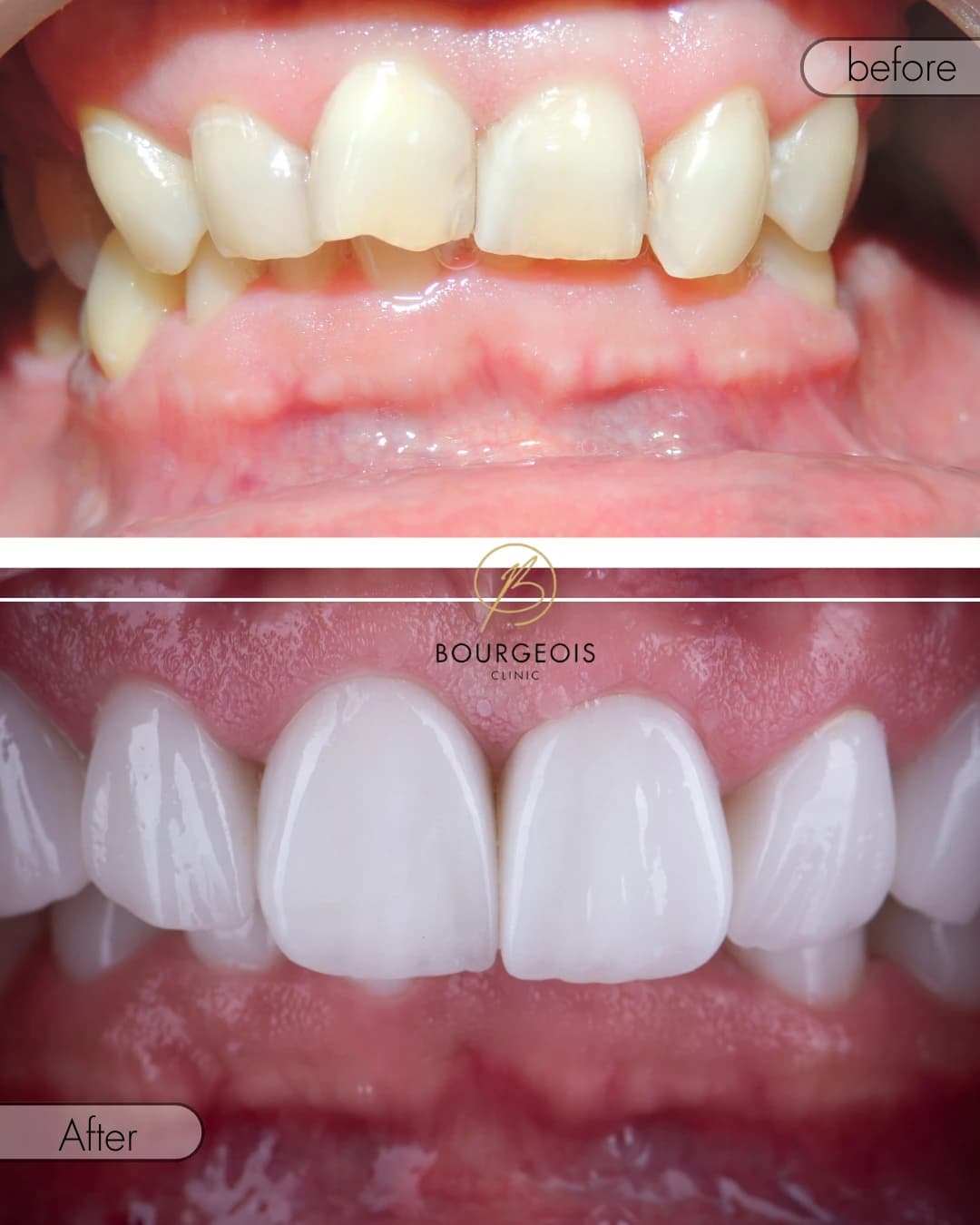
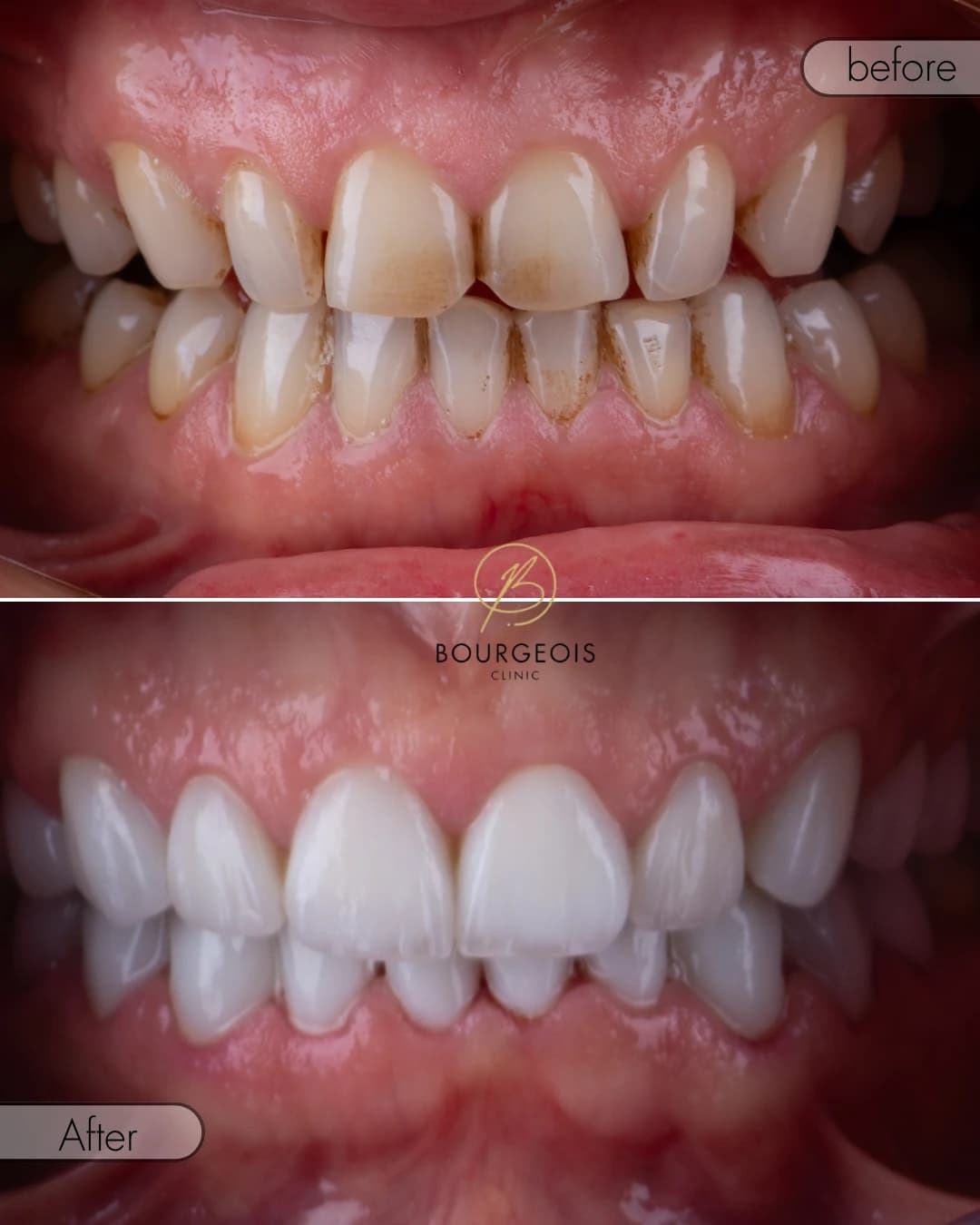
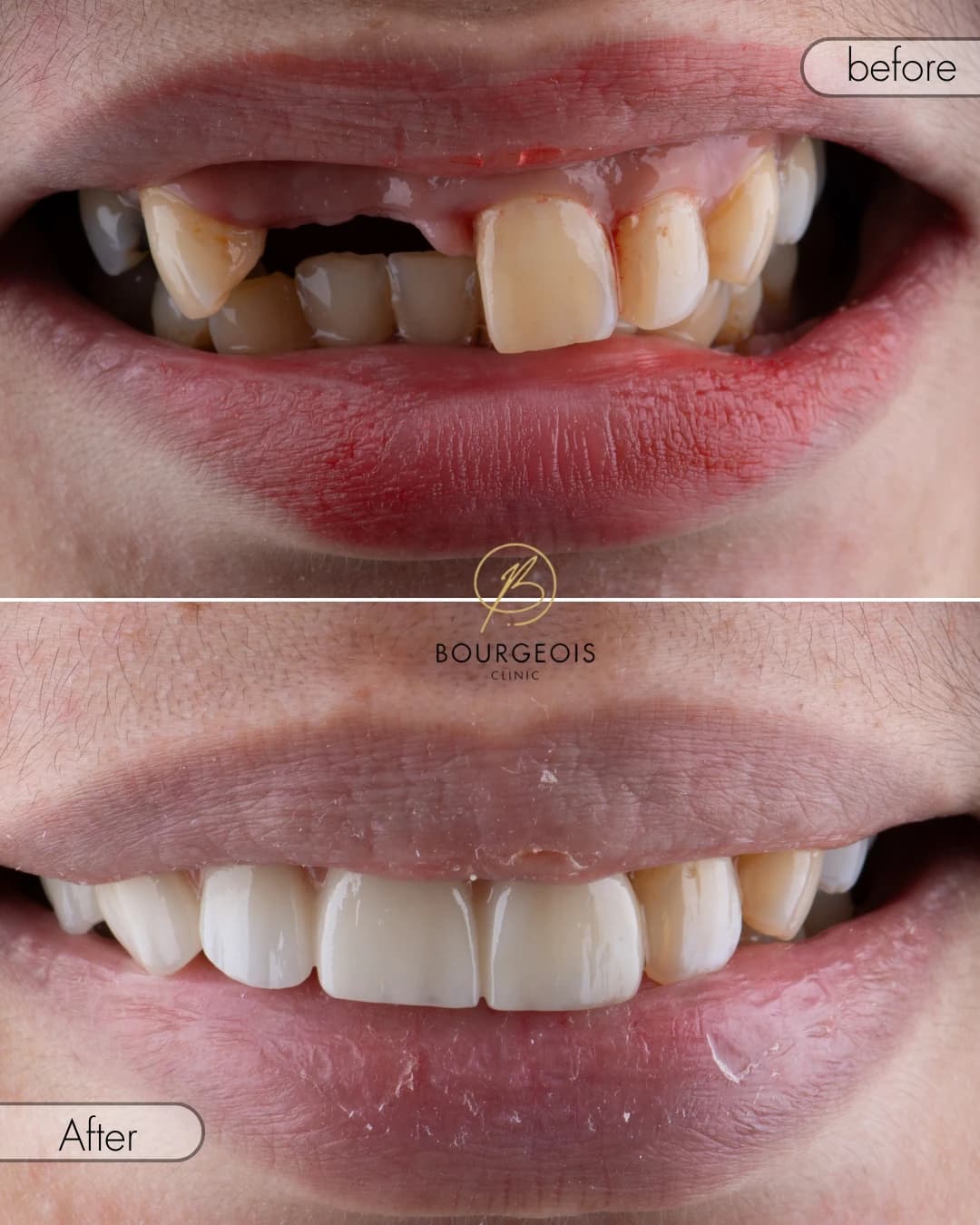
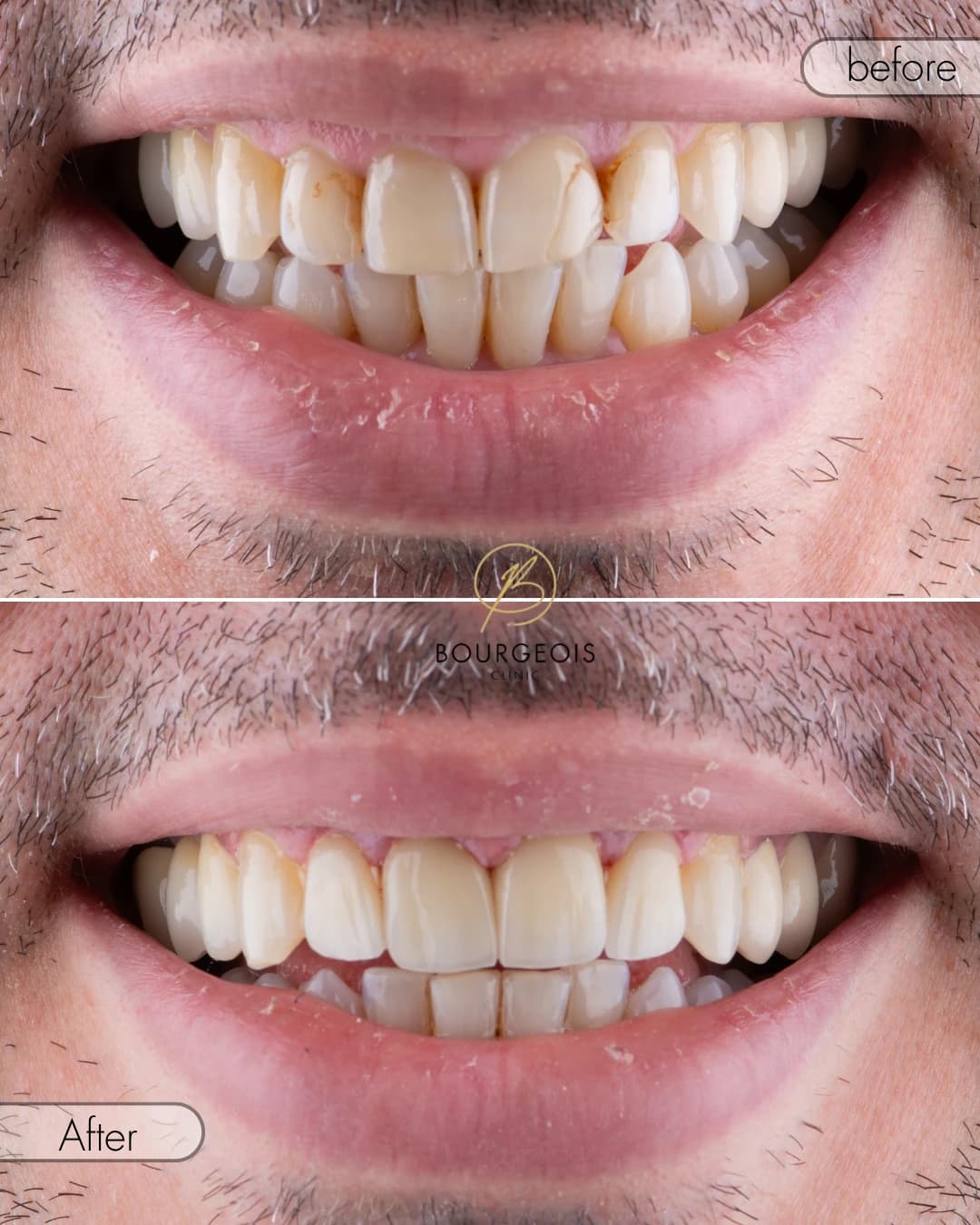
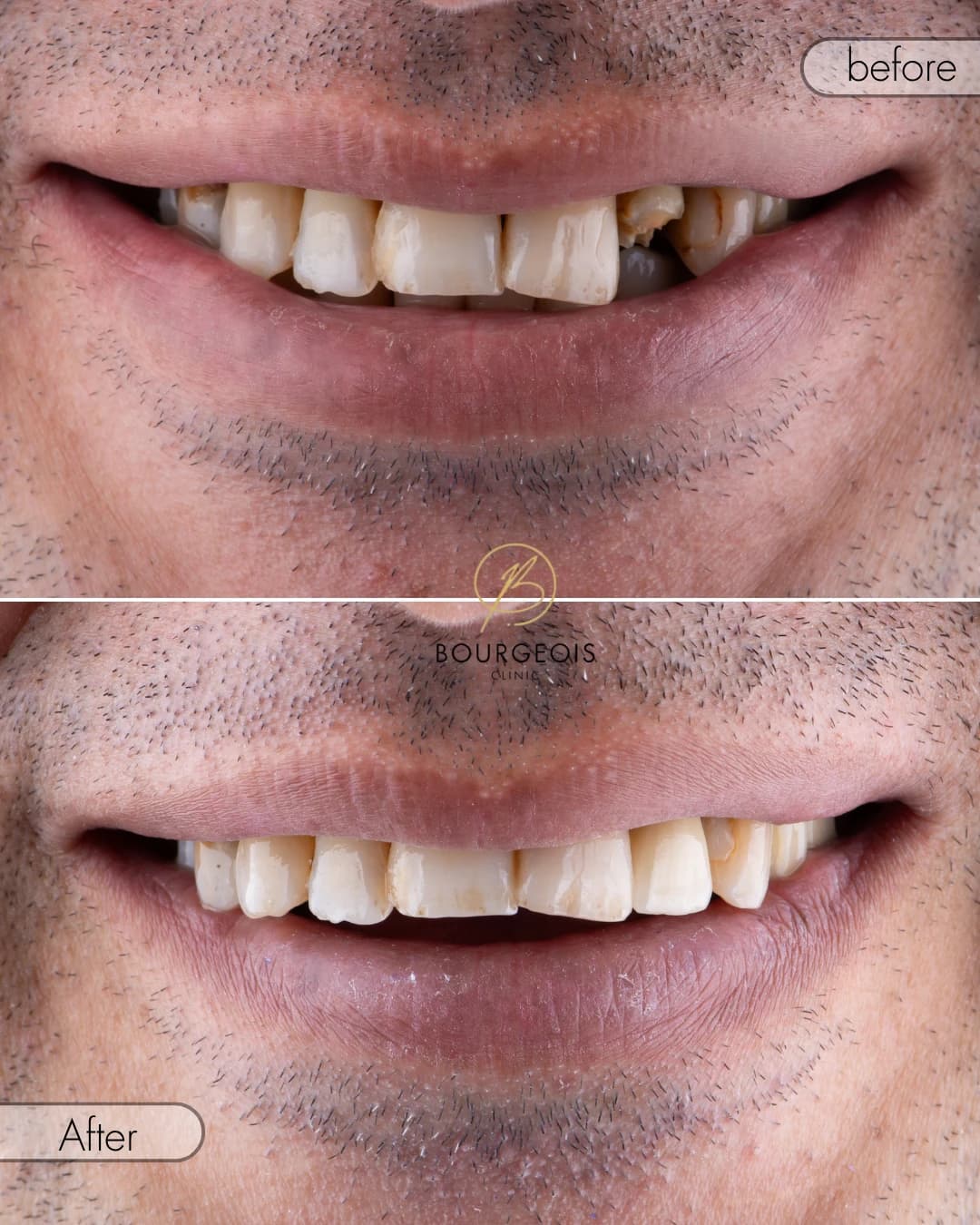
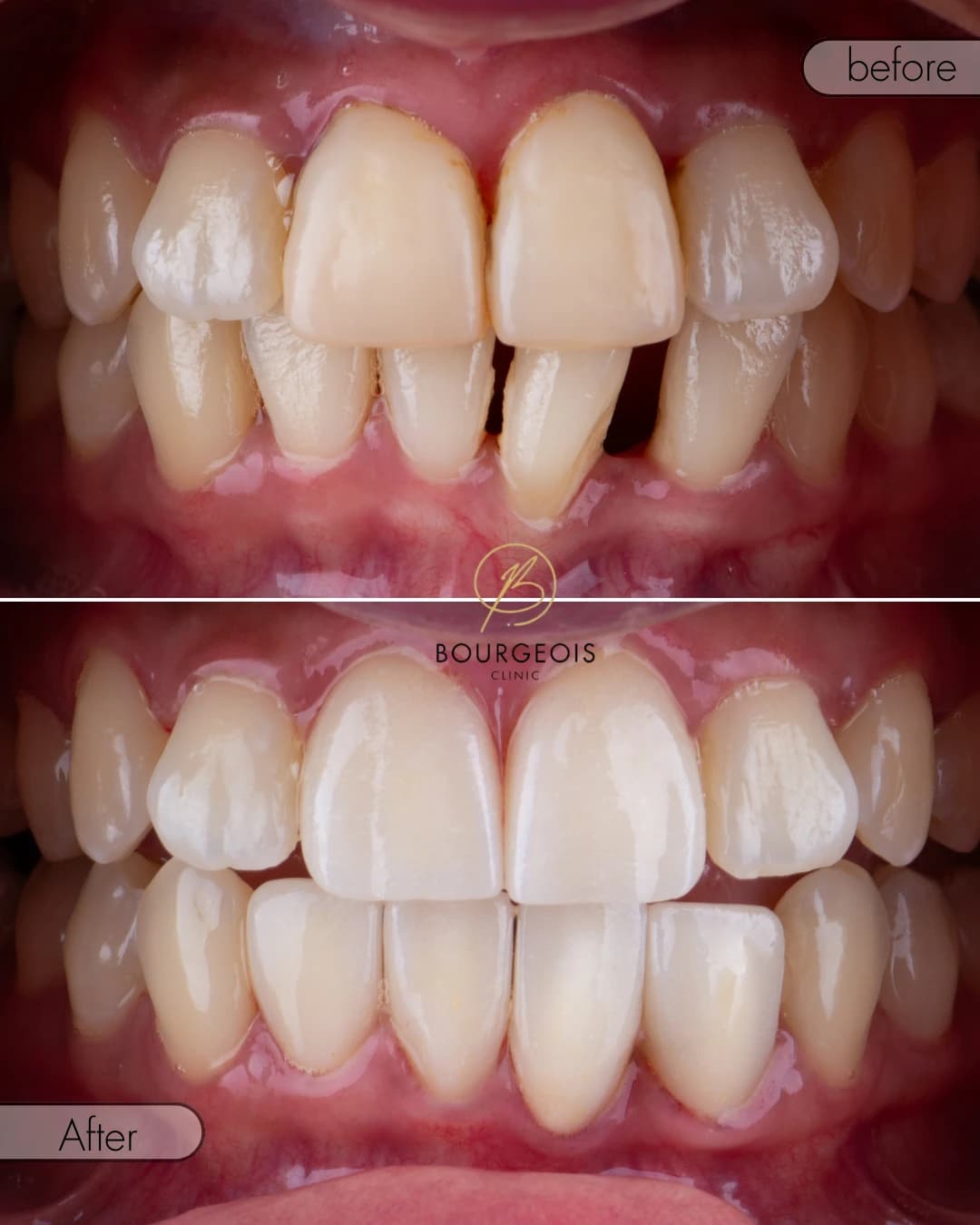
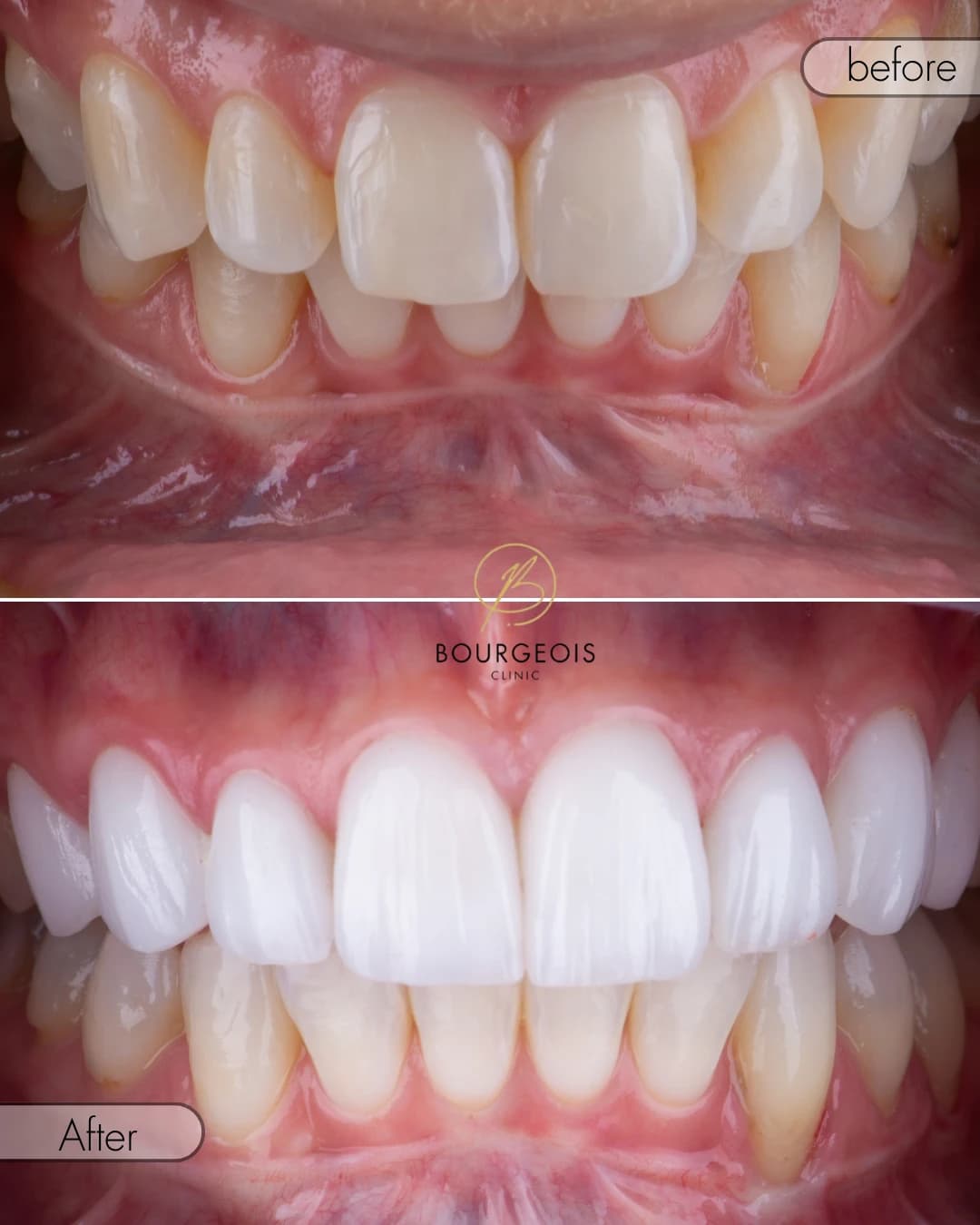
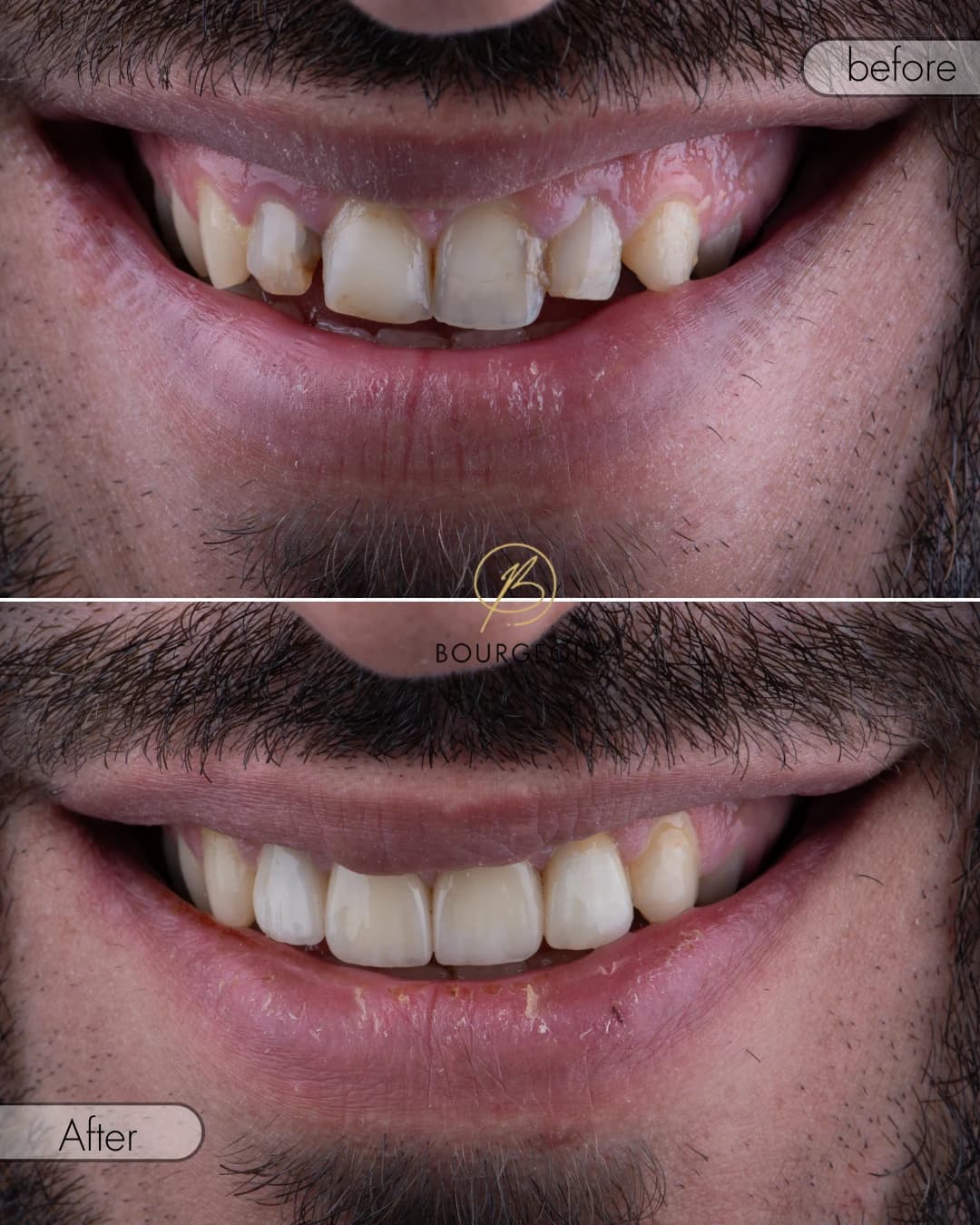
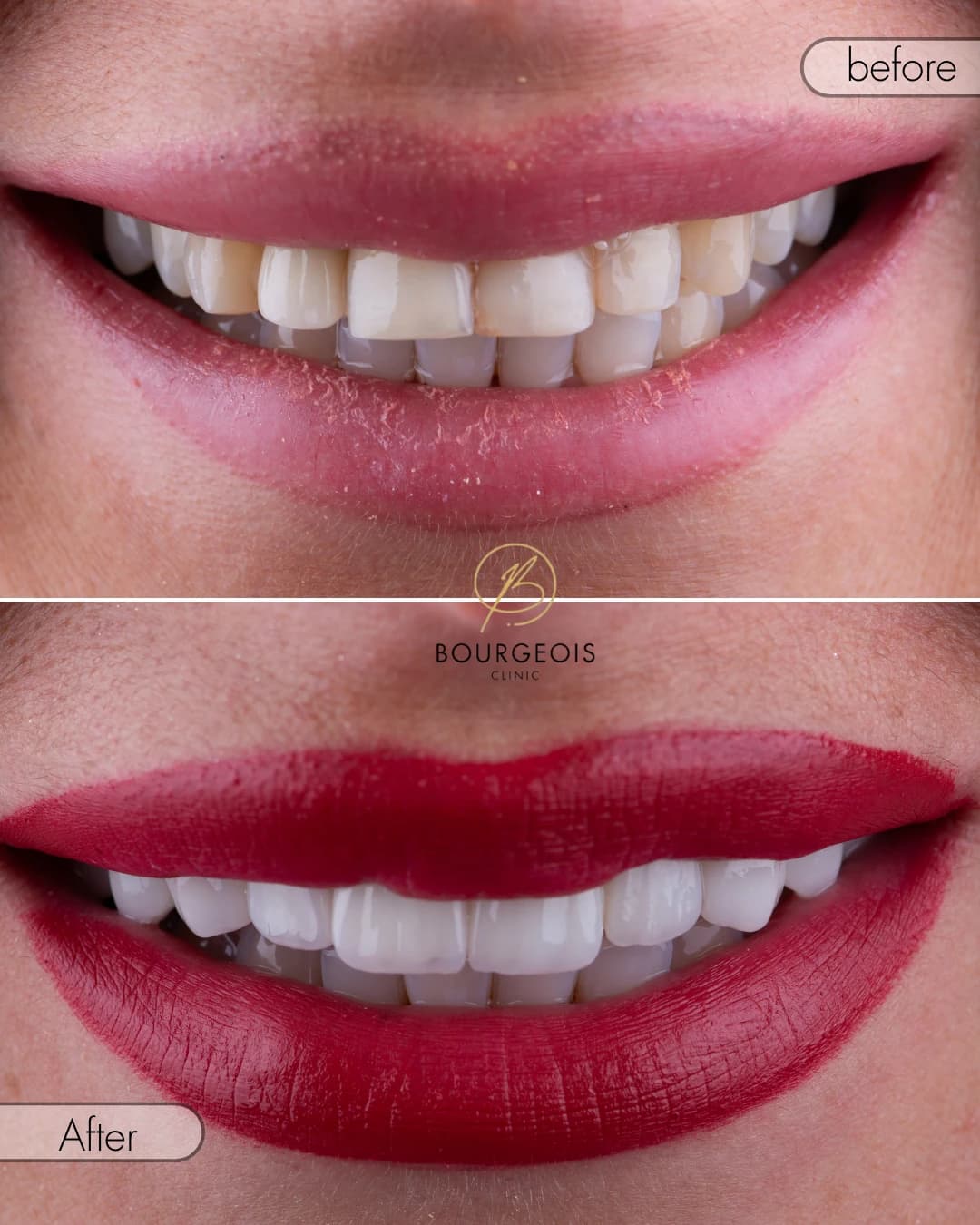
Veneers are thin restorations bonded to the front and sometimes edge of a tooth. They may be considered when several visible teeth have suitable enamel but need coordinated changes in shape, proportions, surface texture or colour that cannot be achieved predictably with whitening or limited bonding.
Veneers are not automatically the correct treatment for every crooked, dark or damaged tooth. The plan must consider preparation depth, available enamel, tooth position, gum health, bite and the final material thickness. Some cases can be largely additive; others require reduction to avoid bulky contours. Explore porcelain veneers and E-max veneers in Dubai as assessment-based options rather than interchangeable labels.
4. Clear aligners when tooth position is the main issue
If the main concern is crowding, rotation, spacing or a bite relationship, orthodontic movement may be more conservative than covering the teeth with restorations. Clear aligners can move suitable teeth gradually through a planned series of trays. They do not change the intrinsic colour or surface quality of a tooth, so whitening or limited bonding may be considered after alignment when appropriate.
Aligner suitability depends on the type and complexity of movement, gum and bone health, patient compliance and the need for attachments, refinement or specialist orthodontic care. Retainers are required after active movement. A clear-aligner assessment in Dubai should distinguish a primarily orthodontic problem from one better managed restoratively or through a combined plan.
5. Crowns when a tooth needs structural restoration
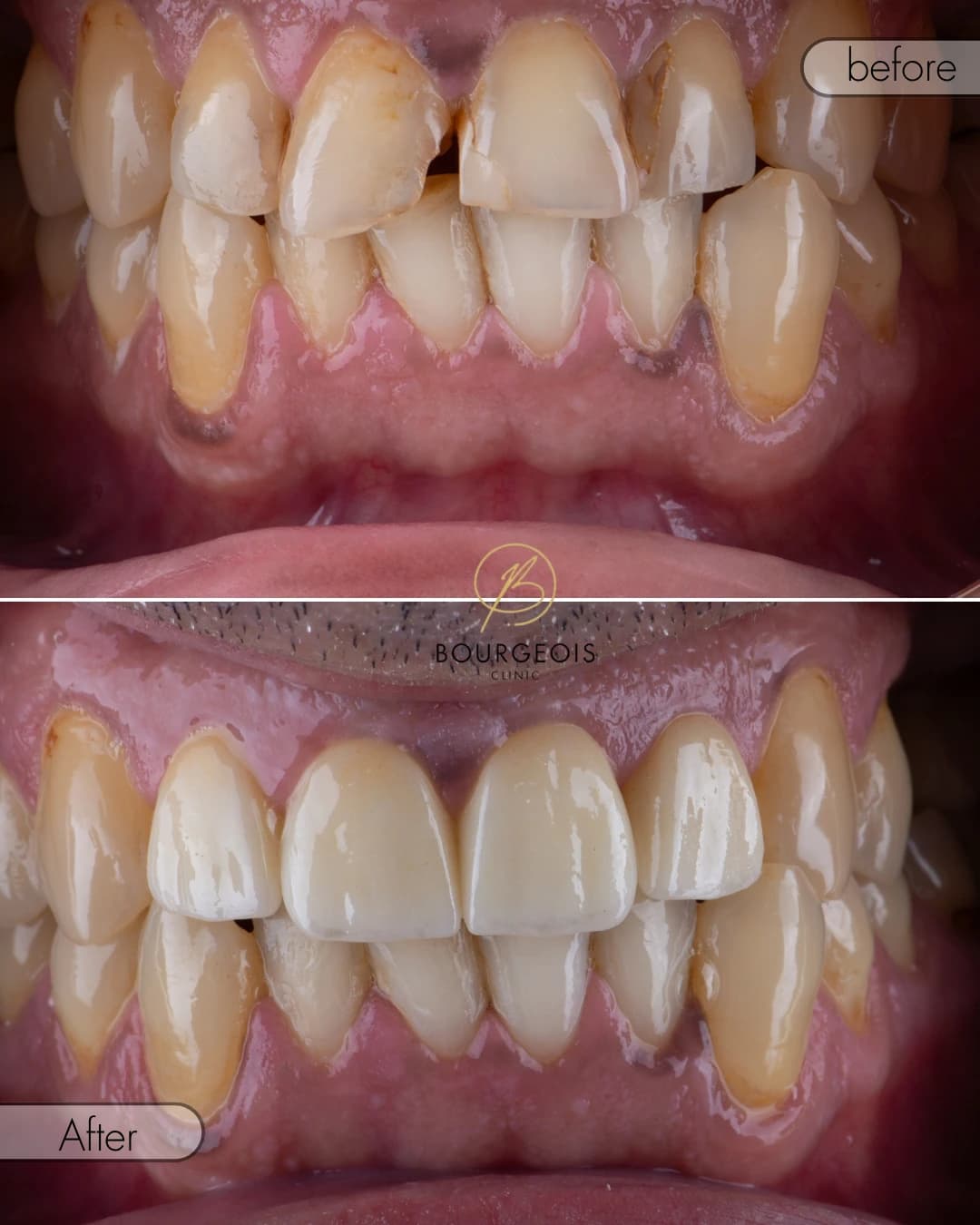
A crown covers more of the tooth than a veneer. It may be appropriate when a tooth is heavily filled, fractured, weakened after root-canal treatment or otherwise requires broad structural coverage. Choosing a crown for an intact tooth only because a cosmetic change is requested may remove more tooth structure than a conservative alternative.
The dental-crown service in Dubai assesses how much sound tooth remains, the condition of any previous restoration, the bite and the margin position. A cosmetic plan may include a crown for one structurally compromised tooth while neighbouring healthier teeth receive whitening, bonding, veneers or no restorative treatment.
6. Gum contouring and smile balance
The gum line influences visible tooth proportions and symmetry. When gum tissue is uneven or covers more of the tooth than expected, contouring may be considered after checking gum health, bone position, tooth eruption and the reason for the appearance. Removing tissue without understanding this relationship can produce unstable or biologically unsuitable margins.
A gum-contouring consultation in Dubai determines whether minor reshaping is appropriate or whether periodontal treatment, crown lengthening, orthodontics or no procedure is safer. Healthy gum tissue is also essential before bonding veneers or placing new restorations.
When is a smile makeover appropriate?
A smile makeover is a coordinated treatment plan, not a single product. It may combine oral-health treatment with whitening, alignment, bonding, veneers, replacement of failing restorations or gum-related care. The benefit of a combined plan is sequencing: each step prepares for the next and avoids designing one treatment in isolation.
For example, alignment may reduce the amount of enamel preparation needed for veneers; whitening before bonding can help select a stable lighter shade; and treating inflamed gums before impressions improves margin planning. A smile-makeover assessment should explain which procedures are necessary, which are optional and which alternatives preserve more natural tissue.
Why oral health comes before cosmetic treatment
Cosmetic treatment should not be placed over untreated disease. Cavities, active gum inflammation, infection, failing restorations, unexplained pain and unstable bite problems need diagnosis first. Treatment may then be completed, stabilised or incorporated into the cosmetic plan.
This does not mean every patient needs extensive preliminary work. It means the dentist must identify risks before changing tooth surfaces or gum contours. A healthy foundation helps restorations fit, allows margins to be cleaned and reduces the chance that untreated disease interrupts the cosmetic result.
Conservative sequencing can reduce unnecessary treatment
The most conservative sequence often moves from reversible or low-intervention options toward more invasive ones only when they are indicated. A possible pathway is oral-health stabilisation, then alignment, whitening, minor reshaping or bonding, followed by veneers or crowns only for teeth that still need them. The exact order varies with diagnosis.
A trial smile, photographs, digital planning or a physical mock-up may help communicate proposed proportions before final restorations. These tools support discussion but do not guarantee the biological response or exact final result. The smile-design service in Dubai should connect visual planning to clinical examination and realistic material limits.
What makes a cosmetic result look natural?
Natural-looking dentistry is not simply the whitest shade. It considers tooth width and length, edge position, surface texture, translucency, symmetry, gum display and how the smile relates to the lips and face. Slight variations may look more believable than identical, opaque teeth.
The desired result is personal. Some patients prefer subtle correction; others want a brighter and more uniform smile. Before treatment, discuss shade, shape, visibility, reference photographs and what you do not want. When multiple restorations are planned, a preview or provisional stage may provide a useful opportunity to assess speech, comfort and appearance.
How long does cosmetic dentistry last?
No cosmetic treatment is permanent. Whitening can fade as new stains accumulate. Bonding can require repolishing or repair. Veneers and crowns may last for years but can chip, debond, wear or eventually need replacement. Aligners move teeth, but retainers are needed to limit relapse. Gum results also depend on health, tissue response and ongoing care.
Longevity varies with diagnosis, material, preparation, bonding conditions, bite forces, grinding, diet, smoking, hygiene and attendance for maintenance. Ask what repairs are possible, what replacement may involve and whether a night guard or other protective measure is advised for your case.
How much does cosmetic dentistry cost in Dubai?
There is no single cosmetic-dentistry price because a whitening visit, one bonded edge and a multi-tooth restorative plan are different treatments. Fees can depend on the number of teeth, material, laboratory work, treatment complexity, preliminary care, provisional restorations, orthodontic stages and follow-up.
Request an itemised written plan that separates required oral-health treatment from optional cosmetic changes. It should state which teeth are included, which material or technique is proposed, whether temporary restorations and retainers are included, and what maintenance is expected. Compare complete plans rather than an advertised per-tooth figure detached from diagnosis.
Questions to ask at a cosmetic consultation
- What is causing the colour, shape, gap or alignment concern?
- Are my teeth and gums healthy enough to begin?
- Which option preserves the most healthy tooth structure?
- Would whitening, alignment or bonding reduce the number of veneers or crowns?
- Is any preparation irreversible, and approximately where is it needed?
- How will the proposed change affect my bite and cleaning?
- Can I review suitable cases, a mock-up or a proposed shade and shape?
- What repairs, reviews and future replacements should I budget for?
- What is included in the written quotation?
Warning signs in cosmetic treatment advertising
Be cautious with universal packages, guaranteed lifespans, claims that one material is best for everyone, treatment offered without examination, or promises of permanent whitening and maintenance-free veneers. The phrase no-prep should not be interpreted as automatically suitable or reversible. Similarly, painless and risk-free are not responsible guarantees for an individual clinical procedure.
A good consultation should include limitations, alternatives and the option of no treatment. It should also identify when another area—such as orthodontics, gum care, root-canal treatment, oral surgery or implant dentistry—needs coordinated assessment.
Book a cosmetic dentistry consultation in Dubai
Bourgeois Dental Clinic provides cosmetic, general, restorative, orthodontic and gum-related dental care on Sheikh Zayed Road, near Al Thanya Street. A cosmetic dental consultation can compare suitable procedures according to your oral health, priorities, desired level of change, timing and maintenance expectations.
Book an appointment in Dubai to discuss tooth colour, chips, gaps, worn edges, alignment, veneers, bonding, whitening or a coordinated smile makeover. The best plan is the one supported by diagnosis and informed consent—not the largest treatment package.