


Broken Denture and Dental-Appliance Repair
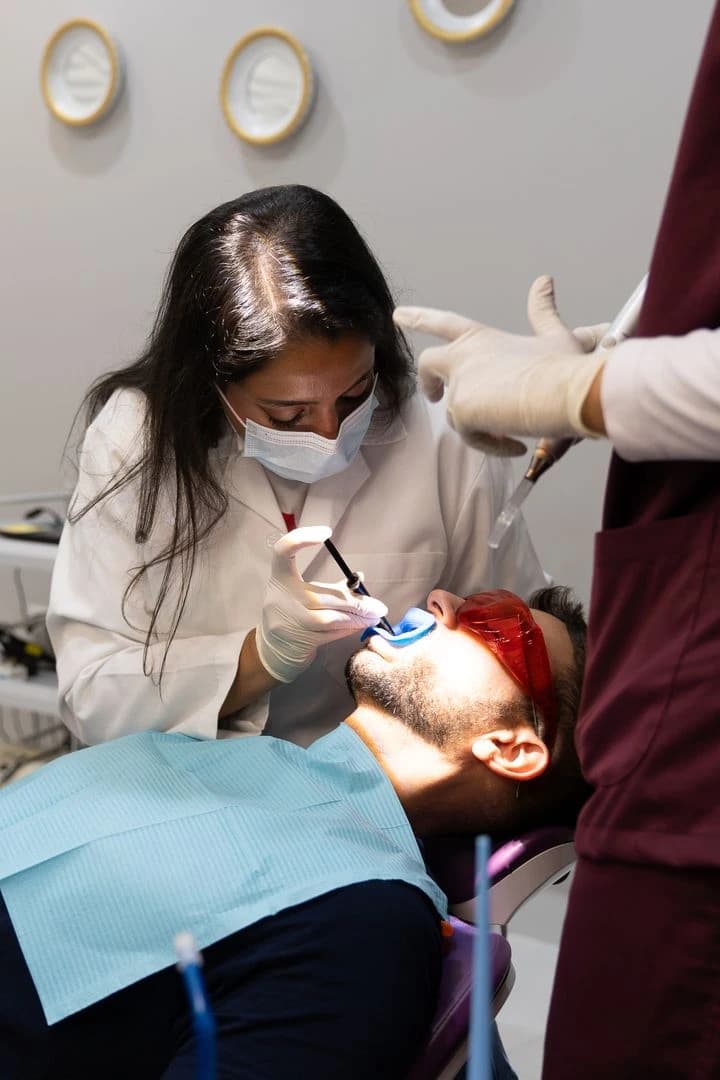
Broken denture and dental-appliance repair begins with assessing the appliance, oral tissues, supporting teeth or implants, bite, fit, and cause of failure. Depending on the damage, urgent care may involve smoothing a sharp edge, temporary stabilisation, laboratory repair, adjustment, relining, component replacement, or fabrication of a new appliance.
At Bourgeois Dental Clinic in Dubai, the dentist may assess complete dentures, partial dentures, flexible dentures, retainers, night guards, occlusal splints, removable orthodontic appliances, and other removable dental devices.
Do not use household glue to repair a denture or dental appliance. Glue may contain unsuitable substances, prevent accurate professional repair, alter the fit, damage oral tissues, and cause the appliance to fracture again.
Which Appliance Problems Need Prompt Assessment?
- A denture cracked into two or more pieces
- A sharp edge cutting the gum, tongue, or cheek
- A denture tooth becoming loose or falling out
- A broken clasp on a partial denture
- An appliance that no longer fits
- A night guard that has split or worn through
- A retainer that has cracked or distorted
- An appliance causing ulcers or bleeding
- A loose attachment on an implant-supported denture
- A removable appliance that presents a swallowing risk
What Happens During the Assessment?
- Appliance inspection: Checking cracks, fractures, missing teeth, damaged clasps, rough edges, distortion, and cleanliness.
- Fit assessment: Evaluating retention, stability, pressure areas, bite contacts, and movement during speech or chewing.
- Oral examination: Checking ulcers, swelling, infection, gum changes, supporting teeth, and implant tissues.
- Cause assessment: Reviewing trauma, dropping the appliance, age, wear, bite forces, fit changes, and previous repairs.
- Repairability decision: Determining whether the appliance can be repaired safely or requires replacement.
- Temporary care: Smoothing sharp areas or protecting tissues when appropriate.
- Laboratory or replacement planning: Arranging repair, relining, adjustment, component replacement, or a new appliance.
Can a Broken Denture Be Repaired?
Possibly. Repairability depends on:
- Location and extent of the fracture
- Denture material
- Age and condition of the appliance
- Previous repairs
- Fit before the fracture
- Condition of the denture teeth and clasps
- Changes in the gums, bone, teeth, or implants
- Whether the repaired appliance can remain safe and stable
When Is Replacement Better Than Repair?
Replacement may be more appropriate when:
- The denture is severely worn
- The fit was poor before the fracture
- Several repairs have already failed
- Multiple teeth or components are damaged
- The bite is unstable
- The denture base is extensively distorted
- The supporting tissues have changed significantly
- A durable repair cannot be achieved
Can I Continue Wearing a Cracked Denture?
A cracked denture may fracture further, injure oral tissues, become unstable, or create a swallowing risk.
Stop using it when:
- The crack is spreading
- The denture bends or separates
- It has sharp edges
- It no longer stays in place
- It causes pain or ulcers
- A loose piece may detach
Can I Glue the Denture at Home?
No. Household glue can alter the fit, irritate the mouth, contaminate the repair surface, and make professional repair more difficult.
An inaccurately repaired denture may apply harmful pressure to the gums, teeth, or implants.
What if a Denture Tooth Falls Out?
Keep the tooth and bring it to the appointment. It may sometimes be reattached if:
- The tooth is intact
- The denture base is not extensively damaged
- The original position can be reproduced
- The bite remains suitable
A replacement tooth may be needed when the original is damaged or unavailable.
Can a Broken Clasp Be Repaired?
A damaged partial-denture clasp may sometimes be repaired or replaced, but the supporting tooth and denture fit must be assessed.
A broken clasp may indicate:
- Metal fatigue
- Poor fit
- Tooth movement
- Heavy removal forces
- Changes in the supporting tooth
- Damage elsewhere in the denture
Why Does a Denture Keep Breaking?
Repeated fracture may be related to:
- Poor fit
- Loss of gum or bone support
- An unstable bite
- Grinding or clenching
- Thin or weakened material
- Previous repairs
- Dropping the denture
- Damage to supporting teeth or implants
Repeated repair without addressing the cause may provide only temporary benefit.
Can a Denture Be Relined Instead of Replaced?
Relining may improve the fit of a denture when the base remains suitable but the gums and supporting bone have changed.
Relining may not correct:
- Severe tooth wear
- Major bite problems
- Extensive fractures
- Poor denture design
- Multiple damaged components
- Significant appearance concerns
Visit denture relining and adjustment for more information.
Can a Broken Night Guard Be Repaired?
Minor rough areas may sometimes be adjusted, but split, distorted, heavily worn, or unstable appliances commonly require replacement.
A broken night guard should be reviewed for:
- Tooth movement
- Grinding wear
- Material thinning
- Changes after dental treatment
- Uneven pressure
- Bite changes
Visit occlusal-splint adjustment and review.
Can a Broken Retainer Be Repaired?
Some retainers can be repaired, while others require replacement.
A new scan or impression may be needed when:
- The retainer is distorted
- The teeth have moved
- The wire has broken
- The acrylic is extensively fractured
- The appliance no longer fits
What if an Implant-Supported Denture Breaks?
Implant-supported dentures may develop:
- Fractured denture teeth
- Cracks in the denture base
- Worn or loose attachments
- Loose screws
- Damage to the framework
- Heavy bite contacts
The denture, implant components, surrounding tissues, and bite should be assessed before repair.
Can a Sharp Edge Be Smoothed?
A sharp edge may sometimes be smoothed professionally as temporary or definitive care, depending on the appliance and damage.
Do not file the appliance at home because this may weaken it or change the fit.
What Should I Bring to the Appointment?
- All broken pieces
- Any loose denture teeth or clasps
- The appliance storage case
- Previous spare dentures or retainers when available
- Information about when and how the break occurred
- Details of recent dental treatment
How Can Future Breakage Be Reduced?
- Handle the appliance over a towel or basin of water
- Store it in a protective case
- Avoid bending clasps
- Do not use hot water
- Use cleaning products suitable for the material
- Do not chew unsuitable hard foods with unstable dentures
- Attend fit and maintenance reviews
- Assess grinding or bite problems
- Do not continue wearing a loose or damaged appliance
What Are the Risks and Limitations?
- Not every appliance can be repaired
- A repair may be temporary
- Colour or shape matching may be limited
- The fit may remain inadequate without relining or replacement
- Repeated fracture may continue
- Supporting teeth or implants may require treatment
- Laboratory work may be required
- A new appliance may require several appointments
- No repair can guarantee permanent resistance to future damage
When Is Hospital Care Required?
Seek urgent medical care when a loose appliance component may have been inhaled or causes choking, breathing difficulty, persistent coughing, wheezing, chest pain, or significant swallowing difficulty.
Broken Denture and Appliance Care on Sheikh Zayed Road
Bourgeois Dental Clinic is located on the first floor of Indigo Sky Building, Sheikh Zayed Road, Exit 41, near Al Thanya Street in Dubai. The clinic is accessible from Al Barsha, Umm Al Sheif, Umm Suqeim, Jumeirah, Al Quoz, Barsha Heights, The Greens, Dubai Marina, and nearby communities.
Book an assessment for a broken denture or dental appliance when it cracks, fractures, becomes loose, develops sharp edges, loses a tooth or clasp, no longer fits, or causes oral injury.
Department
Dental Emergencies & Urgent Dental Care
FAQ
Frequently Asked Questions
BOOK AN
Appointment
Working Hours
We are here to serve you