



Dental Veneers in Dubai
- 5Specialists
- 5Documented Cases
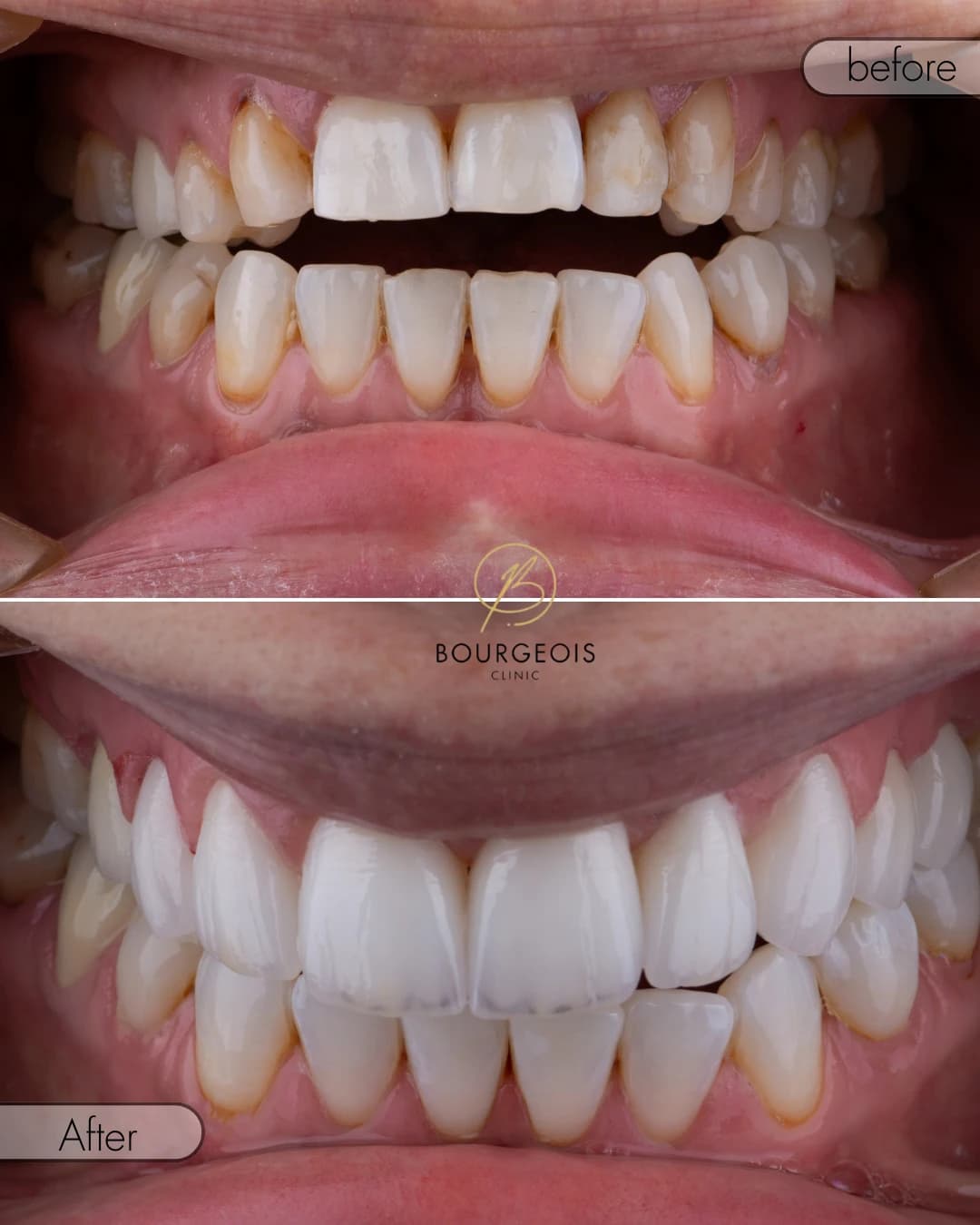
Cases
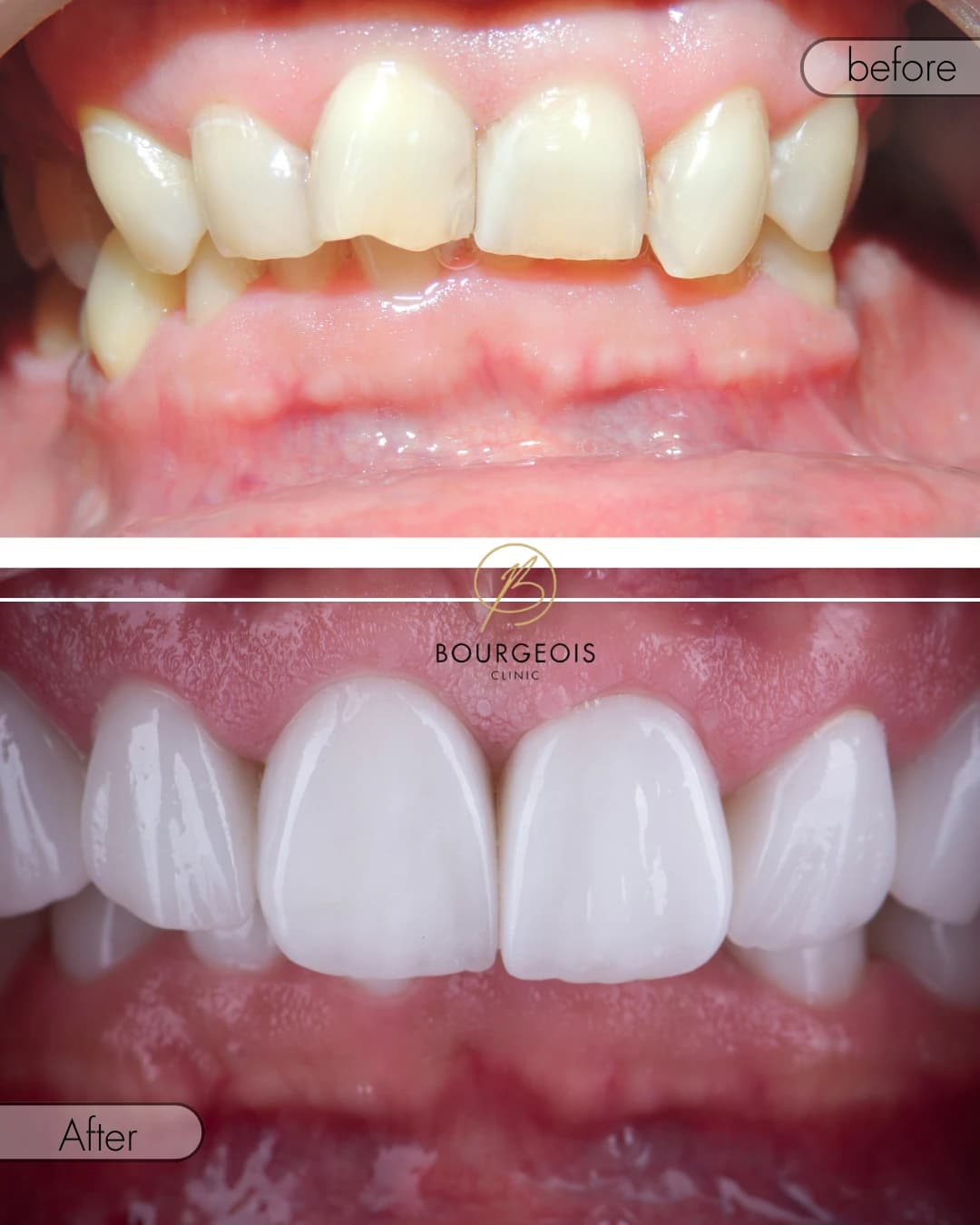
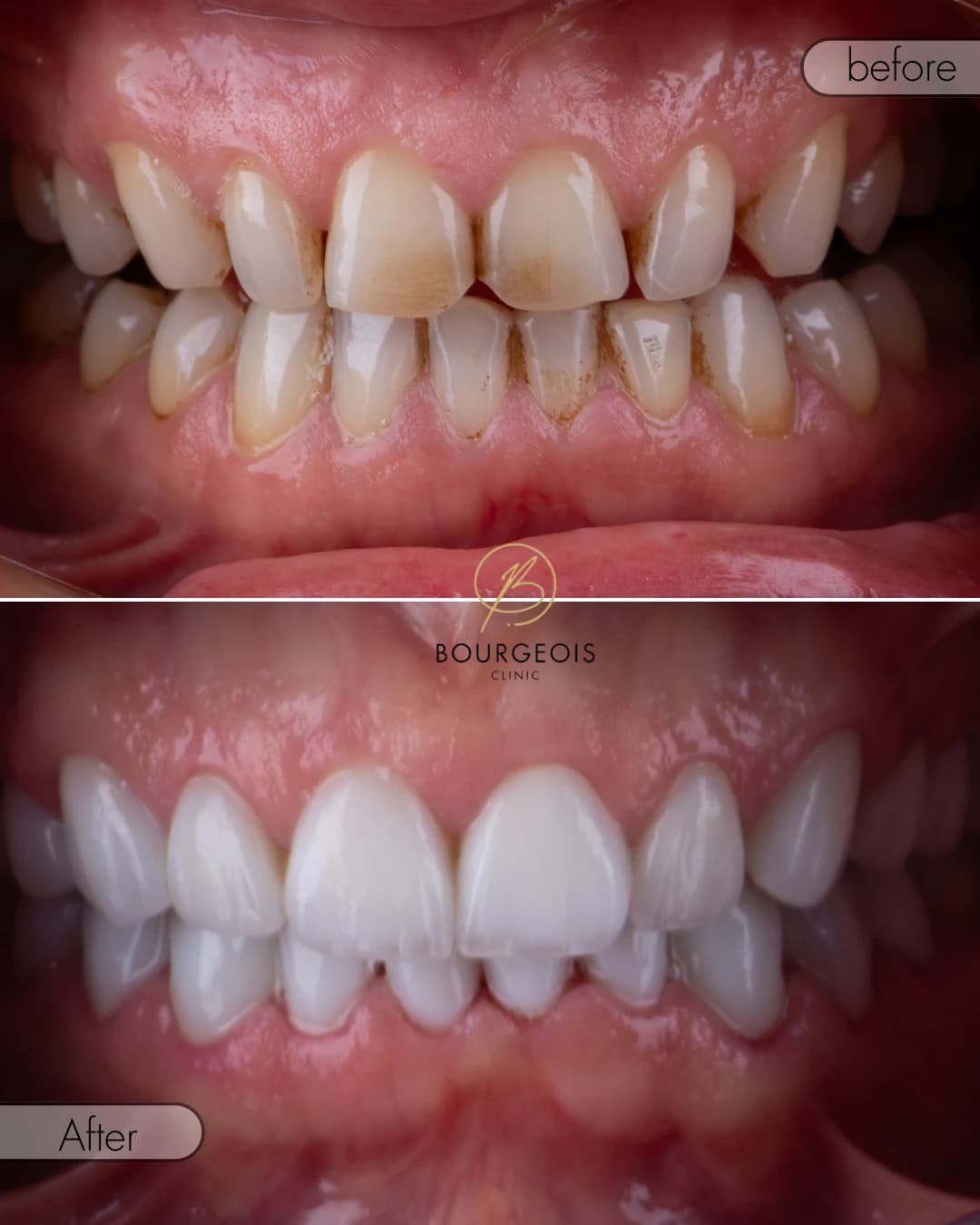
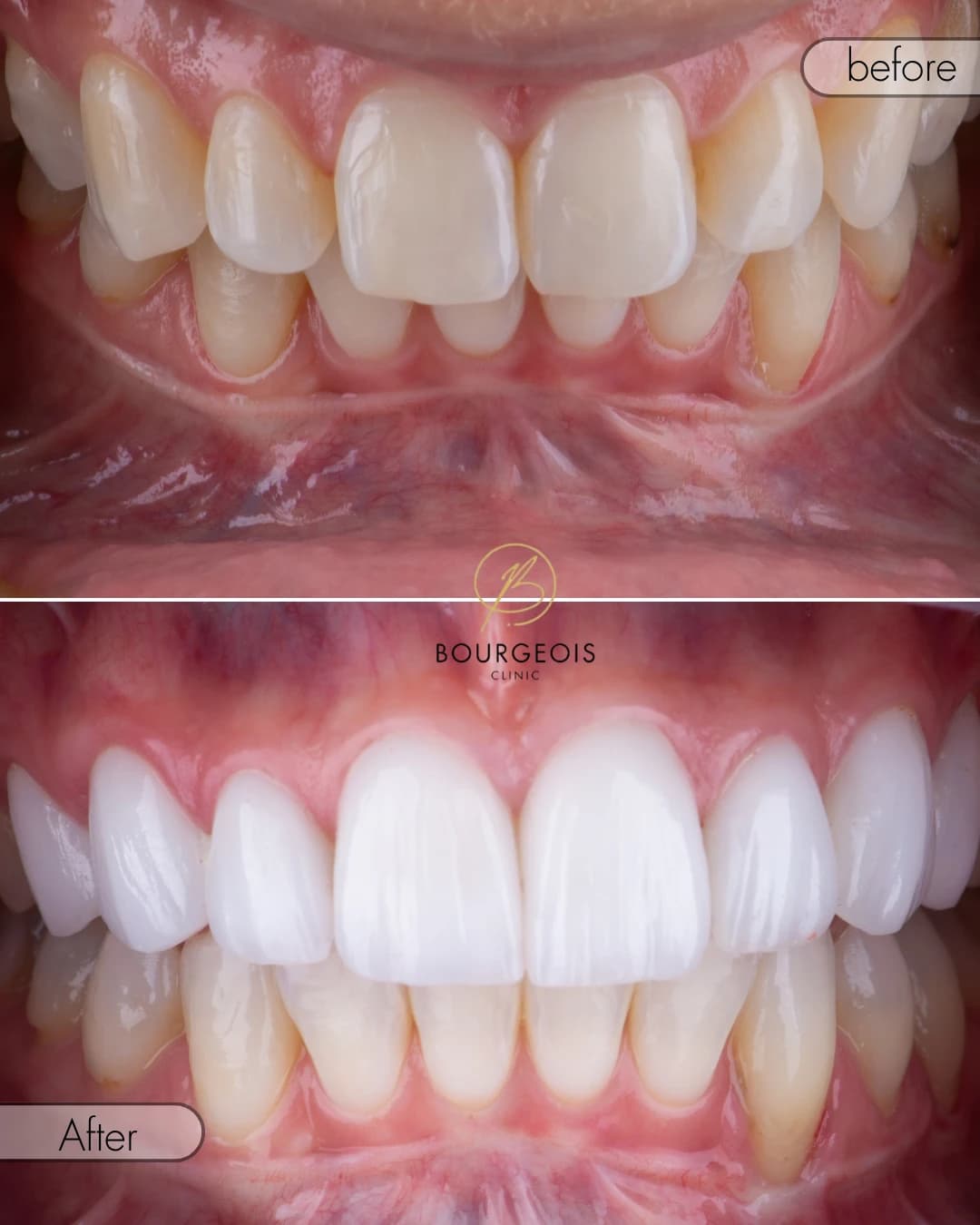
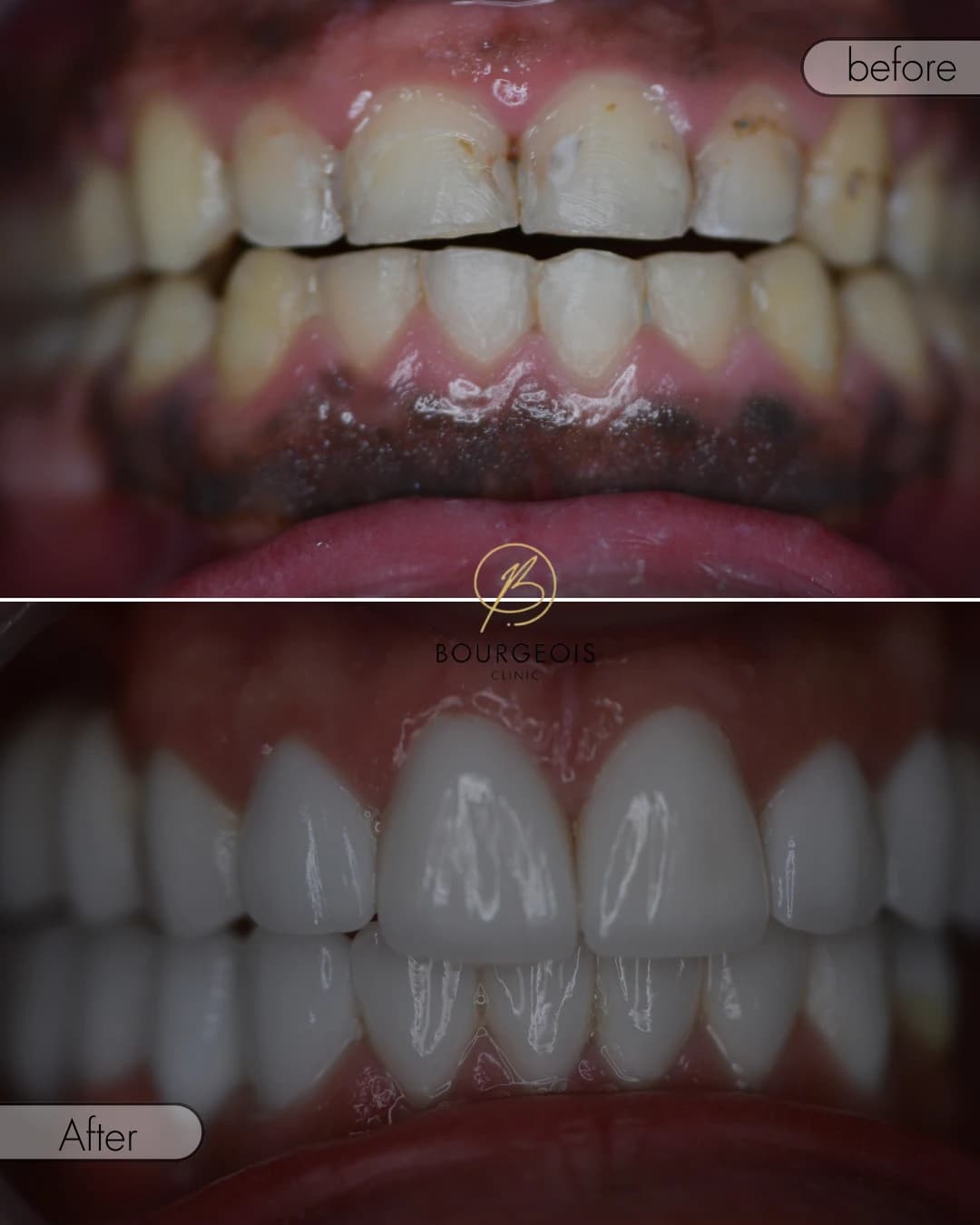
Dental veneers are thin, custom-designed restorations placed on the visible surfaces of selected teeth. They may be considered when a patient wants to improve several cosmetic details together, such as persistent discolouration, uneven edges, small gaps, worn areas or differences in tooth shape. At Bourgeois Dental Clinic, veneer planning starts with the health and structure of the teeth rather than with a standard smile template.
Quick answer: which type of veneer is suitable?
There is no single veneer material or preparation method that is right for every smile. Porcelain veneers are laboratory-made ceramic restorations. E-max veneers are a specific ceramic option commonly made from lithium disilicate. Composite veneers use tooth-coloured resin shaped directly or indirectly. The appropriate choice depends on the tooth condition, the planned colour and shape change, the amount of enamel available, the bite, maintenance expectations and whether future repair is likely.
What can dental veneers improve?
Veneers may help selected patients improve the visible appearance of:
- Front teeth with colour changes that do not respond sufficiently to whitening
- Small chips, worn edges or mild surface irregularities
- Teeth that look short, narrow, uneven or asymmetrical
- Small spaces between otherwise healthy teeth
- Minor visual rotations or alignment differences
- Old veneers or visible restorations that require reassessment
- Several cosmetic concerns affecting the same smile zone
A veneer changes the appearance of a tooth; it does not automatically correct the biological or functional cause of a problem. Decay, gum inflammation, cracks, infection, significant tooth movement and unstable bite forces need their own diagnosis and treatment.
Porcelain, E-max and composite veneers compared
| Option | How it is made | Potential planning advantages | Points to consider |
|---|---|---|---|
| Porcelain veneer | Custom ceramic restoration made outside the mouth | Control over shade, surface texture and tooth proportions; good colour stability | Usually involves laboratory stages and may require enamel preparation |
| E-max veneer | Lithium-disilicate ceramic selected for suitable cases | Can reproduce natural translucency while allowing planned changes in colour and form | It is one ceramic system, not a universal solution; opacity, thickness and bite must be planned |
| Composite veneer | Tooth-coloured resin shaped directly or fabricated indirectly | May allow conservative additions and can often be repaired more readily | May stain, lose gloss or wear sooner than ceramic and can need periodic maintenance |
The word “porcelain” is often used broadly for ceramic veneers. E-max is therefore not the opposite of porcelain; it is a particular ceramic family. A material should be chosen for the individual tooth and treatment objective, not only because its name is familiar.
Who may be a candidate for veneers?
A suitable candidate generally has healthy or appropriately treated teeth and gums, enough sound tooth structure for the planned bonding, stable oral hygiene and realistic expectations. The dentist also evaluates tooth position, smile width, lip movement, existing fillings, gum levels, sensitivity, previous dental treatment and the forces created during biting and jaw movement.
Veneers may not be the first choice when there is active decay, untreated gum disease, extensive structural damage, very large fillings, severe enamel loss, uncontrolled grinding, marked crowding or a bite problem that places excessive force on the front teeth. Preliminary treatment or another restoration may provide a safer result.
Why the veneer consultation matters
A cosmetic dental consultation is used to separate what the patient sees from what is happening clinically. The visit may include dental and gum examination, bite analysis, photographs, digital scans, impressions and radiographs when indicated. Existing restorations and the underlying tooth colour are recorded because they can influence the final design.
The dentist discusses whether the goal is a subtle refinement, a brighter smile or a more uniform result. A smile-design assessment may help examine tooth length, edge position, proportions, symmetry and the relationship between teeth, gums, lips and face. A preview or mock-up can sometimes be used to evaluate proposed changes before final treatment.
Do veneers require tooth shaving?
Some veneers require controlled enamel preparation and others may be mainly additive. The amount is determined tooth by tooth. A tooth that is prominent, rotated, dark or already restored can require a different approach from a small or inward-positioned tooth. Creating too little space may produce a bulky contour; removing unnecessary tooth structure conflicts with conservative planning.
“No-prep” should not be promised before examination. Even when no conventional preparation is planned, finishing, bonding and future maintenance still matter. When enamel is removed, veneer treatment should generally be regarded as irreversible because the tooth is likely to need ongoing restoration coverage.
How veneer treatment is planned and completed
- Assessment: the teeth, gums, enamel, bite and cosmetic goals are evaluated.
- Option selection: veneers are compared with whitening, bonding, orthodontics, crowns and observation.
- Design: the dentist plans shade, shape, edge position, number of teeth and the treatment sequence.
- Preparation when required: enamel is adjusted only to the extent required by the agreed design and clinical conditions.
- Records: scans or impressions are taken. Laboratory-made veneers may require temporary restorations.
- Try-in and review: fit, colour, contours, contacts, symmetry and patient feedback are assessed.
- Bonding: the teeth and restorations are prepared and bonded using the selected adhesive protocol.
- Follow-up: the bite, gum response, cleaning access and comfort are reviewed.
The number of appointments varies according to the material, amount of preparation, preliminary treatment and whether laboratory work is required.
Creating a natural-looking veneer result
Natural appearance is not produced by choosing the brightest shade alone. It depends on translucency, surface texture, line angles, tooth width and length, edge character, gum levels and how light reflects across the smile. The underlying tooth colour and thickness of the restoration also affect the result. A carefully planned smile can preserve small variations rather than making every tooth identical.
Whitening natural teeth may be recommended before the final veneer shade is selected because whitening products do not lighten ceramic or composite restorations in the same way they lighten natural enamel. The dentist also considers how veneers will relate to visible crowns, fillings and neighbouring untreated teeth.
Veneers, bonding, whitening, orthodontics or crowns?
Veneers are only one part of cosmetic dentistry. Professional teeth whitening may be enough when tooth shape and position are acceptable and the main concern is colour. Composite bonding may suit small additions to edges, chips or gaps. Clear aligners can move teeth when alignment or spacing is the primary issue and may reduce restorative preparation.
A dental crown covers more tooth structure and may be considered when a tooth is heavily filled, cracked, weakened or requires greater structural protection. Sometimes a combined plan is most conservative—for example, alignment followed by limited bonding, or whitening followed by veneers on only selected teeth.
Gum health, bite and teeth grinding
Healthy, stable gums help define veneer margins and support a balanced smile. Bleeding, swelling or active periodontal disease should be treated before elective veneers. Gum recession can expose margins over time, while inflammation may change the appearance and cleanability of the result.
Clenching and grinding can increase the risk of wear, chipping, fracture or debonding. Bite contacts must be assessed before treatment and checked after bonding. A custom night guard may be recommended when signs of bruxism are present, but it does not replace diagnosis or follow-up.
How to care for dental veneers
- Brush twice daily with fluoride toothpaste and a suitable toothbrush
- Clean between the teeth every day without snapping floss against the gums
- Attend dental examinations and professional cleaning as advised
- Avoid biting ice, pens, hard shells and other non-food objects
- Do not use veneered teeth to tear packaging
- Wear a prescribed protective appliance as directed
- Seek assessment if a veneer feels loose, rough, sharp or different in the bite
Veneers are not maintenance-free. Ceramic may chip or debond, composite can stain or wear, gums can recede and natural teeth can still develop decay. A problem identified early may be easier to manage than one left until pain or fracture occurs.
When does a veneer need assessment or replacement?
Contact a dentist if you notice movement, a visible crack, a sharp edge, persistent sensitivity, gum swelling, an unpleasant taste, a new gap at the margin, a change in the bite or a colour mismatch that has developed. Do not attempt to glue a veneer at home. If trauma causes a broken or lost restoration, keep any recovered piece safely and arrange an examination.
Dental veneers with Dr. Nour in Dubai
Dr. Nour, CEO, Founder and Lead Dentist at Bourgeois Dental Clinic, provides general and cosmetic dental care and takes part in personalised smile planning. Her role in a veneer consultation is to evaluate whether veneers are appropriate, explain the material and preparation choices, and coordinate any general, gum, orthodontic or restorative care needed before the cosmetic stage.
The purpose of the consultation is not to fit every patient into one treatment. It is to identify which changes can be achieved conservatively, which teeth actually require treatment and how the proposed design will function as well as look.
Veneer consultation on Sheikh Zayed Road
Bourgeois Dental Clinic is located on the first floor of Indigo Sky Building, Sheikh Zayed Road, Exit 41, near Al Thanya Street in Dubai. The location serves patients from Al Barsha, Umm Al Sheif, Umm Suqeim, Jumeirah, Al Quoz, Barsha Heights, The Greens, Dubai Marina and surrounding communities.
Explore the clinic’s Cosmetic Dentistry department or book a dental veneer consultation to compare porcelain, E-max, composite and non-veneer options for your teeth.
Department
Cosmetic Dentistry
Related Doctors



FAQ
Frequently Asked Questions
BOOK AN
Appointment
Working Hours
We are here to serve you