


Post-Treatment Pain, Bleeding, and Complication Assessment
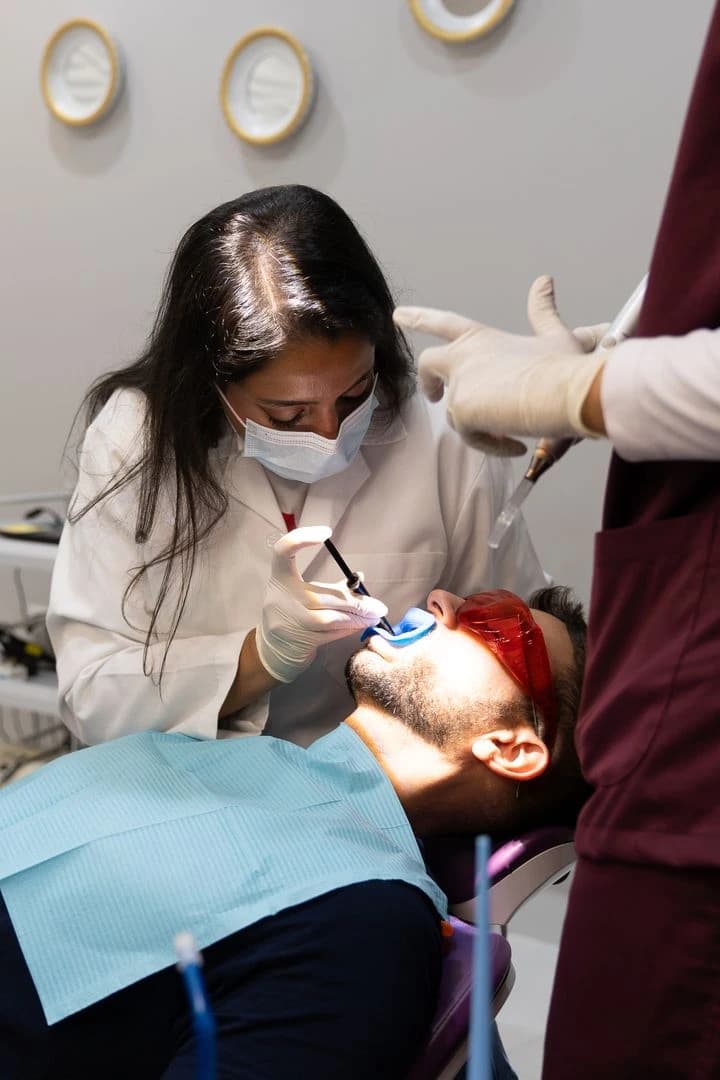
Post-treatment pain, bleeding, and complication assessment evaluates symptoms that are severe, worsening, unexpected, or continuing beyond the recovery pattern anticipated after a dental procedure. The assessment helps distinguish normal healing from infection, uncontrolled bleeding, a high restoration, dry socket, nerve irritation, dental trauma, restoration failure, or another complication.
At Bourgeois Dental Clinic in Dubai, the dentist reviews the procedure performed, time since treatment, symptom progression, pain severity, swelling, bleeding, fever, pus, numbness, bite changes, medication, medical history, and whether hospital or specialist care is required.
Mild discomfort, tenderness, swelling, or sensitivity may occur after some procedures and often improves gradually. Severe, increasing, or unusual symptoms should not be assumed to be normal without assessment.
Which Symptoms Need Prompt Review?
- Severe or increasing pain
- Pain that does not follow the expected recovery pattern
- Heavy or persistent bleeding
- Rapidly increasing swelling
- Fever or marked weakness
- Pus or a persistent bad taste
- Difficulty breathing or swallowing
- Increasing difficulty opening the mouth
- A sudden bite change
- A loose filling, crown, bridge, implant component, or temporary restoration
- Persistent numbness or altered sensation
- Severe pain several days after extraction
- A fractured tooth or restoration after treatment
What Happens During the Assessment?
- Urgency screening: Checking breathing, swallowing, bleeding, swelling, fever, neurological symptoms, and general health.
- Treatment review: Confirming what procedure was completed, when it was performed, and what symptoms were expected.
- Symptom history: Reviewing pain, swelling, bleeding, numbness, medication, and progression.
- Clinical examination: Checking the treatment site, teeth, gums, extraction socket, restorations, implants, sutures, and bite.
- Diagnostic testing: Assessing tenderness, tooth vitality, drainage, mobility, and bite contacts when relevant.
- Imaging when indicated: Dental X-rays may be used to evaluate infection, fractures, roots, implants, restorations, or healing.
- Management plan: Discussing cleaning, drainage, bite adjustment, restoration repair, bleeding control, dry-socket care, medication, referral, or further treatment.
How Much Pain Is Normal After Dental Treatment?
The expected level and duration depend on the procedure, individual healing response, infection, surgical complexity, and medical factors.
Assessment is recommended when pain:
- Is severe or increasing
- Returns after initial improvement
- Interrupts sleep repeatedly
- Is associated with swelling, pus, or fever
- Is concentrated on one tooth during biting
- Persists longer than advised
- Is not controlled by the recommended care
What Causes Pain After a Filling or Crown?
Possible causes include:
- Temporary pulp irritation
- A high bite contact
- Deep decay
- A cracked tooth
- Bonding or cement-related sensitivity
- A loose or leaking restoration
- Irreversible pulp inflammation
- Root or gum infection
A clearly high restoration may sometimes be adjusted after examination. Extensive irreversible bite alteration is not required for routine post-treatment sensitivity.
What Causes Pain After Root-Canal Treatment?
Temporary tenderness may occur as tissues around the root recover.
Prompt review may be required for:
- Severe or increasing pain
- Swelling
- Pus
- Fever
- A temporary filling falling out
- A fractured tooth
- A bite that feels excessively high
- Symptoms that do not improve as expected
What Causes Pain After Extraction?
Expected soreness may follow extraction, especially after surgical treatment.
Possible complications include:
- Dry socket
- Infection
- Retained fragments
- Food trapping
- Trauma to adjacent tissues
- Sinus involvement
- Nerve irritation
- Delayed healing
What Is Dry Socket?
Dry socket is a painful healing complication in which the blood clot within the extraction socket is lost or breaks down.
Possible signs include:
- Increasing pain after initial improvement
- Pain spreading towards the ear, temple, or jaw
- A bad taste or odour
- An exposed-looking socket
- Limited benefit from ordinary pain measures
Treatment may involve gentle socket care, local medication, hygiene guidance, and follow-up.
How Much Bleeding Is Normal After Extraction?
Light oozing or blood-stained saliva may occur during the initial healing period.
Prompt assessment is needed when:
- Bleeding remains heavy
- Gauze repeatedly becomes saturated
- Large clots continue forming
- The patient feels weak or dizzy
- Bleeding restarts significantly
- The patient takes blood-thinning medication or has a bleeding condition
How Is Dental Bleeding Managed?
Management may include:
- Direct pressure
- Replacing or adjusting sutures
- Local haemostatic materials
- Cleaning the site
- Reviewing medication and medical risks
- Referral when bleeding cannot be controlled safely in the clinic
Patients should not stop prescribed blood-thinning medication without guidance from the prescribing clinician.
When Is Swelling Concerning?
Some swelling may occur after surgical treatment and may increase temporarily before improving.
Concerning signs include:
- Rapidly increasing swelling
- Swelling that worsens after initial improvement
- Difficulty swallowing
- Difficulty breathing
- Swelling extending towards the eye or neck
- Fever, severe weakness, or confusion
- Increasing difficulty opening the mouth
Can Infection Develop After Treatment?
Yes. Infection may occur after extraction, root-canal treatment, implant placement, gum treatment, or restoration failure.
Possible signs include:
- Increasing pain
- Swelling
- Pus
- Persistent bad taste
- Fever
- Drainage
- Delayed healing
- Increasing redness or tenderness
Are Antibiotics Always Needed?
No. Treatment may require drainage, cleaning, restoration repair, root-canal care, extraction, or another procedure.
Antibiotics may be prescribed when infection is spreading, systemic symptoms are present, or medical and clinical findings justify their use.
What if the Bite Feels Different After Treatment?
A bite change may occur because of:
- A high filling or crown
- Swelling
- A loose restoration
- A displaced tooth
- A poorly fitting splint or appliance
- Muscle guarding after treatment
Assessment is recommended when one tooth contacts first, biting is painful, or the change persists.
What if a Temporary Filling or Crown Falls Out?
Keep any lost restoration and arrange review.
- Avoid household glue
- Keep the area clean
- Avoid hard chewing
- Seek prompt care for pain, sensitivity, swelling, or sharp edges
Visit lost or broken filling emergency care or lost or loose crown emergency care.
What if an Implant Crown or Component Becomes Loose?
Loose implant components may involve screw loosening, cement failure, component wear, restoration fracture, bite forces, or implant-related problems.
Avoid chewing on the component and arrange assessment before repeated tightening or recementation.
Is Numbness After Dental Treatment Normal?
Temporary numbness is expected while local anaesthesia remains active.
Assessment is recommended when altered sensation:
- Persists beyond the expected anaesthetic period
- Appears after an extraction or implant procedure
- Is associated with facial weakness
- Is increasing rather than improving
- Affects the lip, chin, tongue, or face
- Is accompanied by severe pain or neurological symptoms
Can Sutures Come Loose?
Sutures may loosen or dissolve during healing depending on their type.
Prompt review may be appropriate when:
- The wound opens significantly
- Bleeding becomes heavy
- Food collects deeply in the site
- Swelling or pus develops
- The suture causes significant irritation
- An implant or surgical site becomes exposed unexpectedly
What Should I Do Before the Appointment?
- Follow the original post-treatment instructions
- Do not place chemicals or household substances on the area
- Avoid repeatedly touching or testing the site
- Keep the mouth clean according to instructions
- Bring a current medication list
- Record when symptoms began and how they changed
- Seek urgent medical care for breathing, swallowing, or severe general symptoms
What Are the Risks and Limitations?
- Some symptoms may represent normal healing
- The exact cause may require imaging or further testing
- Temporary treatment may be needed before definitive care
- Pain may not resolve immediately
- Restorations may require repair or replacement
- Root-canal treatment or extraction may become necessary
- Bleeding may require medical coordination
- Nerve symptoms may require specialist assessment
- Hospital referral may be necessary for spreading infection or uncontrolled bleeding
When Is Hospital Emergency Care Required?
Seek urgent hospital medical care for breathing or swallowing difficulty, rapidly spreading facial or neck swelling, swelling around the eye, uncontrolled bleeding, loss of consciousness, facial weakness, speech difficulty, severe neurological symptoms, chest pain, severe weakness, confusion, or significant deterioration.
Post-Treatment Emergency Assessment on Sheikh Zayed Road
Bourgeois Dental Clinic is located on the first floor of Indigo Sky Building, Sheikh Zayed Road, Exit 41, near Al Thanya Street in Dubai. The clinic is accessible from Al Barsha, Umm Al Sheif, Umm Suqeim, Jumeirah, Al Quoz, Barsha Heights, The Greens, Dubai Marina, and nearby communities.
Book a post-treatment complication assessment for severe or worsening pain, bleeding, swelling, fever, pus, bite changes, numbness, dry-socket symptoms, restoration problems, or unexpected healing concerns.
Department
Dental Emergencies & Urgent Dental Care
FAQ
Frequently Asked Questions
BOOK AN
Appointment
Working Hours
We are here to serve you