


Preventive Care for Dental Implants and Restorations
- 1Specialist
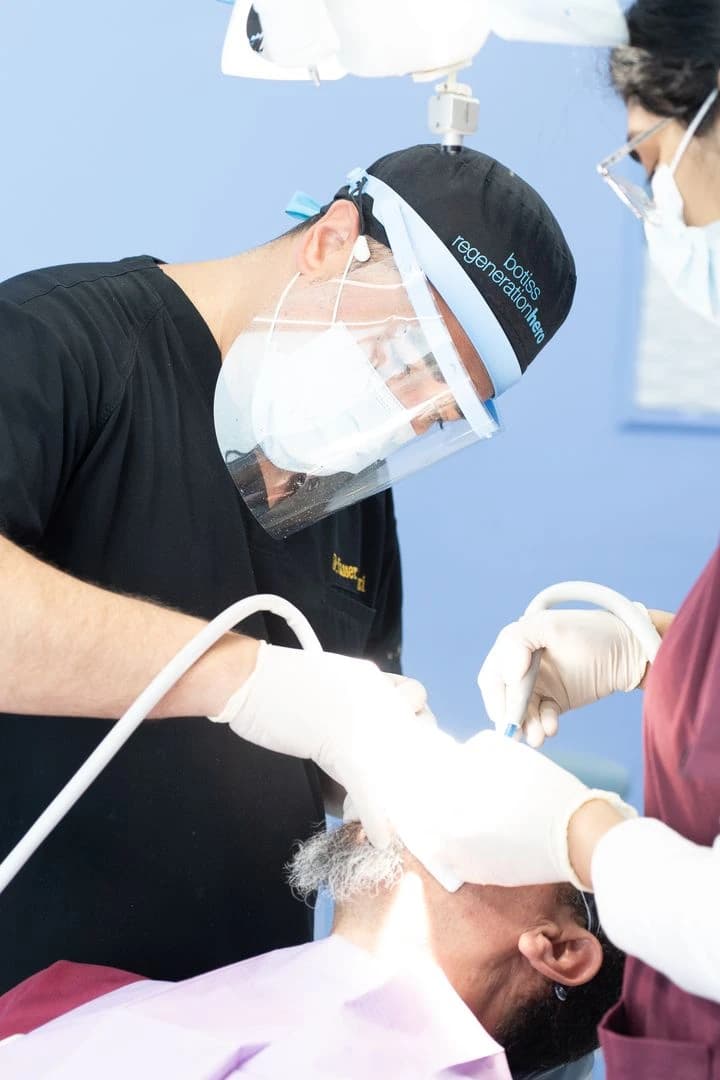
Preventive care for dental implants and restorations helps monitor the health, cleanliness, stability, and function of implants, crowns, bridges, veneers, fillings, dentures, and their supporting teeth and tissues. Maintenance aims to identify plaque, gum inflammation, decay around natural teeth, restoration wear, loose components, food trapping, and bite-related problems before they become more extensive.
At Bourgeois Dental Clinic in Dubai, the maintenance plan is personalised according to the type and number of restorations, implant history, gum and bone health, oral-hygiene access, smoking, medical conditions, grinding, diet, previous complications, and ability to attend regular reviews.
Which Dental Treatments Require Preventive Maintenance?
Preventive reviews may be recommended for patients with:
- Dental implants
- Implant crowns
- Implant-supported bridges
- Implant-supported dentures
- Natural-tooth crowns
- Dental bridges
- Veneers
- Fillings and bonded restorations
- Complete or partial dentures
- Full-mouth rehabilitation
- Extensive cosmetic or restorative dental work
Why Is Maintenance Important?
Dental restorations are not maintenance-free. Problems may develop gradually and initially cause few symptoms.
Regular care may help identify:
- Plaque and calculus
- Gum bleeding or swelling
- Decay around crowns, bridges, and fillings
- Food trapping
- Loose screws or attachments
- Fractured or worn materials
- Changes in denture fit
- Heavy bite contacts
- Grinding-related wear
- Inflammation around implants
- Changes in supporting bone when imaging is justified
What Happens During a Maintenance Visit?
- History review: Discussing pain, looseness, food trapping, bleeding, cleaning difficulty, smoking, medical changes, medication, and previous complications.
- Restoration assessment: Checking margins, contacts, stability, fracture, wear, colour changes, and cleaning access.
- Supporting-tooth assessment: Evaluating decay, cracks, sensitivity, mobility, and remaining tooth structure.
- Gum and implant-tissue assessment: Checking plaque, bleeding, swelling, recession, pocketing, and signs of inflammation.
- Bite assessment: Reviewing heavy contacts, grinding, clenching, tooth wear, and restoration loading.
- Professional cleaning: Removing accessible plaque and deposits using suitable methods for teeth, restorations, and implants.
- Imaging when indicated: Dental X-rays may be recommended when clinically justified to assess roots, bone, decay, or implant-related concerns.
- Home-care review: Demonstrating brushing and cleaning around bridges, implants, attachments, and dentures.
- Maintenance plan: Recommending future review, cleaning, adjustment, repair, or treatment.
Can Dental Implants Develop Cavities?
No. The implant itself is not a natural tooth and cannot develop dental decay.
However:
- The gums around it can become inflamed
- Supporting bone can be lost
- Implant crowns or bridges can loosen or fracture
- Screws and attachments can wear
- Food can become trapped
- Nearby natural teeth can develop cavities
What Is Inflammation Around a Dental Implant?
- Peri-implant mucositis: Plaque-related inflammation of the soft tissues around an implant without established progressive supporting-bone loss.
- Peri-implantitis: Inflammation associated with progressive loss of supporting bone around an implant.
Bleeding, swelling, pus, pain, difficulty cleaning, or changes in the restoration should be assessed promptly.
How Are Dental Implants Professionally Cleaned?
Professional cleaning should use instruments and techniques selected for the implant surface, restoration material, and surrounding tissues.
The visit may include:
- Plaque and deposit removal
- Cleaning around the implant crown or bridge
- Assessment beneath implant-supported bridges
- Cleaning around denture attachments
- Review of interdental-brush sizes
- Evaluation of gum bleeding and pocketing
- Review of restoration stability
How Should Implant-Supported Bridges Be Cleaned at Home?
Daily cleaning may include:
- Brushing around implant crowns and gum margins
- Interdental brushes of suitable size
- Floss threaders or bridge floss
- Single-tuft brushes
- Water irrigation as an additional aid
- Cleaning beneath the replacement teeth
The correct tools depend on available space and restoration design. Visit oral-hygiene instruction for personalised guidance.
Can Crowns and Bridges Develop Decay?
The crown or bridge material does not decay, but the supporting natural tooth may develop decay at or beneath the margins.
Risk may increase with:
- Plaque accumulation
- Frequent sugar exposure
- Dry mouth
- Poorly fitting margins
- Food trapping
- Gum recession
- Damage or looseness
- Difficulty cleaning beneath a bridge
How Are Veneers Maintained?
Veneer maintenance includes assessment of:
- Margins
- Gum health
- Chipping or fracture
- Bonding stability
- Colour and surface changes
- Bite forces
- Grinding or clenching
- Plaque accumulation
Veneers do not make the supporting teeth immune to decay or gum disease.
How Are Dentures Maintained?
Maintenance may review:
- Denture fit and stability
- Pressure areas
- Cracks or wear
- Clasp or attachment condition
- Oral-tissue health
- Cleaning and storage
- Remaining natural teeth
- Implant attachments
- Need for adjustment, repair, relining, or replacement
Visit denture relining and adjustment when fit or comfort has changed.
Can a Loose Implant Crown Be Tightened?
Possibly. The implant, screw, crown, bite, and surrounding tissues should first be assessed.
Repeated loosening may be related to:
- Heavy bite forces
- Grinding or clenching
- Component wear
- Restoration design
- Loss of cement retention
- Implant-position or alignment factors
- Damage to the crown or screw
Repeatedly tightening a component without identifying the cause may not provide a long-term solution.
Can Grinding Damage Restorations?
Grinding and clenching may increase the risk of:
- Porcelain chipping
- Composite wear
- Crown or veneer fracture
- Loose implant components
- Tooth fracture
- Denture wear
- Muscle fatigue
A night guard or occlusal splint may be recommended for selected patients, but it cannot prevent every complication.
How Often Are Maintenance Visits Needed?
The interval depends on:
- Gum and bone health
- Implant history
- Number and type of restorations
- Plaque and calculus accumulation
- Smoking
- Medical conditions
- Dry mouth
- Grinding or clenching
- Previous complications
- Home-care effectiveness
Patients with implant inflammation, previous gum disease, extensive restorations, or limited cleaning access may require closer follow-up.
Can Maintenance Guarantee That Implants and Restorations Will Last?
No. Maintenance can reduce risk and identify problems earlier, but longevity also depends on biology, materials, design, bite, smoking, health, hygiene, trauma, and treatment history.
All restorations may eventually require repair, adjustment, component replacement, relining, recementation, or complete replacement.
What Are the Risks and Limitations?
- Inflammation may progress despite maintenance
- Decay can develop around natural supporting teeth
- Restorations may wear, loosen, or fracture
- Implant components may require replacement
- Professional cleaning cannot replace daily home care
- Some problems may require imaging or restoration removal
- Future repair or replacement may be necessary
- Referral may be required for complex complications
When Is Prompt Assessment Needed?
Arrange prompt dental care for a loose implant crown, fractured bridge, severe pain, swelling, pus, uncontrolled bleeding, a sudden bite change, a broken denture, gum injury, or a restoration that creates a sharp edge.
Difficulty breathing or swallowing, rapidly spreading facial or neck swelling, swelling around the eye, severe weakness, or significant deterioration requires urgent medical care.
Implant and Restoration Maintenance on Sheikh Zayed Road
Bourgeois Dental Clinic is located on the first floor of Indigo Sky Building, Sheikh Zayed Road, Exit 41, near Al Thanya Street in Dubai. The clinic is accessible from Al Barsha, Umm Al Sheif, Umm Suqeim, Jumeirah, Al Quoz, Barsha Heights, The Greens, Dubai Marina, and nearby communities.
Book preventive maintenance for implants and restorations to assess gums, bone, crowns, bridges, veneers, dentures, implant components, cleaning access, bite forces, wear, and long-term care.
Department
Preventive Dentistry & Oral Hygiene
Related Doctors

FAQ
Frequently Asked Questions
BOOK AN
Appointment
Working Hours
We are here to serve you