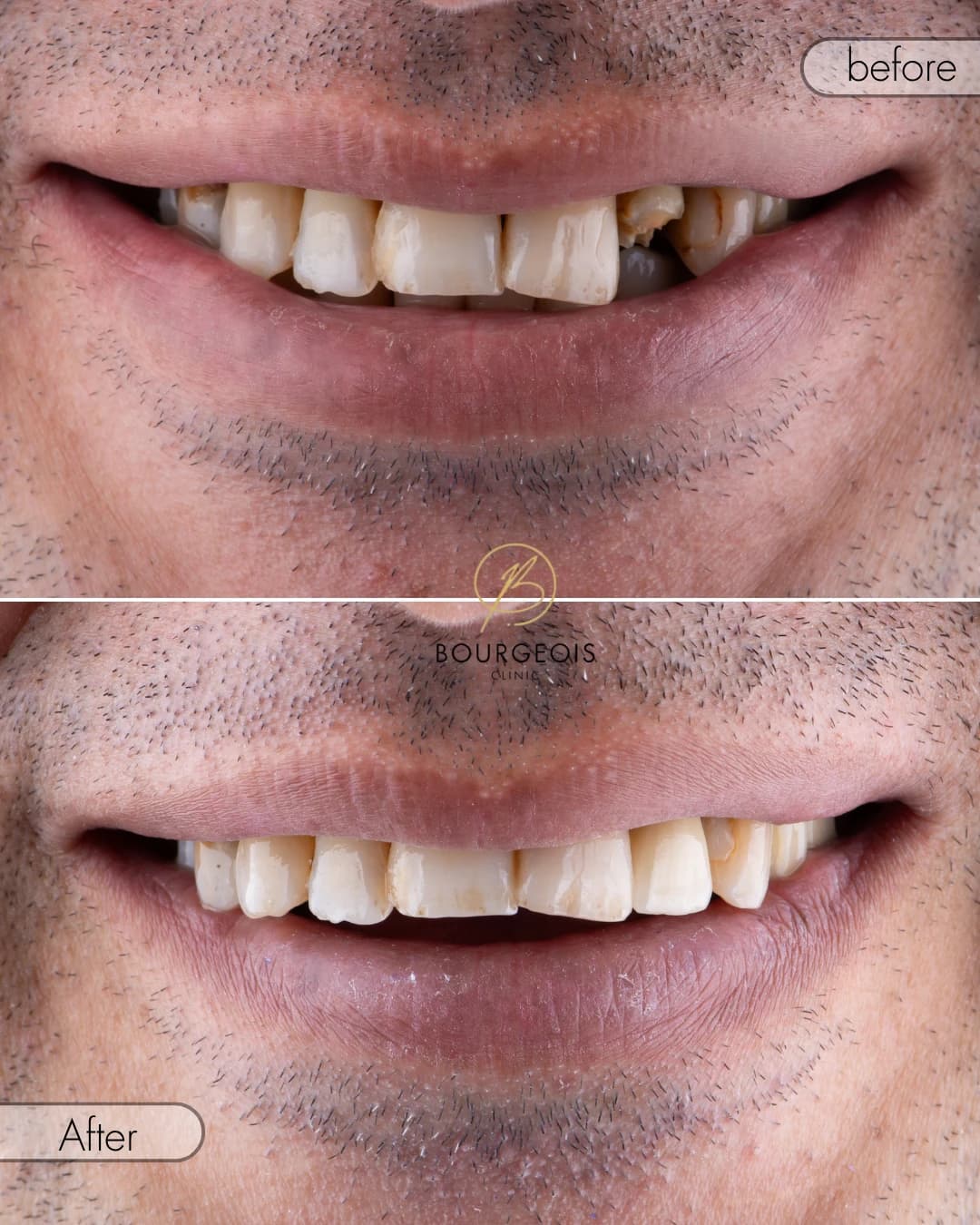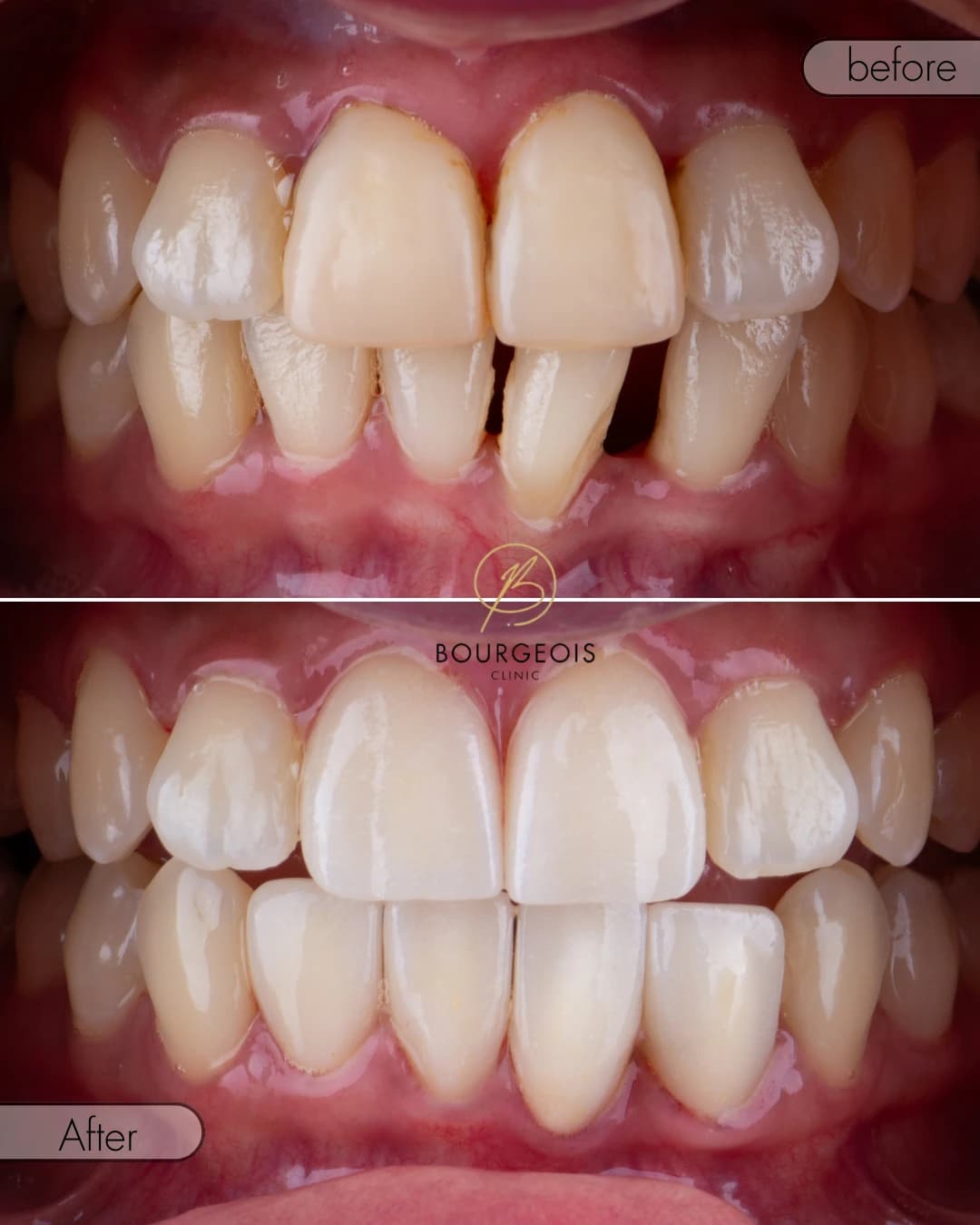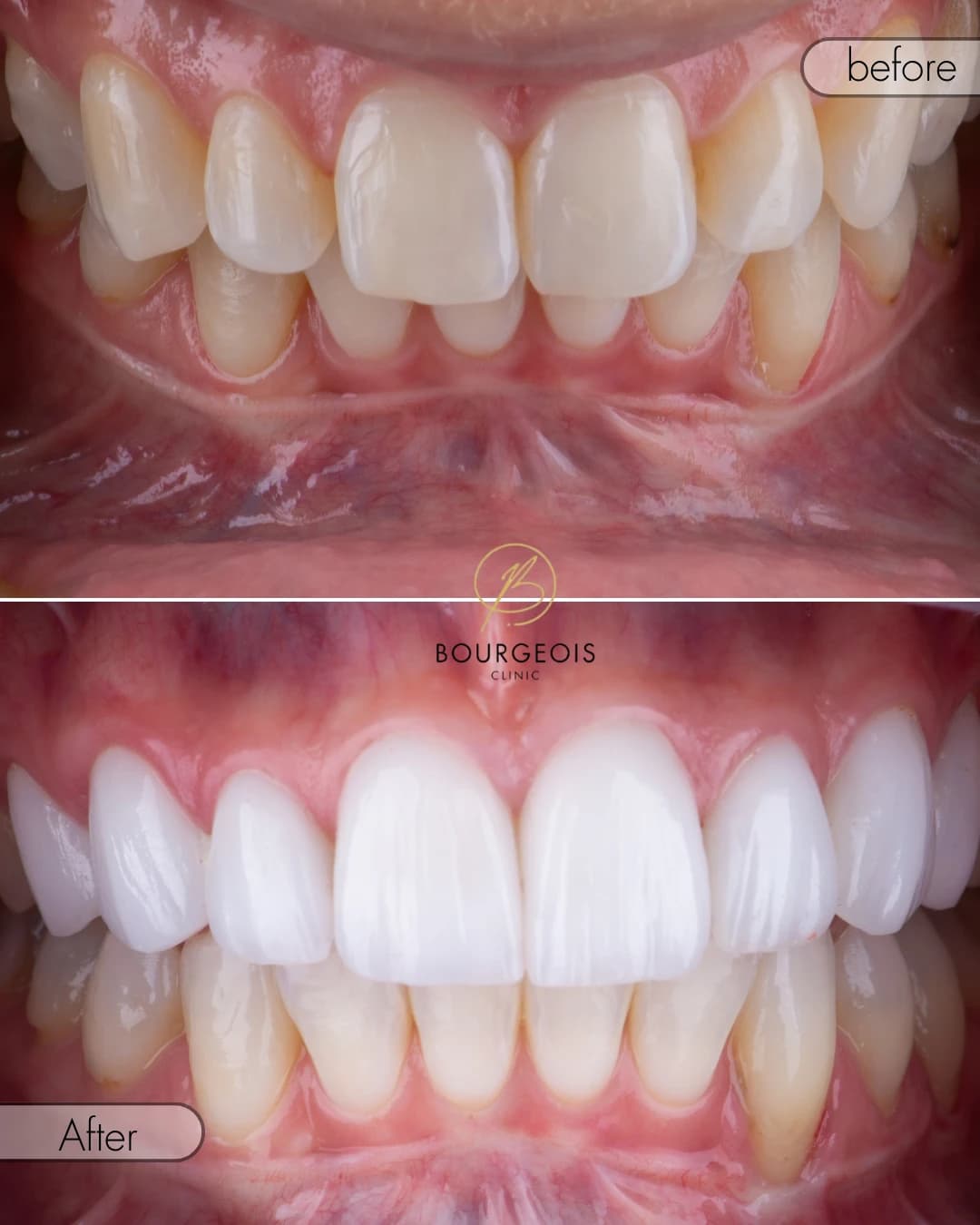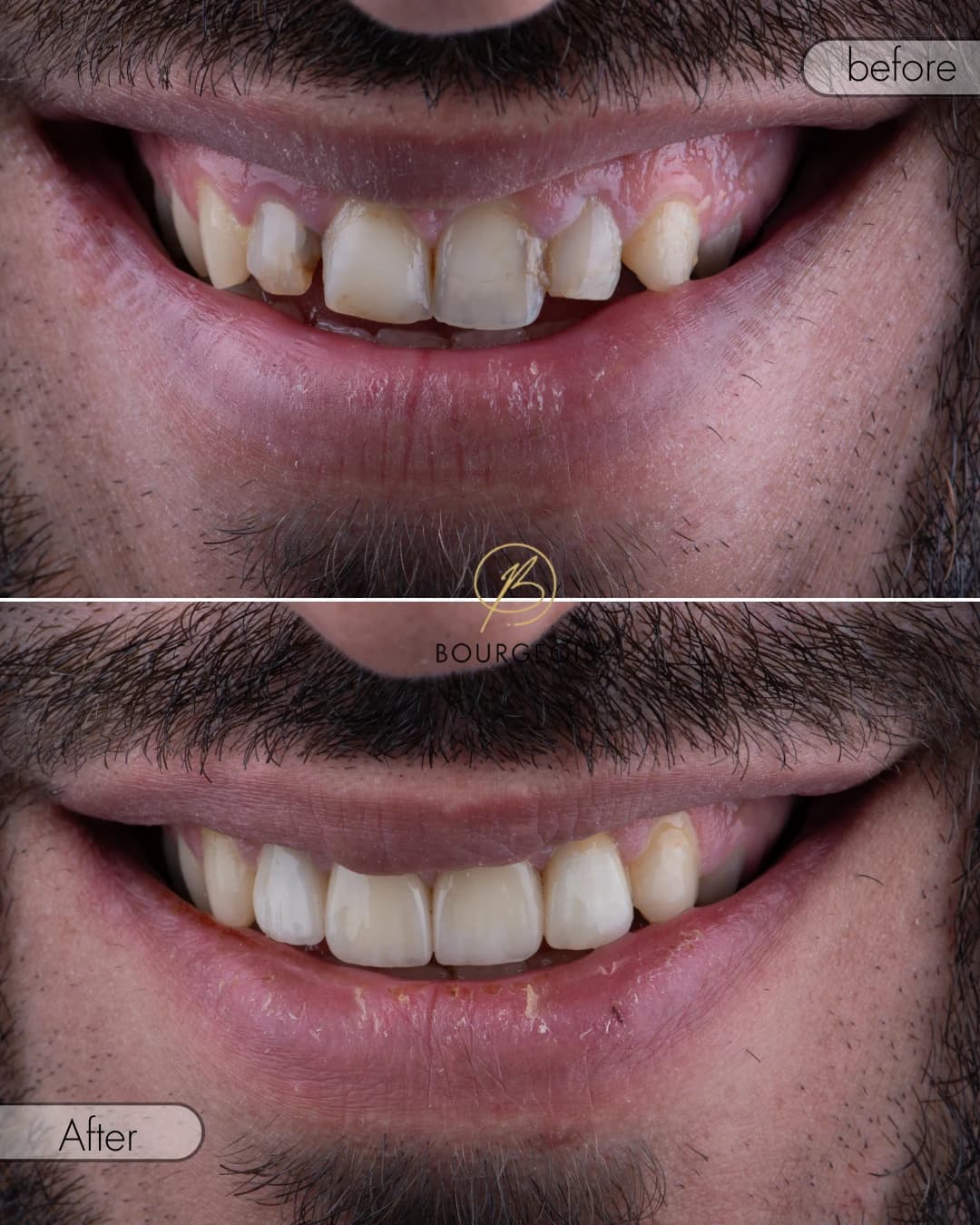


Gummy Smile or Uneven Gumline in Dubai: Is Gum Contouring Suitable?
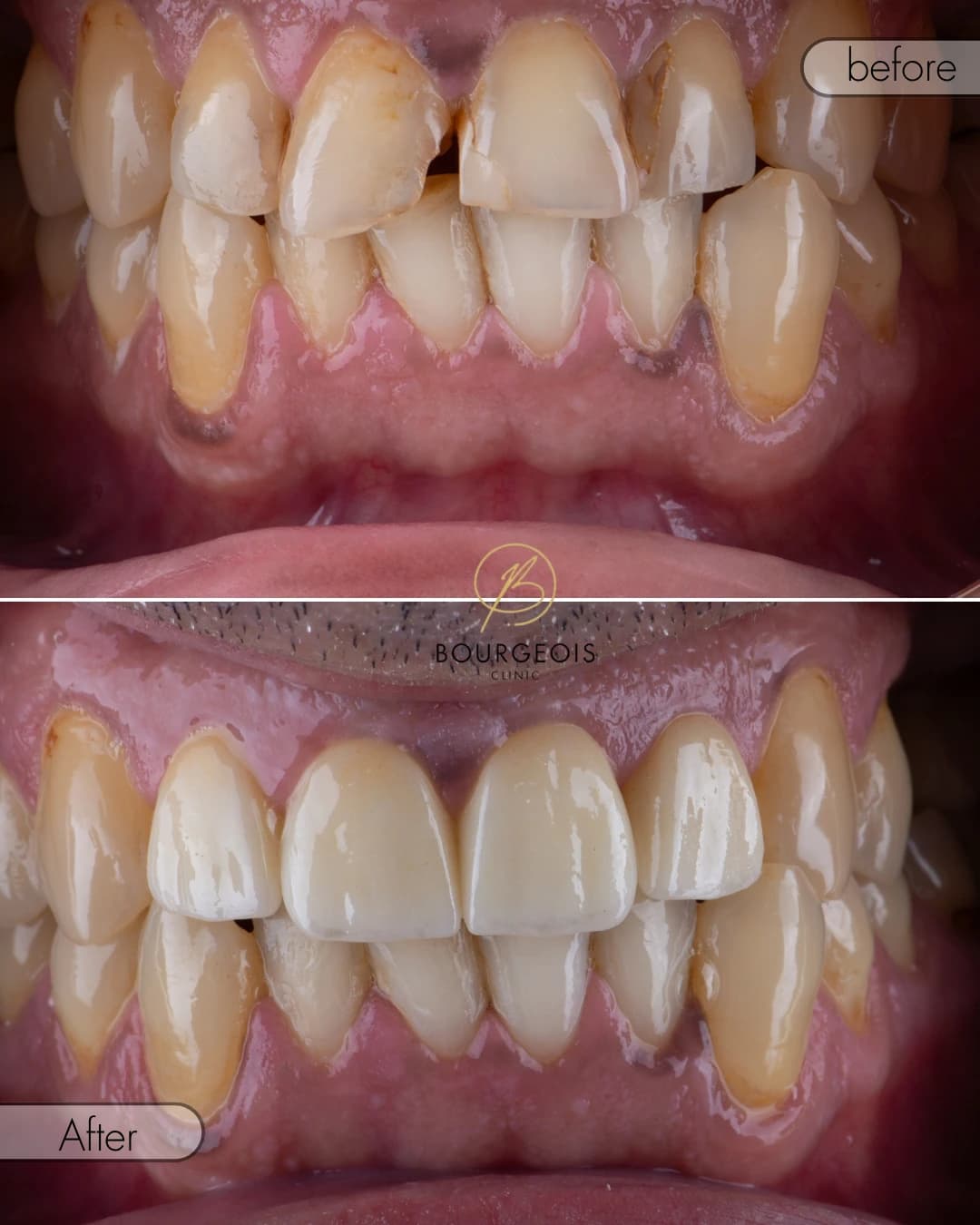
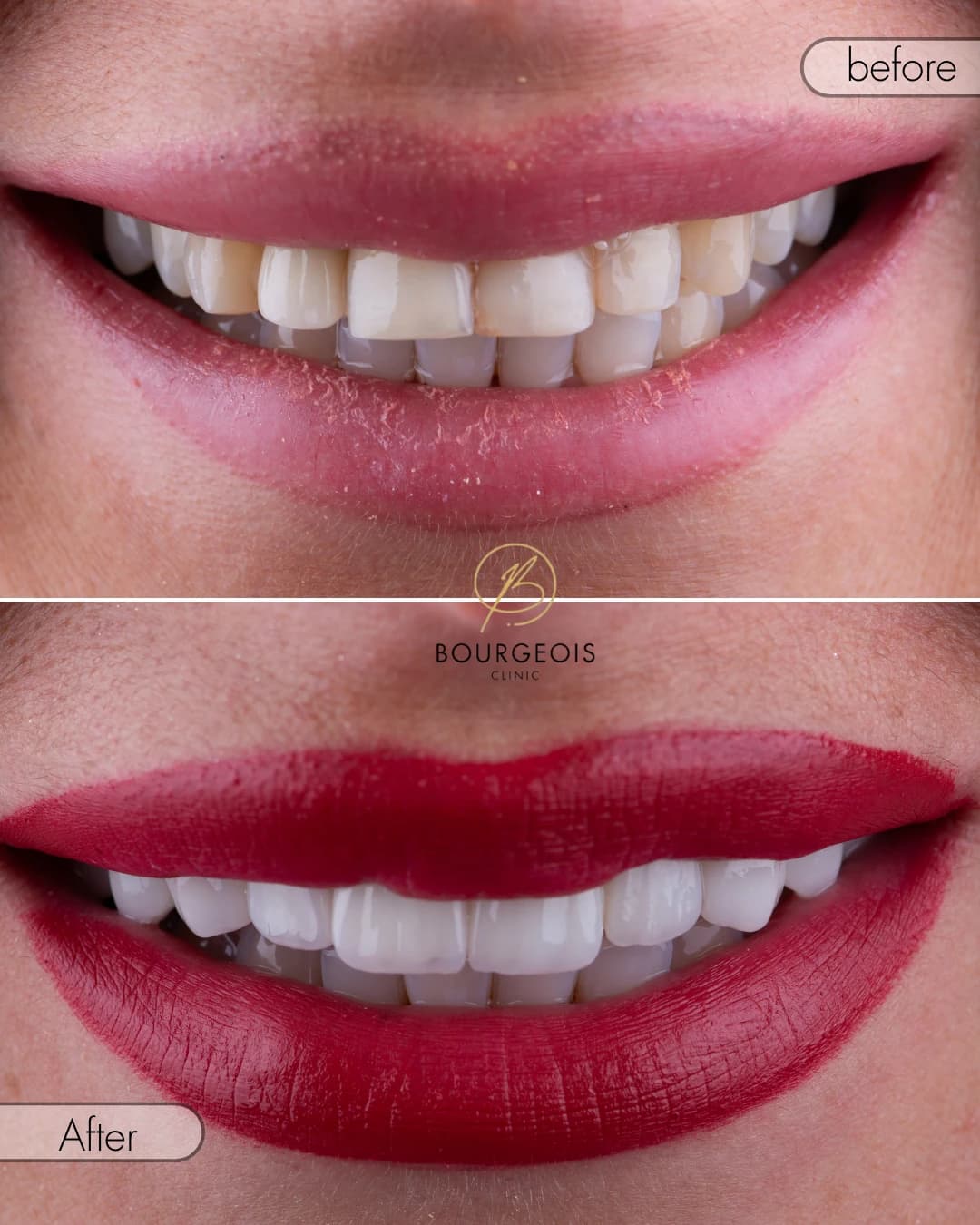
A smile can appear “gummy” when more gum tissue than expected is visible above the upper teeth, or when the gumline makes some teeth look shorter than others. The visible result may have more than one cause, so treatment should not begin with removing tissue. At Bourgeois Dental Clinic, assessment considers the teeth, gums, supporting bone, bite, lip movement and overall facial relationship before any cosmetic recommendation is made.
Quick answer: can gum contouring improve a gummy smile?
Gum contouring may improve an uneven gumline or selected excessive gum display when the problem is mainly related to the shape or amount of visible gum tissue and when the bone and tooth anatomy permit safe reshaping. It is not suitable for every gummy smile. Some cases are influenced by tooth position, altered tooth eruption, lip movement, jaw relationships, inflammation or worn teeth, and these factors may need a different or combined approach.
What is a gummy smile?
“Gummy smile” is an informal description, not a single diagnosis. It generally refers to a smile in which a patient feels that the upper gums are too visible. The amount that feels excessive is personal and is influenced by tooth length, gum symmetry, lip height, facial proportions and the width of the smile. Some patients are comfortable with greater gum display, while others are concerned about only one uneven area.
Why can the gumline look uneven?
- Natural differences in the position or shape of the gum margins
- Inflammation or swelling caused by plaque accumulation
- Different tooth positions, rotations or levels
- Gum recession beside an area with more tissue
- Teeth that have not fully emerged from the gum tissue
- Differences in the supporting bone around the teeth
- Worn or chipped tooth edges that alter apparent proportions
- Previous crowns, bonding or veneers with mismatched margins
- Changes after orthodontic treatment or tooth movement
Because these causes require different solutions, copying the gumline from a photograph or reshaping every visible tooth to the same height can produce an unsuitable result.
What happens during a gum and smile assessment?
The dentist first asks what the patient would like to change and whether the concern appears at rest, during a natural smile or only during a wide smile. A clinical assessment may include photographs, measurement of tooth display, evaluation of gum thickness, probing around the teeth, inspection for inflammation or recession, bite assessment and radiographs when the relationship between gum and bone needs clarification.
A periodontal consultation may be recommended when there is bleeding, swelling, recession, deep pockets, bone loss or uncertainty about tissue health. Cosmetic reshaping should be planned only after active disease is controlled.
What is gum contouring?
Gum contouring reshapes selected areas of gum tissue to improve the relationship between the visible tooth and gumline. Depending on the case, the objective may be to make one margin more even, expose a small amount of additional tooth structure or create better symmetry before another cosmetic treatment.
The technique and extent depend on tissue thickness, tooth position and the location of the supporting bone. Removing more tissue is not always better. An adequate tissue attachment must remain around the tooth, and the final margin should support cleaning, stability and a natural transition.
When may gum contouring be appropriate?
It may be considered when the gums are healthy, the concern is localised or limited, the teeth and bone allow safe reshaping, and the expected change can be achieved without compromising periodontal support. It may also form one stage of a wider plan involving bonding, whitening, veneers or replacement of old restorations.
A preview or smile-design assessment can help show whether the main imbalance comes from the gumline, the tooth shape or both. This reduces the risk of changing healthy tissue when a restorative or orthodontic solution would be more appropriate.
When might another treatment be needed?
Inflamed or enlarged gums
If swelling is related to plaque, calculus, medication or another health factor, the priority is diagnosis and gum care. Professional teeth cleaning, improved daily cleaning or periodontal treatment may change the gum appearance without cosmetic removal of tissue.
Teeth positioned too low or unevenly
When tooth position is the main cause, an orthodontic assessment may be appropriate. Moving teeth can also move their surrounding gum margins and may improve symmetry more conservatively than reshaping tissue alone.
Short, worn or irregular teeth
Some teeth look short because their edges are worn rather than because the gums cover too much surface. Restorative options such as composite bonding may restore selected edges. The bite and cause of wear should be assessed first.
Gum recession
Removing tissue from neighbouring teeth does not treat a receded gum margin. When recession creates sensitivity, cleaning difficulty or tissue weakness, gum grafting or another periodontal approach may be discussed.
Lip or jaw-related gum display
If the upper lip lifts strongly or the jaw relationship creates extensive gum display, simple contouring may provide little change. The dentist may recommend assessment by an appropriate specialist and explain the limits of dental treatment.
Can gum contouring be combined with veneers?
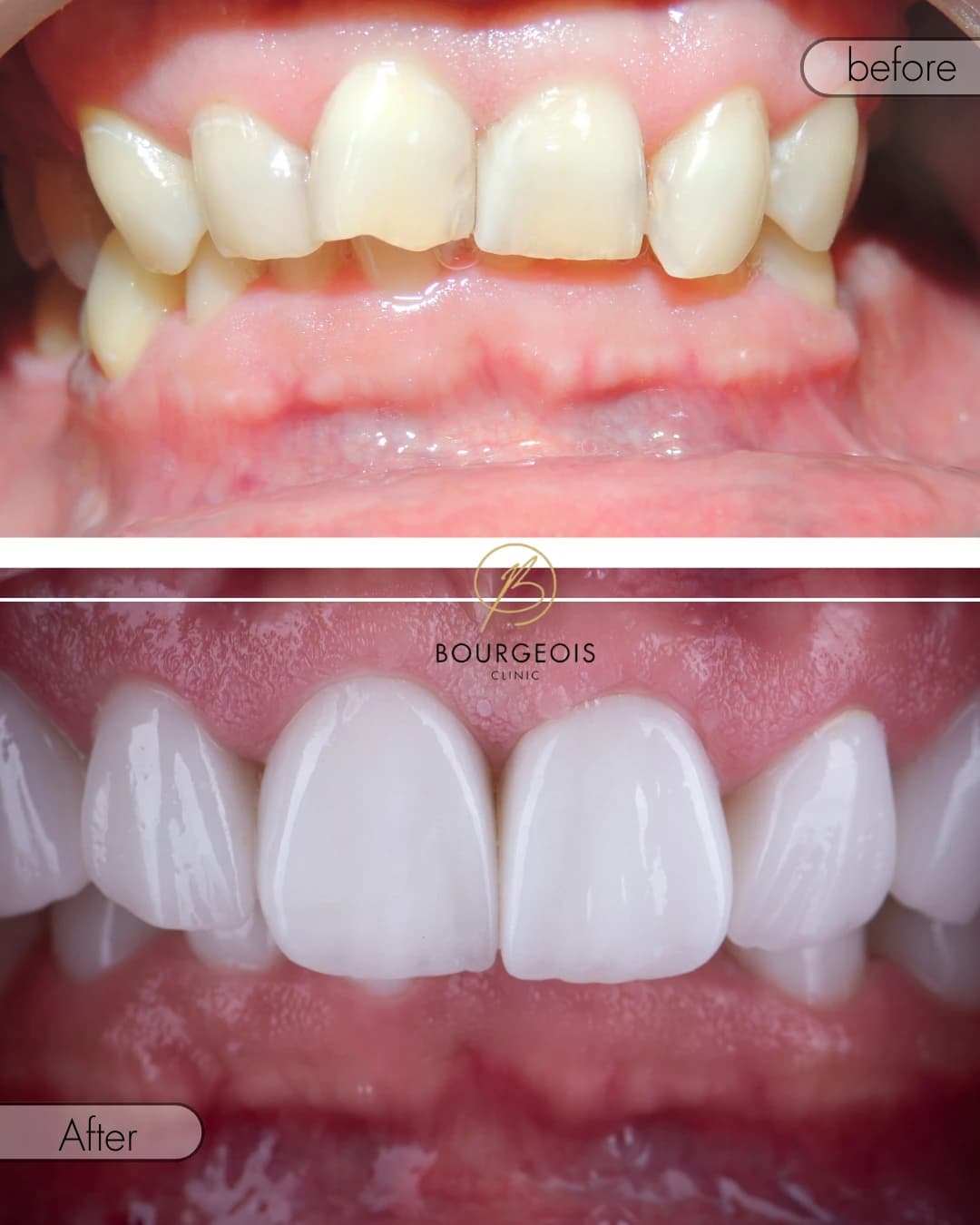
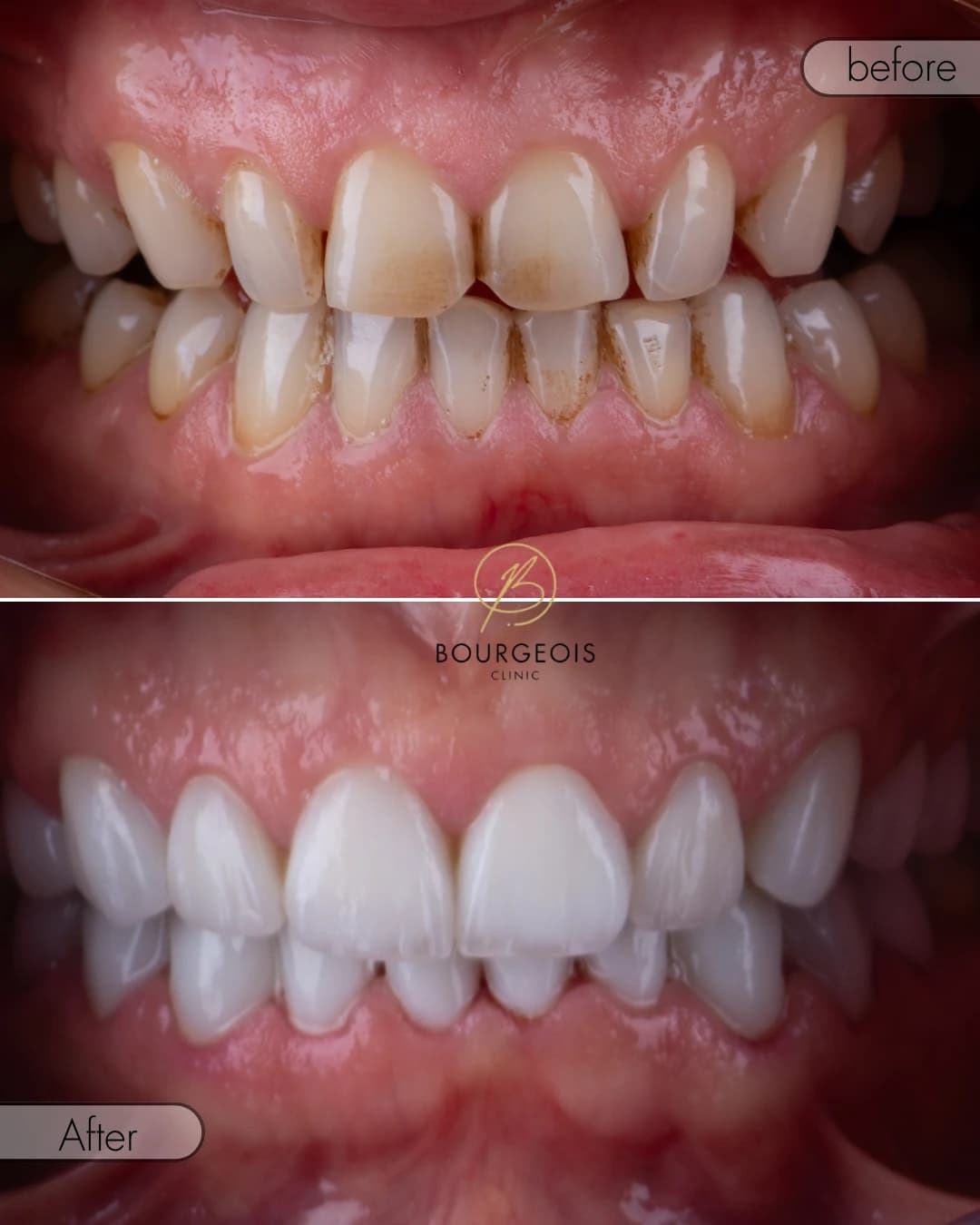
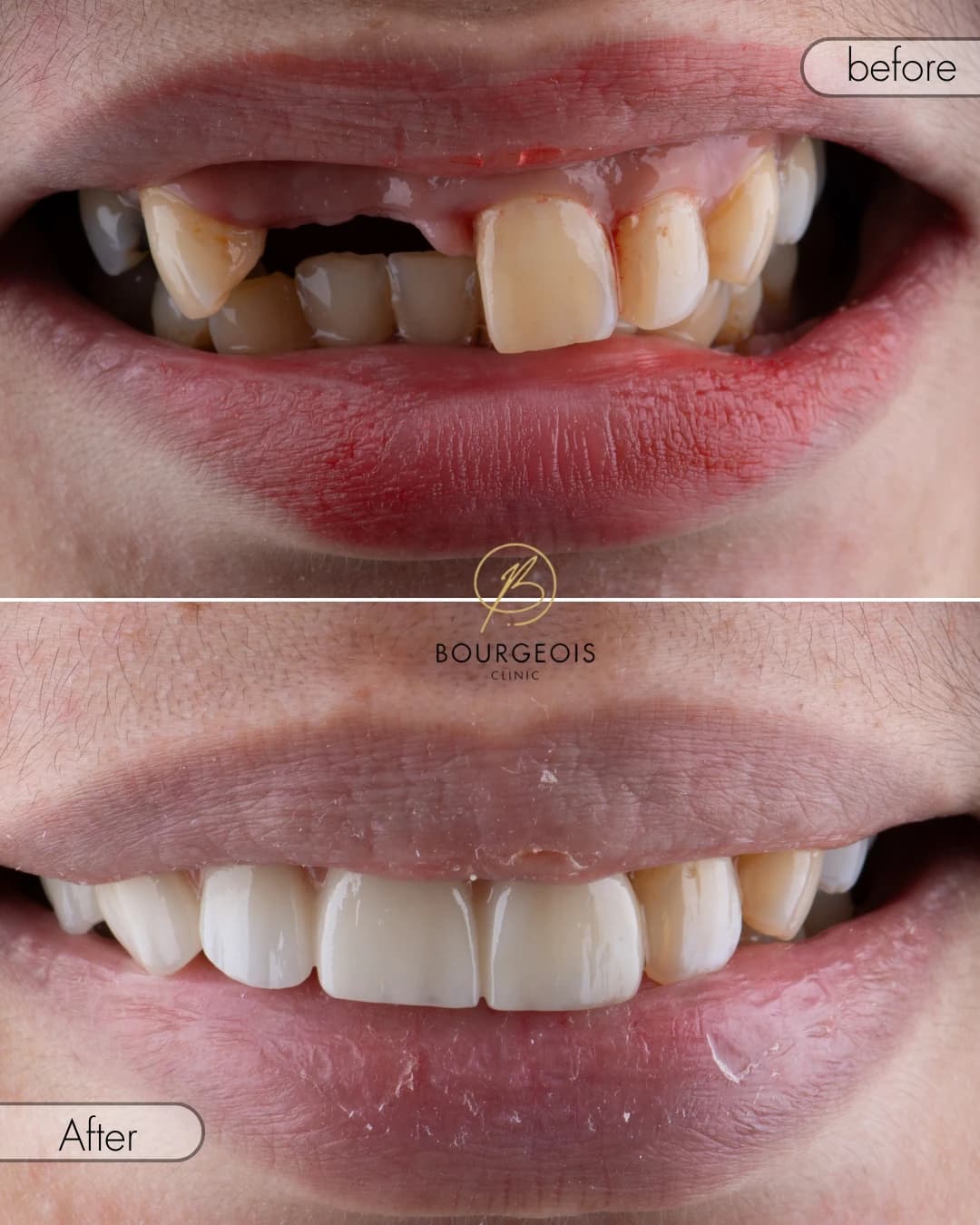
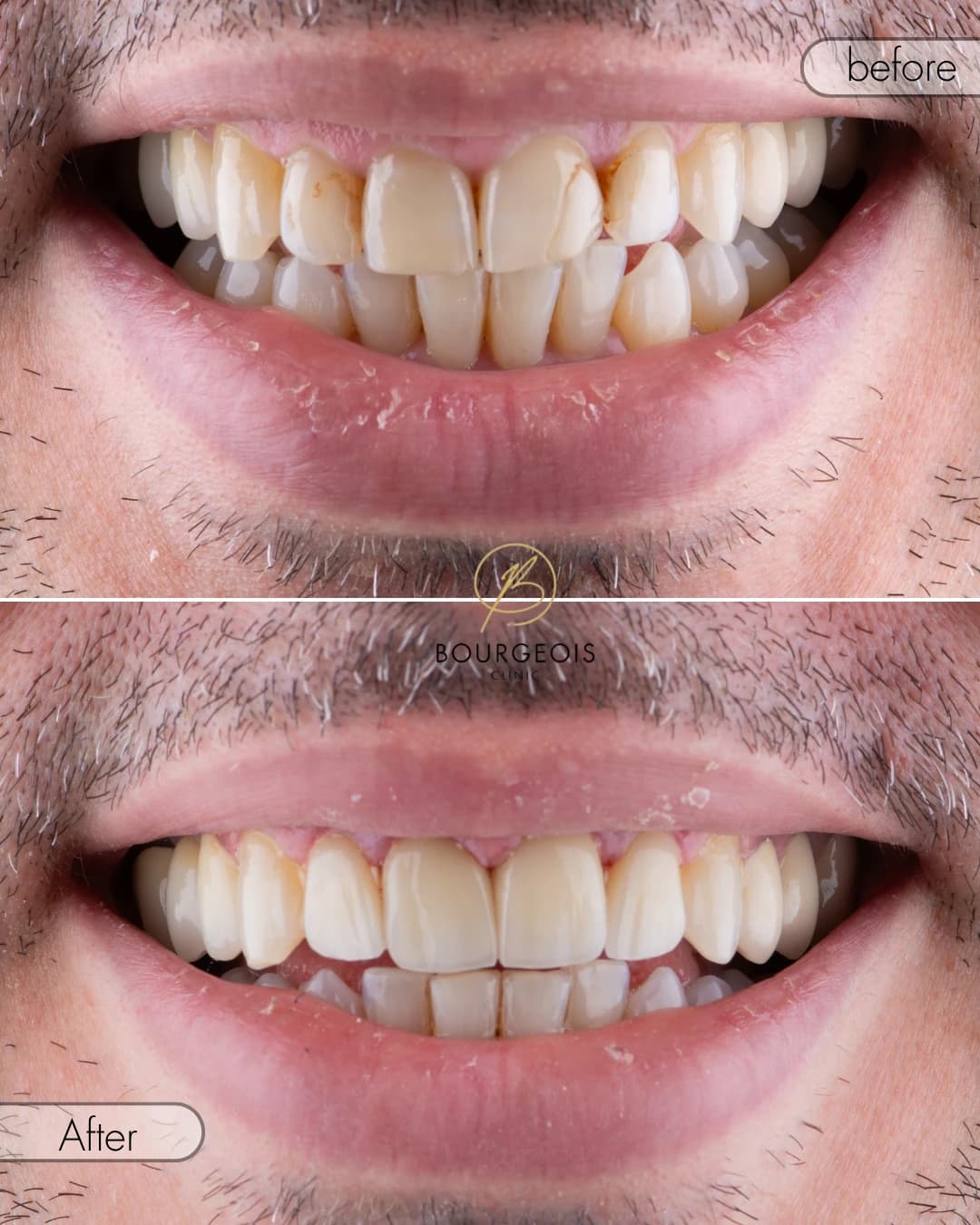
Yes, but the sequence matters. When dental veneers are being considered, gum position should usually be stabilised before the final veneer design and margins are confirmed. Not every veneer case needs gum contouring, and not every uneven gumline requires veneers. The most conservative combination treats only the structures that need change.
What should patients expect after gum reshaping?
Recovery depends on the extent and method of treatment. Temporary tenderness, swelling or sensitivity may occur. The dentist provides instructions for brushing, food choices, medication when indicated and follow-up. Patients should avoid disturbing the area and should report persistent bleeding, increasing swelling, fever, severe discomfort or an unexpected change.
The gumline may look different during early healing. Final evaluation should occur after the tissue has settled, especially before definitive bonding, veneers or crowns are completed.
What are the limitations and possible risks?
Possible considerations include tenderness, bleeding, sensitivity, uneven healing, recession, relapse, exposure of root surfaces or dissatisfaction with the cosmetic change. Removing tissue without respecting the bone and attachment around the tooth can create instability. A clinician must therefore determine the safe limit for each area.
How does Dr. Nour approach cosmetic gumline planning?
Dr. Nour, CEO, Founder and Lead Dentist at Bourgeois Dental Clinic, provides general and cosmetic dental assessment. For patients concerned about gum display, her role is to examine how gum levels interact with tooth shape, restorations, smile movement and the bite, and to coordinate periodontal or orthodontic input when the concern falls outside simple cosmetic reshaping.
The goal is not to promise one procedure. It is to identify whether the smile requires healthier gums, tooth movement, restorative additions, carefully limited contouring or no treatment at all.
Gummy-smile assessment on Sheikh Zayed Road
Bourgeois Dental Clinic is located on the first floor of Indigo Sky Building, Sheikh Zayed Road, Exit 41, near Al Thanya Street in Dubai. The location is convenient for patients from Al Barsha, Umm Al Sheif, Umm Suqeim, Jumeirah, Al Quoz, Barsha Heights, The Greens and Dubai Marina.
Explore the Cosmetic Dentistry department or book an appointment for an individual assessment of gum display, tooth proportions and suitable treatment options.