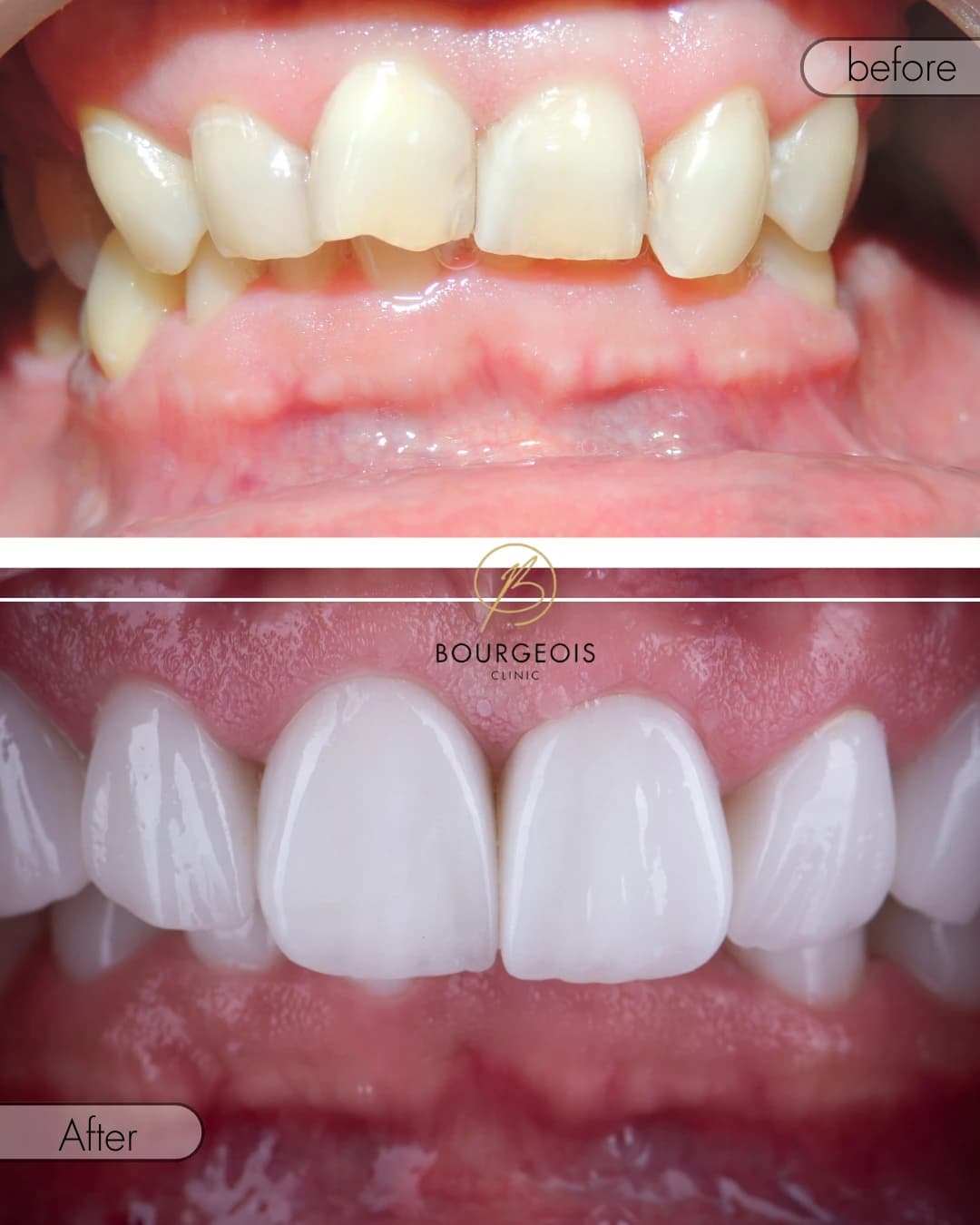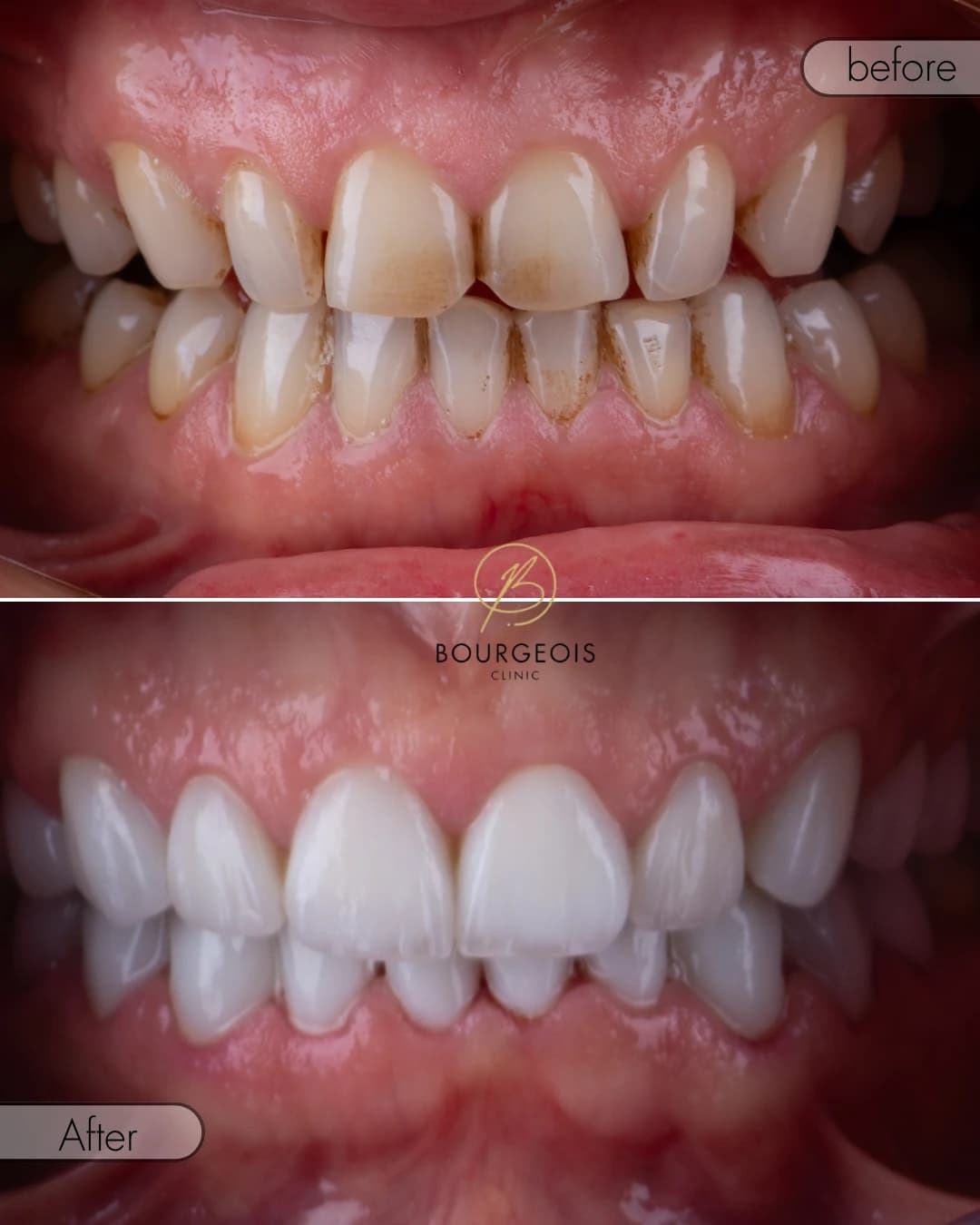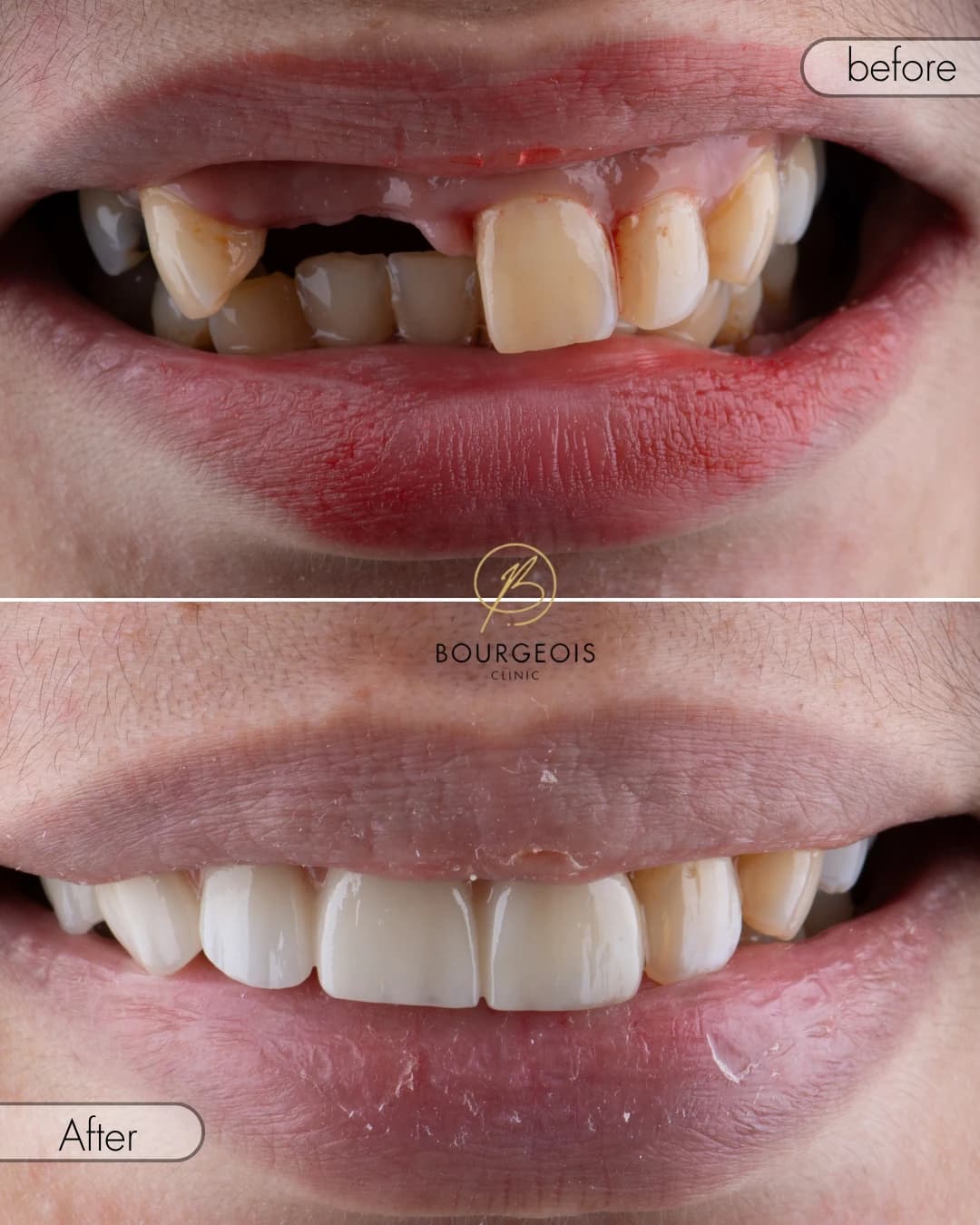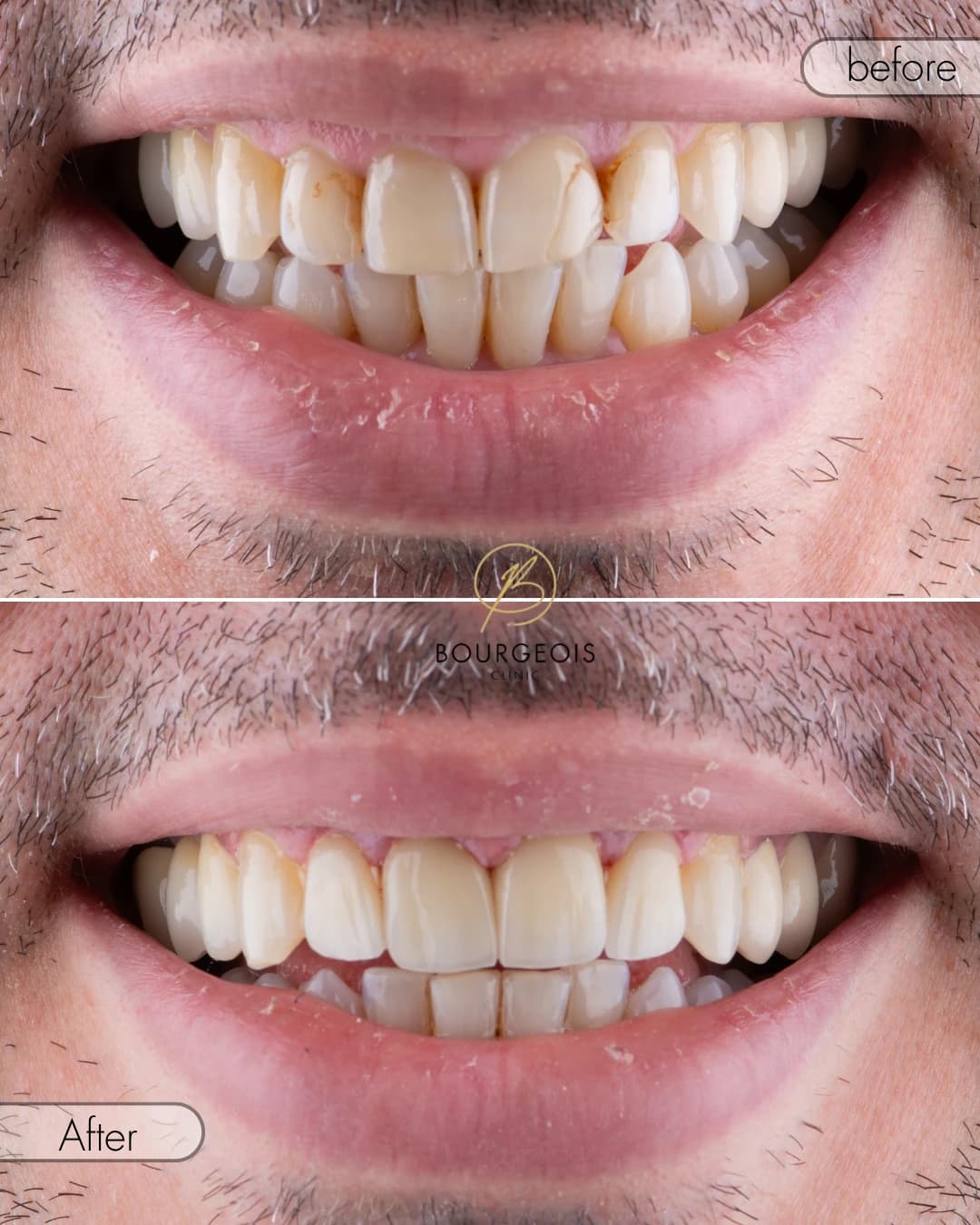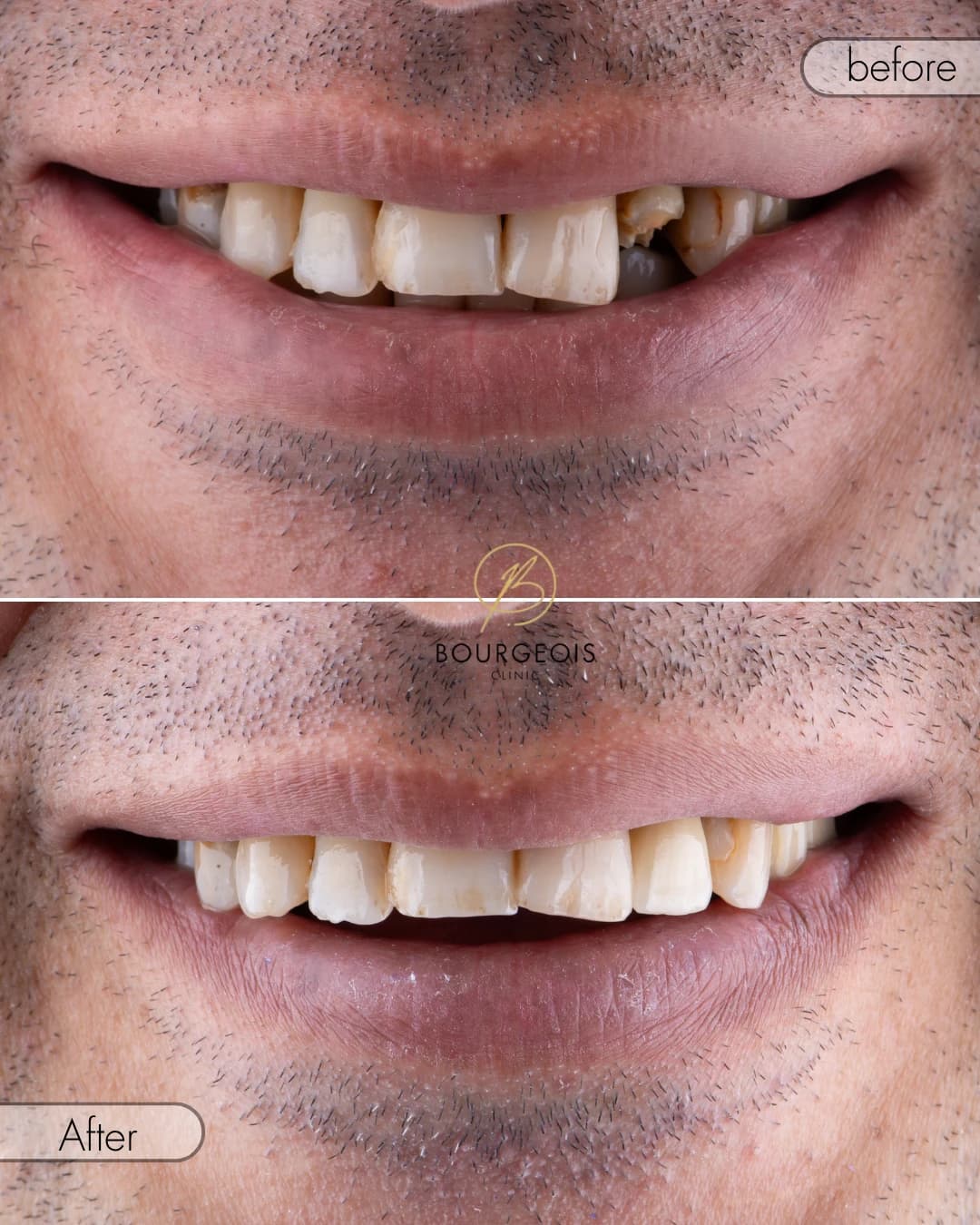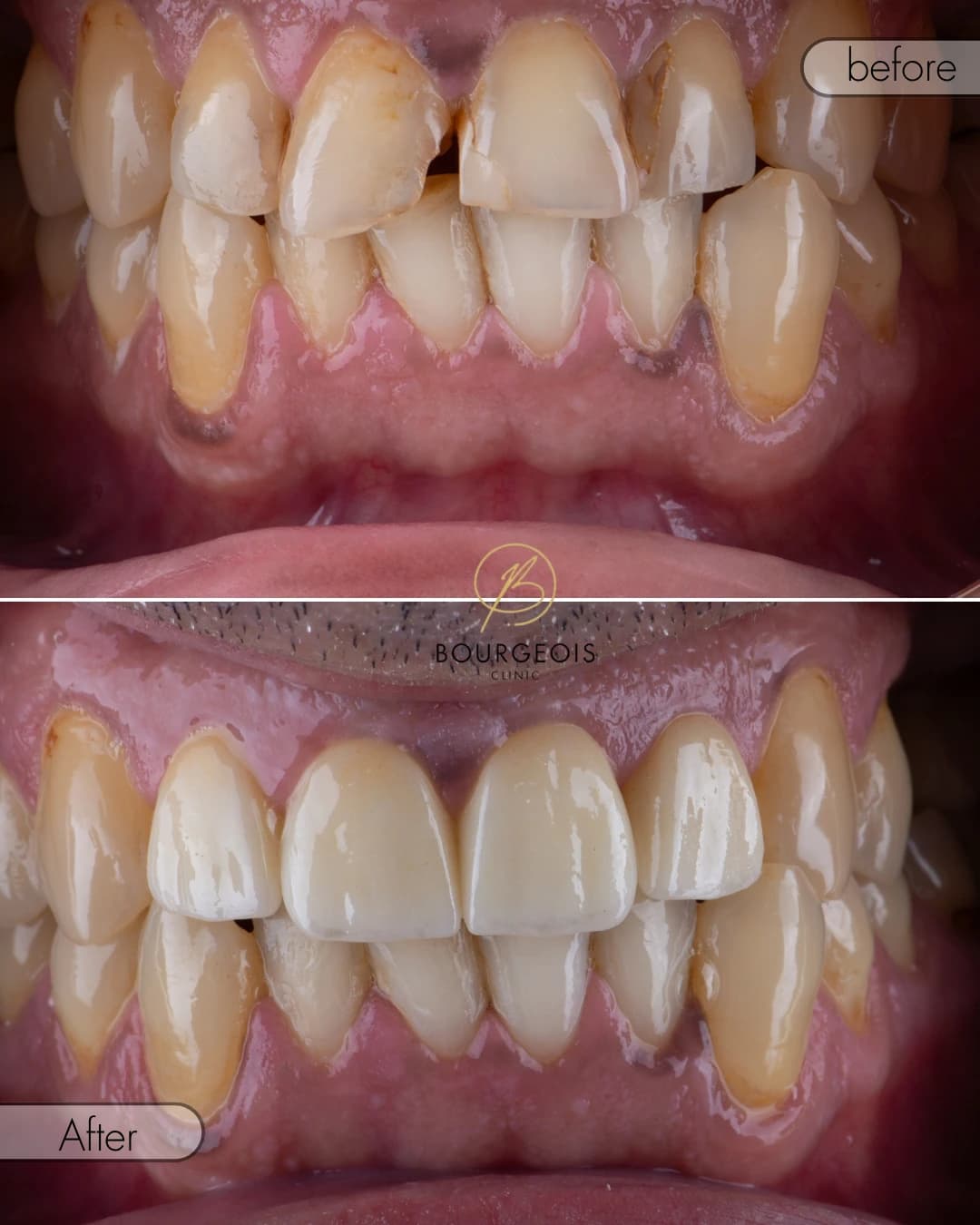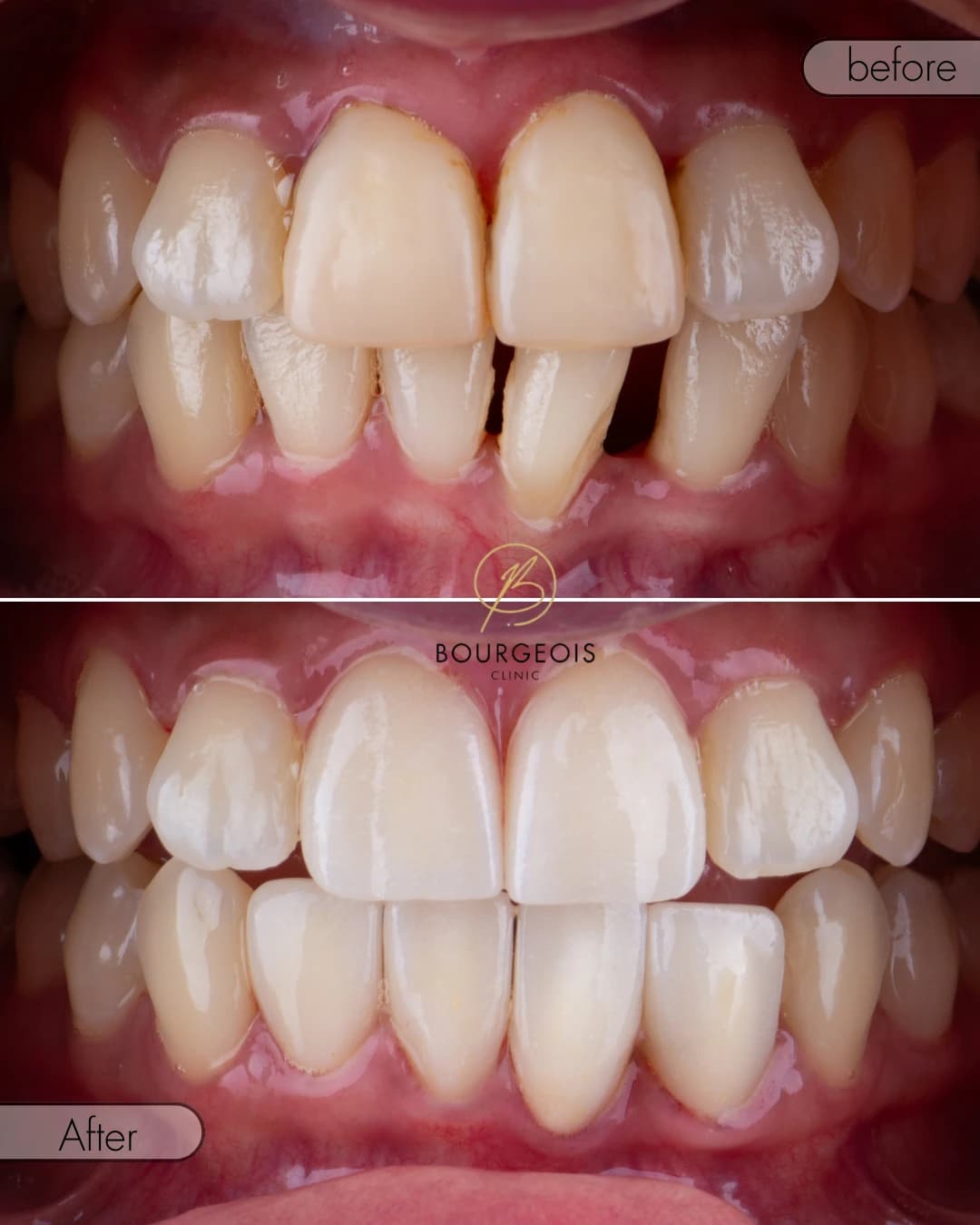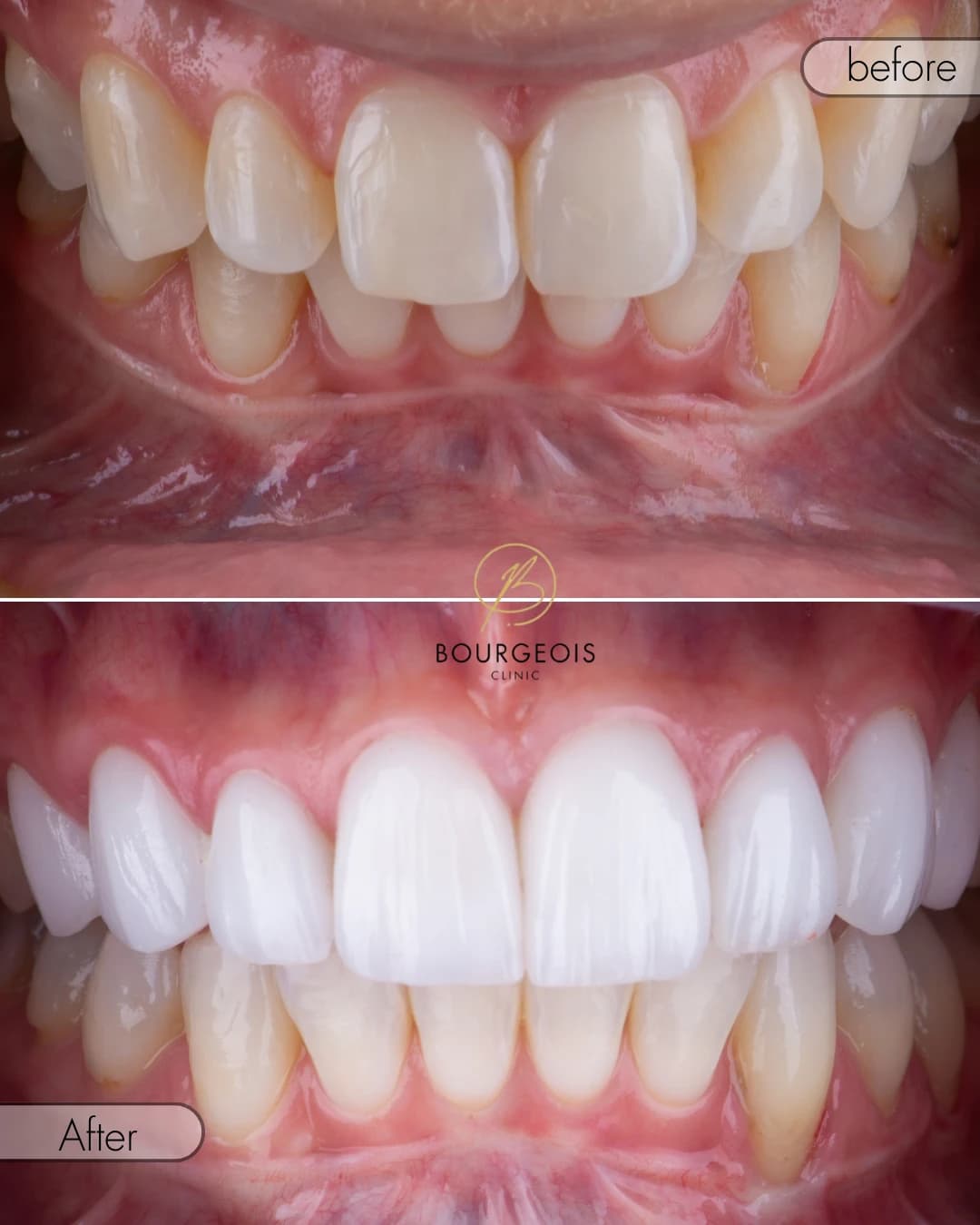


Inlay, Onlay or Crown in Dubai: Which Restoration Does Your Tooth Need?
What is the difference between an inlay, an onlay and a crown?
An inlay fits mainly inside the chewing surface of a back tooth. An onlay covers a larger area and protects one or more weakened cusps. A crown surrounds most of the visible tooth above the gumline. These are not simply small, medium and large versions of the same treatment; each design responds to a different pattern of damage and remaining structure.
At Bourgeois Dental Clinic in Dubai, Dr. Nour can assess the damaged tooth, existing filling, symptoms and bite before discussing conservative and full-coverage options.
The short answer
An inlay may suit damage contained between the cusps. An onlay may be chosen when one or more cusps need coverage but enough strong tooth remains to avoid a full crown. A crown may be more predictable when the tooth is extensively restored, structurally weak or needs broader protection. The final decision requires examination and often an X-ray.
When is a standard filling no longer enough?
Direct fillings are useful for many cavities and defects, but very large restorations can leave thin walls or cusps exposed to chewing forces. Repeated filling replacement can also remove more tooth structure. When a direct restoration cannot provide predictable shape, contact or support, an indirect restoration may be considered.
Size alone is not the only factor. The location of the defect, quality of enamel, presence of cracks, depth near the pulp, moisture control and bite load all influence whether a filling remains appropriate.
What is a dental inlay?
An inlay is custom made to fit within a prepared area, usually between the cusps of a molar or premolar. It can restore a moderate area while leaving the cusps uncovered when they are strong enough. Modern inlays may be made from ceramic, composite or other materials according to the clinical plan.
Dental inlays and onlays in Dubai are typically produced from a digital scan or impression and then bonded or cemented to the tooth.
What is a dental onlay?
An onlay extends beyond the centre of the tooth and covers one or more cusps. This additional coverage may help protect a weakened cusp from flexing or fracture. Because it does not necessarily surround the whole tooth, an onlay can sometimes preserve more natural structure than a crown.
The border between a large inlay and an onlay is based on the design required to protect the tooth. Patients do not need to choose the label; the dentist chooses coverage after removing decay or failing restorative material and evaluating the remaining structure.
What is a dental crown?
A crown provides broad coverage around the visible part of a tooth. It may be considered when there is extensive structural loss, several weakened cusps, a large fracture, major wear or a restoration that already occupies much of the tooth. Some root-canal-treated teeth also benefit from cuspal coverage, depending on their location and remaining structure.
The clinic’s dental crown service includes assessment of tooth restorability, preparation, shade and material selection, laboratory production, bite adjustment and maintenance guidance.
How do cracks affect the decision?
A crack confined to a cusp may be managed with coverage that protects the weakened segment. A deeper crack approaching or extending below the gumline can reduce the prognosis and may require additional evaluation. Covering a tooth does not make every crack harmless and cannot guarantee that a crack will never progress.
Symptoms such as pain on release after biting, temperature sensitivity or intermittent sharp pain should be described clearly. Magnification, bite tests, transillumination and imaging may help, although some cracks remain difficult to map completely.
Does a crown always make the tooth stronger?
A well-designed crown can protect remaining structure by distributing forces, but placing it requires preparation of the tooth. A crown cannot restore a tooth that lacks adequate support, has an unfavourable fracture or has uncontrolled disease. It is a protective restoration, not a guarantee.
The most conservative treatment is the one that preserves healthy tissue while providing sufficient protection. An undersized restoration can fail because it does not cover weak areas; an unnecessarily extensive restoration can remove sound structure.
What materials can be used?
Ceramic, composite, zirconia, metal-containing materials and other restorative systems may be used according to the tooth, thickness, appearance, bonding conditions and bite. There is no single best material for every case. Front-tooth aesthetics, back-tooth forces, available space and the opposing restoration can lead to different choices.
Material names should not replace diagnosis. Two patients receiving the same material may need different preparation designs because their teeth and bites are different.
How are bite contacts checked?
The restoration must fit within the patient’s bite rather than simply fill the prepared space. The dentist checks contact when the teeth close and during forward and side movements. A high contact can cause tenderness, overload a cusp or restoration and make chewing uncomfortable. Too little contact may reduce function or allow neighbouring and opposing teeth to move over time.
Bite adjustment should be controlled and followed by polishing. Patients should report a restoration that feels high, catches first or becomes increasingly painful rather than waiting for the sensation to settle without assessment.
What happens during treatment?
- The dentist examines symptoms, decay, cracks, gums and bite.
- X-rays or other records are taken when indicated.
- Decay and failing restorative material are removed.
- The remaining tooth determines the final design.
- A scan or impression records the preparation.
- A temporary restoration may be used while the laboratory restoration is made.
- The final restoration is checked for fit, contact, shade and bite before bonding or cementation.
How should the restoration be maintained?
Brush with fluoride toothpaste, clean between the teeth and attend review appointments. Avoid using restored teeth to open packages or bite very hard objects. Patients who grind may need a custom night guard after assessment.
Contact the clinic if the tooth develops persistent pain, a high bite, looseness, a fracture or food trapping. Early assessment may make repair more feasible.
Planning restorative care with Dr. Nour
Dr. Nour can explain why a filling, inlay, onlay or crown is being considered and show which parts of the tooth need support. When pulp, gum or complex rehabilitation issues are present, she can coordinate the appropriate care within the clinic’s restorative dentistry department.
Book a damaged-tooth assessment
If you have a broken filling, biting pain or a weakened tooth, avoid delaying until a larger fracture occurs. Book a dental appointment in Dubai for diagnosis and a personalised restorative plan.