


Crowded Teeth Treatment
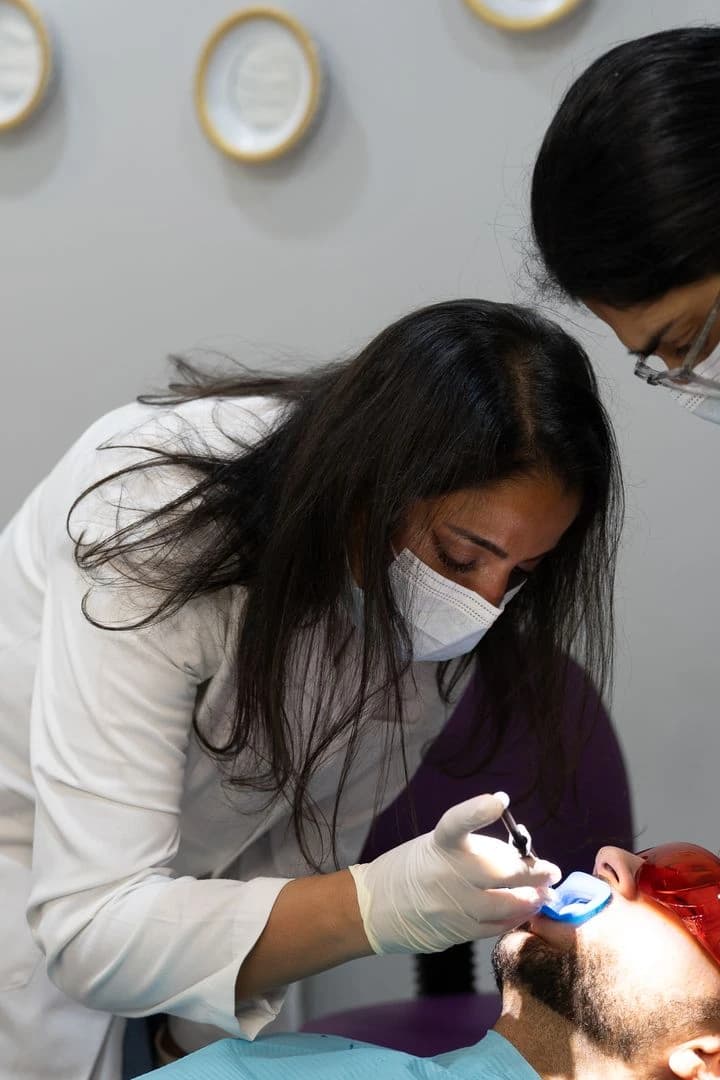
Crowded teeth occur when there is not enough suitable space for teeth to align normally within the dental arch. Teeth may overlap, rotate, erupt outside the arch, or remain displaced because of tooth size, jaw size, eruption pattern, early tooth loss, retained teeth, or relapse after previous orthodontic treatment.
At Bourgeois Dental Clinic in Dubai, crowded-teeth treatment is planned according to severity, gum and bone limits, facial profile, tooth size, bite, dental health, age, previous treatment, and long-term stability.
What Are the Signs of Crowded Teeth?
- Overlapping teeth
- Rotated or twisted teeth
- Teeth erupting inside or outside the normal arch
- Difficulty brushing or flossing
- Food trapping between misaligned teeth
- Uneven tooth wear
- Gum irritation around difficult-to-clean areas
- A tooth blocked from erupting normally
- Teeth shifting after previous braces
What Causes Dental Crowding?
- A mismatch between tooth size and available arch space
- Jaw size or shape
- Early loss of baby or permanent teeth
- Retained baby teeth
- Delayed or abnormal eruption
- Impacted teeth
- Tooth migration after missing teeth
- Relapse after previous orthodontic treatment
- Natural changes with growth and ageing
Why Should Crowded Teeth Be Assessed?
Crowding may affect appearance, but assessment also considers:
- Difficulty cleaning plaque effectively
- Gum inflammation
- Decay risk in inaccessible areas
- Abnormal tooth wear
- Bite interference
- Trauma to protruding or displaced teeth
- Effects on neighbouring teeth and restorations
- Preparation for cosmetic or restorative treatment
Treatment is not automatically required for every minor irregularity. The likely benefits, risks, stability, and patient goals should be considered.
What Happens During the Assessment?
- Clinical examination: Evaluating overlap, rotations, eruption, spacing, tooth shape, and bite.
- Gum and bone assessment: Reviewing inflammation, recession, bone support, and cleaning access.
- Space analysis: Measuring the amount of crowding and available arch space.
- Jaw and facial review: Considering profile, arch shape, and jaw relationships.
- Dental records: Photographs, scans, impressions, and imaging may be recommended.
- Treatment comparison: Discussing braces, aligners, enamel reduction, extraction, restorative treatment, or monitoring.
How Can Crowded Teeth Be Treated?
Treatment may involve one or more of the following:
- Metal braces
- Ceramic braces
- Clear aligners
- Controlled arch development in suitable cases
- Minor enamel reduction between selected teeth
- Movement of teeth to use existing space more efficiently
- Extraction of selected teeth when clinically appropriate
- Restorative reshaping or bonding in selected minor cases
- Monitoring where treatment is not currently required
Can Clear Aligners Treat Crowded Teeth?
Clear aligners may treat selected mild, moderate, and some more complex crowding, depending on the required movements, bite, gum and bone limits, and patient cooperation.
Attachments, enamel reduction, elastics, or refinement trays may be required. Some cases may be more predictable with fixed braces.
When Are Fixed Braces Recommended?
Fixed braces may be considered when continuous control is helpful for complex rotations, large movements, significant bite correction, teeth that need detailed root positioning, or patients who may struggle with removable-tray wear.
What Is Interproximal Enamel Reduction?
Interproximal enamel reduction removes a small, controlled amount of enamel between selected teeth to create space or improve tooth-size relationships.
It is not appropriate for every patient and depends on enamel condition, tooth shape, crowding, decay risk, gum health, and the amount of space required.
Do Crowded Teeth Always Require Extraction?
No. Non-extraction treatment may use existing space, controlled arch changes, enamel reduction, or tooth movement.
Extraction may be considered when severe crowding, protrusion, facial balance, bite correction, damaged teeth, gum and bone limits, or stability cannot be managed predictably without removing selected teeth.
Can Cosmetic Dentistry Fix Crowded Teeth?
Composite bonding, veneers, or crowns may visually change selected minor irregularities, but they do not move tooth roots or correct the underlying bite.
Restorative treatment may require removal of healthy tooth structure and may not be suitable when crowding is significant. Orthodontic alignment may reduce restorative preparation in selected cases.
Can Crowded Teeth Return After Treatment?
Yes. Teeth may shift because of growth, ageing, bite forces, gum and bone changes, habits, missing teeth, or inconsistent retainer use.
Retainers are generally required after active treatment to help maintain alignment.
How Long Does Treatment Take?
Duration depends on:
- The severity of crowding
- The movements required
- The selected appliance
- Whether space creation or extraction is required
- Patient growth and biological response
- Appointment attendance
- Aligner or elastic wear
- Oral hygiene and dental health
What Are the Risks and Limitations?
- Temporary soreness
- Gum inflammation with poor cleaning
- Enamel marks or decay around appliances
- Gum recession in susceptible areas
- Root shortening in some teeth
- Insufficient space for every requested movement
- Need for enamel reduction or extraction
- Incomplete correction because of gum, bone, or jaw limits
- Longer treatment than expected
- Relapse without retention
When Should Crowding Be Assessed Promptly?
Prompt assessment may be helpful when a permanent tooth is not erupting, a tooth is emerging outside the arch, crowding is worsening quickly, gums are repeatedly inflamed, or cleaning has become difficult.
Crowded Teeth Treatment on Sheikh Zayed Road
Bourgeois Dental Clinic is located on the first floor of Indigo Sky Building, Sheikh Zayed Road, Exit 41, near Al Thanya Street in Dubai. The clinic is accessible from Al Barsha, Umm Al Sheif, Umm Suqeim, Jumeirah, Al Quoz, Barsha Heights, The Greens, Dubai Marina, and nearby communities.
Book a crowded-teeth assessment to discuss braces, clear aligners, space creation, extraction considerations, relapse, or alignment before cosmetic dentistry.
Department
Orthodontics, Braces & Clear Aligners
FAQ
Frequently Asked Questions
BOOK AN
Appointment
Working Hours
We are here to serve you