


Underbite Treatment
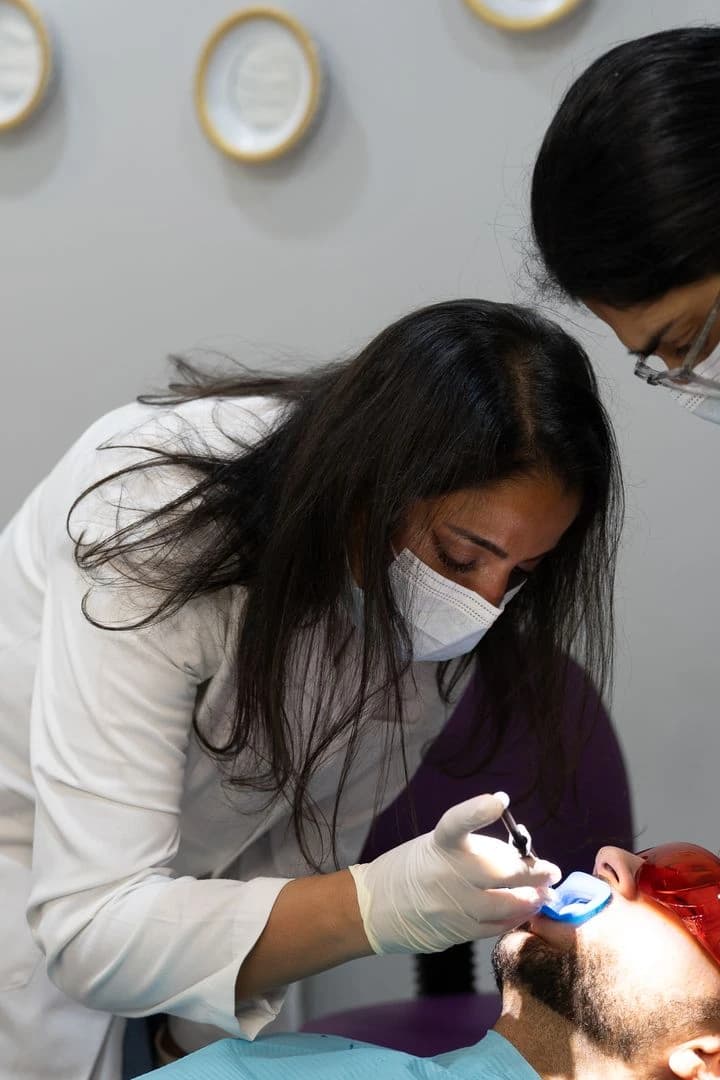
An underbite occurs when the lower front teeth or lower dental arch sit ahead of the upper front teeth when biting. The cause may be mainly dental, related to jaw growth, functional jaw positioning, or a combination of these factors.
At Bourgeois Dental Clinic in Dubai, underbite treatment begins by identifying whether the concern can be corrected through tooth movement alone or whether jaw relationships create additional limitations requiring broader assessment.
What Are the Signs of an Underbite?
- Lower front teeth bite in front of the upper front teeth
- The lower jaw appears prominent
- The upper jaw or dental arch appears relatively narrow or retruded
- Difficulty biting or chewing selected foods
- Uneven tooth wear
- Chipping of front teeth or restorations
- Gum recession around overloaded teeth
- Jaw shifting when closing
- Speech concerns in selected cases
- Facial or smile imbalance
What Causes an Underbite?
- Lower front teeth tilted forward
- Upper front teeth tilted backward
- Excessive lower-jaw growth
- Limited upper-jaw growth
- A functional shift of the lower jaw
- Crossbite involving several front teeth
- Missing teeth or altered tooth positions
- Family growth patterns
- A combination of dental and skeletal factors
Why Is Correct Diagnosis Important?
A dental underbite caused mainly by tooth position may respond differently from a skeletal underbite caused mainly by jaw relationships.
Attempting to camouflage a severe jaw-related problem through tooth movement alone may create gum, bone, stability, or facial-profile limitations. Treatment should therefore be based on a full assessment.
What Happens During the Assessment?
- Bite examination: Evaluating the front-tooth relationship, jaw shift, crossbite, and functional contacts.
- Tooth-position review: Assessing tooth inclination, crowding, spacing, wear, and eruption.
- Jaw and facial assessment: Reviewing profile, symmetry, growth, and upper-to-lower jaw relationships.
- Gum and bone review: Checking recession, thin tissues, bone support, and overloaded teeth.
- Dental-health assessment: Evaluating decay, infection, restorations, missing teeth, and tooth prognosis.
- Diagnostic records: Photographs, scans, impressions, and imaging may be recommended.
- Treatment discussion: Comparing orthodontic, growth-related, restorative, monitoring, or combined approaches.
How Can an Underbite Be Treated?
Depending on the diagnosis, treatment may involve:
- Metal braces
- Ceramic braces
- Clear aligners in selected dental cases
- Orthodontic elastics or auxiliaries
- Growth-related treatment planning in suitable younger patients
- Space creation or extraction in selected cases
- Restorative reshaping or rebuilding of damaged teeth
- Combined orthodontic and jaw-surgery assessment for selected severe adult skeletal cases
- Monitoring when immediate treatment is not appropriate
Can Clear Aligners Correct an Underbite?
Clear aligners may improve selected mild or moderate dental underbites caused mainly by tooth position.
Attachments, elastics, additional trays, or fixed appliances may be required. Severe jaw-related underbites generally cannot be corrected predictably with aligners alone.
Can Fixed Braces Treat an Underbite?
Fixed braces may reposition teeth, coordinate the dental arches, correct selected anterior crossbites, and prepare the bite for restorative or combined treatment.
The amount of correction possible depends on gum and bone limits and the underlying jaw relationship.
Why Is Timing Important for Younger Patients?
Growth may influence selected underbite treatment options. Earlier assessment can identify functional jaw shifts, eruption problems, and developing skeletal relationships.
However, early treatment cannot guarantee that later jaw growth will not change the result. Some patients may require monitoring or additional treatment after growth.
Can Adults Treat an Underbite Without Surgery?
Some adult dental underbites can be treated without surgery through orthodontic tooth movement or restorative care.
Severe skeletal underbites may have limits that cannot be fully corrected through tooth movement alone. In such cases, combined orthodontic and surgical assessment may be discussed, but surgery is not automatically required for every underbite.
Can Restorative Dentistry Improve an Underbite?
Composite bonding, veneers, crowns, or replacement of missing teeth may improve selected minor tooth-shape or bite concerns.
Restorative treatment does not change the underlying jaw relationship and may not be appropriate where significant tooth movement or skeletal correction is required.
Does Underbite Treatment Require Extraction?
Not always. Extraction may be considered when space, tooth inclination, crowding, protrusion, damaged teeth, or camouflage planning require it.
The decision should be based on diagnostic records and the effect on facial balance, gums, bone, and stability.
Can an Underbite Cause Dental Problems?
An underbite may contribute to:
- Uneven front-tooth wear
- Chipping or fractures
- Gum recession around overloaded teeth
- Difficulty biting selected foods
- Restorative damage
- Jaw-movement interference
- Progressive bite changes
These problems can also have other causes, so assessment is required.
Can an Underbite Return After Treatment?
Yes. Growth, ageing, tooth movement, gum and bone changes, bite forces, and inconsistent retainer use can affect stability.
Retainers and long-term monitoring are generally required.
How Long Does Treatment Take?
Duration depends on:
- Whether the cause is dental or skeletal
- The severity of the bite relationship
- The age and growth stage
- The appliance selected
- The movements required
- Elastic or aligner wear
- Appointment attendance
- Need for restorative or combined treatment
What Are the Risks and Limitations?
- Temporary soreness and tissue irritation
- Gum inflammation with poor cleaning
- Gum recession where teeth are moved beyond suitable limits
- Root shortening in some teeth
- Incomplete correction of severe jaw relationships
- Changes in facial or tooth appearance
- Need for extraction, restoration, or combined treatment
- Longer treatment than expected
- Continued growth affecting the result
- Relapse after treatment
When Should an Underbite Be Assessed Promptly?
Prompt assessment may be helpful when the jaw shifts while closing, front teeth are wearing or fracturing, gum recession is progressing, a child’s bite is becoming more reversed, or chewing has become difficult.
Underbite Treatment on Sheikh Zayed Road
Bourgeois Dental Clinic is located on the first floor of Indigo Sky Building, Sheikh Zayed Road, Exit 41, near Al Thanya Street in Dubai. The clinic is accessible from Al Barsha, Umm Al Sheif, Umm Suqeim, Jumeirah, Al Quoz, Barsha Heights, The Greens, Dubai Marina, and nearby communities.
Book an underbite assessment to discuss braces, clear aligners, jaw growth, anterior crossbite, tooth wear, gum recession, restorative options, or combined treatment planning.
Department
Orthodontics, Braces & Clear Aligners
FAQ
Frequently Asked Questions
BOOK AN
Appointment
Working Hours
We are here to serve you