


How to Choose the Best Cosmetic Dentist in Dubai
The best cosmetic dentist in Dubai is the appropriately licensed clinician who begins with oral health, understands your goals, explains conservative alternatives and plans a natural, functional and maintainable result.
Choosing the best cosmetic dentist in Dubai is not about finding the boldest promise or the brightest smile on social media. The right cosmetic dentist should first assess your oral health, understand what you want to change, explain conservative and comprehensive options, and design a result that suits your teeth, gums, bite, face and long-term maintenance needs.
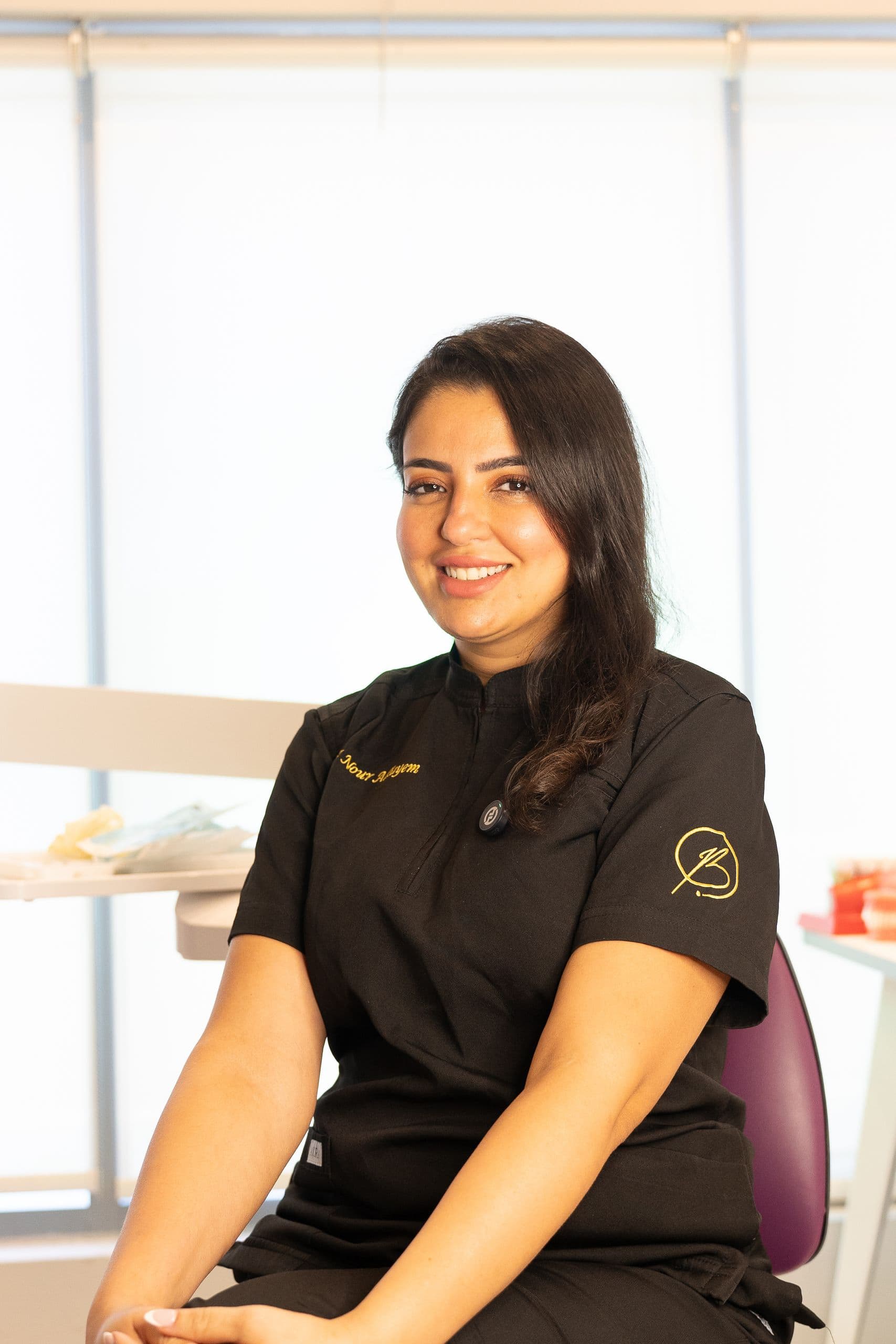
At the Cosmetic Dentistry Department at Bourgeois Dental Clinic, patients can consult Dr. Nour Al-Kayem, the clinic’s CEO, Founder and Lead Dentist. Her published clinical scope includes general dentistry, aesthetic dentistry, prosthetic rehabilitation and dental care for children. This combination is relevant when a cosmetic concern also involves tooth health, existing restorations, function or a broader treatment plan.
Quick Answer: What Makes a Good Cosmetic Dentist?
A good cosmetic dentist does not recommend the same procedure to every patient. The dentist examines the teeth, gums and bite; identifies disease or structural problems; understands the patient’s priorities; discusses alternatives; and explains what can realistically be achieved. Treatment should preserve healthy tooth structure where possible and include a plan for care, repair and maintenance.
What Does “Best Cosmetic Dentist in Dubai” Really Mean?
No dentist or cosmetic treatment is universally best. Whitening may be appropriate for healthy but stained teeth. Bonding may suit selected chips or spaces. Veneers may be considered for particular colour, shape or surface concerns. Crowns are generally more relevant when a tooth needs broader structural coverage. Orthodontics may be the more conservative option when tooth position is the main problem.
The best match is therefore an appropriately licensed dentist whose experience, diagnostic approach and aesthetic philosophy suit your individual case.
1. Verify the Dentist’s Licence and Current Professional Scope
Confirm that the dentist is licensed to practise in Dubai and review the current professional title and clinical scope. Promotional phrases such as “celebrity dentist,” “smile artist” or “number-one cosmetic dentist” are not substitutes for registered professional information.
Ask which cosmetic and restorative procedures the dentist personally provides and when another clinician, such as an orthodontist, implant dentist, gum-care clinician or endodontic dentist, may need to contribute.
2. Choose Experience Relevant to the Change You Want
Cosmetic dentistry includes several distinct treatments. Experience with whitening does not automatically demonstrate experience with complex veneers, full-mouth rehabilitation or bite-related restorative cases. Ask to see cases that resemble your starting condition and desired degree of change.
| Your concern | Options that may be assessed |
|---|---|
| Stained but healthy teeth | Professional cleaning, whitening or management of the underlying cause |
| Small chips or limited gaps | Composite bonding, contouring or orthodontic movement |
| Colour and shape changes across several teeth | Whitening, bonding, veneers or a combination plan |
| Crooked or crowded teeth | Braces or clear aligners before considering restorative camouflage |
| Heavily filled, cracked or weakened teeth | Restorative assessment, onlays or crowns rather than veneers alone |
| Worn teeth or altered bite | Functional and restorative assessment before cosmetic treatment |
| Missing teeth | Implant, bridge, removable replacement or multidisciplinary planning |
3. Expect a Complete Cosmetic Dental Consultation
A responsible cosmetic dental consultation in Dubai begins with your goals, medical and dental history, previous treatment, habits and expectations. The dentist examines the teeth, gums, bite, smile line, tooth display, proportions and existing restorations.
Diagnostic records may include photographs, digital scans, radiographs and bite records when indicated. These records help separate a purely cosmetic concern from decay, cracks, gum disease, erosion, grinding, bite problems or failing restorations that should be managed first.
4. Look for Health-First, Conservative Treatment Planning
Cosmetic treatment should not conceal active disease. Tooth decay, gum inflammation, infection, unstable restorations and uncontrolled grinding may compromise comfort, appearance and durability. These concerns should be treated or stabilised before elective cosmetic work.
Ask how much healthy enamel or tooth structure each option requires. A conservative plan may begin with cleaning, whitening, minor bonding or orthodontics before considering veneers or crowns. Conservative does not always mean the simplest procedure; it means selecting the least destructive predictable option for the agreed goal.
5. Compare Cosmetic Treatments Objectively
The right procedure depends on the diagnosis, not only on the desired photograph. Each option has different indications, limitations and maintenance requirements.
| Treatment | May help with | Important considerations |
|---|---|---|
| Professional teeth whitening | Selected natural-tooth stains and general colour improvement | Does not change tooth shape or lighten existing crowns, fillings or veneers |
| Composite bonding | Selected chips, edges, small spaces and shape adjustments | May stain, chip, wear or require polishing and repair |
| Porcelain veneers | Selected colour, shape, proportion and surface concerns | Requires suitability assessment and may involve irreversible enamel preparation |
| E-max veneers | Selected cases requiring a ceramic veneer design | Material choice depends on tooth colour, preparation, bite and laboratory design |
| Dental crowns | Teeth needing broader structural coverage or replacement of large restorations | More tooth coverage than a veneer; not justified for healthy teeth by appearance alone |
| Smile makeover | Several interacting cosmetic, restorative or alignment concerns | Should be an individual treatment plan rather than a fixed package |
6. Ask Whether Tooth Alignment Should Be Corrected First
Veneers and bonding can alter the visible shape of selected teeth, but they do not move roots or correct every bite problem. When crowding, rotation, protrusion or spacing is the main concern, orthodontic treatment may preserve more natural tooth structure.
Ask the dentist to compare restorative camouflage with actual tooth movement. The guide to veneers versus braces in Dubai explains why the best choice depends on alignment, enamel, bite, time and the desired change.
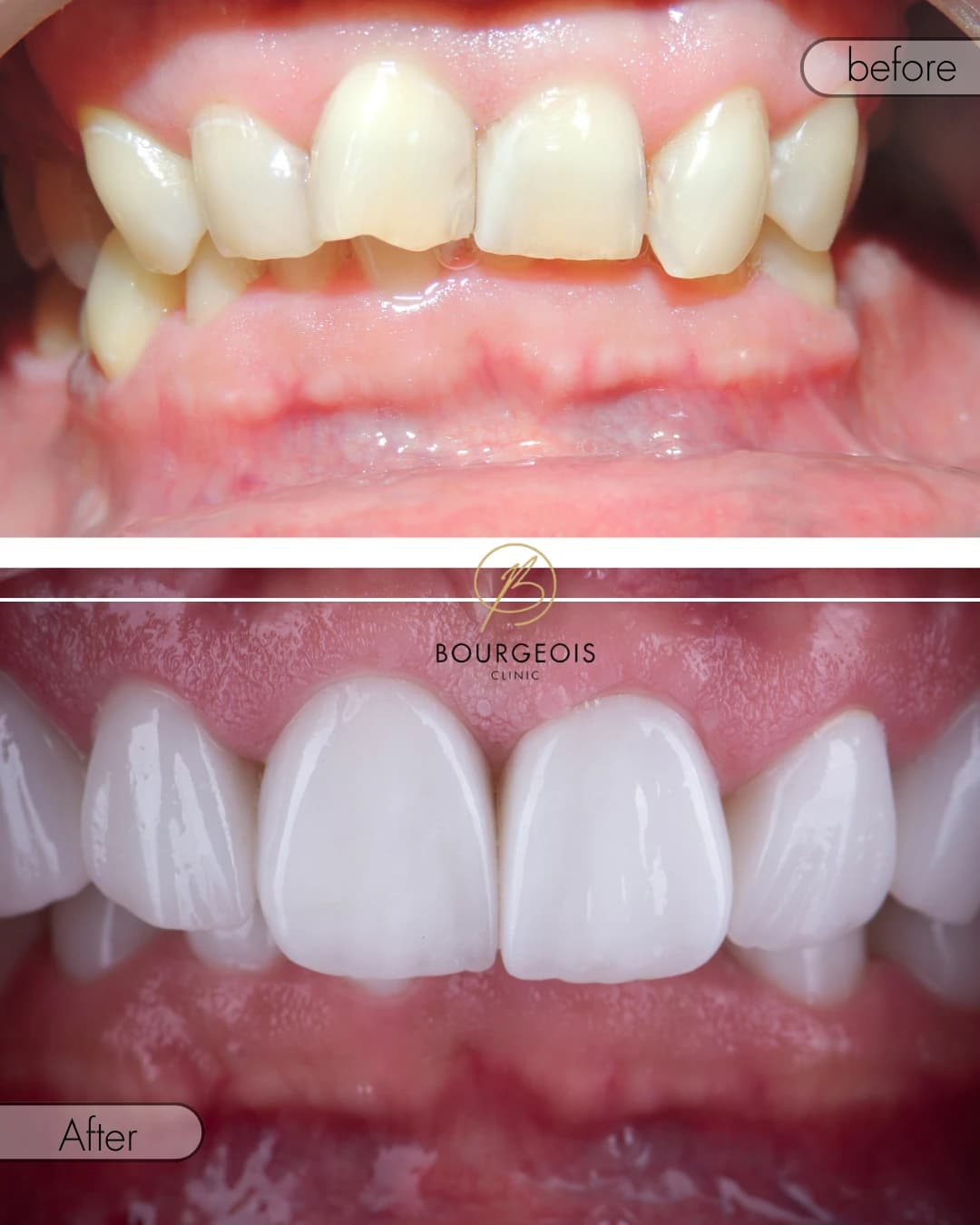
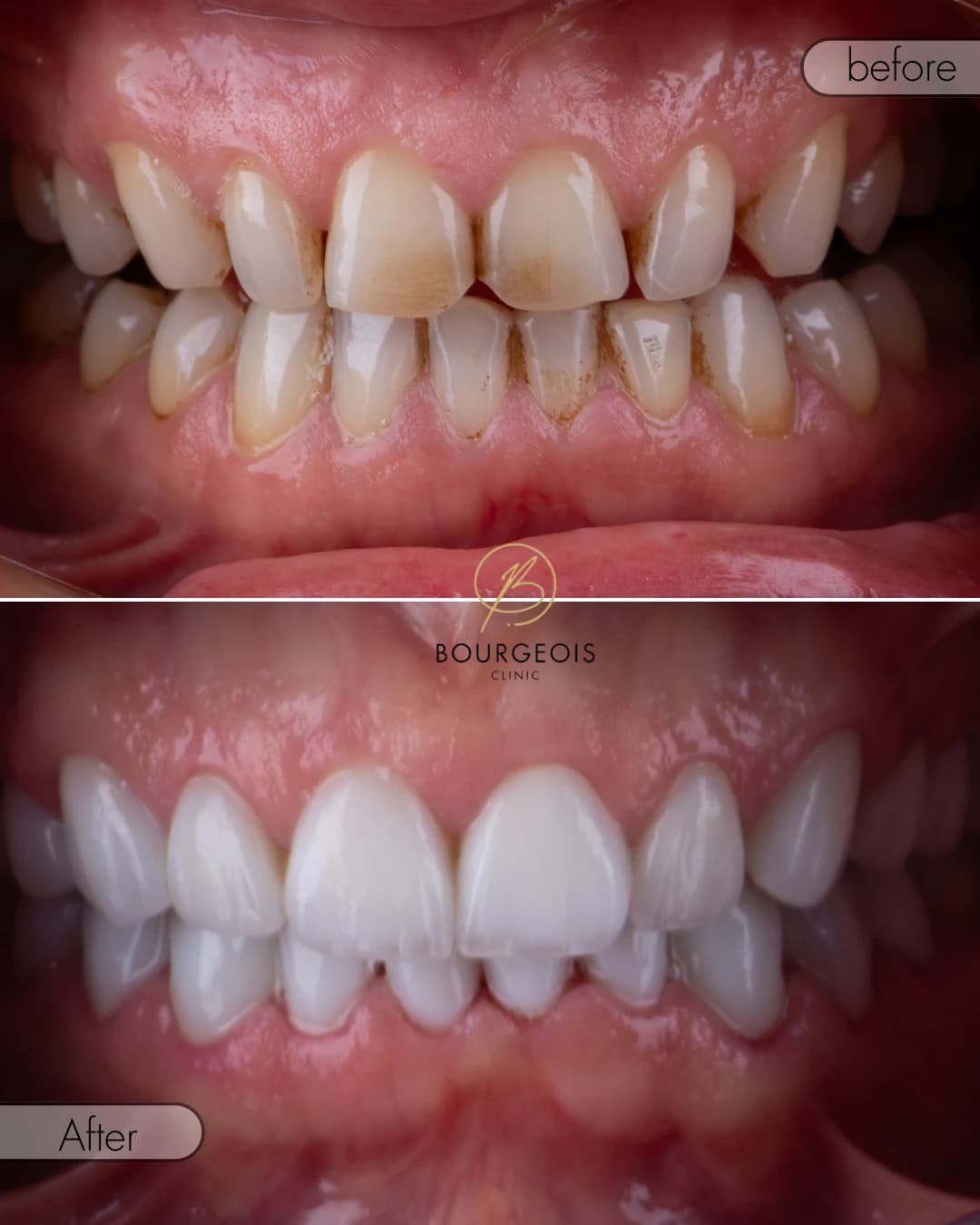
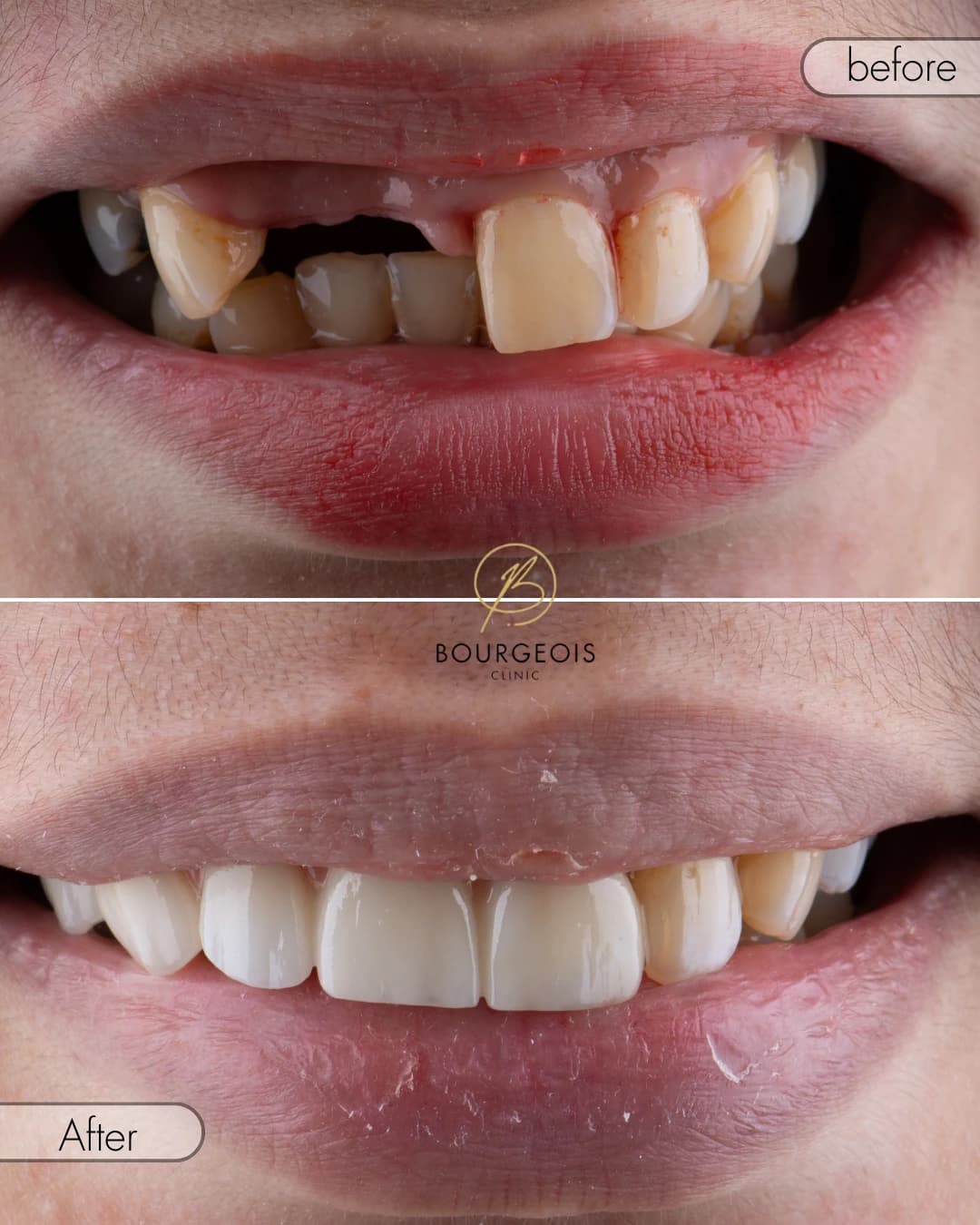
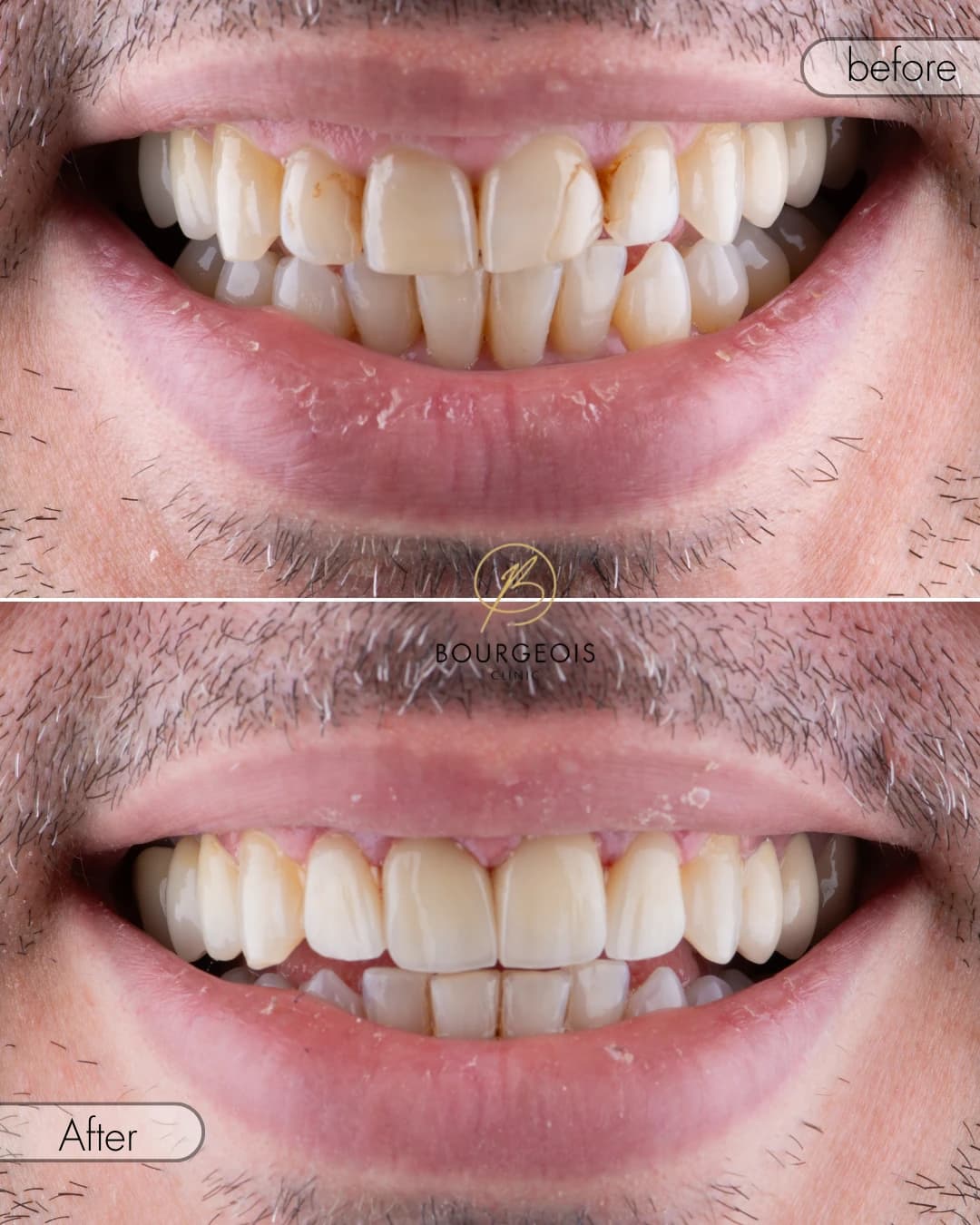
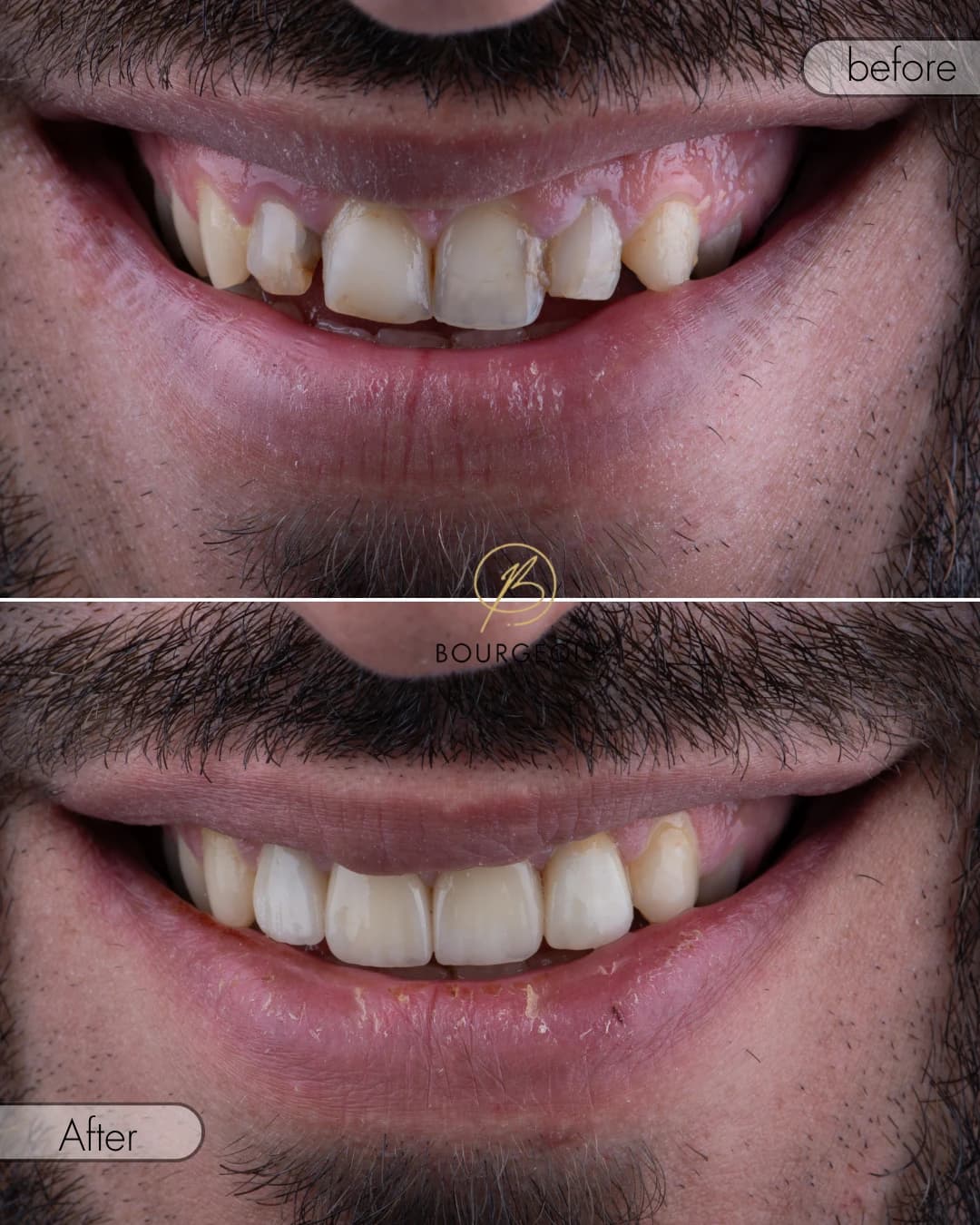
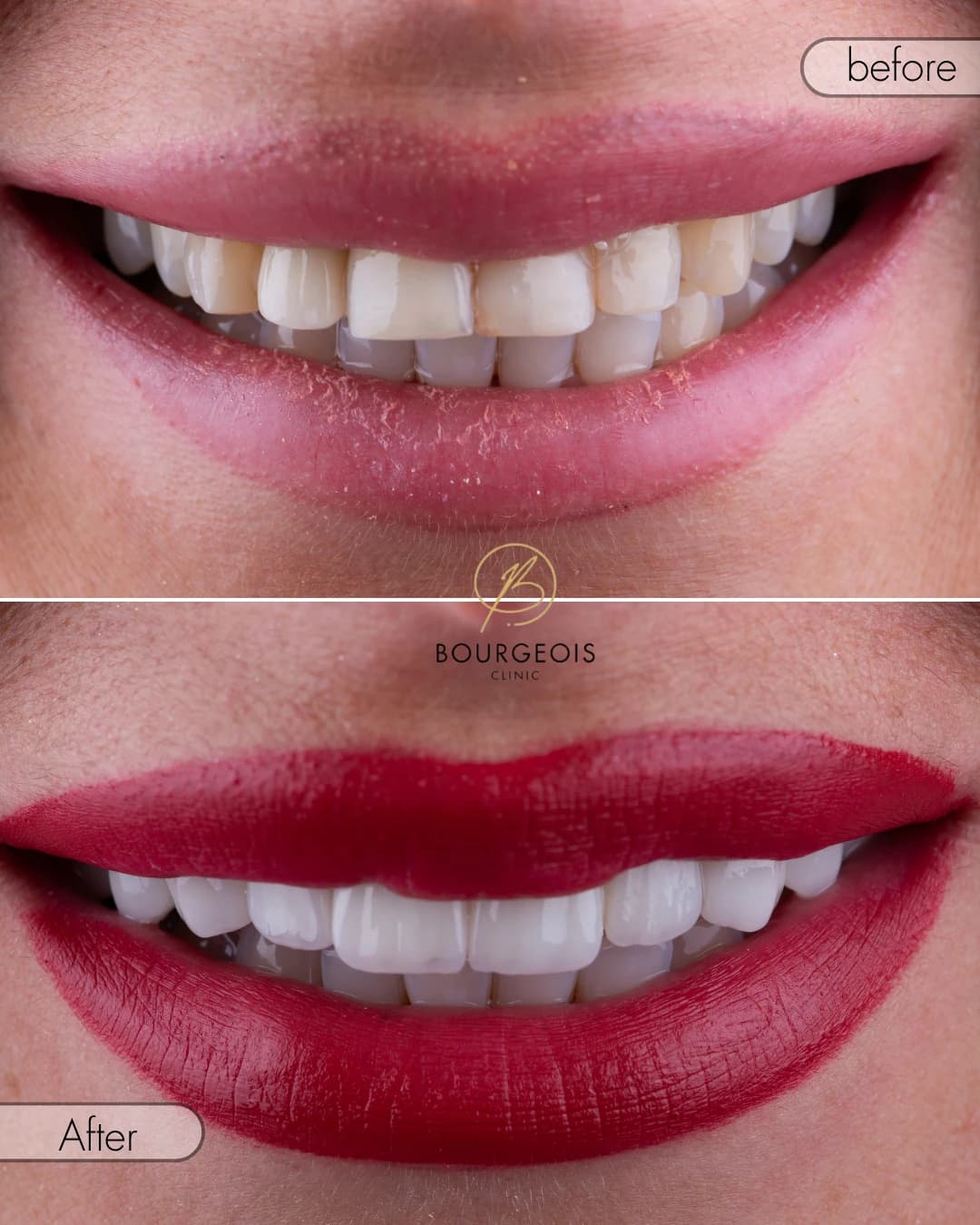
7. Review Before-and-After Cases Critically
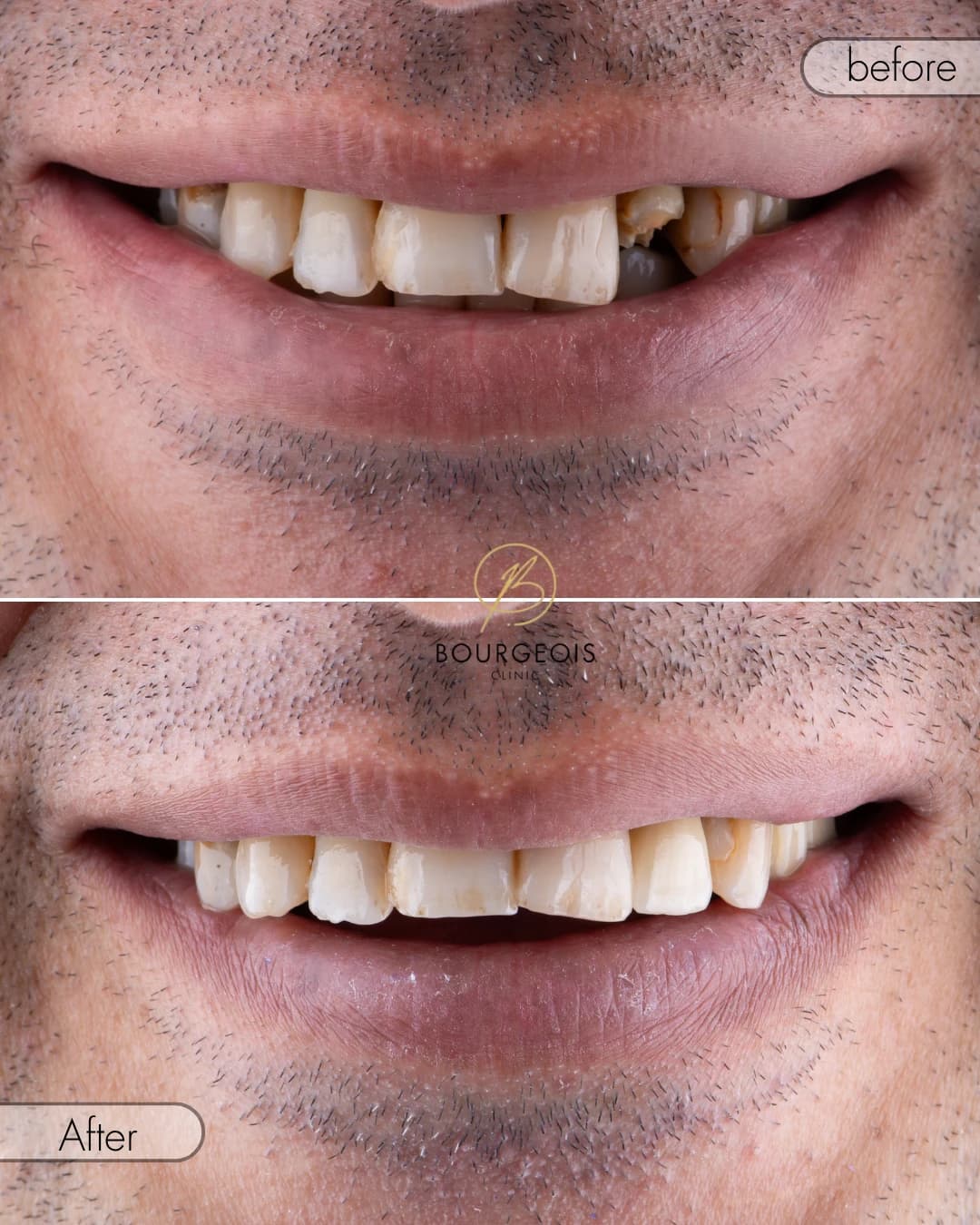
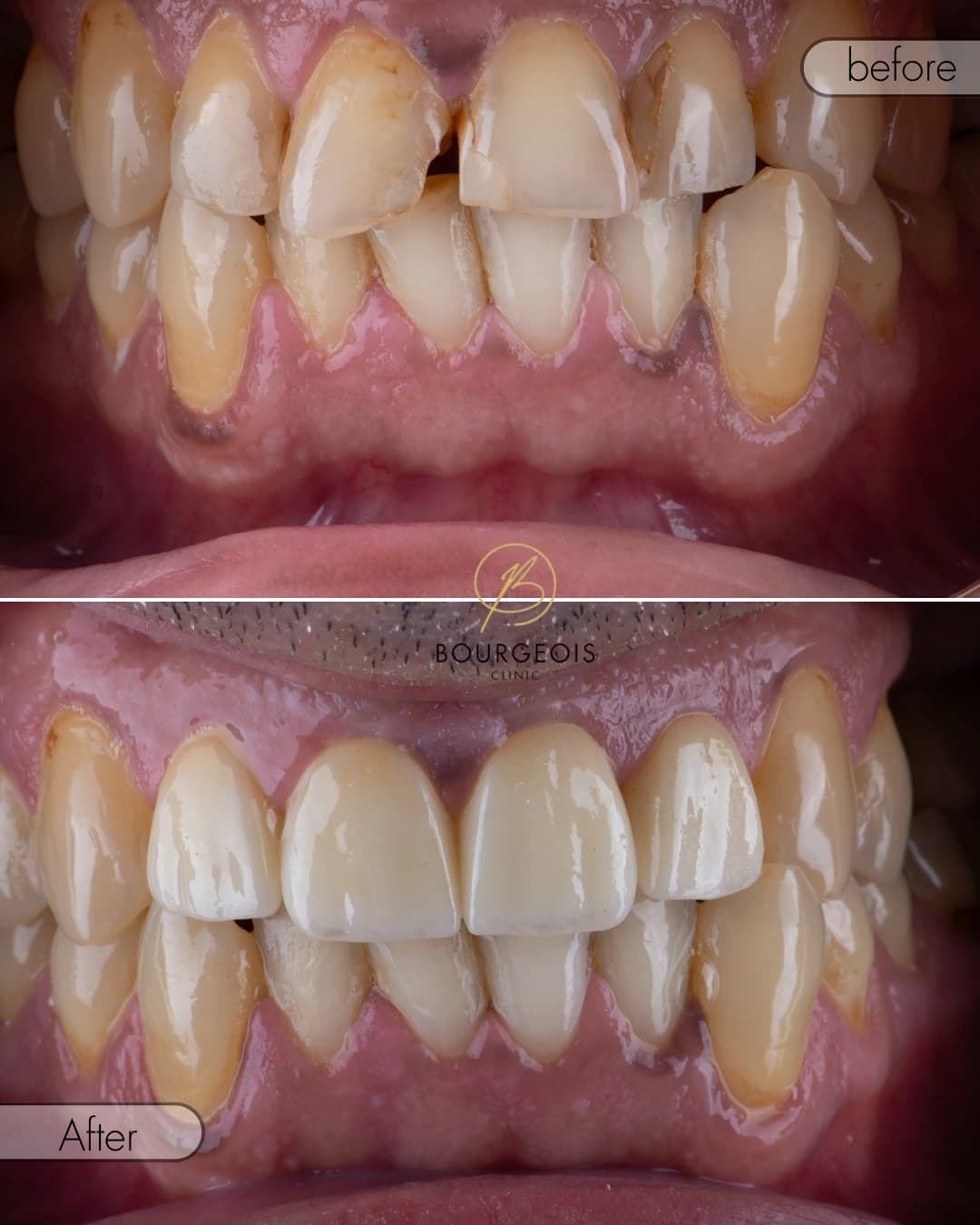
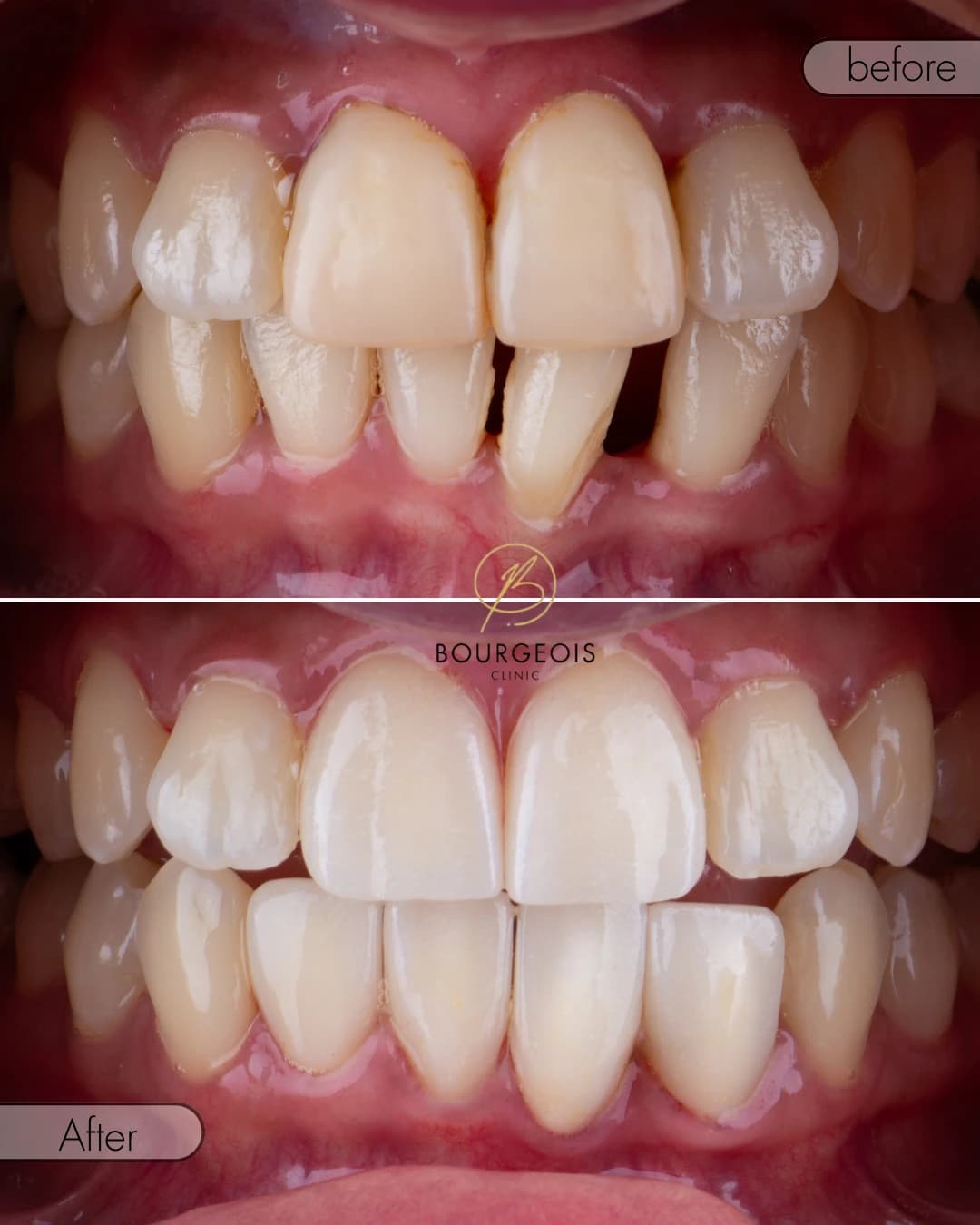
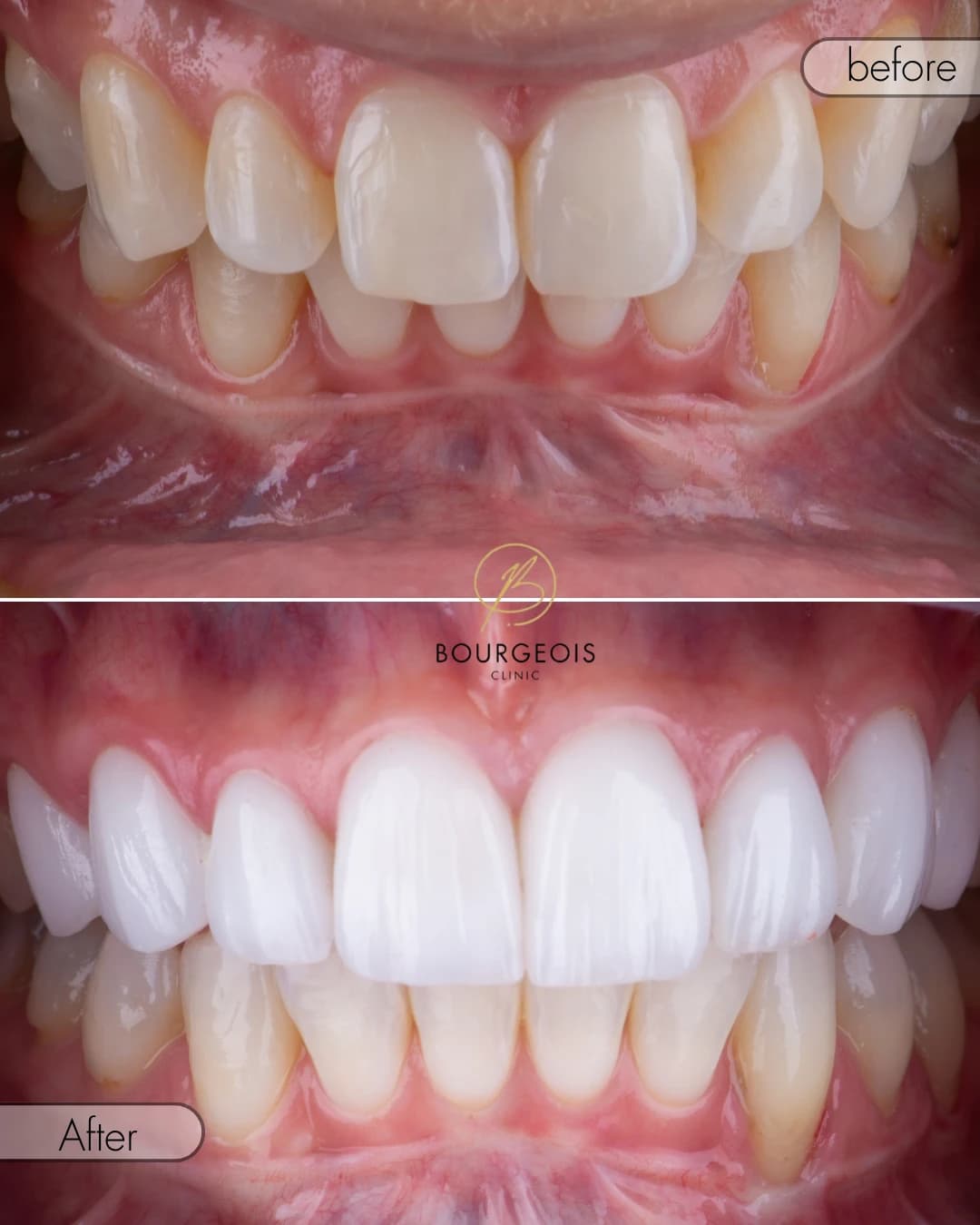
Before-and-after cases can reveal a dentist’s style, but images should be evaluated carefully. Look for starting cases similar to yours, consistent photography and results that appear natural in different views. Ask which teeth were treated, what procedures were used and when the final photographs were taken.
A front-facing smile photograph cannot show the complete bite, gum health, preparation design or long-term condition. Cases should support a conversation, not replace diagnosis or guarantee an identical outcome.
8. Discuss Smile Design and Your Preferences
A cosmetic result should reflect the patient rather than a universal template. Discuss colour, translucency, tooth length, edge shape, symmetry, texture and how much natural variation you prefer. Very white or perfectly identical teeth are not automatically the most natural or appropriate result.
Depending on the case, the planning process may use photographs, digital design, a diagnostic wax-up, provisional restorations or a trial smile. Ask which elements are simulations and which aspects can be predicted reliably.
9. Make Sure Function and Bite Are Considered
Cosmetic restorations must work during biting and jaw movement. Grinding, clenching, deep bite, edge-to-edge contacts or missing back teeth can increase stress on bonding, veneers and crowns. A beautiful design that ignores function may chip, wear or feel uncomfortable.
The dentist should assess contacts, guidance and available restorative space. A protective night guard may be discussed when clinically appropriate, but it does not correct an unsuitable design or untreated disease.
10. Understand Materials and Laboratory Work
Material names alone do not guarantee a good outcome. Composite, porcelain, lithium-disilicate ceramics and zirconia have different optical, mechanical and preparation characteristics. The choice should reflect the tooth condition, colour, bite, restoration thickness and required appearance.
For laboratory-made restorations, ask how shade, surface texture, shape and fit are communicated to the dental technician. Also ask what happens if the trial or final appearance does not match the agreed plan.
11. Compare Written Costs, Not Package Headlines
Request an itemised treatment plan showing the diagnosis, procedure for each tooth, number of teeth, material, provisional stages, laboratory work, reviews and aftercare. Confirm whether cleaning, whitening, gum treatment, replacement fillings, retainers or a night guard are separate.
A lower advertised price may exclude necessary stages, while a higher price does not prove that the treatment is appropriate. Compare like-for-like plans and prioritise diagnosis, preservation of tooth structure and long-term maintainability.
12. Ask About Maintenance, Repair and Longevity
No cosmetic treatment is maintenance-free or guaranteed for life. Whitening may require future touch-ups. Bonding can stain, chip or need polishing. Veneers and crowns may require repair or replacement. Gum levels, bite and natural teeth can also change over time.
Ask how to clean around the treatment, which habits may cause damage, how often reviews are recommended and whether the clinic can repair or replace the materials used. The dentist should distinguish between the restoration itself and the health of the tooth beneath it.
Meet Dr. Nour Al-Kayem at Bourgeois Dental Clinic
Dr. Nour Al-Kayem is the CEO, Founder and Lead Dentist of Bourgeois Dental Clinic in Dubai. Her current profile describes a scope across general dentistry, aesthetic dentistry, prosthetic rehabilitation and dental care for children.
This breadth is useful when cosmetic goals overlap with existing crowns, fillings, missing tooth structure, family dental needs or a more comprehensive rehabilitation plan. Her profile also presents a patient-centred approach in which recommendations are based on examination, medical history, oral-health priorities, suitability and patient expectations.
Dr. Nour’s role and clinical scope make her a relevant dentist to consult for aesthetic concerns, but suitability for whitening, bonding, veneers, crowns, Invisalign or a complete smile makeover must still be determined individually after examination.
Questions to Ask a Cosmetic Dentist Before Treatment
- What is the diagnosis behind the appearance I want to change?
- Are my teeth and gums healthy enough for elective treatment?
- What is the most conservative suitable option?
- Should whitening or orthodontics be considered before restorations?
- How much natural tooth structure would each option require?
- Can I see documented cases similar to mine?
- How will the proposed result be planned or previewed?
- Which materials are recommended and why?
- How will the treatment affect my bite?
- What is included in the written cost?
- What maintenance, repair or replacement may be expected?
- What limitations or risks are specific to my case?
Red Flags When Choosing a Cosmetic Dentist
- Recommending veneers or crowns without a complete examination
- Offering the same number, colour and shape of teeth to every patient
- No discussion of cleaning, whitening, bonding or orthodontic alternatives
- Guaranteeing a perfect result or lifetime durability
- Ignoring gum health, tooth structure, bite or grinding
- Relying only on heavily edited social-media photographs
- No explanation of enamel preparation or treatment irreversibility
- An incomplete quotation that excludes temporary or laboratory stages
- Pressure to begin elective treatment immediately
- No aftercare, repair or maintenance plan
What Happens During a Cosmetic Consultation?
The dentist first asks what you like and dislike about your smile and what degree of change you want. Your teeth, gums, bite, smile line and existing dental work are examined. Diagnostic records are taken when needed, and oral-health problems are identified before elective treatment.
You should then receive an explanation of reasonable options, including what each can and cannot change, the amount of tooth preparation, likely stages, costs, maintenance and alternatives. Complex plans may involve whitening, orthodontics, gum care, restorations or replacement of missing teeth in a coordinated sequence.
Book a Cosmetic Dental Consultation with Dr. Nour
Bourgeois Dental Clinic is located on the first floor, Office No. 5, Indigo Sky Building, Sheikh Zayed Road, Exit 41, near Al Thanya Street in Dubai. The clinic is accessible from Al Barsha, Umm Al Sheif, Umm Suqeim, Jumeirah, Al Quoz, Barsha Heights, The Greens, Dubai Marina and nearby communities.
Book an appointment with Dr. Nour to discuss tooth colour, chips, spaces, worn teeth, existing restorations, veneers, bonding, crowns, whitening, Invisalign or a personalised smile makeover.
Editorial note: This guide explains how to compare cosmetic dentists and does not rank any individual dentist as universally best. Professional credentials, oral health and treatment suitability should be confirmed for each patient.