


Bite Assessment for Jaw Symptoms
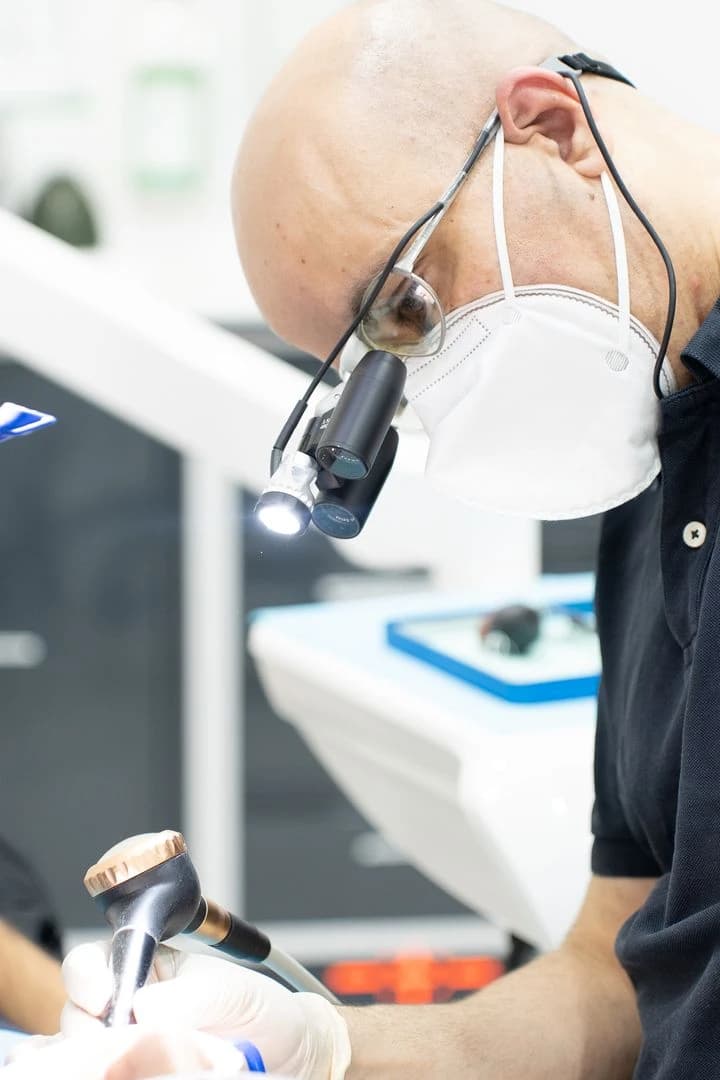
A bite assessment for jaw symptoms evaluates how the upper and lower teeth contact during closing, chewing, and selected jaw movements. The assessment may help identify a clearly high recent restoration, unstable dental work, tooth mobility, missing-tooth changes, fracture, or another dental factor contributing to localised pain or repeated restoration damage.
At Bourgeois Dental Clinic in Dubai, bite findings are interpreted cautiously because jaw pain, headaches, clicking, clenching, and temporomandibular symptoms are not always caused by tooth contacts.
Irreversible reshaping of healthy teeth or extensive bite reconstruction should not be recommended as routine first-line treatment for unexplained jaw pain. Any dental intervention requires a clear diagnosis, a defined objective, and an explanation of alternatives and limitations.
Who May Benefit From a Bite Assessment?
Assessment may be appropriate for patients who experience:
- A tooth that feels high after a filling or crown
- Pain when biting on a specific tooth
- A sudden change in how the teeth meet
- Repeated fracture of a filling, crown, or veneer
- Loose implant components
- Difficulty chewing after recent dental treatment
- Tooth mobility
- Extensive tooth wear
- Changes after losing a tooth
- Jaw discomfort that requires broader dental assessment
- A splint that appears to change the bite
- Planning for complex restorative rehabilitation
What Is Dental Occlusion?
Dental occlusion describes how the teeth contact when the jaw closes and during function.
It may be influenced by:
- Tooth position
- Tooth shape
- Fillings and crowns
- Veneers and bridges
- Dental implants
- Missing teeth
- Tooth wear
- Tooth mobility
- Orthodontic treatment
- Jaw position and movement
What Happens During the Assessment?
- Symptom review: Discussing pain, timing, location, recent treatment, bite changes, jaw symptoms, and restoration damage.
- Dental examination: Checking decay, cracks, fractures, mobility, gum health, restorations, implants, and missing teeth.
- Contact assessment: Evaluating where the teeth meet during gentle closing and selected movements.
- Restoration review: Checking whether a filling, crown, bridge, veneer, or implant restoration has an excessive or unstable contact.
- Tooth-wear review: Assessing patterns of wear, erosion, and fracture.
- Jaw assessment: Reviewing opening, movement, muscles, joints, clicking, and locking when relevant.
- Imaging when indicated: Dental X-rays may be recommended to assess roots, decay, infection, bone support, or fractures.
- Diagnosis and plan: Discussing monitoring, local adjustment, dental treatment, splint review, rehabilitation, or referral.
What Does a High Filling or Crown Feel Like?
Possible symptoms include:
- One tooth contacts before the others
- Pain when biting
- Difficulty closing normally
- Localised tooth sensitivity
- Discomfort after recent treatment
- Awareness that the bite is uneven
Similar symptoms may also be caused by a cracked tooth, root inflammation, infection, or periodontal problems. Diagnosis is required before adjustment.
Can a High Restoration Cause Jaw Pain?
A clearly excessive contact on a recent restoration may contribute to localised tooth pain, altered chewing, or muscle guarding in selected patients.
It does not explain every case of general jaw pain, clicking, headaches, clenching, or facial pain.
How Is a High Contact Adjusted?
When a clearly excessive contact is confirmed, the dentist may carefully refine the restoration and recheck the bite.
Adjustment should:
- Be limited to clinically identified areas
- Preserve restoration strength
- Avoid unnecessary removal of healthy tooth structure
- Be followed by polishing when appropriate
- Include reassessment of symptoms
Can Natural Teeth Be Adjusted?
Minor adjustment of natural tooth structure may occasionally be considered for a clear and specific dental indication, but it is irreversible.
Alternative explanations and treatment options should be assessed before removing healthy enamel.
Can Bite Adjustment Stop Bruxism?
No guarantee can be made. Sleep grinding and daytime clenching may involve sleep physiology, behaviour, stress, medication, stimulants, alcohol, tobacco, or medical factors.
Irreversible bite alteration is not a routine treatment for stopping bruxism. Visit bruxism and teeth-grinding assessment for a broader evaluation.
Can Bite Adjustment Cure TMJ Pain?
No. Temporomandibular symptoms may arise from joints, muscles, trauma, dental infection, sleep factors, medical conditions, and other causes.
A bite assessment may identify selected dental contributors, but extensive occlusal adjustment should not be used as a universal treatment for TMD.
Can Missing Teeth Change the Bite?
Missing teeth may allow neighbouring or opposing teeth to move, tilt, over-erupt, or change chewing patterns over time.
Not every missing tooth causes jaw pain, but replacement may be discussed when there are functional, restorative, or oral-health indications.
Can Tooth Wear Change How the Teeth Meet?
Extensive wear may:
- Reduce tooth height
- Change front-tooth guidance
- Alter chewing contacts
- Reduce restorative space
- Expose dentine
- Increase fracture risk
A tooth-wear assessment may be recommended when changes are extensive or progressing.
Can Loose Teeth Affect the Bite?
Yes. Tooth mobility may change contacts and chewing comfort.
Possible causes include:
- Periodontal disease
- Trauma
- Root fracture
- Dental infection
- Heavy loading
- Orthodontic movement
The cause of mobility should be diagnosed before adjusting the bite.
How Are Implant Contacts Assessed?
Implants do not have the same periodontal-ligament response as natural teeth. Implant restorations should be assessed for:
- Heavy contacts
- Loose screws or crowns
- Chipped material
- Food trapping
- Cleaning access
- Surrounding tissue health
- Changes during jaw movement
Can a Night Guard Change the Bite?
A suitable, monitored full-coverage appliance aims to minimise unwanted changes.
Arrange an occlusal-splint adjustment and review when the bite remains different after removal, the appliance becomes tight or loose, or tooth pain develops.
When Is Complex Bite Rehabilitation Considered?
A broader rehabilitation may be considered when multiple teeth are severely worn, fractured, missing, unstable, or restored and the condition affects function, restorative space, comfort, or appearance.
Complex treatment may involve:
- Diagnostic records
- Digital planning
- Temporary restorations
- Bonded restorations
- Onlays or crowns
- Implants or bridges
- Orthodontics
- Periodontal or root-canal care
- A maintenance and protection plan
Visit bite rehabilitation for more information.
Are Digital Bite Scans Always Required?
No. Digital tools may support selected assessments but do not replace the clinical examination, symptom history, restoration assessment, and diagnostic judgement.
What Are the Risks of Bite Adjustment?
- Removal of tooth or restoration material is irreversible
- Symptoms may not improve
- Sensitivity may occur
- Additional adjustment may be required
- Restoration strength may be reduced if excessive material is removed
- The original cause may involve another dental or medical condition
- Complex symptoms may require referral
When Is Monitoring More Appropriate?
Monitoring may be appropriate when:
- No clearly excessive contact is identified
- Symptoms are mild and improving
- The bite is stable
- There is no progressive damage
- The likely cause is muscular or non-dental
- Further diagnostic information is needed
When Is Prompt Dental Care Needed?
Arrange prompt assessment for severe biting pain, swelling, pus, a fractured tooth, a loose crown or implant component, a sudden bite change, facial trauma, persistent locking, or inability to close normally.
Difficulty breathing or swallowing, rapidly spreading facial or neck swelling, major trauma, neurological symptoms, severe weakness, confusion, or significant deterioration requires urgent medical care.
Bite Assessment on Sheikh Zayed Road
Bourgeois Dental Clinic is located on the first floor of Indigo Sky Building, Sheikh Zayed Road, Exit 41, near Al Thanya Street in Dubai. The clinic is accessible from Al Barsha, Umm Al Sheif, Umm Suqeim, Jumeirah, Al Quoz, Barsha Heights, The Greens, Dubai Marina, and nearby communities.
Book a bite assessment for jaw symptoms for a high filling or crown, pain when biting, bite changes, restoration fractures, loose implant components, tooth wear, missing teeth, or complex restorative planning.
Department
TMJ, Jaw Pain & Bruxism Care
FAQ
Frequently Asked Questions
BOOK AN
Appointment
Working Hours
We are here to serve you