

Receding Gums in Dubai: Causes, Sensitivity and Treatment Options
What are receding gums?
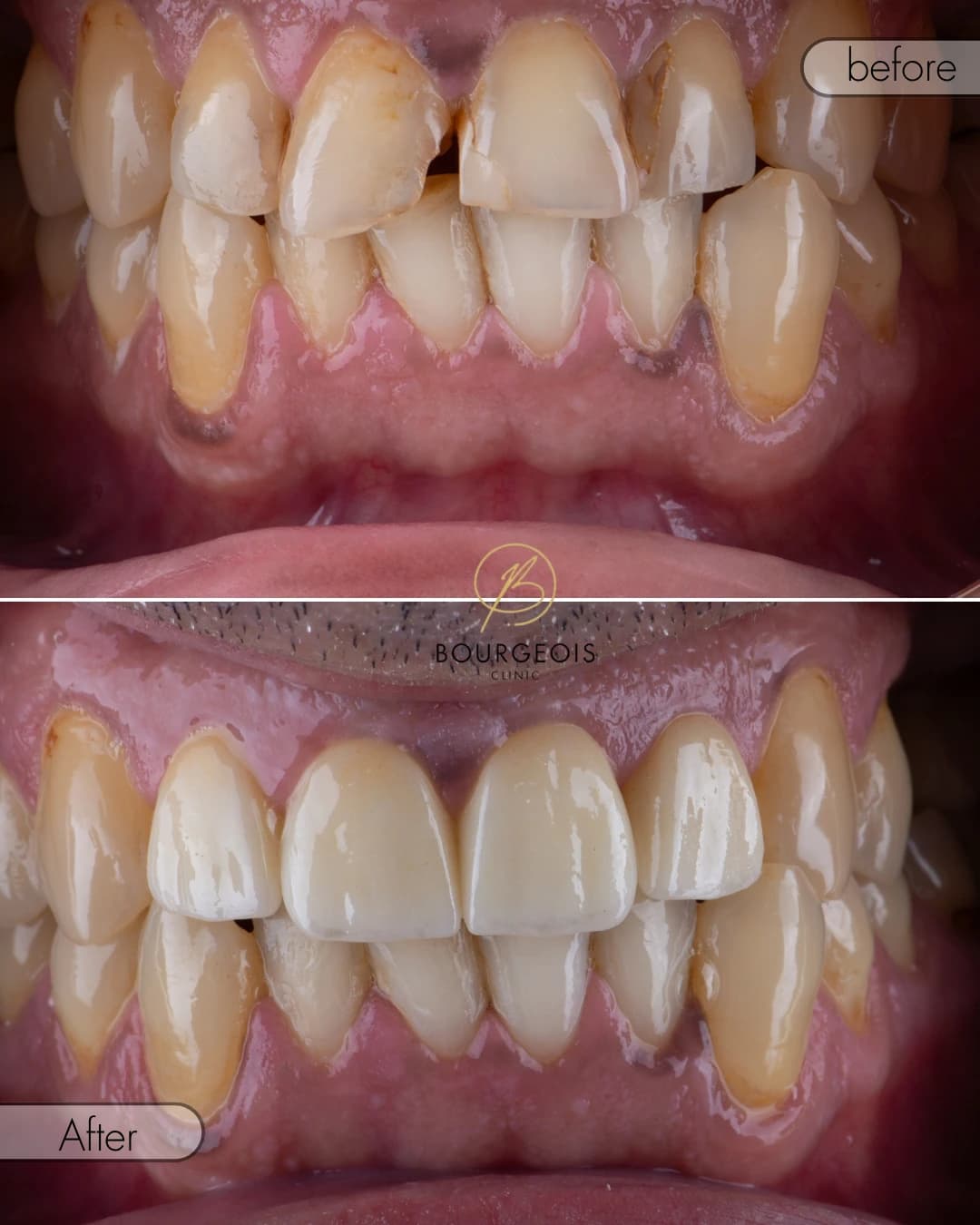
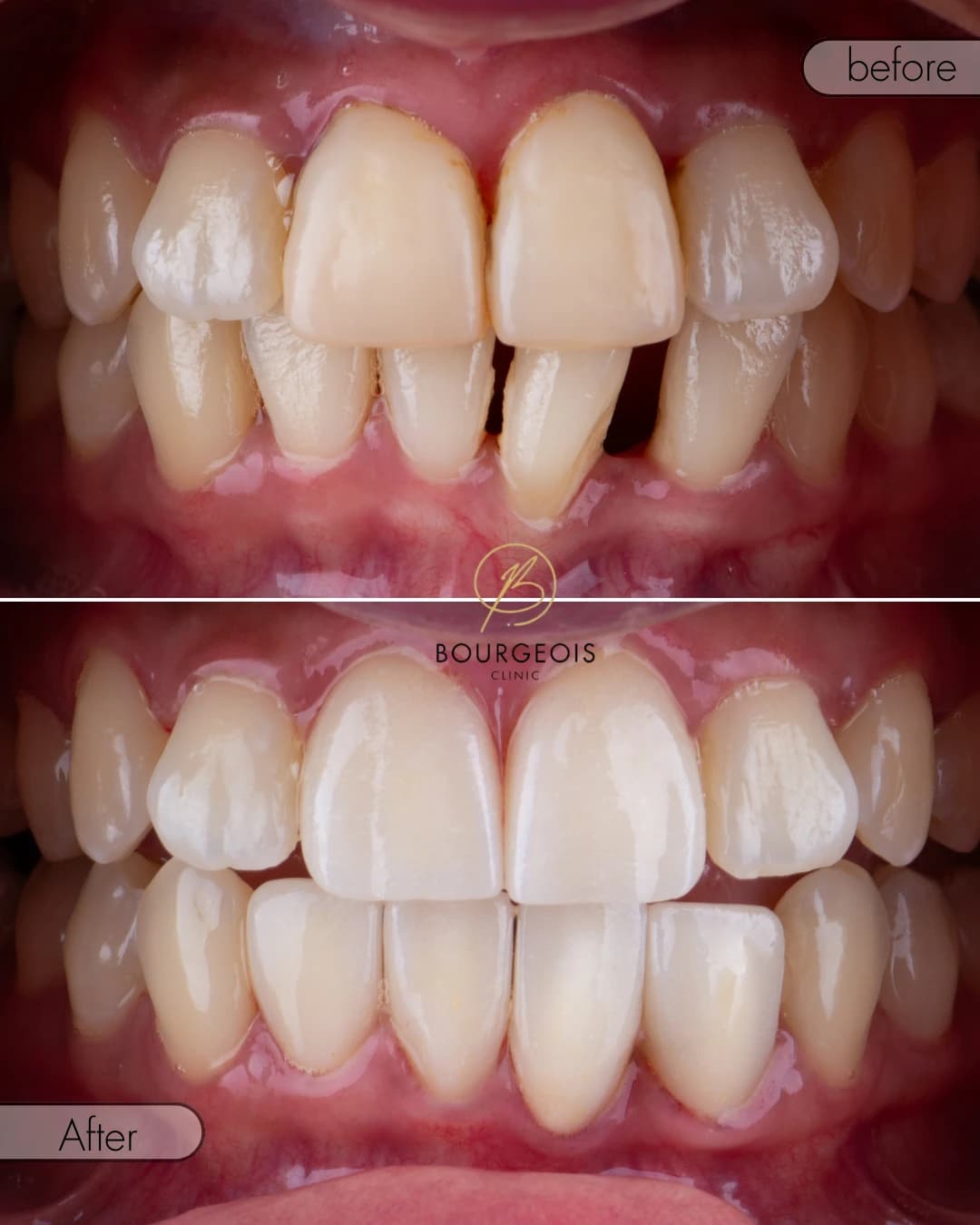
Gum recession means the edge of the gum has moved away from its previous position, exposing more of the tooth or its root. It may affect one tooth, several teeth or a wider area. Recession can change the appearance of the gumline, create sensitivity and make root surfaces more vulnerable to wear and decay. It is a finding, not a diagnosis by itself.
At Bourgeois Dental Clinic in Dubai, recession is assessed together with gum inflammation, tissue thickness, tooth position, brushing technique, bite forces and bone support. Dr. Nour can begin the general and aesthetic evaluation and coordinate periodontal care when specialist assessment is appropriate.
The short answer
Receding gums do not usually grow back naturally. Treatment first aims to identify and control the cause. Mild stable areas may be monitored and protected, while active disease may require periodontal treatment. Sensitivity may be managed with fluoride, desensitising care or bonding. Gum grafting can add tissue or cover selected roots, but suitability depends on anatomy, gum health, cleaning and the type of recession.
What signs should you notice?
- One tooth appearing longer than nearby teeth.
- An uneven or higher gumline.
- A yellowish root surface becoming visible.
- Cold, sweet or brushing sensitivity near the gumline.
- A small notch or worn area at the neck of a tooth.
- Food trapping or difficulty cleaning.
- Bleeding, swelling, bad breath or tooth movement when gum disease is also present.
Recession can progress quietly, so photographs and periodontal measurements are more reliable than memory alone. A change in appearance does not automatically reveal whether the recession is active.
Why do gums recede?
Periodontal disease
Inflammation and loss of supporting tissues can lead to recession, pockets and bone loss. Bleeding or tenderness may be present, but periodontitis can progress with limited pain. A periodontal consultation measures the tissues rather than judging by appearance alone.
Toothbrush trauma
A hard brush or repeated excessive pressure may contribute to localised recession and cervical wear. Stopping aggressive brushing is important, but simply switching brushes cannot replace assessment if the root is already exposed or gum disease is present.
Thin gum tissue and tooth position
Some teeth have naturally thin tissue or sit toward the outside of the bone. Orthodontic history, crowding and anatomy may influence the risk. This does not mean orthodontics always causes recession; the relationship must be assessed for the individual tooth.
Bite forces and oral habits
Clenching, grinding, nail biting and other forces may coexist with recession or notches near the gumline. Visible wear alone does not prove one cause. The dentist reviews contacts, habits and patterns before recommending bite-related treatment.
How is gum recession diagnosed?
The dentist records the gum margin, pocket depth, bleeding, plaque, tooth mobility and exposed root. Photos, X-rays and digital scans may support monitoring. The width of attached tissue, frenum pull, tooth position and cleaning access may also influence the plan. The dedicated gum-recession service addresses health, comfort and aesthetics together.
Can sensitivity be reduced?
Exposed root dentine can react to cold, touch and sweetness. Management may include desensitising toothpaste, professionally selected fluoride, protective coatings, bonding or treatment of inflammation. The tooth-sensitivity service also checks for decay, cracks and pulp problems so pain is not attributed to recession without evidence.
Treatment options for receding gums
Cause control and monitoring
Improved plaque control, gentler brushing, professional cleaning and risk-factor management may help stabilise selected cases. Monitoring uses repeat measurements and images. Stability matters more than a quick cosmetic change.
Composite bonding
Tooth-coloured material may cover a sensitive or worn root area in suitable cases. It changes the tooth surface rather than replacing lost gum and requires cleanable margins and maintenance.
Gum grafting
Gum grafting may increase tissue thickness, protect a root or improve root coverage. Complete coverage is not possible in every case. Results depend on defect type, bone level, tooth position, smoking, plaque control and healing.
Orthodontic or restorative coordination
When tooth position, crowding or restoration contours contribute, a staged plan may involve orthodontic movement, replacement of a faulty restoration or reshaping of a plaque-retentive margin before or after periodontal care.
Can receding gums be treated cosmetically?
Appearance matters, especially around front teeth, but cosmetic planning should not hide active disease. Root colour, tooth length, symmetry and smile line are considered after health and stability. Gum contouring removes tissue and is therefore not the standard solution for an already receded area.
When is prompt assessment needed?
Book promptly for rapidly changing recession, pus, swelling, fever, severe pain, increasing mobility or trauma. Difficulty breathing or swallowing and spreading facial swelling require urgent medical care.
Planning care with Dr. Nour
Dr. Nour can evaluate how recession affects comfort, restorations and smile appearance, identify local contributors and coordinate the gum team. This allows treatment to preserve healthy tissue and avoid placing cosmetic work on unstable gums.
Book a gum assessment in Dubai
Bring older photographs if the gumline has changed gradually. Book a dental appointment on Sheikh Zayed Road, Exit 41, for individual assessment and treatment planning.
This article provides general information and does not replace a periodontal diagnosis.