


Root Canal or Tooth Extraction in Dubai: Which Treatment Is Better?

Root canal treatment may preserve a restorable natural tooth, while extraction may be appropriate when structural or supporting-tissue damage makes retention unpredictable. Compare the complete pathways before deciding.
Root canal treatment is usually considered when an infected or inflamed tooth can still be restored predictably. Extraction may be the safer option when the tooth is split, decay extends too far below the gum, bone support is inadequate, or there is too little healthy structure left to rebuild it. The better treatment is therefore not determined by pain alone. It depends on whether the tooth can be disinfected, sealed, restored and maintained as a useful part of the bite.
Patients comparing a root canal in Dubai with extraction often focus on the price or number of appointments. Those factors matter, but the full comparison must include the condition of the tooth, the final restoration and what will happen to the space if the tooth is removed. This guide explains how a dental team approaches that decision without assuming that one option suits every case.
Root canal versus extraction: the short answer
If a natural tooth has adequate root, gum and bone support and enough sound structure for a durable restoration, preserving it is often the more conservative goal. Root canal treatment removes inflamed or infected pulp from inside the tooth, cleans and seals the canal system, and allows the remaining tooth to stay in the mouth. A filling, onlay or crown may then be required to protect and restore it.
Extraction removes the entire tooth. It can eliminate a tooth that cannot be predictably saved, but it also creates a space. Depending on the tooth and the bite, that space may later require an implant, bridge or removable replacement. The extraction fee alone therefore does not represent the complete treatment plan.
Comparison at a glance
| Decision factor | Root canal treatment | Tooth extraction |
|---|---|---|
| Main objective | Disinfect and retain a restorable natural tooth | Remove a tooth that is hopeless, unsafe or unsuitable to retain |
| Key requirement | A tooth that can be sealed and rebuilt predictably | A clear reason why preservation is not appropriate or desired after informed discussion |
| After treatment | Usually needs a definitive filling, onlay or crown | May need socket care and later replacement planning |
| Healing focus | Healing of tissues around the root while the tooth remains functional | Healing of the extraction socket and surrounding tissues |
| Cost comparison | Include root canal and final restoration | Include extraction, grafting if indicated, and any bridge, denture or implant |
| Main limitation | Cannot predictably save every tooth | Irreversible and may affect chewing, tooth position or future replacement choices |
When may root canal treatment save the tooth?
Root canal treatment may be appropriate when decay, trauma, a crack or a deep restoration has inflamed or infected the pulp but the tooth remains structurally restorable. Assessment usually considers symptoms, clinical tests and dental imaging. The dental team also checks the root shape, the position of any crack, the amount of remaining tooth, the gum margin, bone support and whether a reliable final seal can be created.
A tooth may still be worth treating even when there is pain, swelling or an infection around the root. These findings do not automatically make extraction necessary. However, urgent assessment matters because dental infection can progress, and pain level does not reliably show how much damage is present. Patients with swelling, fever, difficulty swallowing or breathing, or rapidly worsening symptoms should seek urgent care rather than wait for a routine appointment.
When may extraction be necessary?
Extraction may be recommended when a tooth has a vertical root fracture or is split in a way that cannot be repaired; when decay or fracture extends too far below the gum; when there is insufficient sound tooth structure for a dependable restoration; or when severe periodontal disease has left inadequate support. It may also be considered after unsuccessful treatment when retreatment or endodontic surgery is not predictable, suitable or accepted.
Impacted teeth, problematic wisdom teeth and teeth removed as part of another surgical or orthodontic plan involve different decisions. The clinic's oral surgery and tooth-extraction department assesses whether a simple or surgical approach is required. An infected tooth should not be labelled hopeless without evaluating whether endodontic, restorative or periodontal treatment could reasonably preserve it.
Restorability is the central question
The most useful question is not simply, Can the canals be treated? It is, Can the complete tooth be restored and maintained after the canals are treated? Successful disinfection has limited value if the remaining tooth cannot support a durable restoration or cannot be kept clean.
Restorability assessment may include how much healthy tooth remains above the gum, whether decay can be fully accessed, the position and direction of a crack, the crown-to-root relationship, mobility, periodontal probing and the quality of the supporting bone. A cracked-tooth assessment is particularly important because a small coronal crack, a fractured cusp and a deep vertical root fracture do not have the same prognosis.
What happens during root canal treatment?
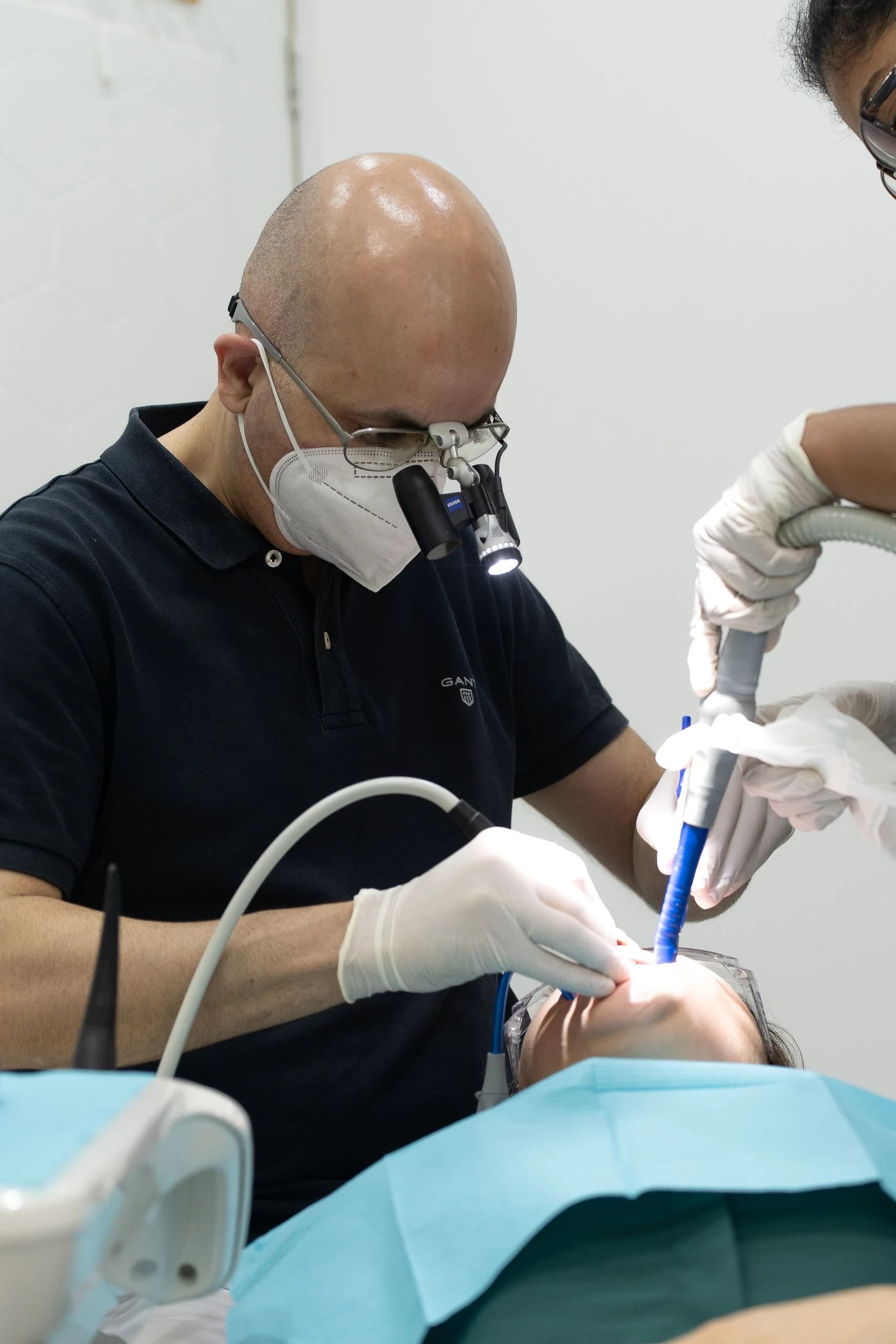
After diagnosis and local anaesthesia, the tooth is isolated so the inside can be treated in a controlled field. An access opening is made, inflamed or infected tissue is removed, and the canals are shaped, disinfected, filled and sealed. Some cases are completed in one visit; others need more than one visit because of anatomy, infection, symptoms or treatment complexity.
The access cavity then requires a reliable restoration. Back teeth frequently need cuspal protection with an onlay or dental crown, while the appropriate restoration for a front tooth depends on how much structure was lost. Until definitive restoration is completed, patients should follow the treating dentist's instructions and avoid using a weakened or temporary restoration for hard biting.
What happens during tooth extraction?
For a simple extraction, the tooth is loosened and removed through the socket under local anaesthesia. A surgical extraction may require a small gum opening, limited bone removal or dividing the tooth into sections. Technique depends on root shape, tooth position, previous restorations, fracture, infection and surrounding anatomy.
After removal, a blood clot forms in the socket and protects early healing. Patients receive instructions about bleeding control, eating, cleaning and activities. The clinic's extraction aftercare guidance explains why the clot should not be disturbed and which symptoms require review. Extraction can be appropriate treatment, but it is irreversible and should be planned with the future of the space in mind.
Does an infected tooth always need extraction?
No. Infection inside the tooth may be managed with root canal treatment when the tooth is restorable. Extraction is more likely when infection is combined with a structural or periodontal problem that makes retention unpredictable. Antibiotics alone do not remove the source inside a necrotic tooth; definitive dental treatment may still be needed.
The infected-tooth service evaluates the source, extent and urgency of infection before recommending drainage, root canal treatment, retreatment, periodontal care or extraction. If facial swelling or systemic symptoms are present, urgency and medical history can change the immediate plan.
What if a previous root canal has failed?
Persistent pain or a new infection after root canal treatment does not automatically mean the tooth must be removed. Causes may include untreated anatomy, leakage, new decay, a damaged restoration or a fracture. Depending on the diagnosis, options can include replacing the restoration, root canal retreatment, endodontic surgery or extraction.
The prognosis should be reassessed rather than assuming that repeating treatment is always worthwhile. Retreatment is most useful when the cause can be identified and corrected and when the tooth remains restorable. A deep crack, severe loss of support or an unrepairable perforation may shift the balance toward removal.
Which option takes longer?
Extraction can remove the tooth in one procedure, but that does not necessarily mean the whole treatment is finished. Socket healing, bone preservation, implant placement, bridge preparation or denture construction may extend the plan over weeks or months. Some spaces do not require replacement, but that decision depends on tooth location, chewing function, neighbouring teeth and the overall bite.
Root canal treatment may require one or more treatment visits followed by a separate restorative appointment. The tooth can often remain in function during the process, although temporary restrictions may apply. Comparing timelines therefore requires the complete endpoint: a protected natural tooth versus a healed and, when indicated, replaced missing tooth.
How should cost be compared in Dubai?
Ask for two complete written pathways rather than comparing a root canal fee with an extraction fee. The root canal pathway may include diagnostic imaging, treatment complexity, medication inside the tooth, a core build-up and a crown or onlay. The extraction pathway may include surgical difficulty, socket preservation, follow-up and replacement with a bridge, removable prosthesis or implant.
An apparently lower initial extraction price may become a larger total plan if the missing tooth needs replacement. Conversely, investing in root canal treatment is not sensible when the tooth cannot support a predictable restoration. Insurance benefits, exclusions and annual limits vary, so the clinic should provide itemised treatment codes and the patient should confirm coverage directly with the insurer.
What happens if the space is not replaced?
Not every extracted tooth must be replaced, but leaving a functional tooth space can affect chewing or allow neighbouring and opposing teeth to move over time. The effect depends on which tooth is missing, the condition of the remaining teeth and the bite. For visible teeth, appearance and speech may also matter.
If removal is chosen, discuss the replacement of missing teeth before extraction whenever possible. Early planning can clarify whether the socket should be preserved, whether an immediate temporary tooth is feasible and whether an implant, bridge or removable option fits the patient's health, anatomy, timing and budget.
Questions to ask before choosing
- Is the tooth restorable after the infection or damaged tissue is treated?
- Is there a crack, and where does it extend?
- How much healthy tooth and periodontal support remain?
- What restoration will be needed after root canal treatment?
- What is the prognosis, and which findings make it uncertain?
- If extraction is recommended, does the space need replacement?
- Would grafting or another preparatory step be considered?
- What are the complete fees, visits and maintenance needs for each pathway?
- What symptoms would require urgent review?
Warning signs that should not wait
Seek prompt dental assessment for persistent or severe toothache, pain on biting, lingering temperature sensitivity, a gum swelling or pimple, a bad taste, a fractured tooth or facial swelling. Fever, spreading swelling, difficulty swallowing, breathing difficulty or significant deterioration can require urgent medical or dental attention. Do not place aspirin against the gum, and do not rely on leftover antibiotics.
For sudden symptoms, an emergency root-canal assessment can determine whether the immediate priority is stabilisation, drainage, endodontic care or extraction. The final decision should follow examination and appropriate imaging, not online symptoms alone.
Book a root canal or extraction assessment in Dubai
Bourgeois Dental Clinic provides endodontic, restorative, oral-surgery and tooth-replacement planning in one clinic on Sheikh Zayed Road near Al Thanya Street. The team can compare whether the tooth is predictably restorable, explain the prognosis and provide a written plan that includes the final restoration or replacement rather than only the first procedure.
Book a dental assessment in Dubai if you have tooth pain, swelling, a broken tooth or have been advised to choose between root canal treatment and extraction. Earlier assessment may preserve more options, but no treatment outcome can be guaranteed before the tooth and supporting tissues are evaluated.