


Jaw Clicking and Popping Assessment
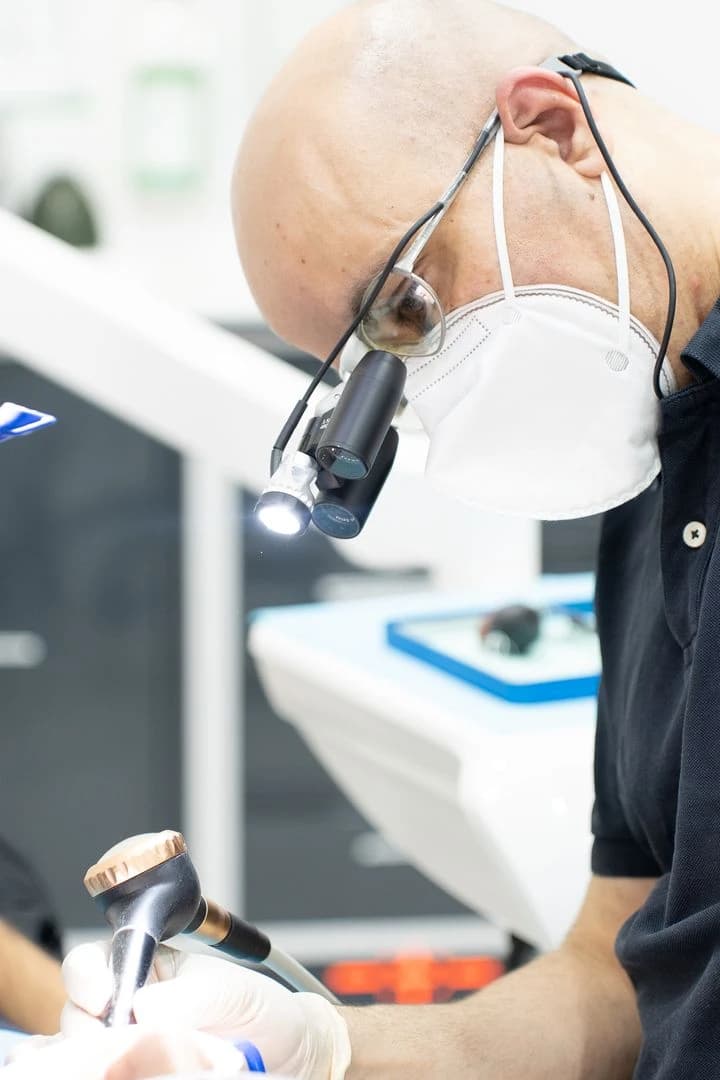
A jaw-clicking and popping assessment evaluates sounds arising during opening, closing, chewing, speaking, or side-to-side jaw movement. The examination considers whether the sound occurs alone or together with pain, locking, restricted opening, trauma, muscle tenderness, bite changes, or functional difficulty.
At Bourgeois Dental Clinic in Dubai, jaw sounds are assessed cautiously because clicking and popping can occur in people without significant pain or progressive disease. A sound alone does not automatically mean that treatment, surgery, bite alteration, or an occlusal appliance is required.
When Should Jaw Clicking Be Assessed?
An assessment may be appropriate when the clicking or popping is:
- New or becoming more frequent
- Painful
- Associated with jaw locking
- Accompanied by reduced mouth opening
- Related to a recent dental or facial injury
- Associated with a sudden bite change
- Present with chewing difficulty
- Accompanied by swelling or tenderness
- Increasingly affecting daily activities
- Combined with recurrent headaches or facial pain that require broader assessment
What Can Cause Jaw Sounds?
Possible contributors may include:
- Movement of the joint disc
- Ligament or soft-tissue movement
- Changes in coordination between the joint and muscles
- Joint-surface changes
- Previous trauma
- Temporary inflammation
- Jaw hypermobility
- Normal anatomical variation
The type, timing, and intensity of the sound do not establish a diagnosis by themselves.
What Happens During the Assessment?
- Symptom history: Reviewing when the sound began, which side is affected, whether it is painful, and whether locking, trauma, or limited opening is present.
- Medical and dental review: Discussing health conditions, medication, previous jaw treatment, orthodontics, dental procedures, and injuries.
- Jaw-movement assessment: Observing opening, closing, side-to-side movement, deviation, and comfort.
- Joint-sound assessment: Identifying whether the sound occurs during opening, closing, both movements, or chewing.
- Muscle examination: Checking tenderness, fatigue, and whether pressure reproduces familiar symptoms.
- Dental examination: Assessing teeth, restorations, infection, fractures, and possible dental causes of pain.
- Bite assessment: Reviewing recent changes without assuming that the bite caused the sound.
- Imaging decision: Considering imaging only when clinically justified.
- Management plan: Recommending monitoring, conservative care, follow-up, or referral.
Does Painless Clicking Need Treatment?
Not always. Stable clicking without pain, locking, progressive restriction, trauma, or difficulty eating may be monitored rather than actively treated.
Patients may be advised to return if:
- Pain develops
- The jaw begins to lock
- Opening becomes limited
- The sound changes suddenly
- The bite feels different
- Swelling appears
- Function becomes difficult
Can Clicking Be Related to the Joint Disc?
In some patients, clicking may occur when the joint disc changes position during jaw movement. However, a clinical sound cannot confirm the exact disc position without appropriate assessment and, in selected cases, advanced imaging.
Many disc-related sounds remain stable and do not require invasive treatment.
What Is the Difference Between Clicking and Crepitus?
- Clicking or popping: Usually describes a distinct sound occurring at a particular point during movement.
- Crepitus: Describes a rough, grating, or gravel-like sound that may occur through a wider range of movement.
Crepitus may require further assessment when it is painful, progressive, related to trauma, or associated with functional limitation.
Can Jaw Clicking Be Caused by Clenching or Grinding?
Clenching and grinding may increase muscle tension and loading around the jaw joints, but they do not explain every clicking sound.
A bruxism and teeth-grinding assessment may be considered when clicking occurs with tooth wear, morning muscle fatigue, repeated restoration damage, or daytime clenching.
Can Dental Treatment Cause Temporary Jaw Sounds?
Prolonged mouth opening during dental treatment may temporarily fatigue the jaw muscles or irritate the joint in some patients.
New symptoms after treatment should be assessed when they are persistent, painful, worsening, associated with locking, or accompanied by a bite change.
Are Dental X-Rays Always Needed?
No. Routine dental X-rays do not show every soft-tissue structure inside the jaw joint and are not required for every clicking sound.
Imaging may be considered when there is:
- Recent trauma
- Persistent pain
- Progressive restriction
- Recurrent locking
- Suspected bone change
- Severe asymmetry
- Unexplained bite alteration
- Need for specialist treatment planning
How Is Jaw Clicking Managed?
Management depends on symptoms and may include:
- Monitoring painless, stable clicking
- Temporary reduction of hard or prolonged chewing
- Avoiding extreme mouth opening
- Awareness of daytime clenching
- Conservative comfort measures
- Selected mobility guidance after assessment
- Treatment of dental pain or infection
- An occlusal appliance for selected patients
- Physiotherapy or specialist referral when required
Visit TMJ and jaw-pain consultation for a broader assessment when clicking occurs with pain or functional symptoms.
Will a Night Guard Stop Jaw Clicking?
Not necessarily. A night guard may protect selected teeth and restorations or support management of certain muscle symptoms, but it cannot guarantee that joint sounds will stop.
The appliance should not be prescribed solely because a painless click is present without considering the full clinical findings.
Should the Bite Be Adjusted to Stop Clicking?
Irreversible reshaping of natural teeth is not a routine first-line treatment for unexplained jaw clicking.
A minor adjustment may be considered only when a recent restoration has a clearly excessive contact associated with symptoms. Extensive bite changes require separate diagnosis and justification.
Can Jaw Exercises Stop the Sound?
Selected coordination or mobility exercises may help some patients when recommended after examination, but they cannot guarantee elimination of clicking.
Exercises should be avoided or modified during acute locking, recent trauma, severe pain, infection, suspected fracture, or progressive limitation.
When Is Referral Appropriate?
Referral may be recommended for:
- Persistent pain
- Recurrent locking
- Progressive restriction
- Major trauma
- Suspected inflammatory joint disease
- Complex facial pain
- Neurological symptoms
- Need for advanced imaging
- Limited response to conservative care
What Are the Limitations of Treatment?
- The sound may continue despite treatment
- Clicking may have more than one contributor
- A clinical examination may not identify the exact internal joint position
- Symptoms may change over time
- A splint may not eliminate clicking
- Some patients require imaging or specialist care
- Improvement cannot be guaranteed
When Is Prompt Assessment Needed?
Arrange prompt assessment when clicking is associated with severe pain, swelling, trauma, persistent locking, inability to open or close normally, a sudden bite change, fever with worsening dental symptoms, or a fractured tooth.
Difficulty breathing or swallowing, rapidly spreading facial or neck swelling, major facial trauma, suspected jaw fracture, loss of consciousness, neurological symptoms, or significant deterioration requires urgent medical care.
Jaw-Clicking Assessment on Sheikh Zayed Road
Bourgeois Dental Clinic is located on the first floor of Indigo Sky Building, Sheikh Zayed Road, Exit 41, near Al Thanya Street in Dubai. The clinic is accessible from Al Barsha, Umm Al Sheif, Umm Suqeim, Jumeirah, Al Quoz, Barsha Heights, The Greens, Dubai Marina, and nearby communities.
Book a jaw-clicking and popping assessment for painful sounds, locking, restricted movement, trauma, chewing difficulty, bite changes, or symptoms affecting daily jaw function.
Department
TMJ, Jaw Pain & Bruxism Care
FAQ
Frequently Asked Questions
BOOK AN
Appointment
Working Hours
We are here to serve you